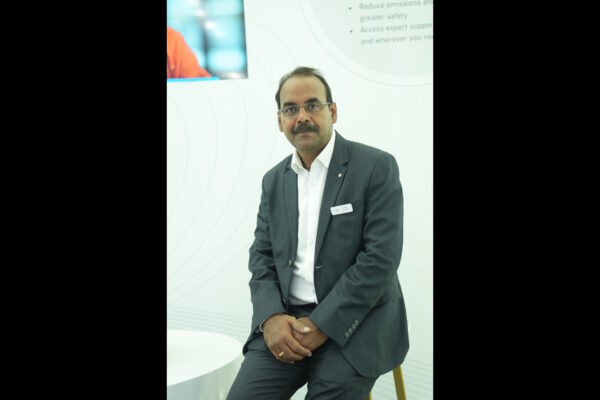

Nikhil Mundra, Sr. Manager Growth Business, Strategy & Transformation – IMEA, Lubrizol

Residential fire safety in India is often approached as a compliance requirement. Why is there a need to move beyond minimum compliance towards a more structural and performance‑driven approach?
Residential fire safety should be viewed first and foremost as a life‑safety imperative rather than a compliance exercise. Minimum adherence typically reflects the lowest acceptable threshold, whereas real‑world fire scenarios demand systems that perform reliably under extreme conditions and over long periods of time. With increasing urban density, taller residential structures, and more complex building designs across India and the Middle East, the consequences of fire incidents have become significantly higher. A performance‑driven approach focuses on how systems activate, sustain pressure, and function during an actual fire event. Thus, a mindset change is essential to building safer, more resilient residential infrastructure.
How is Lubrizol leveraging its materials science expertise to strengthen residential fire safety infrastructure, particularly in high‑rise developments?
Lubrizol brings decades of global materials science expertise to residential fire protection through solutions such as BlazeMaster® CPVC fire sprinkler systems. BlazeMaster has a proven global history of over 40 years, with millions of feet installed across residential and commercial buildings worldwide. This long‑standing track record provides confidence in system performance, consistency, and long‑term reliability. In high‑rise residential developments, where access for repairs is limited and system failure can have serious consequences, material performance becomes critical. BlazeMaster delivers dependable pressure and temperature performance, corrosion resistance, and system integrity over the building’s lifecycle. Lubrizol complements this with local technical support, design guidance, and installer education to ensure systems are implemented correctly and perform as designed.
With materials innovation gaining importance, how is Lubrizol driving the adoption of CPVC‑based fire sprinkler systems, and how do these compare with traditional metallic systems?
Lubrizol has played a leading role in advancing CPVC fire sprinkler technology globally and in the IMEA region. CPVC systems such as BlazeMaster offer inherent corrosion resistance, smoother internal surfaces for efficient hydraulic performance, and ease of installation compared to traditional metallic piping systems. These advantages translate into consistent long‑term performance with reduced risk of degradation over time. In residential applications, particularly high‑rises, long‑term reliability and reduced maintenance are paramount. CPVC systems help address challenges commonly associated with metallic systems, such as corrosion, scaling, and heavy installation requirements. Lubrizol supports adoption through technical engagement with consultants and developers, demonstrating how material choice directly impacts lifecycle performance and fire safety outcomes.
From an IMEA perspective, how significant is the residential fire safety segment for Lubrizol, and how are you aligning your growth strategy in India and the Middle East?
Residential fire safety is a strategically important growth segment for Lubrizol across the IMEA region. Rapid urbanisation in India, coupled with large‑scale residential and mixed‑use developments across the Middle East, is driving demand for robust and reliable fire protection systems. Lubrizol’s growth strategy focuses on strengthening ecosystem partnerships, expanding technical engagement, and aligning with regional building practices and regulations. In both India and the Middle East, we are working closely with developers, consultants, and local stakeholders to encourage the adoption of performance‑driven fire safety solutions that meet the demands of modern residential construction.
How is Lubrizol working with developers, consultants, and industry bodies to drive adoption of advanced fire safety systems?
Collaboration is central to Lubrizol’s approach. We actively engage with industry bodies such as the International Fire Suppression Alliance (IFSA), Fire & Security Association of India (FSAI) and Fire Protection Association of India (FPAI) to support knowledge sharing, technical education, and awareness around best practices in fire protection. These partnerships help elevate industry understanding of how material selection influences system performance and safety. Lubrizol also conducts technical seminars, design discussions, and installer training programs across the IMEA region. By engaging early in the project lifecycle and working closely with consultants and developers, we help ensure fire protection systems are designed and installed with long‑term performance in mind.
To what extent is lack of awareness a barrier to adopting high‑performance fire safety materials, and what role is Lubrizol playing in education?
Lack of awareness remains a significant barrier, particularly because fire protection infrastructure is often prioritized late in the construction process. Decisions may also be driven by initial cost rather than system reliability or lifecycle performance. Lubrizol addresses this gap through continuous education initiatives. This ranges from sensitization sessions with key government stakeholders, installer certifications, consultant engagements and collaboration with industry associations. By improving understanding of material behaviour, system performance, and long‑term reliability, we aim to help stakeholders make informed decisions that prioritize safety over short‑term savings.
How supportive are current government regulations and building codes in promoting advanced fire safety materials, and where do you see gaps?
Regulatory frameworks in India and the Middle East have made steady progress in recognising the importance of fire safety. However, there remains an opportunity to move further toward performance‑based codes and innovative solutions that emphasise system reliability and material quality beyond basic compliance. Greater alignment with international best practices and clearer guidance on material performance would help strengthen fire safety outcomes. Industry collaboration with policymakers will be essential in addressing these gaps. The new National Building Code and its emphasis on fire safety is a welcome step.
How is Lubrizol integrating sustainability considerations into its fire protection solutions?
Sustainability is an important consideration in Lubrizol’s fire protection solutions. CPVC systems offer long service life and reduced maintenance requirements which contribute to lower lifecycle impact. Lightweight systems also reduce transportation and installation demands. Third party studies prove that CPVC as a material is inherently more sustainable than its metal counterparts. By focusing on durability and lifecycle performance rather than frequent replacement, Lubrizol helps support safer and more sustainable residential infrastructure.
Looking ahead, how does Lubrizol envision its role in shaping safer residential infrastructure across India and the Middle East?
Lubrizol envisions itself as a long‑term partner in advancing fire safety across the IMEA region. By combining global expertise, BlazeMaster’s proven 40‑year legacy, and strong local collaboration, we aim to help shift the industry conversation from compliance to performance. Through our mission of Science, Service and Safety, our goal is to support the creation of safer, more resilient buildings that protect lives and deliver reliable fire safety performance for decades to come.
Tags