
Neeraj Balani, Chief Customer Officer, Welspun One

ESG-compliant assets are now seeing stronger occupier preference, as they help reduce operating costs and align with global sustainability mandates
The warehousing sector in India has witnessed significant expansion in recent years. How do you assess the current growth momentum, and what are the key factors driving this surge in demand?India’s warehousing sector continues to see strong growth, driven by e-commerce expansion, manufacturing under Make in India, and rising 3PL demand. This momentum is increasingly structural, with India’s logistics sector expected to grow at ~10–12% CAGR, supported by supply chain formalisation and consumption growth. We see this as sustainable, with Tier 1 cities driving the growth and 2/3 cities also contributing as key growth centres and high-velocity clusters driving absorption. Key drivers include PM Gati Shakti’s focus on multimodal connectivity and efforts to reduce logistics costs from ~13–14% toward single digits of GDP. E-commerce and FMCG contribute a significant share of demand, alongside engineering and manufacturing occupiers. Additionally, quick commerce and omni-channel models are reshaping demand toward both large distribution hubs and in-city logistics assets. We are scaling AI-ready parks across key corridors, aligned to evolving occupier needs for Grade A, tech-enabled infrastructure. Lastly, in the past few years we have also seen manufacturing as a growth driver in Grade A parks, wherein customers look at long term (20+ years) of compatible spaces with established and compliant developers.
Site selection plays a crucial role in the success of logistics parks. What are the key parameters you consider when identifying strategic locations for warehouse development?
For us site selection is predominantly driven by compliance. We only engage with sites that have clear titles and fully comply with our requirements. This is followed by connectivity, demand visibility, and long-term scalability, with priority given to proximity to consumption centres, highways, ports, and freight corridors to ensure efficient movement of goods. Increasingly, developers rely on micro-market analysis, including leasing activity, sectoral demand, and upcoming infrastructure, to identify emerging logistics clusters rather than relying solely on land availability. This is critical as location today directly impacts delivery timelines, transportation costs, and overall supply chain efficiency. We further complement this by evaluating regulatory clarity, land readiness, and availability of large, contiguous parcels, along with operational factors such as labour access, utilities, and expansion potential. Access to a stable workforce and future infrastructure pipeline are becoming as important as current connectivity. Considering these aspects, out site selection is anchored in a data-led, customer-aligned approach, ensuring decisions are closely linked to occupier demand and long-term viability.
How have major infrastructure initiatives such as logistics parks, expressways, and dedicated freight corridors influenced the growth and location of warehousing developments in India, and how are you aligning your expansion strategy to leverage these emerging logistics corridors?
Major infrastructure initiatives such as expressways, multimodal logistics parks, and Dedicated Freight Corridors are fundamentally reshaping warehousing location strategies in India. With over 95% of the Eastern and Western DFCs now operational, freight efficiency and transit reliability have improved significantly, enabling faster movement between ports and hinterland markets. This is driving a shift from traditional metro-led warehousing to corridor-led development in emerging logistics hubs. Additionally, increased government capex on infrastructure is accelerating the creation of high-growth logistics clusters along these corridors, improving network optimisation for 3PL and manufacturing players. At Welspun One, our expansion strategy is aligned to these evolving corridors, with a focus on key markets such as Bhiwandi, Pune, and Bengaluru. We are synchronising development timelines with infrastructure readiness to ensure early-mover advantage and sustained leasing momentum in these high-growth micro-markets.
We are witnessing a growing preference among occupiers for built-to-suit warehouses rather than standard ready-built facilities. What factors are driving this shift, and how is your company tailoring its warehouse development strategy to address these evolving client needs?
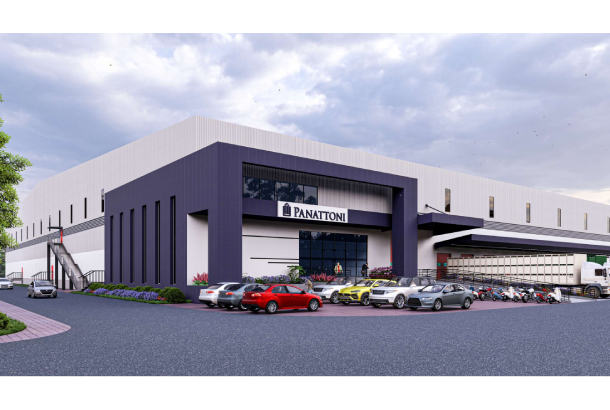
The shift towards built-to-suit (BTS) warehouses is being driven by occupiers seeking greater customization, operational efficiency, and readiness for automation. Today, BTS accounts for an estimated 35 – 40% of leasing in key markets, particularly led by 3PL, e-commerce, and automotive sectors. Unlike standard facilities, BTS enables optimization of layout, clear heights, docking, and integration of robotics and technology. As supply chains become more complex and time-sensitive, occupiers are prioritising facilities tailored to their throughput, storage, and process requirements rather than adapting to generic spaces. This is also aligned with sustainability goals and long-term cost efficiencies. We follow a hybrid approach, combining standardized Grade A infrastructure with client-specific customization. We have delivered BTS solutions across diverse use cases including cold storage, manufacturing-linked facilities, and highly curated racking and automation layouts, aligned to specific operational needs.
With manpower availability emerging as a key challenge in the warehousing sector, what role is technology playing in driving growth and improving operational efficiency? How are solutions such as AI, robotics, WMS, IoT sensors, and RFID helping address these challenges?
Technology is becoming central to addressing manpower constraints and driving efficiency in warehousing. Automation and digital solutions are enabling 20 – 30% improvements in throughput in high-volume operations, while reducing reliance on manual processes. AI supports demand forecasting and inventory optimisation, while WMS platforms provide real-time visibility and process control. Robotics and AGVs are increasingly being deployed for repetitive tasks such as picking and sorting, improving accuracy and turnaround times, while IoT sensors and RFID enhance asset tracking and predictive maintenance. We are building AI-ready, technology-enabled parks that allow occupiers to seamlessly integrate automation into their operations. Our approach focuses on enabling scalable, tech-integrated ecosystems that enhance productivity, reduce costs, and future-proof warehouse operations.
With sustainability becoming a key priority across infrastructure sectors, how are ESG considerations influencing the design and development of your warehouses? What specific green features are being integrated into your facilities?
Sustainability is increasingly becoming a core design principle in warehousing, driven by both occupier expectations and long-term operational efficiency. ESG-compliant assets are now seeing stronger occupier preference, as they help reduce operating costs and align with global sustainability mandates. At Welspun One, ESG is embedded across the asset lifecycle, from design to operations. Our developments incorporate green building certifications such as IGBC and LEED, along with features like solar-ready rooftops, energy-efficient lighting, natural ventilation, water recycling, and EV-ready infrastructure. We are also focused on optimising energy and water consumption at scale, ensuring that our parks are not only environmentally responsible but also deliver measurable cost efficiencies for occupiers over the long term.
Which sectors are currently driving the strongest demand for modern warehousing facilities in India, such as e-commerce, FMCG, manufacturing, or third-party logistics and how do their requirements differ?
Demand for modern warehousing in India is being led by a mix of 3PL, e-commerce (including quick commerce), FMCG, and manufacturing, with 3PL and manufacturing accounting for a significant share of leasing activity in recent quarters. Each of these sectors has distinct requirements, driving greater segmentation in warehouse design and location strategy. E-commerce and quick commerce require high-throughput, automation-ready facilities close to consumption centres, while 3PL players prioritise large, flexible, multi-client warehouses in key logistics corridors. FMCG demand is driven by distribution efficiency and network reach, whereas manufacturing, especially export-led sectors requires large-format, port-linked and corridor-aligned facilities. This diversification is accelerating the shift from standardised warehousing to use-case-driven development, where assets are increasingly designed around specific supply chain needs rather than a one-size-fits-all approach.
How have initiatives such as the National Logistics Policy and PM Gati Shakti influenced the development of warehousing infrastructure, and what further policy support is required to sustain the sector’s growth?
Government’s policy push is aligned with India’s ambition to rank among the top 25 countries on the World Bank’s Logistics Performance Index (LPI) by 2030, which requires sustained improvements in infrastructure quality, freight efficiency, and supply chain reliability. Initiatives like the National Logistics Policy and PM Gati Shakti are central to this, enabling integrated, multimodal planning and reducing logistics costs from ~13 – 14% of GDP toward 8 – 10%. The focus on digitisation, standardisation, and coordinated infrastructure rollout is driving demand for large-format, Grade A warehousing across metro and Tier II/III markets. Additionally, programs such as NICDC – led plug-and-play industrial parks are accelerating ecosystem development and reducing project timelines. To sustain this momentum, faster clearances, uniform zoning, infrastructure status, and incentives for ESG-led developments will be critical.
Looking ahead, how do you see the Indian warehousing sector evolving over the next five to ten years, and what role do you envision your company playing in this transformation?
The Indian warehousing sector is at an inflection point, transitioning from a fragmented landscape to a more organised, institutionalised asset class. Over the next 5 – 10 years, we expect demand to be driven not just by consumption but increasingly by manufacturing growth and India’s integration into global supply chains. This will further accelerate the shift toward Grade A, technology-enabled, and ESG-compliant warehousing, with development expanding beyond metros into corridor-led and Tier II/III markets. Supply chains will become faster, more automated, and more network-optimised, increasing the need for specialised, use-case-driven assets. Also, rising land costs across established logistics hubs will drive the creation of new clusters and accelerate brownfield development, with developers increasingly upgrading existing B-grade warehouses and sheds into A-grade assets. Our focus is on building differentiated platforms across large-format fulfilment centres, in-city logistics, and port-led developments. We aim to play a key role in shaping next-generation logistics infrastructure by aligning asset design, location strategy, and technology with evolving supply chain needs.
Tags