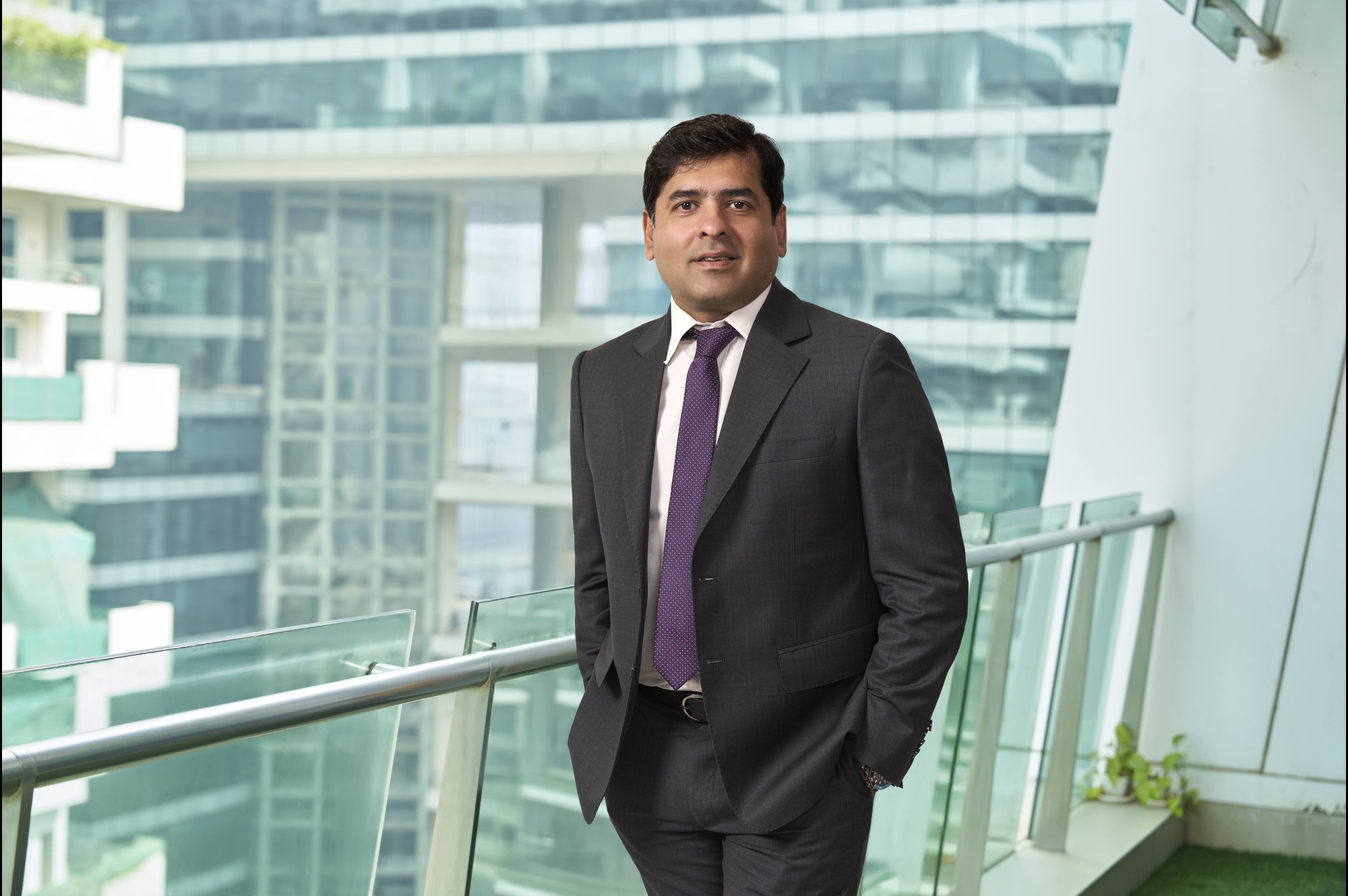
Interview: Urvish Rambhia, Chief Executive Officer, Horizon Industrial Parks

The warehousing sector in India has witnessed significant expansion in recent years. How do you assess the current growth momentum, and what are the key factors driving this surge in demand?
India is the fastest-growing manufacturing and consumer market globally. Supply chain diversification, favorable government policies & infrastructure spend along with cost efficient talent pool are driving manufacturing growth. And consumption is surging due to rising disposable incomes, growth in e-commerce & q-commerce and the formalization of the economy. These structural tailwinds are driving the demand for Grade A logistics and industrial spaces in the country. The demand is growing at around 28% CAGR, projected to rise from 44 million sq ft in 2024 to nearly 149 million sq ft by 2029. To add to this the logistics market is significantly under-penetrated, and there in lies the opportunity for investors and institutional developers. To give you an example, India’s total logistics stock is roughly 0.5 billion sq ft – compared to about 1.3 billion sq ft in Chicago alone. We are also seeing a clear flight to quality – to Grade A industrial infrastructure – as occupiers prefer integrated ecosystems over standalone facilities because they offer efficiencies of scale and reliable, high-quality shared infrastructure.
Site selection plays a crucial role in the success of logistics parks. What are the key parameters you consider when identifying strategic locations?
Site selection today is a multi-layered decision. It’s moved well beyond the old equation of cheap land near a highway. The most strategic locations sit at the intersection of established industrial corridors and emerging demand catchments – allowing occupiers to serve both manufacturing supply chains and mid- or last-mile distribution from a single park. We look at multi-modal connectivity – road, rail, port, air cargo – along with land aggregation potential, clear titles, and zoning. Labour catchment with workforce within commutable distance matters as well, along with availability of critical infrastructure like power, water, and good quality of roads. We also follow investment signals like Dedicated Freight Corridors and PM Gati Shakti and confer with our customers to expand proactively in regions where they want to grow.
How have major infrastructure initiatives influenced the growth and location of warehousing developments in India?
Infrastructure initiatives by the Government of India have transformed warehousing from a fragmented, tax-driven network into a strategically located, efficiency-driven system aligned with transport corridors and consumption centers. They have shaped the growth and geographic distribution of warehousing across the country by improving connectivity, reducing logistics costs, and enabling hub-based development. Projects like Dedicated Freight Corridors (DFCs) are enabling faster and more reliable rail freight movement, and warehouses are increasingly located near freight terminals and industrial hubs to minimize transit time and costs. The development of industrial corridors has further driven clustering of warehousing around manufacturing zones. These corridors attract large-scale logistics parks and Grade A warehouses, as companies seek proximity to production centers and export gateways. Highway upgrades under programs like Bharatmala have improved road connectivity, making Tier 2 and Tier 3 cities more viable for warehousing. Additionally, the National Logistics Policy and Multimodal Logistics Parks (MMLPs) are promoting integrated logistics ecosystems, encouraging warehouses to co-locate with transport infrastructure such as ports, railheads, and highways.
We are witnessing a growing preference for built-to-suit warehouses. What factors are driving this shift, and how is your company responding?
Built-to-Suit (BTS) facilities are increasingly being preferred, owing to the tailored customisations that match their exact operational, technological, and regulatory needs. BTS developments are highly efficient as companies can design layouts specifically for their workflows, improving productivity and reducing handling time and costs. For example, requirements like heavier floor loading, EoT cranes, compressed air, and high-capacity electrical infrastructure must be planned at design stage; these cannot be retrofitted efficiently. Tailored factories can be planned from the ground up to support automation and technology integration seamlessly. Regulatory compliance and sustainability are also easier to achieve with BTS facilities as these can be built to meet stringent environmental norms, safety standards, and ESG goals, including energy-efficient designs, solar power integration, and green certifications. Moreover, BTS provides long-term cost predictability as companies benefit from lower operating costs, reduced retrofitting expenses, and better space utilization over time.
With sustainability becoming a key priority, how are ESG considerations influencing the design and development of your warehouses?
Sustainability is about operational efficiency and environmental responsibility. When you design a park with renewable energy, water recycling, and energy-efficient systems from the blueprint stage, you’re directly lowering operating costs – energy bills, water costs – while creating healthier work environments. It’s not an add-on; it’s embedded into how we design, build, and operate. In practice, all our developments are built to IGBC or LEED standards. We have installed ~20 MWp of rooftop solar capacity at our parks offsetting over 20,000 tCO₂e of emissions, along with 100% LED lighting, 100% greywater recycling, 200+ recharge pits and zero liquid discharge, and 15% green cover with native species and biodiversity zones. Our parks are designed with human comfort as a default – naturally lit workspaces, rest zones, and gender-sensitive sanitation. We use also pre-engineered buildings to minimise embodied carbon, which has earned us a 5-Star GRESB Rating in our debut year, and have a net-zero roadmap aligned to SBTi targeting net zero by FY2050.
Which sectors are currently driving the strongest demand for modern warehousing, and how do their requirements differ?
Industrial and consumption-led demand are both expanding. The big structural shift is manufacturing, which according to JLL accounted for roughly 47% of leasing transactions in 2025. E-commerce has had a strong bounce and continues to grow, and 3PL remains steady.
Manufacturing needs spaces designed in accordance with their process flows, heavy floor loading of 5 to 8 tonnes, EoT cranes, compressed air, and wide column spans, with footprints from 50,000 to 800,000 sq ft. E-commerce and 3PL on the other hand emphasize turnaround time with multiple docks, clear heights, mezzanine-enabled designs, and last-mile proximity. FMCG prioritises multi-temperature capabilities and distribution efficiency, while pharma requires controlled environments, cold-chain, clean rooms, and strict compliance. We serve over 100 customers across 3PL, e-commerce, retail, FMCG, renewable energy, engineering, automotive, and aerospace. Industrial facilities represent about 40% of our operational network and 58% of our clientele are Fortune 500 companies,
How have the National Logistics Policy and PM Gati Shakti influenced warehousing infrastructure, and what further policy support is needed?
The impact of NLP and PM Gati Shakti is tangible – faster freight movement, lower logistics costs, and better corridor-level visibility for planning and investment decisions. Further, to accelerate the next phase of growth, the logistics industry needs single-window clearances for logistics park development in corridor zones, harmonisation of state-level land use and zoning regulations, and sustainability-linked incentives that reward green building compliance and renewable energy adoption. Human capital development through skilling initiatives will also help bridge the talent gap in the industry.
How do you see the Indian warehousing sector evolving over the next five to ten years?
Three things will define the next decade. First, Consolidation. Institutional developers will respond to demand for transparency and compliance by upgrading assets into larger, tech-enabled spaces with Grade A standards. Customers will benefit from single platforms delivering development, management and ecosystem services under one roof, which is exactly what we’ve built as the only scaled pure-play industrial and logistics platform in the country. We’ve scaled to 58 msf in five years, and the next five are about growing organically and inorganically while deepening the ecosystem – more solutions, more cities, more value. Second, In-city logistics. Consumer preference for instant deliveries will drive the demand for hyperlocal modern facilities serving last-mile delivery, cold storage, and cloud kitchens. We’ve taken a lead in this direction with India’s largest network with 17 last-mile parks providing access to over 20 million consumers within a 10 to 30-minute drive. Third, transforming industrial spaces into liveable ecosystems. A truly productive work environment is one where people feel safe, supported, and inspired to work at their best. We are creating human-centric parks blending operational efficiency with thoughtful features and amenities that enhance the day-to-day experience of everyone on-site. These include staff accommodation, sports arenas, medical centers, retail & conveniences, hotels and more.
Tags
Related Posts