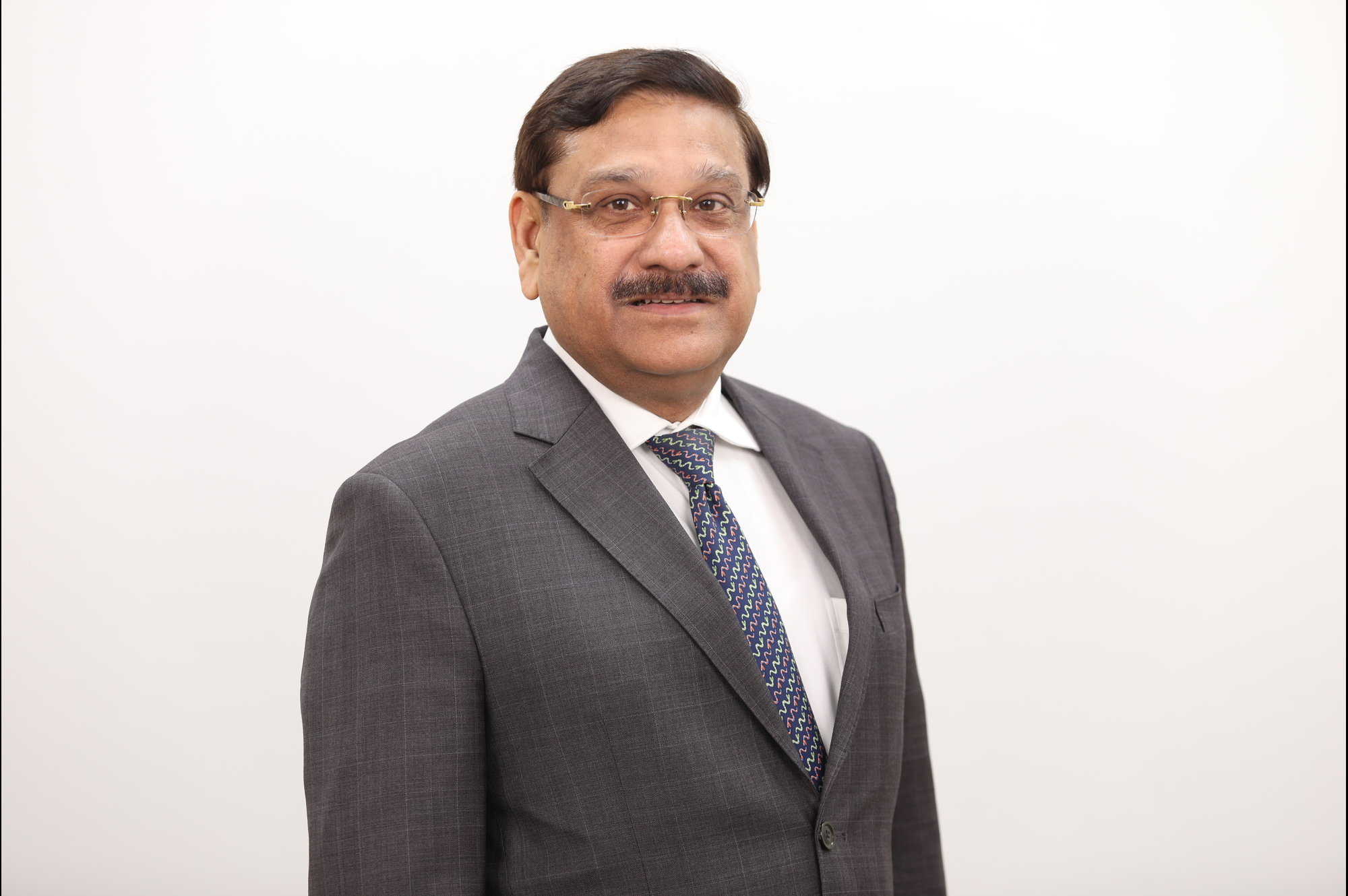
Interview: Sandeep Garg, Managing Director, Welspun Enterprises

How do you envision Welspun Enterprises’ role in contributing to Viksit Bharat 2047?
At WEL, we view our role through the lens of long-term nation-building. Infrastructure has a strong multiplier effect, with public spending estimated to generate GDP gains of 2.5 to 3.5 times over the medium term. But the true value of infrastructure is measured by what it enables — productivity, mobility, accessibility, and quality of life. Our focus is on areas where India’s demand is structural: water security, wastewater treatment and reuse, tunnelling, and high-impact transportation corridors. These are not just business verticals for us; they are national bottlenecks that determine how efficiently cities function, how industries grow and how communities access opportunities. The Aunta–Simaria Road Project in Bihar reflects this approach. By strengthening connectivity between North and South Bihar, improving access to Patna, Begusarai, Barauni and onward to the North East, and reducing travel time by nearly an hour, the project has made mobility more efficient for people, businesses and local communities. Nation-building also depends on the communities we strengthen along the way. Our CSR initiatives reached over 6 lakh beneficiaries in FY25. Through education, healthcare, livelihoods, women’s empowerment, sports and environmental initiatives, we are helping create a more empowered society. For us, contributing to Viksit Bharat means building infrastructure that performs, institutions that endure and communities that participate meaningfully in India’s growth.
What are the key strategic drivers shaping growth in the current infrastructure cycle?
The current infrastructure cycle is being shaped by four clear forces: sustained public capex, rapid urbanisation, climate resilience and the need for greater logistics efficiency. With public capital expenditure proposed at ₹12.2 lakh crore for FY2026–27, infrastructure is no longer being built only to bridge gaps; it is being built to create long-term capacity for sustained growth.
What is also changing is the nature of opportunity. Projects are becoming larger, more capital-intensive and more complex to execute. We believe growth will not be defined by who bids the most, but by who can select the right projects, price risk correctly, deploy capital prudently and deliver consistently. For WEL, this aligns with the choices we have made as a business. We are focused on sectors where India’s needs are structural and where our execution capabilities matter. Mumbai is a strong example of this relevance. Our work across freshwater treatment, wastewater infrastructure and stormwater pumping stations supports the city’s water security, sewage treatment, reuse, flood resilience and overall urban liveability. These projects are essential systems that help a dense, growing city function better. Our approach is to remain selective, with a clear focus on technical differentiation, value accretion and return thresholds.
How is your organisation ensuring excellence in execution across scale, speed and quality?
Execution excellence, in our view, is ultimately about predictability. Large infrastructure projects face several challenges, including land acquisition, design changes, approvals, utility shifting, material price volatility, labour availability, weather conditions and stakeholder coordination. The ability to anticipate these variables early and manage them is what separates consistent execution from episodic performance. At WEL, this discipline has helped us build a track record of delivering complex projects within committed timelines, and in several cases ahead of schedule. We place strong emphasis on detailed engineering, construction methodology, procurement strategy, resource planning and contractor alignment, treating them as core execution levers, not formalities. As projects become larger and more complex, digitisation is helping us make faster, real-time, data-driven decisions, across progress monitoring, safety, quality, site accountability and supply chain visibility. For us, excellence is not a separate pursuit. It is the outcome of preparedness, empowered teams, strong governance and a culture that takes ownership of delivery.
In what ways are technology and digital transformation redefining your project delivery?
At WEL, project monitoring systems, BIM-enabled planning, digital workflows and SCADA-led operations are improving visibility across progress, approvals, quality, safety and asset performance. These tools help teams identify deviations early and make faster, data-backed decisions on the ground. In this space, AI-enabled training and decision support for TBM operators are emerging as important use cases.Simulator and digital-twin environments can recreate geological conditions, machine behaviour and operating scenarios before deployment, helping improve preparedness, safety and response to changing ground conditions.
For us, technology is not an add-on. It is an execution enabler that helps build with greater certainty, safety and accountability.
How are sustainability and ESG principles being embedded within your operations?
For us, sustainability is a core value. It is part of how responsible infrastructure must be built. Through our 3G strategy: Growth, Governance and Green — we are integrating ESG into project selection, design, execution and long-term operations.
This is visible in our core business itself. TThe Dharavi Wastewater Treatment Facility, India’s first vertical WWTF, is being developed on the smallest land footprint for a facility of its size. It reflects how engineering can address sewage treatment, reuse and circularity in a dense urban environment. The facility is designed to generate biogas from sludge, which will help meet nearly 30% of its power requirement and reduce dependence on grid electricity. In construction, we are increasing the use of alternate materials such as pond ash, fly ash and GGBS, expanding renewable energy use, reducing waste and working to lower our carbon footprint. The Pune–Shirur agroforestry drive reflects how this approach is being implemented at the project level. Our responsibility also extends to communities. At the group level, CSR continues to focus on education, empowerment, healthcare, livelihoods and the environment, helping create more resilient and empowered communities around us. Governance gives this agenda discipline. Board-level and internal committees provide oversight across CSR, risk, safety, compliance and project performance, ensuring that sustainability is reviewed with the same seriousness as execution and financial performance.
What are the pressing challenges in the EPC sector, and what measures can address them?
The EPC sector is facing multiple challenges. Project readiness remains a core issue: gaps in DPRs, land availability, utility shifting, approvals, design assumptions or funding flows can quickly lead to delays, disputes, cost escalation and working-capital stress. Geopolitical uncertainty has added another layer through higher commodity prices, disrupted supply chains and input availability. Bitumen is a clear example, given India’s import dependence and exposure to West Asia. Labour availability is another structural constraint that requires skilling, mechanisation and better workforce continuity. The sector needs to move beyond excessive dependence on L1 selection. Complex infrastructure requires evaluation frameworks that give weight to technical capability, safety, quality, delivery track record and long-term performance.
How do you view the impact of evolving government policies and reforms?
Government policy is playing a more enabling role in infrastructure development. The focus is now clearly on building a deeper financing ecosystem, improving project delivery and bringing more credible private participation into the sector.
Asset monetisation is an important part of this shift. NHAI’s FY27 pipeline under TOT and InvIT routes shows how operating assets can be used to recycle capital into new infrastructure creation. For this model to scale further, investors will need continued clarity on traffic assumptions, concession terms, major maintenance obligations and the treatment of exceptional events.
Recent relief measures for highway contractors, including price adjustment for fuel, construction materials and logistics, and force majeure provisions for conflict-linked delays, are also welcome. They recognise that geopolitical disruptions can affect input availability and project economics in ways that are outside the control of contractors and concessionaires.
The strengthening of bid qualification norms is another positive step. Greater emphasis on available bid capacity, net worth and track record will support serious bidders and improve delivery quality. Overall, reforms are moving the sector towards better bankability, stronger accountability and more sustainable infrastructure creation.
What emerging opportunities do you foresee across infrastructure segments?
CRISIL Ratings expects investments in key infrastructure sectors to rise by 45–50% to about ₹23–24 lakh crore over the current and next financial years. The larger shift is in the nature of demand. Urbanisation, water stress, climate resilience and logistics efficiency will drive opportunities in wastewater reuse, stormwater systems, underground utilities, compact treatment facilities, tunnelling and high-density mobility corridors. Globally, rebuilding infrastructure damaged by conflict will also create opportunities over time, particularly in water, transport, municipal services and energy systems.
How is your organisation positioning itself in the global EPC landscape?
Our immediate opportunity remains India, given the scale and complexity of infrastructure development underway here. At the same time, our benchmarks are increasingly global, in engineering, safety, governance, digital systems and delivery standards.
For WEL, this means deepening capabilities in areas where we see long-term relevance. Large-diameter tunnels for transportation, water treatment and transmission, and dense urban infrastructure will be important frontiers for us.
What is your long-term vision and roadmap in contributing to India’s infrastructure transformation?
India’s infrastructure transformation is creating an opportunity to build assets that are larger in scale, stronger in quality and more resilient in performance. We attempt to build infrastructure that not only meets today’s requirements, but also supports the needs of a growing and future-ready India. At WEL, our roadmap is to scale with focus. We will deepen our presence in sectors where India’s needs are critical and where our capabilities matter — water, wastewater, tunnelling and high-impact transportation. These are areas where engineering complexity, technology, operating performance and financial discipline can create meaningful long-term value. We will continue to strengthen governance, invest in people and technology, and build execution systems that support responsible growth. Our objective is to build infrastructure that serves India’s progress while creating an organisation that is capable, responsible and built to endure.
Tags