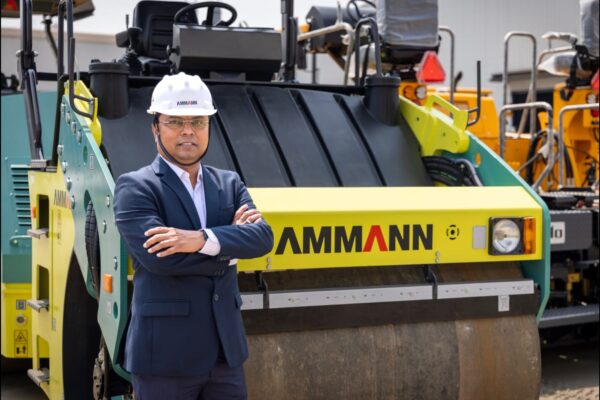

Interview: Puneet Vidyarthi, Head of Brand Marketing, CASE Construction Equipment, APAC & India

How do you envision the role of the CE industry in contributing to the vision of Viksit Bharat 2047?
India’s Viksit Bharat 2047 vision will require large-scale development across roads, railways, logistics corridors, urban infrastructure, mining, and renewable energy. Delivering projects at this scale will depend on greater mechanization, higher productivity, and the adoption of advanced construction technologies. The construction equipment industry therefore has a critical role in enabling faster project execution, improving quality, and supporting efficient resource utilization. According to ICEMA, India remains the world’s third-largest construction equipment market, with industry sales reaching 140,191 units in FY25. We see technology, localization, and productivity as key pillars supporting this transformation. Our BS (CEV) Stage V-compliant portfolio, including the NX Series backhoe loaders, compactors, and crawler excavators, is designed to deliver higher efficiency, lower emissions, and improved productivity. Through intelligent machine systems, telematics, and advanced hydraulics, we help customers improve machine utilization and reduce operating costs. Supported by our Pithampur facility and over 90% local sourcing, we remain committed to delivering solutions that support India’s infrastructure ambitions and contribute to the Viksit Bharat 2047 vision.
What are the key demand drivers shaping growth in the CE sector amid India’s expanding infrastructure pipeline?
Demand for construction equipment in India continues to be driven by sustained investments in infrastructure and connectivity projects. Initiatives such as Bharatmala, PM Gati Shakti, Dedicated Freight Corridors, metro rail expansion, and industrial corridor development are creating long-term opportunities for the sector. In addition, growing investments in urban infrastructure, warehousing, logistics parks, mining, and renewable energy projects are expanding the range of construction equipment applications and accelerating mechanization across project sites. We are seeing increasing demand for versatile, fuel-efficient equipment that can perform across multiple applications. Backhoe loaders remain critical for road construction, urban infrastructure, irrigation, and rural development projects, while compactors and crawler excavators are witnessing higher deployment across highways and large-scale infrastructure developments. Customers are also placing greater emphasis on productivity, uptime, fuel efficiency, and lifecycle value, making technology and service support key differentiators. Another important driver is the growing focus on localized manufacturing and infrastructure development in Tier-II and Tier-III markets. Through our manufacturing operations, dealer network, and connected technologies, CASE is well positioned to support these evolving customer requirements and contribute to India’s long-term infrastructure growth story.
How is your organization enhancing productivity, efficiency, and reliability through advanced machinery and equipment solutions?
Productivity and operational efficiency have become key priorities for construction companies as projects become larger, timelines become tighter, and operating costs continue to rise. Our focus is on developing machines that help customers maximize output while reducing fuel consumption, downtime, and maintenance costs. A key example is our NX Series backhoe loader range, designed specifically for Indian operating conditions. Powered by the optimized FPT F28 engine, these machines combine advanced electronics, intelligent controls, and hydraulic optimization to deliver improved performance across road construction, urban infrastructure, and general construction applications. Compared to the CEV-IV CASE 770EX, the NX Series delivers up to 20% better fuel efficiency and up to 23% higher productivity through technologies such as Dual Power & Torque Curve technology, electro-hydraulic Variable Volume Pump (VVP), improved bucket design, and optimized hydraulic systems. Beyond machine performance, telematics-enabled monitoring, predictive maintenance alerts, and advanced diagnostics help customers reduce unplanned downtime and improve machine reliability. Supported by over 70 dealers and 215+ touchpoints across the country, we are focused on delivering higher uptime, faster service support, and greater operational efficiency as India’s infrastructure development accelerates towards the Viksit Bharat 2047 vision.
In what ways are digital technologies transforming equipment performance, monitoring, and project execution?
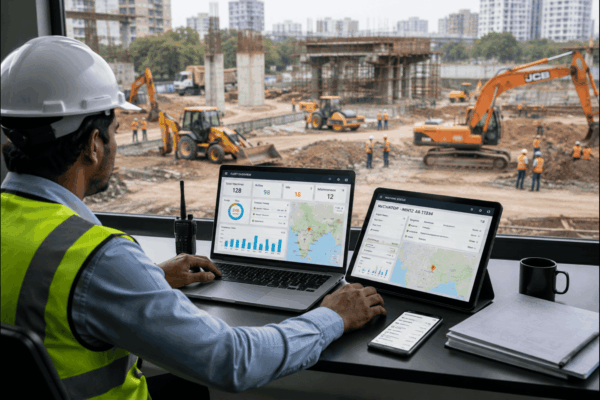
Construction projects today operate under tight timelines, rising fuel costs, and demanding site conditions, making operational efficiency more important than ever. We are leveraging digital technologies to help customers improve machine uptime, optimize fuel consumption, and enhance overall fleet productivity. Our myCASEConstruction Telematics platform provides real-time insights into fuel usage, engine health, machine location, and operating performance. Features such as service alerts, fuel monitoring, geo-tracking, and machine diagnostics help customers plan maintenance proactively, avoid unplanned breakdowns, and improve fleet visibility across project sites. This not only reduces downtime but also supports better resource planning and project execution. Building on this connected ecosystem, our CEV Stage V portfolio, including the 770 NX, 770 NX Magnum, 851 NX, 952 NX, 1107 NX, and CX220C range, is designed to deliver higher efficiency, precision, and reliability across infrastructure applications. Real-time machine monitoring, geo-fencing, and theft tracking further improve fleet utilization and maintenance planning. As India advances towards Viksit Bharat 2047, connected equipment and data-driven operations will play an increasingly important role in delivering infrastructure projects efficiently and sustainably.
How do you assess the impact of government initiatives such as infrastructure push, localization policies, and equipment standardization?
Government initiatives such as Bharatmala, PM Gati Shakti, and the broader focus on infrastructure-led growth have significantly strengthened the construction equipment sector by creating long-term demand visibility and accelerating project execution across roads, highways, industrial corridors, and multimodal transport infrastructure. These programs are improving connectivity, reducing logistics costs, and driving sustained demand for construction equipment across the country. At the same time, localization policies and the emphasis on domestic manufacturing are strengthening India’s construction equipment ecosystem. Localisation remains a key pillar of our strategy. Our Pithampur facility, the second-largest CNH manufacturing plant globally after North America, produces backhoe loaders, excavators, compactors, and skid steer loaders for both domestic and export markets. With over 90% local sourcing, we are improving supply chain resilience, cost efficiency, and product availability while delivering solutions designed for Indian operating conditions. Equipment standardization is also playing an important role in enhancing safety, performance, and environmental compliance across the sector. Together, these initiatives are helping create a stronger and more competitive construction equipment industry, well-positioned to support India’s infrastructure ambitions and the vision of Viksit Bharat 2047.
What are the major challenges faced by the CE industry, and how can they be addressed?
While the construction equipment industry continues to benefit from strong infrastructure investments, challenges remain around project execution, financing, supply chain management, and workforce readiness. Delayed project awards, execution bottlenecks, and cost pressures continue to impact the sector, making operational efficiency and equipment uptime increasingly important for contractors. One of the most significant challenges is the availability of skilled operators and technicians. As equipment becomes more advanced with telematics, intelligent hydraulics, automation, and CEV Stage V technologies, the need for a trained workforce is becoming more critical. We are addressing this through initiatives such as Project Shilpi, Project Hunar, and Project Vijeta, which focus on skill development and operator training. We also leverage customer feedback, telematics insights, Technical Help Desk assessments, and dealer interactions to identify training needs and improve equipment utilization. In parallel, we continue to strengthen our dealer network, supply chain capabilities, and service infrastructure to improve equipment availability, service response, and machine uptime. Addressing these challenges through technology, training, and collaboration will be essential to supporting long-term industry growth and India’s infrastructure ambitions under the Viksit Bharat 2047 vision.
Tags