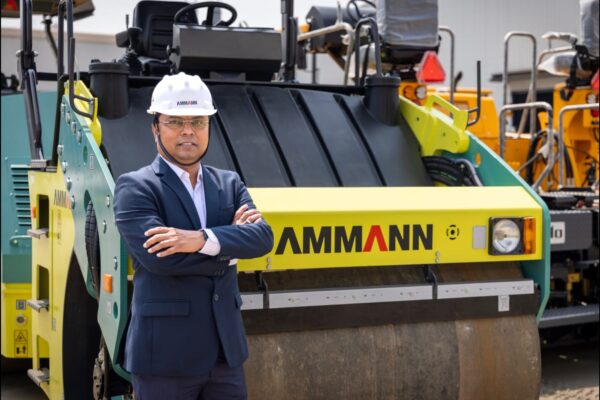
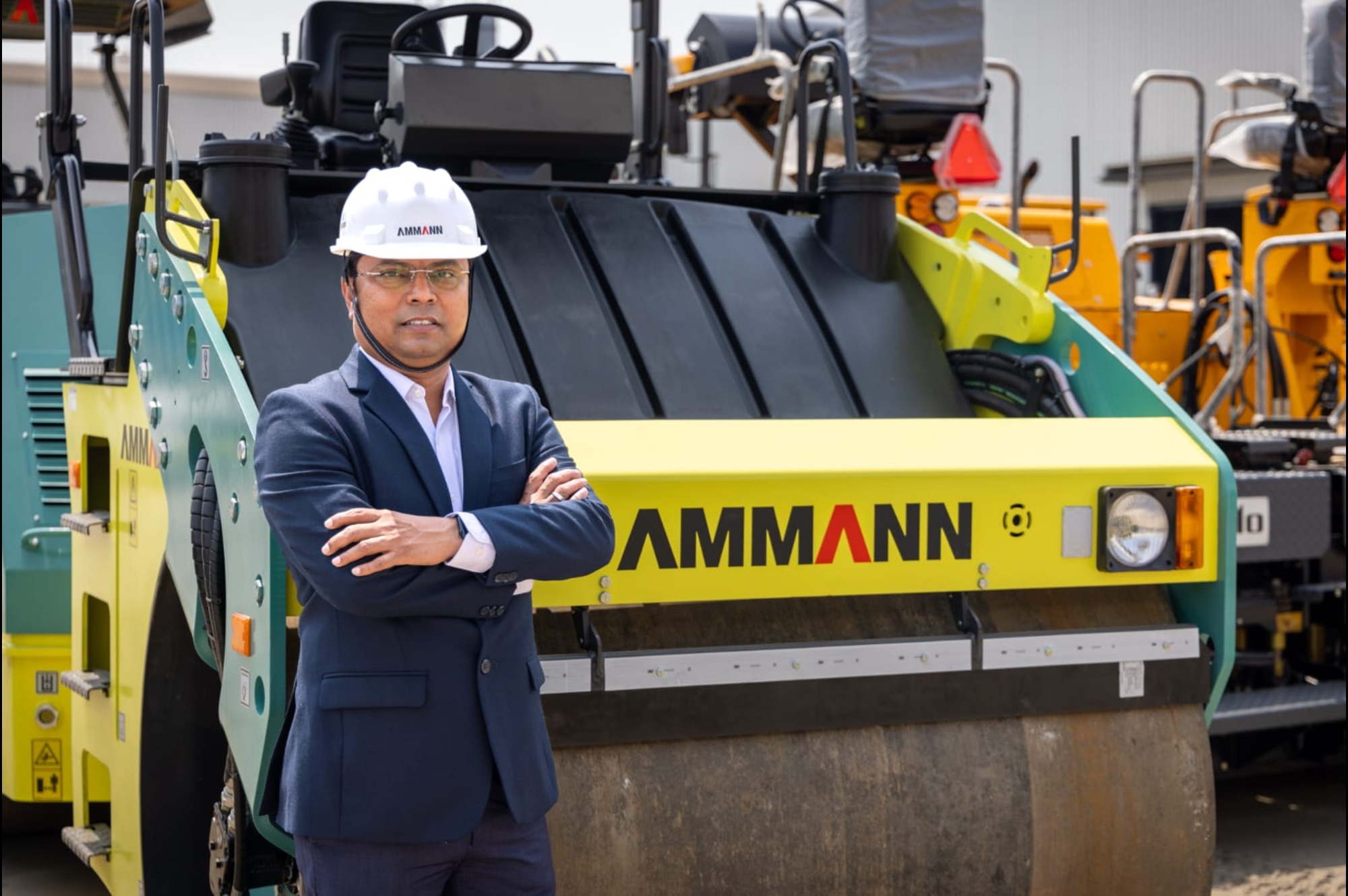
Interview: Dheeraj Panda, Managing Director, Ammann India

How do you envision the role of the CE industry in contributing to the vision of Viksit Bharat 2047?
If you think about what Viksit Bharat 2047 really means in physical terms, it comes down to infrastructure, and that is where our industry becomes indispensable. Roads, railways, ports, cities, industrial corridors: none of it happens without construction equipment on the ground. That is a responsibility we take seriously. But I think our role going forward is broader than just making machines. Sustainability has to be at the centre of how we build, with cleaner technologies, better fuel efficiency, and solutions that do not compromise the environment for future generations. At the same time, as projects get more complex, the bar for innovation and reliability keeps rising. Localisation is another piece of this. A strong domestic manufacturing base is not just good for business; it builds long term industrial resilience for the country. And none of this works without a skilled workforce. Advanced equipment demands trained operators and technicians who can actually unlock its potential on site. Ultimately, our contribution to 2047 is not just equipment; it is helping lay the physical, economic, and human foundation for a developed India.
What are the key demand drivers shaping growth in the CE sector amid India’s expanding infrastructure pipeline?
The scale of what is happening in Indian infrastructure right now is genuinely unprecedented. The single biggest driver is the pace of road and highway development: Greenfield expressways, economic corridors, projects like Delhi Mumbai and Ganga Expressway. The sheer volume of earthmoving, paving, and compaction work demand is enormous. Bharatmala and the National Infrastructure Pipeline have also given the sector something it has historically lacked: long term visibility. When contractors can see a steady pipeline of projects, they invest in better, more advanced equipment. That is exactly what we are seeing. Urbanisation is the other big force. Metro expansion, urban redevelopment, growth in regions like the Mumbai Metropolitan Region: these are not just creating demand, they are shifting the type of equipment needed towards more versatile, mid-sized solutions. And across the board, contractors are asking smarter questions about fuel efficiency, telematics, and total cost of ownership. The demand is not just growing; it is maturing.
How is your organization enhancing productivity, efficiency, and reliability through advanced machinery and equipment solutions?
Our approach is really about the full picture: not just selling a machine but making sure our customers can get the most out of it, day after day, project after project. On the technology side, our A-Cloud IoT platform and as1 Plant Control System give customers real time visibility into machine performance, fuel usage, and plant health. That means fewer surprises, less downtime, and better decision making. The commissioning of new ABG line at our Gujarat manufacturing facility has also been a significant step in bringing us closer to our customers with faster, more responsive support. In terms of equipment, the ABG 5420 Tracked Paver integrates intelligent automation and IoT enabled quality monitoring for superior paving, whilst our ARS Soil Compactors are engineered to achieve high compaction output with fewer passes, which directly improves productivity and cuts rework. Our Elba CC concrete plants deliver consistent, high strength output through advanced spiral mixing, and the modular EcoTec & ValueTec asphalt plants give customers operational flexibility without long installation timelines. Sustainability runs through all of this too, from our RAH 50/60 recycling systems to foam bitumen based warm mix technology. And after sales support, operator training, predictive diagnostics: that is what keeps everything running when it matters most.
In what ways are digital technologies transforming equipment performance, monitoring, and project execution?
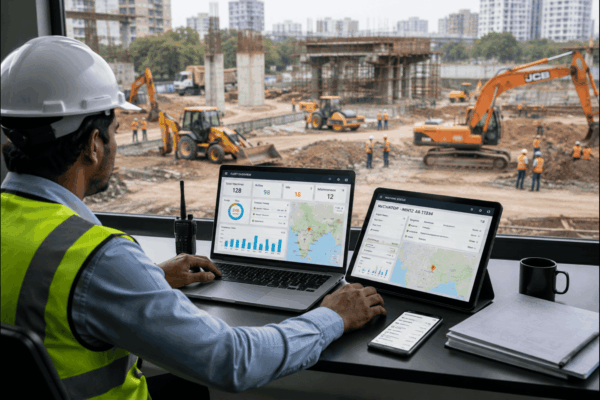
Digitalisation has fundamentally changed what is possible on a construction site. It is no longer just about how powerful a machine is; it is about how connected it is, how much data it generates, and how intelligently that data is used. Our A-Cloud IoT platform with remote diagnostics system lets customers monitor fuel consumption, operating parameters, and equipment health across multiple sites simultaneously. That kind of real time visibility was simply not available a few years ago. Combine that with predictive maintenance using IoT sensors and AI driven analytics, and you can often catch a potential breakdown before it becomes an actual one, which on a large infrastructure project can save enormous time and cost. The as1 Plant Control System brings a similar intelligence to asphalt and concrete production: automated material control, temperature management, quality monitoring, reducing human errors and improving output consistency. On the equipment side, intelligent compaction technologies and machine control systems in solutions like the ABG 5420 give operators real time feedback that directly improves paving accuracy. We are also investing in digital training through the Ammann Academy: simulator based learning that helps operators get up to speed faster and work more safely. Across the board, digitalisation means faster execution, better quality, and more predictable outcomes.
How are sustainability, fuel efficiency, and emission norms influencing equipment design and operations?
This is probably the most significant structural shift in our industry right now, and I would say it is a welcome one. Sustainability is no longer a box you tick for compliance; it is becoming a genuine design philosophy. Take asphalt recycling: our RAH 50/60 system enables the use of high volumes of Reclaimed Asphalt Pavement, reducing dependence on virgin aggregates and bitumen. We are also producing equipment and plants to work with additive materials such as waste plastics, fly ash, steel slag, and recycled rubber. These are not niche applications anymore. On fuel efficiency, Warm Mix Asphalt technology alone significantly lowers production temperatures, cutting fuel consumption during manufacturing. Equipment level features like Intelligent Eco Mode optimise engine output based on actual workload, so you are not burning fuel you do not need. The transition to CEV Stage V emission norms is pushing the whole industry towards advanced aftertreatment systems, cleaner combustion, and lower emission powertrains. And we are already looking ahead: the eARX 26 2 electric roller delivers zero local emissions for urban projects, and our hydrogen capable burner technologies point towards genuinely low carbon plant operations. Digitalisation ties it all together. Real time monitoring of fuel, temperature, and machine performance means you can continuously optimise, reduce waste, and improve efficiency. Sustainability and competitiveness are no longer in tension; they reinforce each other.
What are the major challenges faced by the CE industry (financing, operator skill gaps, maintenance, supply chain), and how can they be addressed?
These are real challenges and I think it is important to be honest about them. The transition to emission compliant, technologically advanced equipment has increased acquisition costs, and for small and mid-sized contractors, that is a genuine barrier. Flexible financing, leasing models, and stronger partnerships with banks and NBFCs are not optional extras; they are necessary infrastructure for this industry to grow inclusively. The skill gap is something I feel strongly about. A sophisticated machine in the hands of an undertrained operator does not deliver its potential, and worse, it creates safety risks. Structured training, simulator-based learning, and industry recognised certification through initiatives like the Ammann Academy are part of the solution. But this needs to be an industry wide commitment, not just individual company initiatives. On maintenance, the old model of fixing things after they break is simply too expensive on today’s projects. Predictive maintenance through platforms like A-Cloud and remote diagnostics is shifting that equation, identifying issues before they become failures. That is a cultural change as much as a technological one. Supply chain volatility is the fourth pressure point, particularly dependence on imported components. The answer is greater localisation, more diversified supplier networks, and continued investment in domestic manufacturing. It takes time, but it is the only sustainable path.
How do you assess the impact of government initiatives such as infrastructure push, localization policies, and equipment standardization?
The impact has been transformative, and I think that word is used too loosely sometimes, but here it genuinely applies. Bharatmala, PM Gati Shakti, Sagarmala, Smart Cities: these programmes have created a sustained demand pipeline that the industry can actually plan around. That changes everything from investment decisions to capacity planning. Make in India has had a real and positive effect on domestic manufacturing. At our Gujarat facility, we have achieved over 95% localisation, working with more than 600 Indian vendor and supplier partners. That is not just good for us; it is building capability across the broader ecosystem. The CEV Stage V transition is another significant development. Aligning with global emission standards opens up highly regulated international markets such as Europe and Australia and raises the overall quality bar domestically. When standards go up, innovation follows. Government support for skill development and financing access is also helping create a more complete ecosystem. The direction of policy is right, and the industry’s job is to execute well against that backdrop.
What emerging opportunities do you foresee in segments such as roads, railways, mining, urban infrastructure, and renewable energy projects?
Across every segment, the growth story is compelling. Roads and highways will continue to drive core demand: high capacity asphalt plants, advanced paving, compaction, but increasingly with a sustainability lens. Higher RAP usage, warm mix technology, alternative materials. That is where the industry is heading. Railways and metro infrastructure represent a fast-growing opportunity. Multi city metro expansion, dedicated freight corridors, railway modernisation: these need advanced concrete equipment, material handling solutions, and precision construction capabilities at scale. Mining and material processing will see strong demand as aggregate requirements grow alongside infrastructure activity. That means crushing, screening, and high-performance compaction solutions, with a growing push towards energy efficiency and digital monitoring. Urban infrastructure, especially in Tier 2 and Tier 3 cities, is an area I am personally excited about. Smart city projects and stricter urban environmental regulations are creating real demand for compact, fuel efficient, low emission equipment, including electric machinery. And then there is renewable energy. India’s clean energy ambitions and the National Hydrogen Mission are driving genuine innovation: hydrogen capable burners, electric equipment, energy efficient plant operations. These are not distant possibilities; they are active areas of development for us right now.
How is your organization strengthening its presence in global markets and contributing to India’s positioning as a manufacturing hub?
Our vision is straightforward: Make in India for the World. India is not just our largest domestic market; it is our global manufacturing platform. Today, Ammann India equipment is exported to more than 100 countries across Africa, the Middle East, Southeast Asia, and Latin America. Exports contribute close to 23% of our overall revenue, and despite a moderate domestic market in FY25, our export business still grew by approximately 10%. That tells you something about the global competitiveness of what we are building here. The foundation of that competitiveness is localisation. Over 95% localisation at our 37-acre Gujarat facility, backed by 600 plus Indian vendors, has strengthened supply chain resilience and reduced import dependence. For 2025, our production roadmap includes nearly 1,200 machines and 200 plants; that is the scale we are working at. What makes our India made equipment attractive globally is the combination: manufacturing cost efficiency, engineering expertise drawn from Germany, Switzerland, and the Czech Republic, and advanced technology like the A-Cloud IoT platform and as1 control system built into the machines. The CEV Stage V alignment matters here too; it opens doors to markets with stringent standards. And through the Ammann Academy, we are investing in the human capability that underpins all of this. India is genuinely becoming one of the world’s most competitive construction equipment manufacturing hubs, and we intend to be at the front of that.
Tags