
India’s Next Oil & Gas Bet: Can Exploration Finally Deliver?

With ₹84,084 crore committed to a new national offshore exploration programme, 80,234 sq km opened under OALP Round XI and India’s first deepwater appraisal well in the Mahanadi Basin now underway, the country’s oil and gas sector is moving into a more aggressive exploration phase. The opportunity is significant—but for industry, the bigger question is whether this new policy push can translate into commercially viable discoveries, faster monetisation and a stronger domestic oilfield-services ecosystem. EPC World explores
India’s oil and gas sector is entering a new phase at a time when the country’s energy demand continues to expand and the government is simultaneously pursuing greater energy security, wider domestic resource exploration and a more investment-friendly upstream environment. Recent developments point to a clear acceleration. In July 2026, drilling began on the first appraisal well in the Mahanadi Offshore Basin as part of a four-well deepwater appraisal programme. Days later, the Union Cabinet approved Samudra Manthan, the National Offshore Exploration Scheme, with an outlay of ₹84,084 crore through FY2030-31. Earlier this year, OALP Round XI put more than 80,234 sq km across 21 blocks and 11 sedimentary basins on offer. These developments together indicate that India’s upstream agenda is moving from policy intent towards large-scale execution.
The timing is important. India remains structurally dependent on imported crude oil and natural gas, even as overall energy consumption rises with economic growth, industrialisation, urbanisation, mobility and infrastructure development. At the same time, renewables, electric mobility, biofuels and other low-carbon energy sources are expanding rapidly. Oil and gas therefore face a changing energy landscape in which their continued relevance will increasingly depend on supply security, cost competitiveness and their ability to meet sectors where alternative fuels cannot yet fully substitute hydrocarbons.
For the oil and gas industry, this changes the nature of the opportunity. The next growth cycle will not be defined simply by adding refining capacity or expanding fuel retail networks. Increasingly, the focus is moving upstream—towards discovering domestic resources, developing frontier basins, improving recovery from existing fields and creating the infrastructure and technology required to bring new resources into production.
A ₹84,084-Crore Offshore Push
The most significant development is the government’s approval of Samudra Manthan. With an allocation of ₹84,084 crore through FY2030-31, the programme represents one of the most ambitious public interventions in India’s offshore exploration sector. Its scope covers seismic data acquisition, processing and interpretation, accelerated deepwater and ultra-deepwater exploration, scientific drilling in frontier basins, common offshore production and evacuation infrastructure, and the development of an integrated Oil & Gas Manufacturing and Services Zone.
The programme is expected to support reserve accretion of more than 600 million metric tonnes of oil equivalent. The significance of this target extends well beyond the upstream operators that will undertake exploration. A large-scale offshore programme requires drilling contractors, seismic companies, engineering and construction firms, subsea technology providers, equipment manufacturers, offshore fabrication companies, logistics providers, digital technology companies and specialist service providers.
This makes the programme particularly relevant for India’s wider B2B ecosystem. If the exploration programme achieves scale, it could stimulate an entire chain of industrial activity around offshore oil and gas. The government’s emphasis on manufacturing and services also creates an opportunity for Indian companies to build capabilities that can eventually serve both domestic and international offshore markets.
The Exploration Map is Getting Bigger
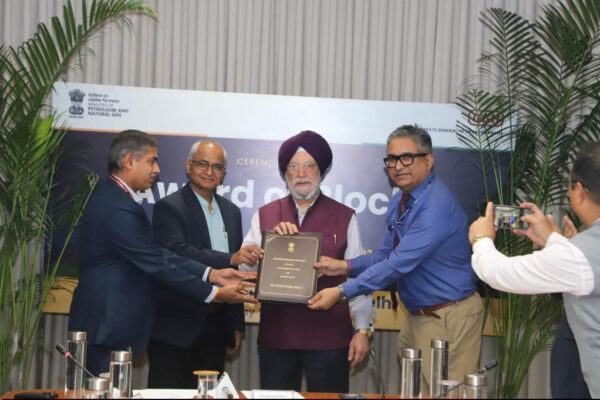
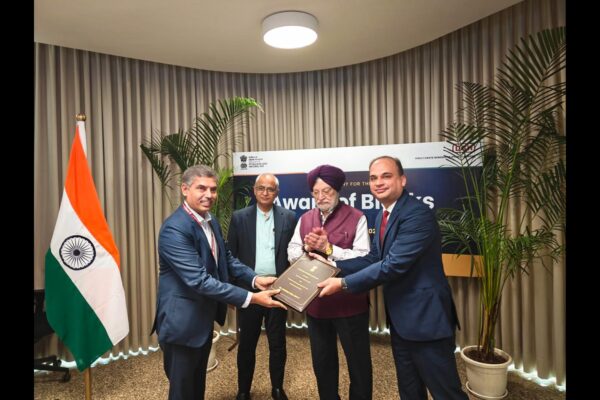
The second major development is the expansion of exploration acreage. OALP Round XI offers 21 blocks covering 80,234.49 sq km across 11 sedimentary basins. Of these, nine are offshore blocks covering 45,295.53 sq km, including deepwater and ultra-deepwater areas. The latest round demonstrates the government’s continued emphasis on bringing frontier and offshore areas into the exploration pipeline.
The composition of the acreage is particularly significant. Deepwater and ultra-deepwater exploration is technically demanding and requires sophisticated drilling systems, advanced seismic interpretation, subsea production technologies, specialised vessels and high levels of engineering expertise. These projects also involve greater capital intensity and longer development cycles than many conventional onshore projects.
The policy framework is therefore critical to investment decisions. The latest licensing framework incorporates measures such as reduced royalty rates, no oil cess, a single licence covering conventional and unconventional hydrocarbons, marketing and pricing freedom, early monetisation incentives and provisions intended to strengthen contractual stability. For investors and operators, such measures can materially influence the risk-return equation of exploration projects, particularly when the geological risk is already high.
From Acreage to Actual Wells
The expansion of acreage is important, but the more meaningful indicator of India’s upstream momentum is the amount of activity taking place on the ground. Government data shows that 172 exploration blocks covering nearly 3.8 lakh sq km have been awarded under OALP, with committed investment exceeding US$4.3 billion. During FY2025-26, approximately 674 wells were drilled, while five new discoveries were made and seven discoveries were monetised.
These figures suggest that the upstream sector has moved beyond the initial phase of policy reform. The focus is now shifting towards execution and commercialisation. The central question is no longer simply how much acreage India can make available to explorers. It is how quickly exploration activity can generate discoveries, how efficiently those discoveries can be appraised and how rapidly commercially viable resources can be brought into production.
This transition will be critical for the next phase of investment. Exploration expenditure creates an initial market for seismic, drilling and geological services. A successful discovery creates a much larger opportunity across appraisal, engineering, infrastructure and production. The economic multiplier therefore increases substantially when a discovery moves through the complete exploration-to-production cycle.
Mahanadi Could Offer an Early Test
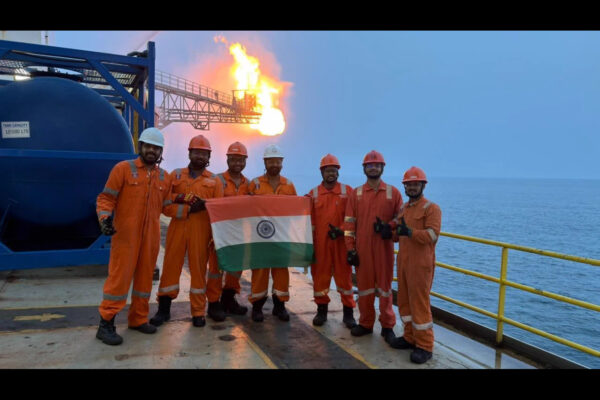
The Mahanadi Offshore Basin is an important example of this transition. In July 2026, drilling began on the first of four planned deepwater appraisal wells. The programme is designed to systematically evaluate the offshore discovery using advanced deepwater drilling technology.
Appraisal is an important stage in determining whether an exploration success can become a commercial development. A discovery needs to be assessed in terms of its size, quality, reservoir characteristics, recoverable resources and development economics. Only after sufficient appraisal can an operator make informed decisions about the scale and configuration of a potential development.
For the wider B2B industry, this stage is significant because the commercialisation of offshore discoveries creates demand across multiple categories. Offshore platforms, subsea systems, pipelines, processing facilities, drilling services, engineering and project management, inspection, maintenance and logistics all become part of the development cycle.
If India can accelerate the movement from discovery to development, the impact on the domestic oilfield-services ecosystem could be substantial.
Opening Up India’s Offshore Potential
The expansion of exploration acreage is also being supported by the opening of previously restricted offshore areas. More than 99% of the earlier offshore “No-Go” areas have been removed, making more than one million sq km of India’s Exclusive Economic Zone available for exploration.
This substantially expands the potential exploration universe. However, acreage alone does not create commercial value. The industry also needs high-quality geological information to identify promising prospects before committing large amounts of capital to drilling.
India has therefore been building its exploration data infrastructure through initiatives such as the National Seismic Programme, Mission Anveshan, the National Data Repository and hydrocarbon resource assessment programmes. The combination of expanded acreage and improved geological data can potentially reduce exploration uncertainty and help operators make more informed investment decisions.
For technology companies, this is creating a growing market at the intersection of energy and advanced analytics. Seismic interpretation, artificial intelligence, machine learning, reservoir modelling and high-performance computing are becoming increasingly relevant to exploration decision-making.
The Data-to-Drilling Opportunity
The next generation of oil and gas exploration is likely to be substantially more technology-driven than previous cycles. The challenge is no longer simply collecting geological information. It is processing large volumes of data quickly enough to identify prospects, assess geological risk and improve drilling decisions.
Artificial intelligence and advanced analytics can potentially improve seismic interpretation and identify patterns that may be difficult to detect through conventional analysis. Digital twins can help operators model asset behaviour, while predictive maintenance can improve equipment reliability and reduce unplanned downtime. Automated drilling and remote monitoring can also become increasingly valuable in technically complex offshore environments.
For Indian technology companies, this represents an opportunity to develop specialised energy solutions rather than simply provide generic IT services. As exploration moves into deeper and more complex areas, technology that can reduce uncertainty, improve productivity or lower operating costs will become increasingly valuable.
Gas Adds Another Layer to the Opportunity
The investment story is not limited to crude oil. Natural gas is becoming an increasingly important component of India’s energy strategy, with the country continuing to expand its pipeline, city gas distribution and downstream gas infrastructure.
As of July 31, 2026, India had 9,096 CNG stations and more than 1.75 crore domestic PNG connections. The scale of this network highlights the expanding role of gas in transportation, households and industry.
The growth of the gas ecosystem creates opportunities on both the supply and infrastructure sides. Additional domestic production can improve availability, while pipeline expansion, gas processing, LNG infrastructure, compression systems and city gas networks can support wider consumption.
The commercial challenge will be ensuring that the economics work across the value chain. Producers need sufficient returns to justify exploration and development, infrastructure companies require viable utilisation levels, and industrial and other consumers need competitive gas prices.
The Real Challenge: Turning Discoveries into Production
For all the momentum around exploration, India’s fundamental challenge remains unchanged: domestic production needs to increase materially if the country is to reduce its dependence on imported hydrocarbons.
This makes monetisation perhaps the most important metric for the next phase of the sector. The number of blocks awarded, wells drilled or seismic surveys completed will provide useful indicators of activity, but they will not by themselves transform India’s energy balance.
The critical link is the conversion of exploration success into producing assets.
A commercially viable discovery needs to move through appraisal, development planning, financing, infrastructure creation and production. Delays at any stage can significantly affect project economics. This is particularly relevant offshore, where infrastructure requirements and development costs can be substantial.
India’s ability to shorten this cycle could become a major determinant of the success of its current exploration push.
Existing Fields Present Another Opportunity
The next production opportunity may also come from India’s existing assets. Mature fields can contain significant remaining resources, but extracting those resources often requires more sophisticated reservoir management and recovery technologies.
Enhanced oil recovery, artificial lift optimisation, well intervention, reservoir modelling, digital monitoring and asset-life extension can help operators improve recovery from mature fields. The government’s emphasis on maximising recovery from existing assets therefore creates another market for technology and specialist services.
This gives service providers two distinct opportunities: supporting frontier exploration and deepwater development while simultaneously helping operators improve productivity from mature producing assets.
Building a Domestic Offshore Ecosystem
One of the most important long-term outcomes of India’s offshore push could be the development of a stronger domestic supply chain.
The scale of Samudra Manthan creates potential demand for offshore fabrication, specialised equipment, subsea systems, drilling services, seismic technologies, inspection systems, safety equipment, logistics and digital solutions. The development of an Indian manufacturing and services base could allow more of the value generated by exploration expenditure to remain within the domestic economy.
However, localisation cannot be limited to assembling equipment domestically. Indian companies will need to develop capabilities that meet international standards of reliability, safety, certification and performance. Offshore oil and gas projects operate in high-risk environments, and equipment failures can have significant operational and financial consequences.
The opportunity is therefore not simply to replace imports. It is to build globally competitive Indian companies capable of serving India’s growing offshore market and eventually competing internationally.
What Industry will Watch Next
The next 12–24 months will be important in determining whether India’s current exploration momentum develops into a sustained investment cycle. Industry will be watching the response to OALP Round XI, particularly participation in the deepwater and ultra-deepwater blocks. The pace of appraisal activity in basins such as Mahanadi will also provide an indication of how quickly existing discoveries can move towards commercial assessment.
The progress of Samudra Manthan will be equally important. The effectiveness of seismic acquisition, data processing, drilling and infrastructure development will determine whether the programme delivers the expected increase in exploration activity and reserve accretion.
Technology adoption will be another important variable. As offshore projects become more technically complex, operators will need solutions that can improve exploration success, reduce drilling risk and optimise production.
Finally, investors will be looking beyond individual exploration projects towards companies that are positioned to benefit from the broader ecosystem. The most attractive opportunities could emerge across drilling, engineering, offshore infrastructure, equipment manufacturing, digital technologies and specialised services.
The Next Oil & Gas Cycle Could be Much Bigger
India’s oil and gas sector is moving into an important new investment phase. The policy environment is becoming more supportive, the exploration map is expanding, offshore acreage is opening up and significant public capital is being committed to accelerating exploration.
The ₹84,084-crore Samudra Manthan programme, the 80,234 sq km offered under OALP Round XI, the 674 wells drilled during FY2025-26 and the more than 3.8 lakh sq km of exploration acreage awarded under OALP together demonstrate the scale of the current push.
But the industry’s ultimate measure of success will not be the scale of the programme itself. It will be whether India can convert this exploration momentum into commercially viable domestic production.
That means faster appraisal, stronger infrastructure, better technology, competitive project economics and a supply chain capable of supporting increasingly complex offshore operations.
For the B2B ecosystem, this creates a much broader opportunity than conventional exploration alone. The next wave of investment could run from seismic and drilling to subsea engineering, manufacturing, digital technologies, offshore infrastructure and field services.
India’s next oil and gas opportunity, therefore, is not simply about finding more hydrocarbons. It is about building the capabilities required to find them, develop them, produce them and monetise them at scale.