Beyond Offices: The Next Growth Wave

India’s commercial real estate sector is evolving beyond traditional office spaces, driven by infrastructure expansion, digital transformation, sustainability and changing occupier needs. From logistics parks to data centres, new asset classes are shaping the next phase of industry growth. This article explores the structural shifts, emerging asset classes and future growth drivers that are redefining commercial real estate in India
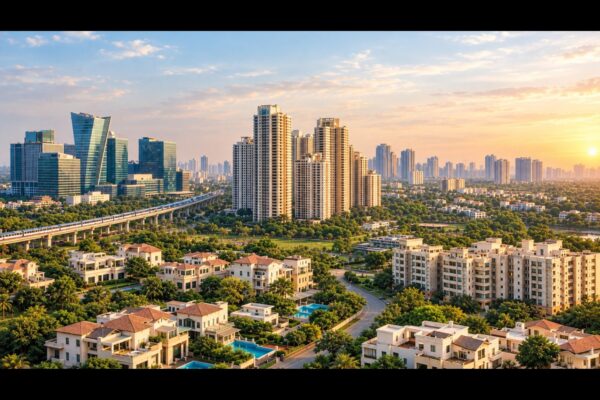
India’s commercial real estate sector is entering a new phase of expansion, driven by robust occupier demand, rapid urbanisation, infrastructure-led development and rising institutional investments. While Grade A office spaces continue to dominate the market, asset classes such as organised retail, industrial and logistics parks, data centres, hospitality and mixed-use developments are witnessing strong momentum, reflecting the evolving requirements of businesses and investors. According to Cushman & Wakefield, India’s office market remained resilient during the first quarter of 2026, recording steady annual growth in gross leasing despite seasonal moderation and global economic uncertainties. The report attributes this performance to sustained demand from multinational corporations, the continued expansion of Global Capability Centres (GCCs) and healthy leasing activity by flexible workspace operators, while moderated supply helped tighten vacancies and support rental growth across key markets.
The positive momentum is further reinforced by Knight Frank, which reported that India’s office market achieved a record gross leasing volume of 21.5 million sq ft in Q1 2026—the highest ever for a first-quarter period. GCCs emerged as the largest occupiers, accounting for 45.5 percent of total leasing activity, followed by flexible workspace operators at 25.9 percent, highlighting the structural shift in occupier demand and the growing preference for high-quality, technology-enabled office environments.
However, the commercial real estate story today extends well beyond office leasing. India’s manufacturing push under the Production Linked Incentive (PLI) scheme, the rollout of multimodal infrastructure under PM Gati Shakti, the rapid growth of e-commerce and organised retail, and the accelerating adoption of cloud computing and artificial intelligence are creating demand for a diverse range of commercial assets. From Grade A office campuses and integrated townships to logistics parks, hyperscale data centres and experience-driven retail destinations, commercial real estate is evolving into a multifaceted ecosystem where infrastructure, sustainability, technology and institutional capital are collectively redefining the future of the built environment.
This transformation is being driven by a combination of structural economic shifts and evolving occupier priorities. Businesses are increasingly seeking future-ready commercial assets that offer flexibility, sustainability, digital infrastructure and operational efficiency, while investors are focusing on high-quality, income-generating assets backed by long-term demand. Simultaneously, government initiatives such as PM Gati Shakti, the National Infrastructure Pipeline (NIP), industrial corridors, metro rail expansion and airport modernisation are enhancing connectivity and unlocking new commercial development opportunities across both established metropolitan markets and emerging cities. Consequently, developers are moving beyond standalone projects to create integrated business ecosystems that seamlessly combine office spaces, retail, hospitality, logistics and digital infrastructure.
Highlighting this shift, Vimal Nadar, National Director & Head, Research, Colliers India, says, “Commercial real estate is entering a new era where the integration of design, sustainability, technology, flexibility and occupier experience will increasingly shape the next wave of developments. In recent years, occupiers and investors have increasingly sought assets that not only deliver financial returns but also support ESG commitments, employee wellbeing and long-term climate resilience. As a result, green-certified and net-zero buildings are rapidly becoming the preferred choice across asset classes, particularly office. At present, nearly two-thirds of the Grade A office stock across India’s top seven cities is green certified. These certifications are increasingly influencing leasing decisions, enabling developers to command rental premiums of 15–20 percent and achieve higher occupancy levels than comparable non-certified buildings.”
The office segment continues to be the backbone of India’s commercial real estate market, with demand driven by Global Capability Centres (GCCs), multinational corporations and flexible workspace operators. According to Knight Frank, Bengaluru retained its leadership position during the first quarter of 2026, accounting for nearly a quarter of the country’s total office leasing activity, followed by Mumbai and Hyderabad. GCCs emerged as the dominant occupier segment across Bengaluru, Chennai, Hyderabad and Mumbai, reaffirming India’s position as a preferred destination for global capability centres. Flexible workspace operators also maintained strong leasing momentum, particularly in Pune and Delhi-NCR, reflecting the growing preference for agile workplace strategies among occupiers. Healthy net absorption, rising rentals across all major office markets and tightening vacancies further underscore the resilience of India’s office sector despite global economic uncertainties.
Echoing this shift, Shrinivas Rao, FRICS, CEO, Vestian, says, “The definition of a successful Grade A office development has evolved significantly in recent years. Occupiers are no longer making decisions solely based on location and rentals; instead, they are prioritising workplace environments that enhance employee experience, support business growth and strengthen organisational culture. Companies are increasingly prioritising sustainable assets, including green building certifications, energy-efficient operations and climate-resilient infrastructure. Employee-centric features such as wellness amenities, superior indoor air quality, spacious common areas and seamless digital connectivity have also become key decision-making factors.” This shift in occupier expectations is encouraging developers to rethink conventional office projects. Increasingly, new commercial developments are incorporating smart building technologies, flexible floor plates, wellness-focused amenities and integrated mixed-use components to create workplaces that enhance productivity while meeting evolving sustainability and ESG requirements.
Beyond Offices: Commercial Real Estate Broadens its Growth Story
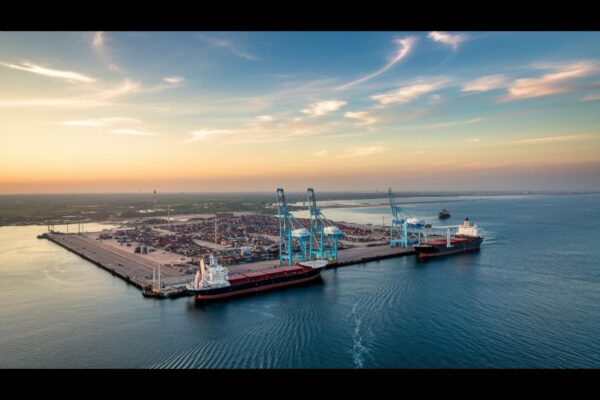
While office assets continue to dominate India’s commercial real estate landscape, other asset classes are also emerging as key growth drivers. The rapid expansion of organised retail, industrial and logistics parks, data centres, hospitality and mixed-use developments is reshaping the sector, supported by changing consumer behaviour, manufacturing expansion, digital transformation and sustained infrastructure investments. As businesses diversify their operations and supply chains become increasingly sophisticated, developers are responding with specialised commercial assets designed to meet evolving operational requirements.
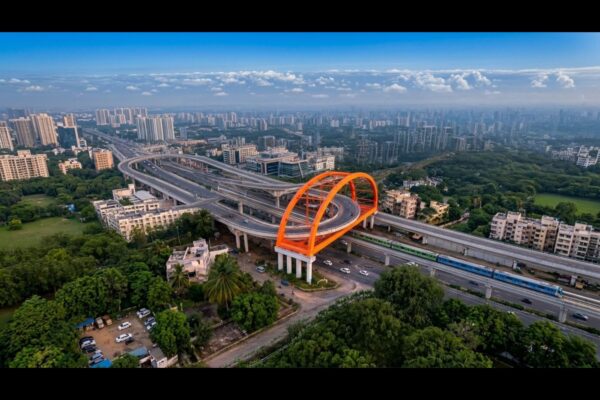
Government initiatives such as the Production Linked Incentive (PLI) scheme, PM Gati Shakti, Dedicated Freight Corridors, industrial corridors, metro rail expansion and airport modernisation are accelerating this transformation by improving connectivity and unlocking new investment destinations. Consequently, commercial real estate growth is no longer confined to established metropolitan centres. Emerging cities with improving infrastructure, competitive operating costs and expanding talent pools are attracting investments across offices, logistics, retail and digital infrastructure, creating new commercial ecosystems that support regional economic development.
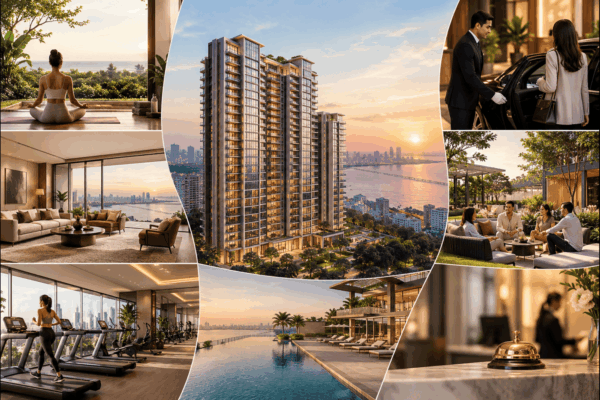
At the same time, commercial developments are becoming increasingly integrated in nature. Rather than creating standalone office buildings or retail centres, developers are focusing on mixed-use projects that combine workplaces, retail, hospitality and lifestyle amenities within a single destination. This integrated approach not only enhances the user experience but also improves asset utilisation, creates diversified revenue streams and supports the development of vibrant urban business districts.
Data Centres: Powering India’s Digital Economy
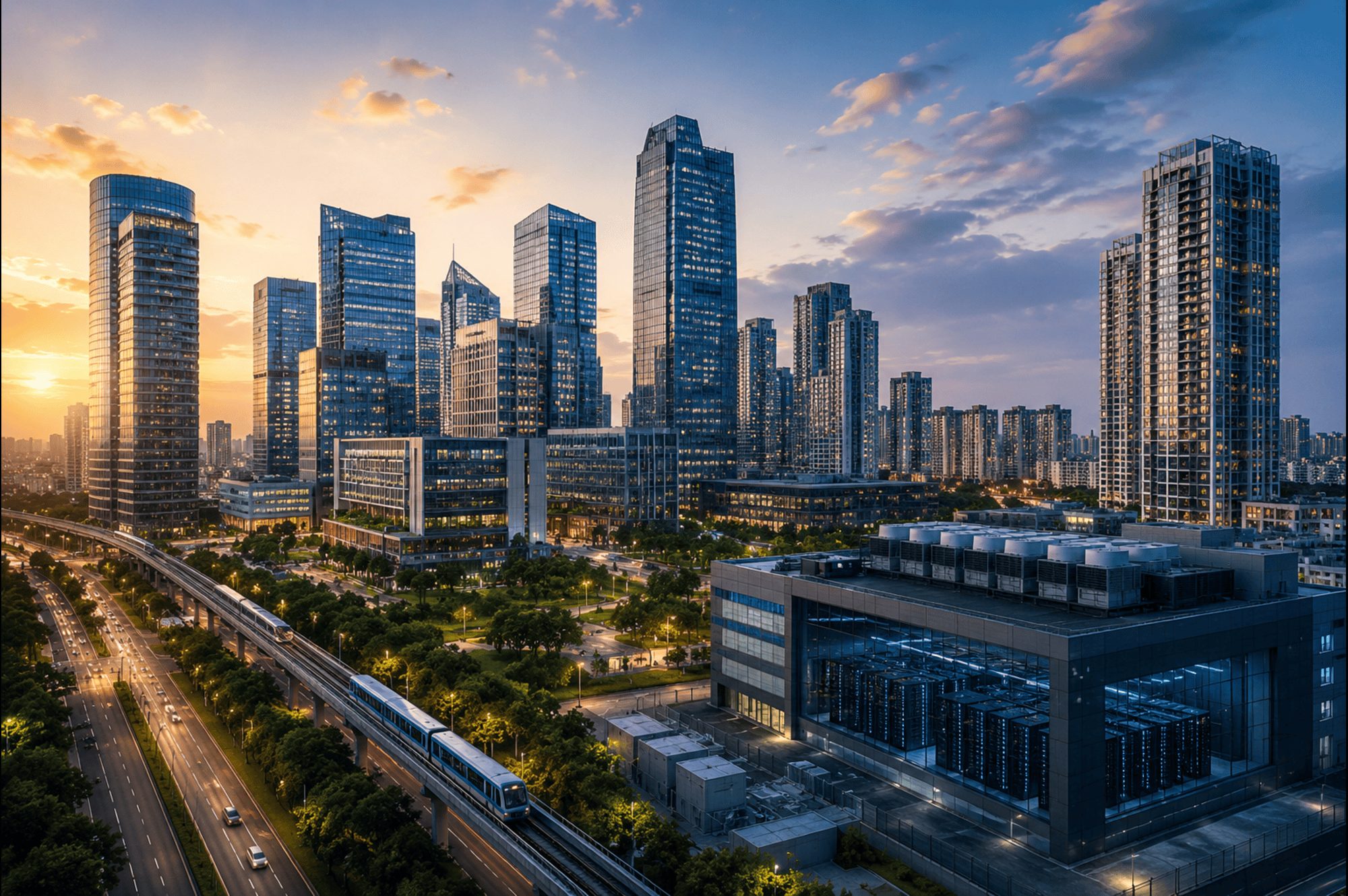
Among the emerging asset classes, data centres have become one of the fastest-growing segments within India’s commercial real estate landscape. The rapid adoption of artificial intelligence (AI), cloud computing, digital payments, e-commerce, 5G networks and enterprise digital transformation is fuelling unprecedented demand for secure, scalable and energy-efficient digital infrastructure. Unlike conventional commercial assets, data centres require specialised engineering, uninterrupted power supply, high-speed connectivity and advanced cooling systems, making them one of the most complex infrastructure developments in the real estate sector. As India strengthens its position as a global digital economy, data centres are increasingly being viewed as critical infrastructure supporting business continuity, innovation and long-term economic growth.
“The role of data centres has fundamentally evolved. The convergence of data centres, cloud platforms, high-speed networks and managed services is reshaping infrastructure planning from a capacity-driven exercise to a business agility imperative. Organisations are no longer asking where to host applications, they are asking how to build resilient, scalable and intelligent digital platforms that can support AI, real-time analytics, edge computing and mission-critical workloads while maintaining governance and compliance,” says Anil Nama, CIO, CtrlS Datacenters.
The increasing deployment of AI workloads, hyperscale cloud infrastructure and mission-critical applications is also compelling developers to rethink how data centres are planned and operated. Greater emphasis is now being placed on resilience, redundancy, energy efficiency and future scalability to meet the evolving requirements of enterprise customers. “Data centres are becoming modular and scalable, with AI-powered monitoring for early detection of problems. Advanced cooling methods like liquid cooling support high-density AI workloads. In daily operations, continuous monitoring, automated responses, and regular testing of recovery plans have become standard. Cybersecurity measures, including threat detection, encryption, and rapid incident response are now integrated into both design and operations to prevent and recover from cyber attacks,” says Sekar Vembu, Founder & CEO, Vembu Technologies.
Data Centres: Powering India’s Digital Economy
Among the emerging asset classes, data centres have become one of the fastest-growing segments within India’s commercial real estate landscape. The rapid adoption of artificial intelligence (AI), cloud computing, digital payments, e-commerce, 5G networks and enterprise digital transformation is fuelling unprecedented demand for secure, scalable and energy-efficient digital infrastructure. Unlike conventional commercial assets, data centres require specialised engineering, uninterrupted power supply, high-speed connectivity and advanced cooling systems, making them one of the most complex infrastructure developments in the real estate sector. As India strengthens its position as a global digital economy, data centres are increasingly being viewed as critical infrastructure supporting business continuity, innovation and long-term economic growth. Echoing this transformation, Anil Nama, CIO, CtrlS Datacenters, says, “The role of data centres has fundamentally evolved. The convergence of data centres, cloud platforms, high-speed networks and managed services is reshaping infrastructure planning from a capacity-driven exercise to a business agility imperative. Organisations are no longer asking where to host applications; they are asking how to build resilient, scalable and intelligent digital platforms that can support AI, real-time analytics, edge computing and mission-critical workloads while maintaining governance and compliance.”
The growing adoption of AI workloads, hyperscale cloud infrastructure and data-intensive applications is compelling developers to rethink every aspect of data centre planning and operations. From modular construction and high-density computing environments to advanced cooling technologies and intelligent power management systems, operators are investing in infrastructure capable of supporting the next generation of digital services. Sustainability is also emerging as a critical priority, with increasing emphasis on improving energy efficiency, reducing carbon emissions and ensuring long-term operational resilience without compromising performance.
Sharing his perspective, Sekar Vembu, says, “Data centres are becoming modular and scalable, with AI-powered monitoring for early detection of problems. Advanced cooling methods like liquid cooling support high-density AI workloads. In daily operations, continuous monitoring, automated responses and regular testing of recovery plans have become standard. Cybersecurity measures, including threat detection, encryption and rapid incident response, are now integrated into both design and operations to prevent and recover from cyber attacks.”
As enterprises continue to accelerate their digital transformation journeys, data centres are evolving beyond conventional IT infrastructure to become strategic commercial real estate assets. Their ability to integrate advanced engineering, resilient design, sustainability and intelligent technologies will play a pivotal role in supporting India’s expanding digital economy. With growing investments from hyperscalers, cloud service providers and enterprise customers, the data centre segment is expected to remain one of the strongest growth engines within the country’s commercial real estate market in the years ahead.
The Road Ahead
India’s commercial real estate sector is poised for sustained growth, supported by infrastructure expansion, digital transformation, manufacturing-led investments and evolving occupier expectations. As businesses continue to prioritise sustainability, flexibility and operational efficiency, developers will increasingly focus on creating integrated commercial ecosystems rather than standalone assets. “The next generation of CRE will be made up of ESG-compliant, green-certified buildings, which now account for 80% of new leasing. Smart infrastructure, integrated PropTech, flexible work layouts and better user experience – with high-quality common spaces, wellness facilities and seamless digital services – will be the key to success,” says Dr. Prashant Thakur, Executive Director & Head – Research & Advisory, ANAROCK Group.
The future of India’s commercial real estate sector will be shaped by far more than rising leasing volumes. The convergence of infrastructure development, digital technologies, sustainability and institutional investment is transforming commercial assets into integrated business ecosystems that support productivity, innovation and long-term value creation. As new growth corridors emerge and occupier expectations continue to evolve, commercial real estate will remain a critical enabler of India’s economic and industrial ambitions.
Tags