The Hidden Cost of Equipment Downtime: Why Small Components Matter on Large Construction Projects

by Mukesh Jain, Director, Bearing Traders (India)
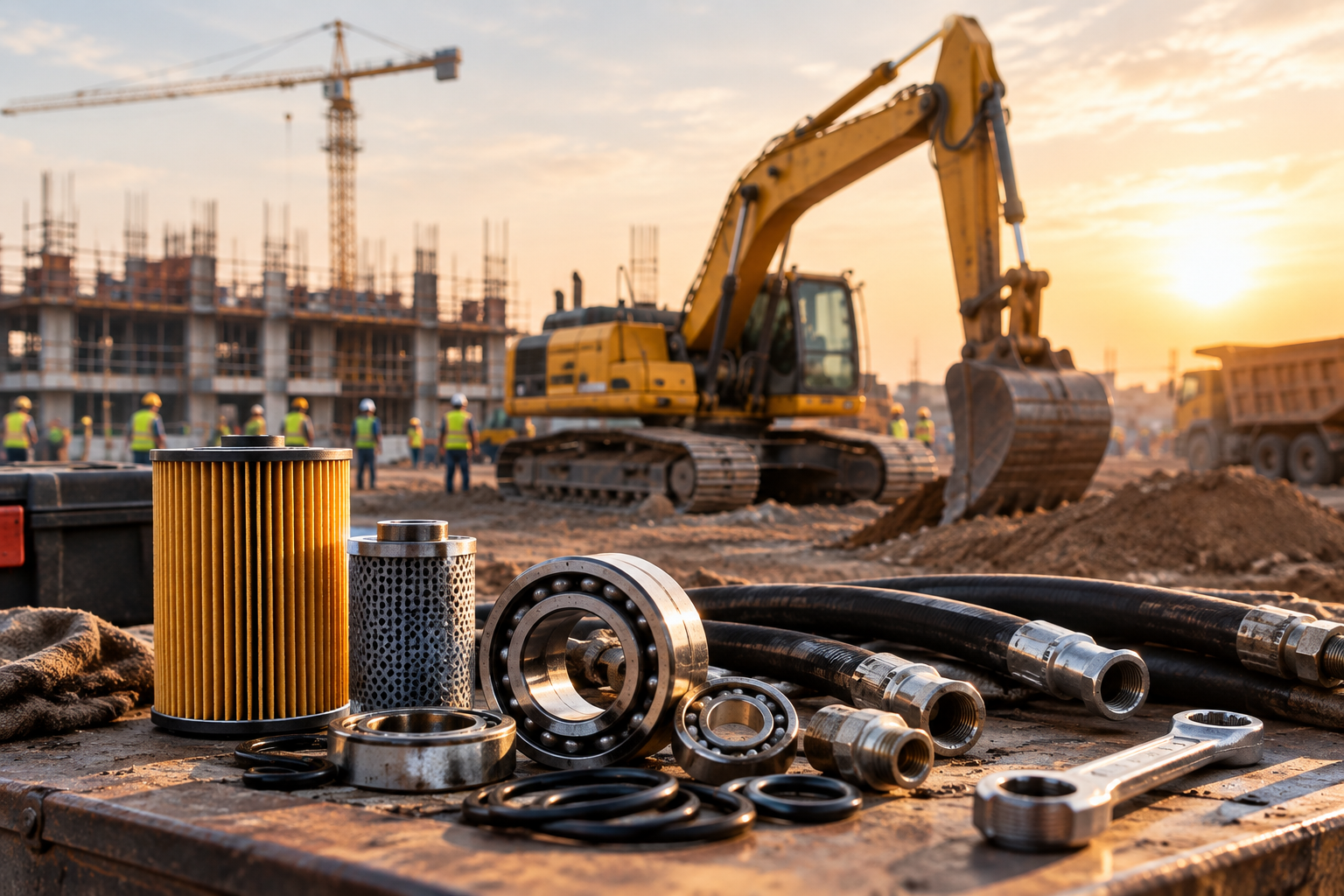
On a large construction site, attention goes to the big machines: the tower crane, the excavator fleet, the concrete batching plant. They are expensive, visible, and closely tracked. Yet a surprising share of project delays begins somewhere far less conspicuous, in a failed hydraulic seal, a worn bearing, a cracked hose, a clogged filter, or a faulty sensor. A component that costs a few hundred rupees can stop a machine worth crores, and the consequences can extend across the entire project.
Downtime Costs More Than the Repair
When a machine stops unexpectedly, the immediate concern is getting it running again. However, the repair bill is often only a small part of the total cost.
Consider an excavator that breaks down while clearing a site. Its operator and supporting crew may have little productive work to do until the machine is back in service. Trucks waiting to be loaded fall behind schedule, and workers assigned to the next stage of construction may have to wait for the area to be cleared. The project continues to incur labour and equipment costs without making the expected progress.
The impact can grow when the delay affects activities that depend on one another. A setback in excavation can push back foundation work, reinforcement, concrete pouring, and subsequent construction stages. If the lost time coincides with monsoon conditions, a contractual milestone, or the availability of a specialist subcontractor, recovering the schedule becomes even harder. Extra shifts, overtime, and hired equipment may help, but they add to project costs.
There can also be contractual and safety implications. Delays may affect milestone-linked payments or expose contractors to liquidated damages. Meanwhile, operating equipment with a worn brake component, a leaking hydraulic line, or a damaged wire rope can put workers at risk. Rushed repairs and temporary workarounds only increase that risk meanwhile the real cost of a breakdown, therefore, includes the work that cannot proceed while the machine remains unavailable.
Why Small Parts Cause Outsized Problems
Heavy equipment is a system of interdependent parts, and its reliability is only as strong as its weakest element. Small components are a disproportionate source of failure for a few reasons.
Many of them are consumables by design. Seals, filters, belts, bushings, hoses, and bearings degrade with every operating hour, and dust, heat, vibration, moisture, and heavy loads, all of which are abundant on a construction site, speed that up.
Their failures also tend to cascade as a failed filter lets contaminants into a hydraulic system and damages pumps and valves. A degraded seal lets in dirt, which accelerates wear on precision surfaces. What begins as a cheap, routine fix can turn into a major component replacement. Maintenance attention usually follows capital value, so high-cost assets get detailed service schedules while low-cost parts are replaced only when they fail. Because they are cheap, there is little urgency to track them.
Procurement decisions can add another layer of risk; a replacement part may fit the machine but fail to meet the required material, tolerance, or durability specifications. Buying it at a lower price offers little saving if it wears out prematurely and forces the equipment to stop again. These failures are particularly difficult to manage when maintenance teams overlook low-cost parts because they seem less critical than major assemblies. The purchase price of a component does not determine how much the project depends on it. Buying a low-quality bearing may save a few pennies but later can cause bigger losses and shutdown of production, industries, and machines. That is why it is important to spend time and money to choose good bearings.
When the Right Part Is Not Available
Even when a failure is identified quickly, the repair may remain on hold because the replacement part is not available. This is another common concern for projects located away from established supplier networks, where an item readily available in a city may take days to reach the site.
The delay becomes more expensive when the affected machine is essential to the next stage of work. A missing hose or bearing may cost relatively little, but the machine’s continued unavailability can hold up several activities and require changes to the construction schedule. Keeping spare parts on site can reduce this risk, although stocking every possible component is neither practical nor economical. Excess inventory ties up working capital and requires storage, while insufficient inventory leaves projects vulnerable to long procurement lead times.
You can actually skip being stuck in such problems if you do proper component warrant planning. The likely frequency of failure, the time needed to obtain a replacement, the consequences of equipment stoppage, and the machine’s role in the construction schedule should guide inventory decisions, and spare-parts planning should not separate from maintenance and procurement.
Practical Ways to Reduce the Risk
Reducing downtime begins with treating component reliability as part of the construction plan before an emergency comes.
Scheduled inspections and preventive replacement can help maintenance teams identify wear before it shuts down the entire production or manufacturing work. Service intervals should reflect operating hours, manufacturer recommendations, and actual site conditions. Equipment working under heavy loads or in particularly dusty environments may require closer inspection.
The next step is to identify the machines whose failure would disrupt work across the site. For each one, maintenance teams should know which components are most likely to fail, how quickly they can be replaced, and what happens to the schedule if they are unavailable. Knowing this helps determine which spares need to be stocked and which can be ordered when required.
Procurement and maintenance teams also need to work from the same specifications. Check the replacement parts against the machine’s requirements, and investigate recurring failures rather than treating them as isolated or incidental work. Records of breakdowns, causes, repair times, and parts used can help determine whether a problem stems from operating conditions, maintenance practices, or component quality.
Operators play an equally important role as they spend considerable time around the equipment and machines. So, if they get a kind of counselling and conversations around noticing something unusual, such as a different noise, excessive heat, vibration, slower responses, or minor leaks, before a fault becomes serious, it can help. It will help them identify if a problem is about to occur or the machine needs to be checked. Giving them a clear process for reporting these signs allows maintenance teams to investigate problems earlier.
Together, these measures create a practical cycle. Inspections identify wear, records reveal recurring problems, procurement ensures the right replacements are available, and operators help flag early warning signs. The information gathered from each breakdown can then improve maintenance schedules and spare-parts decisions for the next operating cycle.
This also changes how the cost of a component should be assessed. Choosing a replacement solely because it is inexpensive, postponing routine maintenance, or leaving critical spares because the inventory may reduce immediate expenditure results in breakdowns that can cost far more, leading to lost working hours, delayed activities, and emergency repairs.
The real cost of equipment downtime lies in the gap between the price of fixing a fault and the cost of everything that stops because of it. For construction projects, preventing that loss begins with giving small components the attention they deserve, from the moment they are selected and installed to the time they need inspection or replacement. A machine worth crores can only deliver its value when the components that keep it running are managed with the same care.
Conclusion
On a construction project, equipment reliability is not determined by the machine alone. It also depends on the component’s quality, its regular inspection, availability of replacements when needed, and addressing early signs of failure as soon as possible. When such things are handled on time together, it allows project teams to reduce avoidable breakdowns, control maintenance costs, and keep work moving according to schedule.
Tags