Reimagining Architectural Coatings: Can Mineral Based Technology Really Challenge The Status Quo Of Conventional Paints?

by Dr. Nikhil Dhote, Founder & Chief Technologist, PureSil Paints
Petrochemical formulations (acrylic, alkyd) are the backbone of architectural coatings over the last few decades. These paints are first choice in the EPC world because of ready availability, wide range of colours and optimum cost. But the fundamental issue with the construction industry is achieving environmental sustainability along with durability keeping economics optimum. These shortcomings of the conventional coatings are now coming to light.
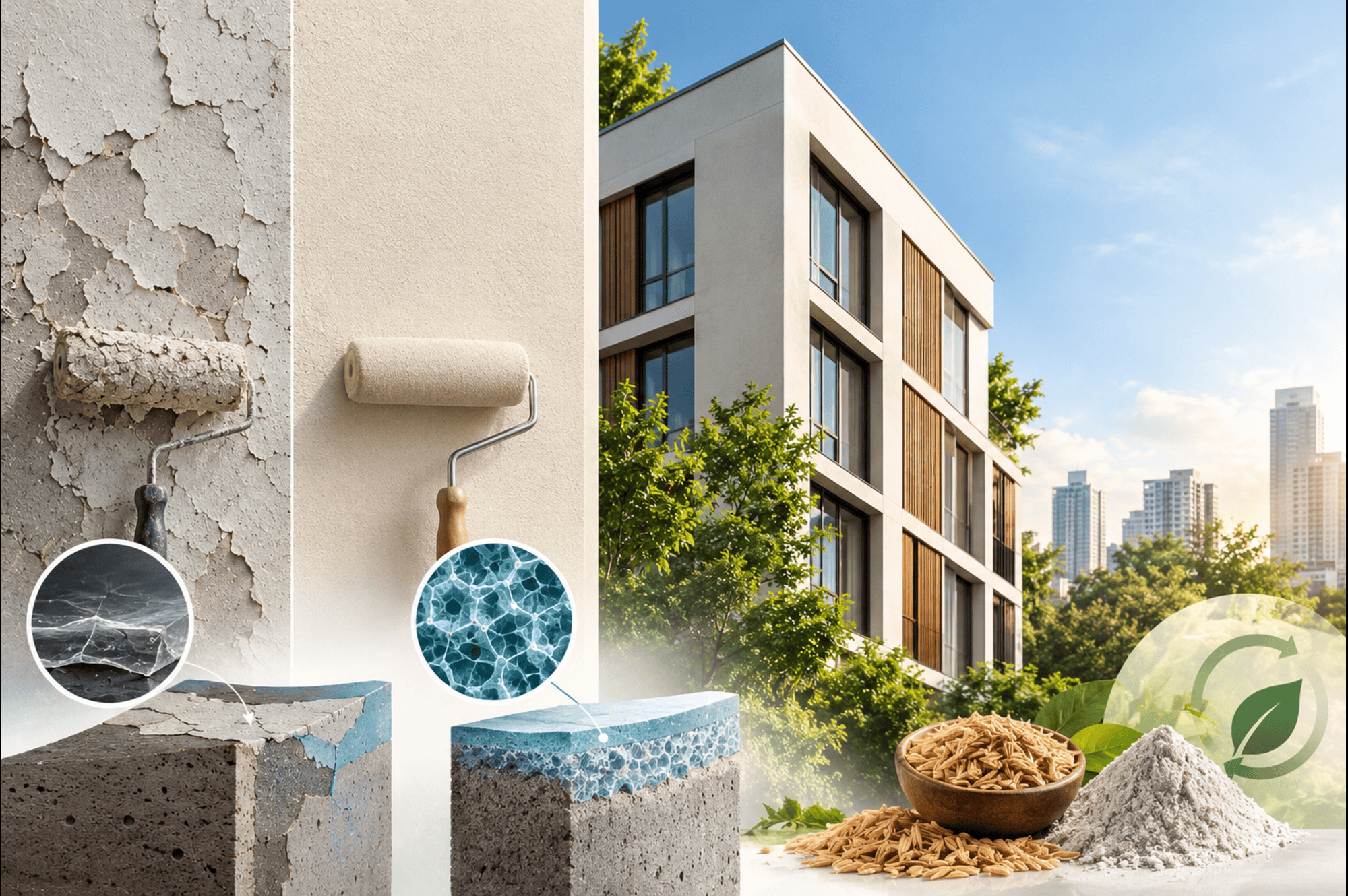
Using conventional paints is like wrapping buildings into plastics, which gives the immediate visual appeal but arrest moisture removal completely leading to blistering, peeling and eventually degrades the structure. Further these paints are a major source of VOC and microplastics which are responsible for air and soil pollution respectively. This long-term toxicity is the major disadvantage of conventional paints.
On such grounds, the mineral based technology is the most suitable alternative which is environmentally sustainable to conventional paints. But the real question is how this old-fashioned mineral technology stands up to the modern petrochemical paint industry. The answer lies in the chemistry of the mineral coatings which needs to be redefined to fit into the sustainable infrastructure future.
The Science of Silicification
The mineral paints when applied on masonry surfaces like concrete, bricks, stucco, reacts with the surface for creating a strong bond, unlike conventional paints which only sit on the surfaces and bond mechanically to it. The reaction of mineral paint which the surface is called as silicification or petrification due to which they give extended long life leading to remarkably reduced life cycle cost for large scale infrastructure projects.
Addressing the Demands of Modern Infrastructure
Tangible performance of building material is as important as its environmental impact due elevating standards or norms for the EPC sector. Mineral paints inherently encounter various issues in modern construction.
Modern concrete and masonry demand breathability for removal of trapped moisture which require high vapour permeability. Mineral paint on application forms micro crystalline structure due to silicification and results in high vapour permeability. This phenomenon creates a natural moisture regulation process within the building envelope and avoids mould and dampness without losing the performance efficacies.
Second is fire safety. In the context of the increasingly stringent global regulations on fire retardant building materials the non-combustibility of mineral paints is a real asset. Being completely inorganic the silicate paints are inherently fire resistant (typically achieving a Class A1 rating). They won’t catch fire and they won’t give off any toxic fumes when subjected to high heat. That’s a significant element of passive fire protection for buildings.
Third is colour stability. Traditional paints use organic pigments which are susceptible to degradation by UV radiation resulting in fading and chalking. Mineral paints use inorganic metal oxide pigments which are completely UV stable. For exterior façades on high rise buildings or large-scale public infrastructure this means the visual character of the building is absolutely unaffected over the years and there is no need for the regular, expensive cycle of repainting.
The Economics: Rethinking Life Cycle Cost (LCC)
In large EPC projects procurement is generally driven by the initial material cost and in that respect conventional petrochemical paints will usually win. When you look at the Life Cycle Cost (LCC) though the picture is very different and mineral paints come out as the clear economic winner.
A genuine LCC analysis takes into account the initial outlay for materials and labour as well as the ongoing costs of maintenance, repair and eventual recoating over the building’s life. As conventional paints are prone to peeling and fading they will need repainting every 5 to 7 years. Each of those recoating operations will involve the expensive process of surface preparation (scraping, sanding, chemical stripping etc) to remove the old synthetic film, plus the cost of scaffolding and labour.
On the other hand the silicification of the mineral paint means it won’t crack or flake at all. It can last 20 years or so with very little degradation. When it does eventually come to the point of requiring a refresh there is no peeling film to strip off, the new coat just bonds to the existing mineral surface. It dramatically reduces the number of maintenance cycles and eliminates the need for any surface prep, resulting in a much better return on investment and lower overall ownership costs (preserving value and minimising structural downtime).
The Role of Green Chemistry and the Circular Economy
Perhaps the most exciting application of mineral based architectural coatings is in the realm of green chemistry and the circular economy. The conventional route to silicate production is very energy intensive (quartz sand and potassium carbonate fused together at very high temperatures). There is now a genuine move in the material science world to re-think that supply chain and look at agro-industrial waste as a source of raw material.
The extraction of high purity silica from biological and industrial by-products (rice husk ash, coal fly ash etc) is completely changing the way silicate binders are made. Using hydrothermal digestion and caustic extraction we can produce potassium silicate and various disilicates directly from the waste. This gives us a high-quality binder for mineral paints and at the same time provides a solution to a huge waste problem.
By taking the fly ash and biomass waste as a by-product of other processes and upcycling it into high value construction materials the carbon footprint of mineral paint production is massively reduced. It goes from being just a ‘less bad’ alternative to a paint that is actually helping to decarbonise the planet.
The Verdict: A Necessary Paradigm Shift
Can mineral based technology displace conventional paint? In the short term conventional paint is likely to continue to hold its ground in the budget end of the market in the DIY residential sector. In the large-scale architecture, infrastructure and commercial construction markets the shift is already well and truly underway.
As LEED and GRIHA become the norm rather than the exception, the demand for ultra low VOC, highly durable, circularly manufactured materials and solutions that have a low life cycle cost will far outstrip the capacity of conventional acrylics. The EPC sector is now beginning to appreciate that the real cost of an architectural coating isn’t the price per litre. It’s the cost of performance and the cost of ownership over a 20 year life. Mineral coatings are not just going to be a challenge to conventional paints, they are going to be the new benchmark for the future of the built environment. That benchmark is achieved by combining the old chemistry of silicification with modern green manufacturing from waste and a superior long term economics.
Tags