Beyond Listings: How PropTech Is Connecting the 3Bs of Real Estate

by Ashish Narain Agarwal, Founder & Managing Director, PropertyPistol
For decades, Indian real estate has operated through fragmented information and disconnected relationships. Buyers searched across multiple channels, brokers worked with limited visibility into genuine demand, and developers often relied on fragmented market signals to understand what customers were looking for.
This fragmentation created friction at almost every stage of the property journey from discovery and lead generation to site visits, negotiations and closure.
From Property Discovery to Transaction Intelligence
The first wave of PropTech transformed how people discovered property. Digital listings made inventory searchable. Online platforms expanded access to projects and locations. Buyers could compare options without relying entirely on newspaper classifieds or individual broker networks. But property discovery represents only one part of the transaction. The larger opportunity lies in what happens after an enquiry is generated.
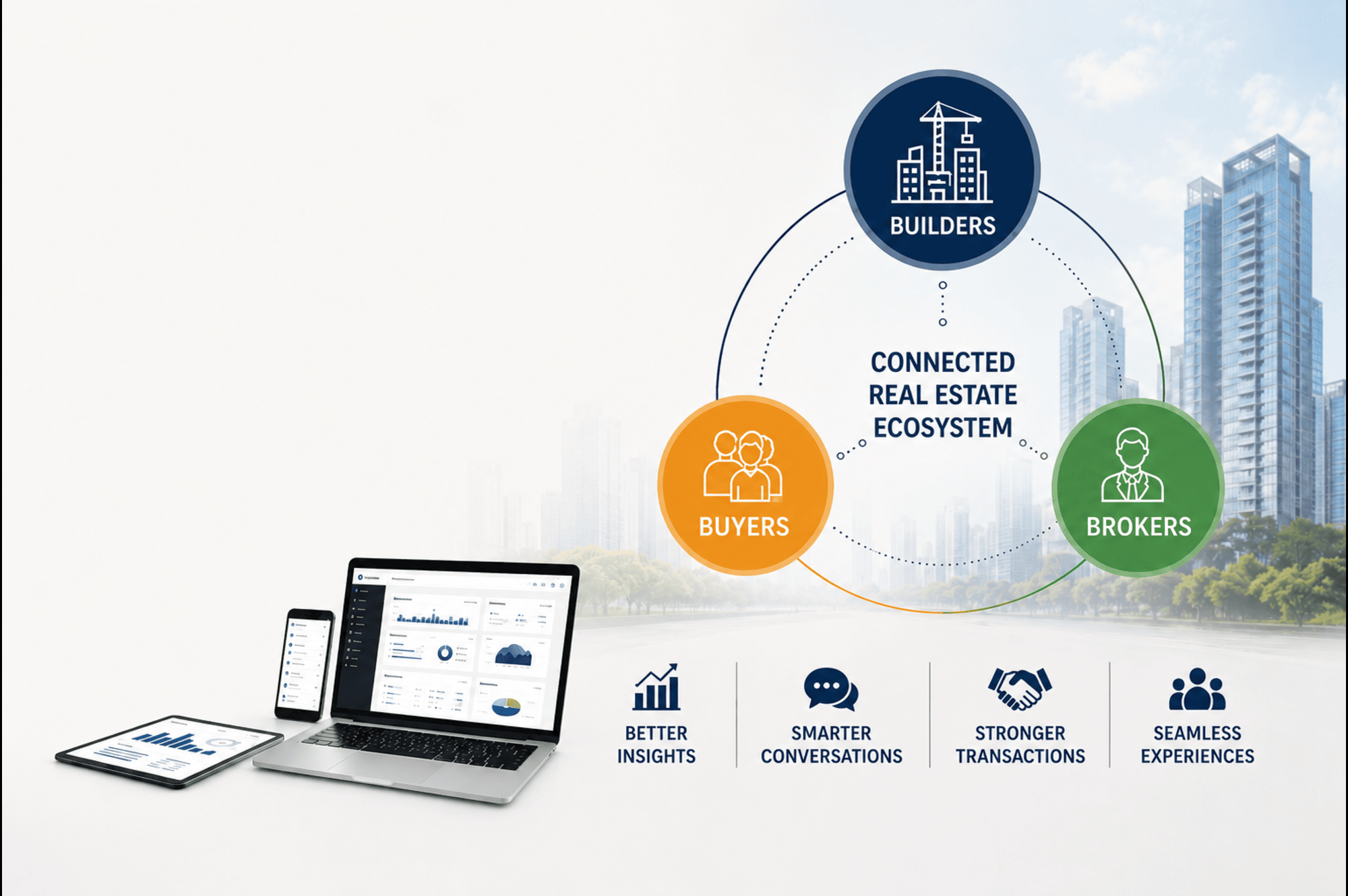
A buyer needs to be understood, qualified and matched with relevant inventory. A broker needs to manage conversations, follow-ups, site visits and negotiations. A developer needs visibility into demand, inventory movement and customer preferences. When these activities operate in separate systems, information gets lost between stakeholders. Technology can change that by creating a connected transaction layer where information moves with the customer rather than getting trapped within individual organisations. This is where PropTech is evolving from being a discovery platform to becoming an intelligence and transaction-enablement platform.The 3B Ecosystem: Builders, Buyers and Brokers The real estate ecosystem has three fundamental participants.
Builders Create the Supply. Buyers Create the Demand. Brokers Connect the Two
For the market to function efficiently, all three need better access to relevant information. Builders need to understand demand where enquiries are coming from, what configurations are being considered, which price points are resonating and how customer intent is changing. Brokers need productivity organised lead pipelines, access to relevant inventory, client history and structured follow-ups. Buyers need relevance faster responses, better property recommendations, greater transparency and a smoother journey from enquiry to transaction. The objective is not to digitise each stakeholder in isolation. It is to create greater connectivity between them. When the same transaction is supported by structured information across the ecosystem, each stakeholder can make better decisions while the overall customer journey becomes more seamless.
PropTech Should Enable Brokers, Not Eliminate Them
One of the most common narratives around real estate technology is that digital platforms will eventually replace brokers. The reality on the ground suggests otherwise. Property remains a high-consideration purchase. Buyers continue to value human guidance, local market knowledge, negotiation expertise and trust. Brokers play an important role in interpreting customer requirements and navigating the complexities of a transaction. Technology’s role is to make that expertise more productive. With the right technology, repetitive tasks can be automated, customer information can be structured and brokers can focus on understanding the customer and moving the transaction forward. Data Is Changing How the Market Understands Demand
The next significant shift in PropTech will be driven by data. Historically, real estate demand was often understood through conversations, enquiries, site visits and sales reports. Technology allows these signals to be captured, connected and analysed at a much greater scale. Buyer requirements such as budget, location, configuration and purchase timeline can be mapped against available inventory. Lead behaviour can help identify intent. Site-visit patterns can reveal engagement. Inventory movement can provide signals about market preferences.Artificial intelligence will further strengthen these capabilities, but AI should be viewed as an enabler rather than the end objective.The real advantage comes from having connected, structured and actionable data.
From Digital Tools to a Connected Real Estate Ecosystem
India’s PropTech journey is therefore entering a more mature phase. The first phase was about digitising discovery. The second was about digitising processes CRM, lead management, customer engagement, documentation and transaction workflows.
The next phase is about connecting the ecosystem.The future of PropTech will not be defined simply by how much real estate it can digitise. It will be defined by how effectively it can connect the people, information and decisions that make real estate transactions happen.
Tags