Precast: Redefining Fast-Track Construction

With infrastructure and housing projects demanding faster execution, precast concrete is emerging as a key enabler of industrialised construction. Factory-controlled production, faster assembly and consistent quality are helping redefine how India builds at scale. Read on…
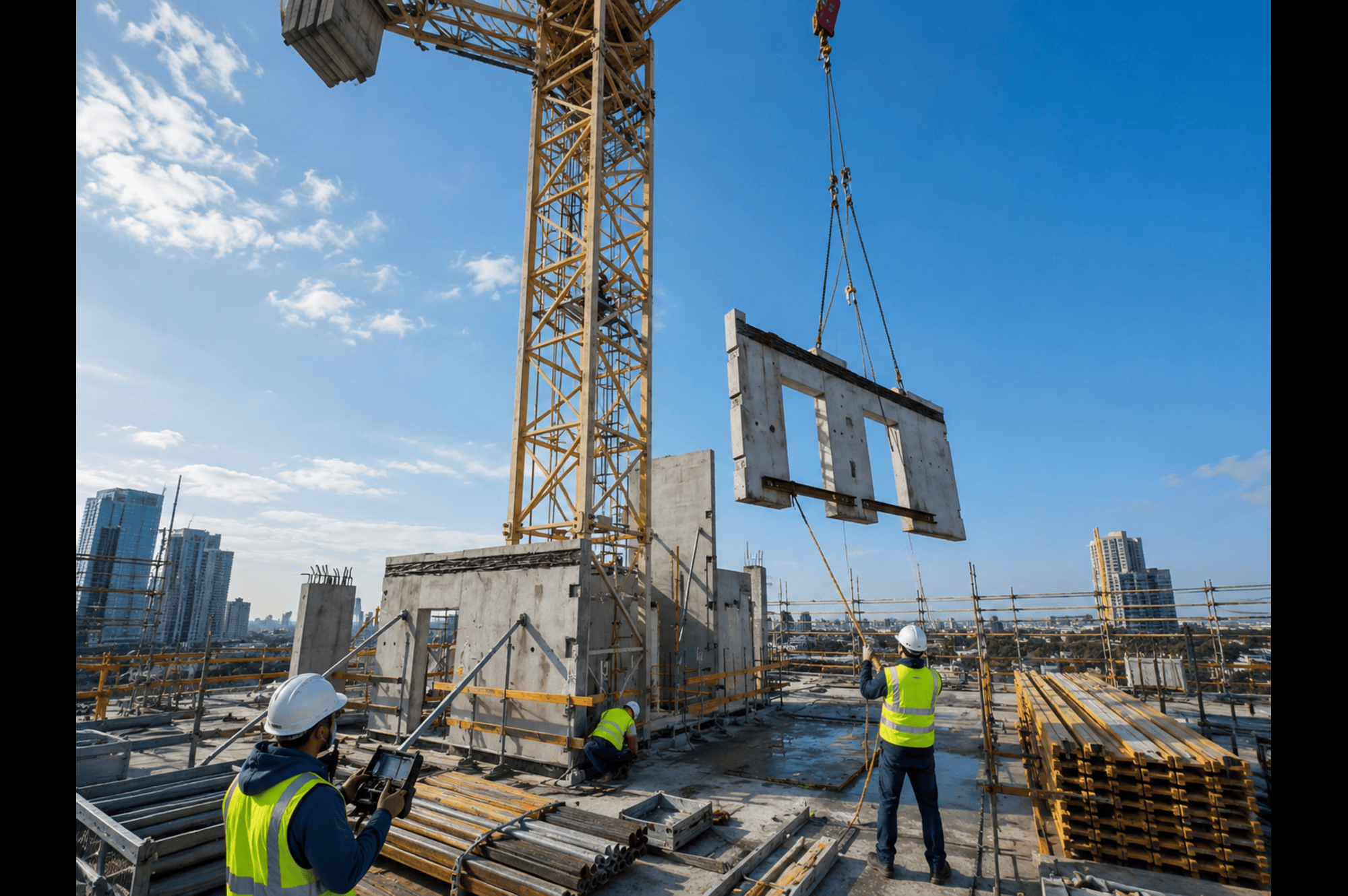
Asia’s largest slum, Dharavi is up for redevelopment. The sheer scale of the transformation, involving the rehabilitation of a large population and the construction of thousands of homes and supporting infrastructure, makes it one of the most challenging urban redevelopment exercises in Mumbai. Along with several other redevelopment projects that have already been tendered out, the project will have to progress at a rapid pace to meet its stipulated completion deadlines. Such large-scale developments present a significant challenge for conventional, site-based construction, where labour dependence, on-site formwork and sequential execution can make it difficult to achieve the required pace. This is where precast construction can play an important role. In precast construction, structural and architectural elements such as beams, columns, slabs and wall panels are manufactured in a controlled factory environment and then transported to the construction site for installation. Unlike conventional construction, where much of the work is carried out sequentially at the site, precast allows several activities to take place simultaneously, helping reduce construction time while improving quality and consistency. “India’s shift toward precast technology is primarily driven by an urgent need for rapid project delivery, escalating labour shortages, severe urbanization pressures, and government mandates. By producing structural elements off-site, this method compresses timelines by 40–50% while mitigating the risks associated with a transient migrant workforce,” says Rajesh Jha, Managing Director, Progress Precast India.
Recently, in Navi Mumbai, a real estate project comprising 74 towers, each rising 26 floors, was constructed in just 16 months using precast construction. The rapid pace was achieved through factory-controlled production and the use of Elematic precast machinery, enabling the engineering team to maintain the project schedule even through Mumbai’s heavy monsoon season. The project was executed by B G Shirke Construction Technology using factory-made concrete components, demonstrating how precast technology can accelerate construction at a scale that would be difficult to achieve through conventional site-based methods.
Beyond Housing: Precast Expands Across Infrastructure
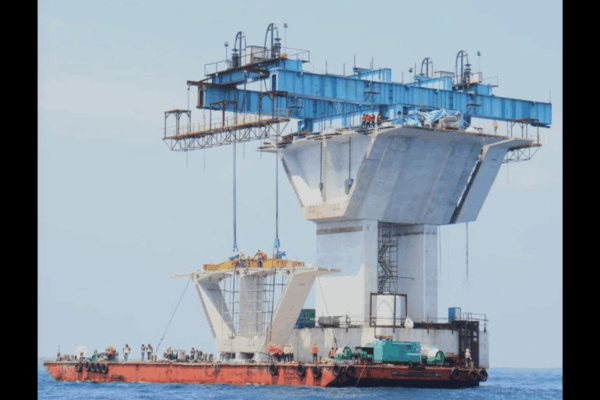
The relevance of precast, however, extends well beyond residential and redevelopment projects. The technology is increasingly being used across infrastructure projects where stringent deadlines, repetitive components and the need for rapid execution make factory-controlled construction particularly relevant. Bridges and viaducts, metro rail systems, railway sleepers and track components, road infrastructure, power transmission poles and other utility structures are among the applications where precast components can help accelerate construction and improve consistency. “Commercial buildings, industrial facilities, warehouses and institutional projects are also generating demand because speed, quality and predictable completion are important in these sectors. Infrastructure applications are expanding, including metro and rail components, bridges and utility structures. Data centers represent a particularly promising segment because they require rapid, repeatable and quality-controlled construction. Urban transport and public-development programme could become major growth drivers where standardized designs and continuous project pipelines are available,” says Shridhar Rao, Director – Sales and Marketing, Elematic India.
As India’s infrastructure and urban development pipeline expands, the role of precast is consequently evolving from a construction technique used for specific projects to an increasingly important component of industrialised construction. According to Grand View Research, the India precast concrete market size was estimated at USD 6.69 billion in 2024 and is projected to reach USD 17.37 billion by 2033, growing at a CAGR of 11.1% from 2025 to 2033. The growth is driven by the country’s rapid urbanization and growing need for time-efficient, cost-effective construction methods. The report further highlights that growing investment in transportation and logistics infrastructure is expanding the use of precast components in metro rail networks, dedicated freight corridors, elevated roads and highways, with girders, pier caps, tunnel segments and culverts increasingly being adopted for their structural uniformity and efficient execution.
From Components to Connected Building Systems
Precast construction is itself undergoing a technological transformation. The focus is gradually moving beyond the manufacture of individual concrete components towards integrated production systems in which design, manufacturing, quality control, material handling and logistics are increasingly connected. Digitalisation and automation are becoming central to this transition, enabling precast manufacturers to improve production planning, optimise material use and achieve greater consistency across large volumes of components.
According to industry players, the next phase of precast manufacturing will be defined by the integration of technologies such as Building Information Modelling (BIM), automated production systems, robotics, IoT-enabled equipment and manufacturing execution systems. These technologies can connect the digital design of a building with the physical production of its components, creating a more seamless workflow from design and detailing to manufacturing and installation. “Digital integration across the entire project lifecycle – from BIM-based design to automated production and on-site installation – will significantly improve coordination and reduce project delays. Industrialised construction is no longer just about manufacturing precast elements; it is about creating a fully connected digital construction ecosystem,” says Hariharasudhan An S, Sales Head, Maxtruder.
At the manufacturing end, this digital integration is being supported by advances in batching, mixing and production automation. Modern precast plants are increasingly using automated systems to improve the accuracy and consistency of concrete production, while integrating batching plants with concrete distribution systems and casting equipment. Real-time monitoring of parameters such as aggregate moisture can also enable automatic adjustments in water dosing and material quantities, helping maintain consistent concrete quality and reduce material wastage. “Automation has moved far beyond simple push-button batching. Platforms like our MCI control system turn the batching plant into an intelligent, self-monitoring asset. Locked-recipe execution eliminates manual operator errors, while smart integration links batching plants directly with Flying Bucket (monorail) concrete distribution systems and casting shuttles. The plant dispatches concrete to exact mold locations only when required, eliminating batch idle time and keeping casting beds operating at peak speed,” says V G Sakthikumar, Chairman & Managing Director, SCHWING Stetter India.
While automation is improving the coordination of concrete production and distribution, advances in casting technology are also helping manufacturers improve precision, productivity and product quality. MAX-truder’s Triple Compaction System, which combines specially designed augers with internal and external vibration, is designed to achieve high concrete density, accurate dimensions and a consistent surface finish. The company also emphasises the importance of synchronising the entire production process – from concrete feeding and casting to cutting, stressing and product handling – rather than optimising individual machines in isolation. When these processes operate as an integrated system, manufacturers can increase daily output while reducing waste and operating costs.
As these production systems become increasingly connected, artificial intelligence is expected to add another layer of intelligence to precast manufacturing. AI can help optimise production planning, analyse machine performance, predict maintenance requirements and improve overall plant efficiency by using real-time production data. More specific applications are also emerging, including predictive curing and early-strength assessment, where data such as ambient humidity, bed temperature and concrete maturity can help determine optimum stripping and de-tensioning times. This could enable manufacturers to shorten production cycles while maintaining quality and consistency. “Artificial intelligence will also begin to play an increasingly important role. AI can optimise production planning, analyse machine performance, predict maintenance requirements and improve overall operational efficiency,” says Hariharasudhan An S, Sales Head, MAX-truder GmbH.
The Challenges of Scaling Precast
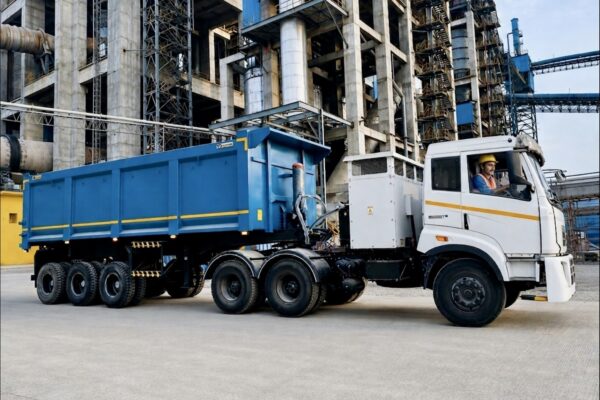
Despite the technological advances, scaling precast construction across India is not without challenges. The transition requires substantial upfront investment in manufacturing facilities, specialised machinery and skilled manpower. At the same time, the economics of precast depend heavily on project scale, design standardisation and a predictable flow of orders. Transportation of large and heavy components from the manufacturing plant to the project site can also add logistical complexity, while design changes after production has begun can disrupt the manufacturing schedule and increase costs. “The wider adoption of advanced precast technology in India is constrained by several challenges despite its potential to transform infrastructure and housing construction. One of the biggest barriers is the high initial investment required to establish automated precast plants, coupled with financing constraints and longer return-on-investment cycles. Transportation and logistics also remain significant hurdles, as moving large precast components requires specialised infrastructure, while congested urban sites and high transportation costs further complicate deployment,” says Rajesh Jha.
Beyond investment and logistics, the wider adoption of precast will also require a shift in how construction is planned and executed. Unlike conventional construction, which has a long-established ecosystem of contractors, workers and practices, industrialised construction requires greater familiarity with factory-based production, design coordination and off-site manufacturing. The location of manufacturing facilities is another consideration, particularly for large and heavy precast components that have to be transported to dense urban sites. “The biggest challenge is mindset, not technology. Most widespread availability and awareness on conventional construction, and shifting to industrialised, factory-built systems require hands-on demonstration, not just literature,” says Sourabh Bansal, Managing Director, Magicrete Building Solutions.
Growing Precast Integration
While the industry is investing in technology and manufacturing capacity, stronger policy support could help accelerate the transition towards industrialised construction. Greater standardisation in precast design and specifications, clearer technical guidelines, wider adoption of BIM and greater acceptance of factory-built construction in public procurement can create a more predictable environment for manufacturers and developers. Government programmes in housing, urban infrastructure, railways, metros, roads and other public infrastructure could provide the project visibility needed for manufacturers to invest in modern production facilities and build capacity ahead of demand. “The strongest demand today comes from industrial buildings, warehouses, logistics parks, data centres, commercial developments and large residential projects. Prestressed hollowcore slabs continue to gain popularity because they offer longer spans, faster erection and lower overall structural costs. Infrastructure will be another major growth engine. As India continues investing in highways, railways, metros, airports and urban infrastructure, precast and prestressed concrete will become increasingly important because these projects require speed, repeatability and consistent quality. From our perspective, India is still in the early stages of precast adoption. Compared to many developed countries, there remains enormous untapped potential, making this one of the most exciting markets globally for advanced precast technology,” says Hariharasudhan An S.
For large-scale projects, however, the opportunity is not limited to adopting precast components; it is also creating a case for dedicated manufacturing capacity. Captive precast plants, established specifically to serve a large project or a cluster of projects, can provide greater control over production, quality and scheduling while reducing dependence on external suppliers. By bringing manufacturing closer to the project and ensuring a continuous supply of components, the model can be particularly relevant for large housing and redevelopment programmes involving thousands of repetitive units. The emergence of captive plants represents a broader shift in the way construction is executed. Instead of treating the construction site as the primary location of production, a significant part of the building process is moved into a controlled manufacturing environment, with the site becoming increasingly focused on assembly and installation. This creates an integrated model combining manufacturing, logistics and construction, with the potential to improve productivity and bring greater predictability to large-scale projects.
From Alternative to Mainstream
India’s precast industry is entering a phase where its role could extend well beyond providing an alternative to conventional construction. The growing demand for faster project execution, combined with labour constraints, urbanisation and the scale of India’s infrastructure and housing pipeline, is creating a stronger case for industrialised construction. Precast offers the ability to shift a significant part of construction activity from the project site to a controlled manufacturing environment, enabling greater consistency, productivity and predictability. The next phase of growth, however, will depend on how effectively the industry addresses the challenges of investment, logistics, standardisation, skills and project planning. Technology will remain central to this transition. Automation, BIM, IoT, robotics and connected production systems are already changing the way precast components are designed and manufactured, while artificial intelligence could further improve production planning, predictive maintenance, quality control and curing processes. At the project level, the emergence of captive precast plants could be particularly significant for large housing, redevelopment and infrastructure programmes, providing dedicated manufacturing capacity and a more integrated link between factory and site. With supportive policies, clearer standards, stronger project pipelines and greater industry acceptance, precast could evolve from a specialised construction technique into a mainstream industrialised construction model. The opportunity is therefore not simply to build faster, but to fundamentally change how India builds.
Tags