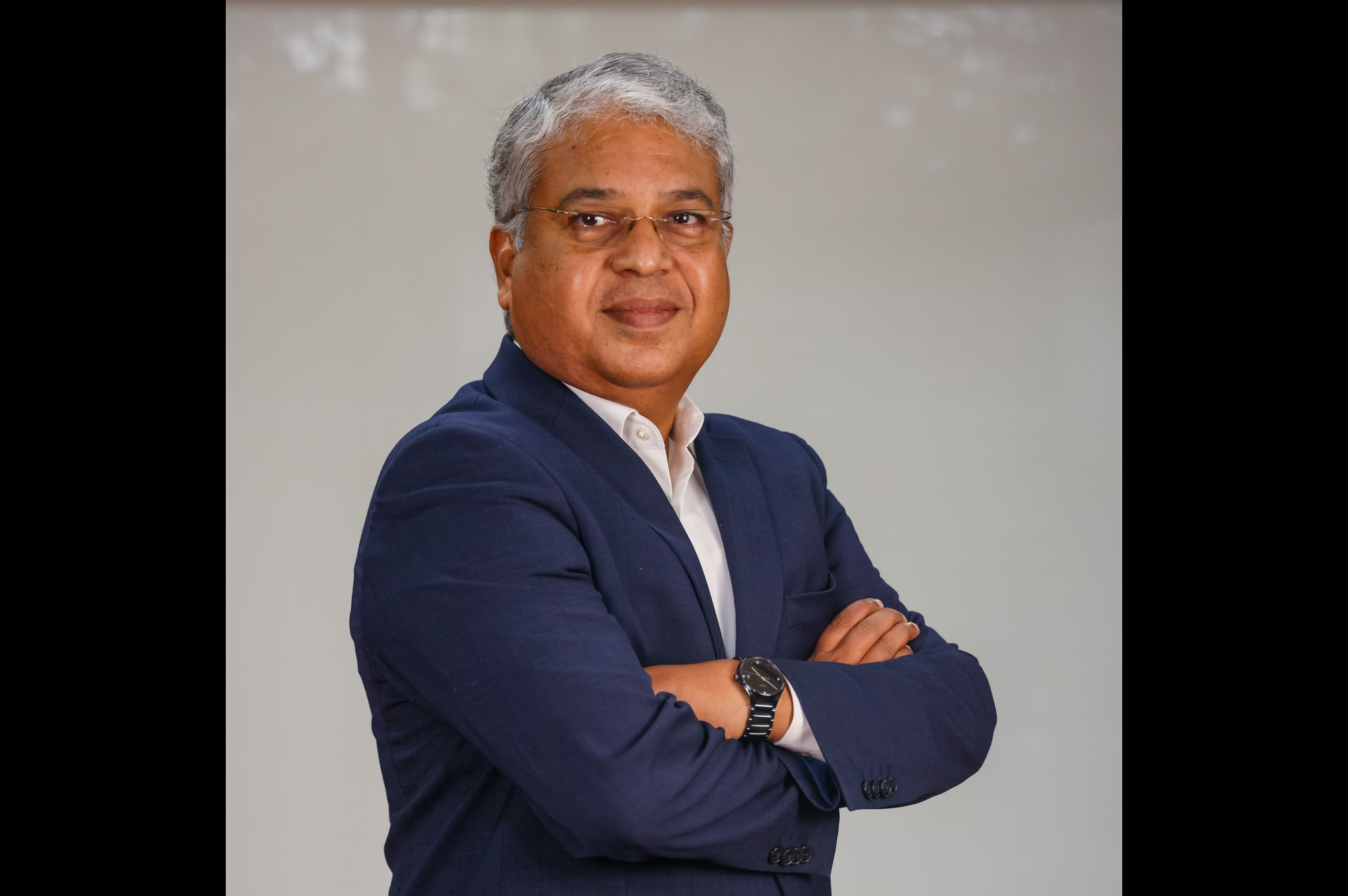
Interview: V G Sakthikumar, Chairman & Managing Director, SCHWING Stetter (India)

How do you envision the role of the CE industry in contributing to the vision of Viksit Bharat 2047?
From the perspective of Schwing Stetter India, the Construction Equipment (CE) industry is a cornerstone of the Viksit Bharat 2047 vision. By driving large-scale localized manufacturing, the industry drastically reduces import dependence and turns India into a global manufacturing hub. Schwing Stetter champions this by building high-end, completely indigenized heavy machinery and pioneering sustainable, clean-tech engineering. Through eco-friendly innovations like hybrid boom pumps and concrete recycling systems, the CE sector minimizes the carbon footprint of massive national infrastructure. Ultimately, by accelerating intelligent, automated, and green construction technologies, the industry builds a self-reliant, developed India.
What are the key demand drivers shaping growth in the CE sector amid India’s expanding infrastructure pipeline?
The expansion of India’s infrastructure pipeline is driven by an unprecedented surge in public capital expenditure, which reached a record ₹12.22 lakh crore. Mega-initiatives like the National Infrastructure Pipeline (NIP) and PM Gati Shakti serve as the primary engines, fast-tracking massive projects across national highways, high-speed rail, and urban metro networks. This extensive pipeline is further propelled by rapid Tier-II and Tier-III urbanization and structural reforms in the mining sector. To meet strict project deadlines, contractors are rapidly transitioning toward advanced mechanization, triggering exponential demand for high-capacity, fuel-efficient, and sustainable concrete and earthmoving machinery.
How is your organization enhancing productivity, efficiency, and reliability through advanced machinery and equipment solutions?
Schwing Stetter India boosts construction productivity and reliability by fusing heavy-duty engineering with intelligent automation. Through integrated telematics and smart CAN-bus data tracking, their machines enable predictive maintenance, eliminating operator error and reducing unexpected site downtime by up to 30%. Solutions like the FBP truck mixer pump optimize efficiency by combining transport, mixing, and pumping on a single chassis. Furthermore, by introducing eco-friendly, alternative-powertrain innovations – including fully electric truck mixers and hybrid boom pumps that switch to grid power on-site – they maximize fuel efficiency and operational uptime while significantly lowering lifecycle costs across massive infrastructure projects.
In what ways are digital technologies transforming equipment performance, monitoring, and project execution?
Schwing Stetter India is transforming equipment performance, monitoring, and project execution by transitioning from standalone hardware to an intelligent, “Connected Equipment” ecosystem. At the core is SCHWING Telematics (integrated with Trackunit®), which acts as the machine’s nervous system by capturing real-time CAN-bus data like fuel consumption, hydraulic pressures, and concrete feed quantities. This IoT connectivity allows operators to monitor fleet health through live dashboards and shifts operations from reactive fixes to predictive maintenance, reducing unplanned job site downtime by 20–30%. Furthermore, digital interlocks and automated SCADA control systems in batching plants bridge real-time field data with enterprise ERPs, guaranteeing precise mixing, absolute operational traceability, and streamlined project timelines
How are sustainability, fuel efficiency, and emission norms influencing equipment design and operations?
Sustainability, strict CEV Stage V emission norms, and fuel efficiency are driving a massive architectural shift in Schwing Stetter India’s equipment design. The company has re-engineered its powertrain line up, transitioning its entire self-loading mixer (SLM) and road compactor fleet to advanced, low-emission CEV Stage V engines. Operationally, Schwing Stetter addresses rising fuel costs and ESG goals by commercializing clean-energy alternatives, notably launching India’s first fully electric truck mixers and hybrid boom pumps. These hybrid systems seamlessly switch from traditional diesel travel to zero-emission on-site grid power, yielding up to 15% in direct energy savings and significantly reducing carbon footprints on high-density urban infrastructure projects.
What are the major challenges faced by the CE industry (financing, operator skill gaps, maintenance, supply chain), and how can they be addressed?
The CE industry faces critical bottlenecks in high financing costs, an acute operator skill gap for advanced machinery, supply chain vulnerabilities, and unpredictable maintenance downtime. These are addressed through targeted strategic interventions. Financial hurdles are eased by competitive retail financing partnerships and the rise of equipment rental and leasing models. The skill deficit is mitigated through specialized, operator training academies using advanced simulators. Supply chain resilience is strengthened by localization and regional component hubs under “Make in India.” Finally, maintenance challenges are resolved by shifting to predictive telemetry, turning unexpected breakdowns into scheduled fixes to maximize fleet uptime.
How do you assess the impact of government initiatives such as infrastructure push, localization policies, and equipment standardization?
Government initiatives are fundamentally reshaping the CE sector by creating a highly structured, self-reliant ecosystem. The government’s historic infrastructure push – driven by record capital allocations toward mega-projects like PM Gati Shakti – guarantees a sustained, multi-year equipment demand pipeline. Simultaneously, localization policies under the “Make in India” mandate are compelling manufacturers to build domestic supply chains, insulating the industry from global geopolitical and maritime disruptions. Finally, stringent equipment standardization, such as the transition to CEV Stage V emission norms and uniform safety regulations, is forcing a technological leap. This elevates Indian manufacturing quality to global benchmarks, making domestic machinery highly competitive in international export markets.
What emerging opportunities do you foresee in segments such as roads, railways, mining, urban infrastructure, and renewable energy projects?
From the perspective of Schwing Stetter India, expanding sectors are opening multi-dimensional growth frontiers. In roads and railways, high-speed bullet trains, dedicated freight corridors, and multi-lane expressways demand specialized high-capacity batching plants and long-reach boom pumps to execute continuous, heavy-duty structural pours. Urban infrastructure is driving localized demand for compact, low-noise machinery -such as short-chassis boom pumps – tailored for tight metro-rail and smart-city corridors. In mining, the push for deeper commercial coal and mineral excavation creates a solid pipeline for heavy earthmovers and durable material handling equipment. Finally, surging renewable energy investments in massive wind and solar farms require high-performance cranes, graders, and specialized foundation-concreting solutions, positioning the equipment sector as an indispensable execution partner across all core infrastructure pillars.
How is your organization strengthening its presence in global markets and contributing to India’s positioning as a manufacturing hub?
Schwing Stetter India is cementing the nation’s status as a premier global manufacturing hub through its mega Global Manufacturing Hub (GMH) in Cheyyar, Tamil Nadu. Operating as a Department for Promotion of Industry and Internal Trade (DPIIT) recognized R&D entity, the Indian subsidiary completely designs and engineers product lines for major international markets, including the USA and Europe. Localized production lines supply approximately 25% of the entire global commercial market for truck mixers outside China. By expanding smart Industry 4.0 automation and exporting high-capacity equipment to over 30 countries across Africa, ASEAN, Brazil, and the Middle East, the organization actively converts “Make in India” into an impactful global reality.
Tags