India’s Highway Infrastructure: Growth, Investment and Future Opportunities

by Sanjay Kumar Sinha, Founder & MD, Chaitanya Projects Consultancy
India is currently undergoing a renaissance in the field of civil engineering, as the speed of highway construction is undergoing a transformation from gradual development to nationwide change. Intending to create a $5 trillion economy, roads have become the biggest driver of growth, contributing about 85% to passenger transportation and over 70% to freight transportation. This revolution is not only about expanding road infrastructure but also about ensuring a seamless multimodal system that ensures low logistics costs and connects inland regions to international markets.
The Scale of Transformation and Investment
The expansion of India’s road network over the past ten years has been staggering. The country has managed to increase the length of national highways by about 60%, growing from 91,287 km in 2014 to 146,145 km by the end of 2024. Such growth is enabled by an extraordinary level of increase in capital investment, which is unmatched and unprecedented. In the recent Union budget of 2026-27, the government once again accelerated capital investment and allocated a massive sum of ₹3.10 lakh crore for the Ministry of Road Transport and Highways (MoRTH), signaling that infrastructure drives the economy’s resilience.
The funding was made possible due to a shift in funding models that aimed at reducing debts from market borrowing. Apart from following the Engineering, Procurement, and Construction (EPC) model, the National Highways Authority of India (NHAI) is gradually making efforts to move towards the zero-market borrowing policy, with the help of monetizing its infrastructure assets using Toll-Operate-Transfer (TOT) and Infrastructure Investment Trusts (InvITs). To this end, the government aims to monetize assets from at least 28 national highways covering more than 1,800 kilometers in the fiscal year 2026-27 and earn about ₹35,000 crore as the government pushes for infrastructure asset recycling to fund infrastructure creation.
Engineering Excellence: Beyond Connectivity
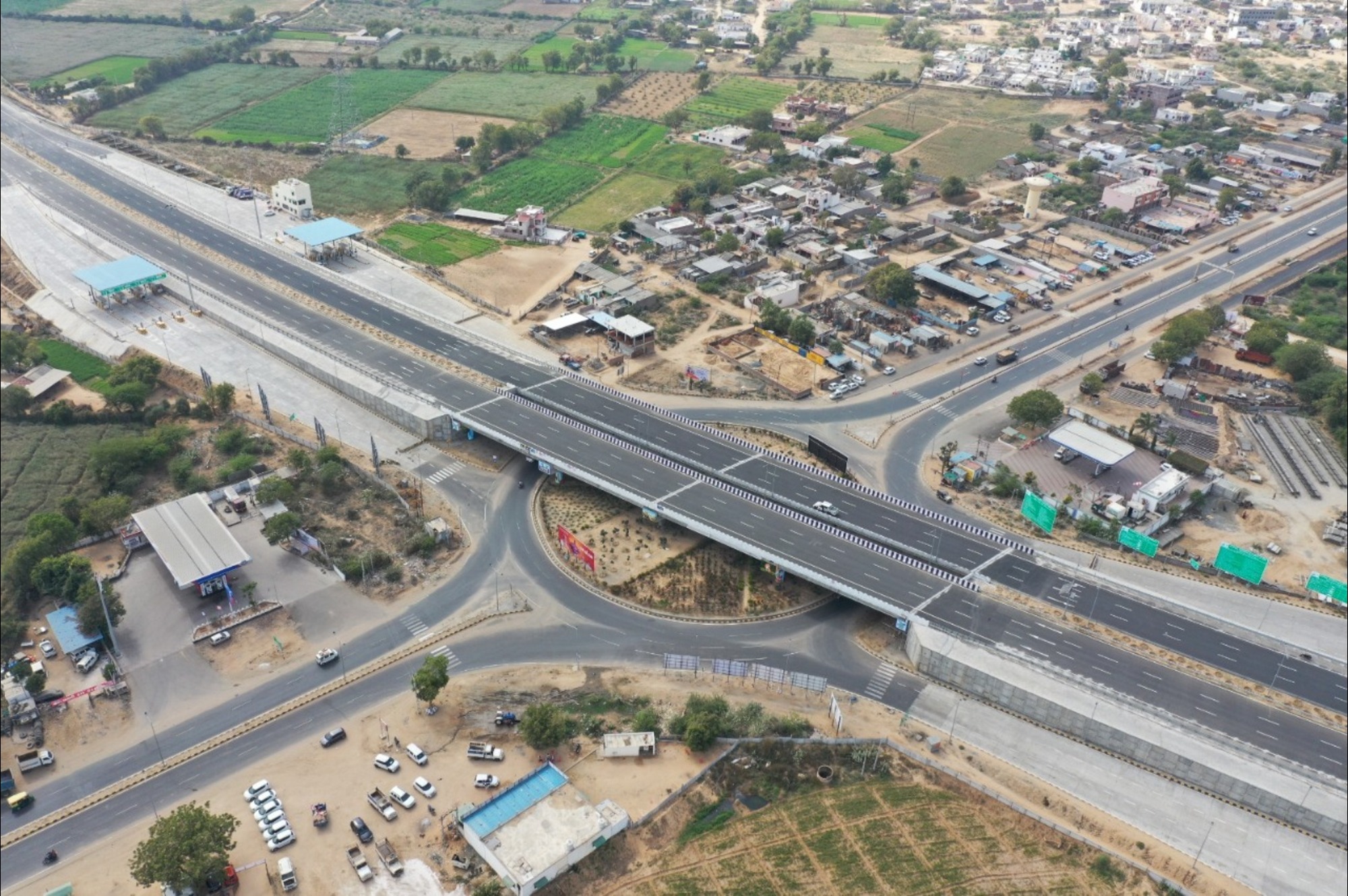
Modern highways of India are no longer limited to just a simple four-lane road but are an engineering marvel built to handle varied topography and urban density. The focus has shifted towards developing a high-capacity corridor and upgrading district arteries to ensure that there is no barrier while moving across state boundaries. One such important move by the Ministry of Roadways has been the upgrade of the 4-laning of the UP-Meerut to Haryana Border stretch (184 KM) in the NCR area for easier passage of industrial cargo, relieving congestion and facilitating smoother transit for industrial freight.
Major projects undertaken in diverse terrains demonstrate the country’s capability in managing such initiatives. For instance, in the Northeast region, project reports in relation to the construction of the Mawshynrut-Mathiabari road (38 KM) in the state of Meghalaya showcase the level of detailing involved in project development in the hilly and economically sensitive areas. In addition, large-scale projects involving long-distance improvements, such as the four-laning of NH-75 (202 KM), illustrate that large-scale supervision and maintenance of design standards is possible for extensive geographical locations. Such projects act not only as a means of transport but also as an economic lifeline for transporting agricultural and industrial products without wastage.
Digital Integration and Future Opportunities
Future prospects of the Indian highways will be dependent on civil engineering as well as digital technology. The introduction of the Global Navigation Satellite System (GNSS) based toll system will replace the conventional toll booths, which ensures a continuous stream of traffic flow and minimizes fuel utilization. Moreover, the “PM Gati Shakti” National Master Plan evolved to be the central nervous system of infrastructure, coordinating roads with rail links and seaports within an integrated geospatial environment.
According to the recent Economic Survey 2025-26, there is one notable achievement, where India has seen a reduction in its logistics cost to about 7.9% of its GDP, compared to the historically high value of 13-14%. This downward trend indicates that integrated planning has started to show its effect. For continuous improvement in this aspect, there is a shift towards “Smart Highways” that use ITSs for traffic management and security, where more than 2,000 kilometers of highways have been integrated with sophisticated traffic management sensors.
Conclusion: The Road Ahead
India’s highways are currently shifting from a period of accelerated growth to an era of intelligent development, sophisticated consolidation, and efficiency. The current agenda is focused on creating fast and controlled access to roads, which can be used along with other means of transportation within a single national system. The focus still rests on sustainable methods of construction, such as the use of recycled plastics and fly ash in roads. The challenge for investors and engineers is keeping this progress moving forward while also meeting the standards of global quality and safety. For a country that is on the move, the roads will always be the ultimate paths to a developed India.
Tags