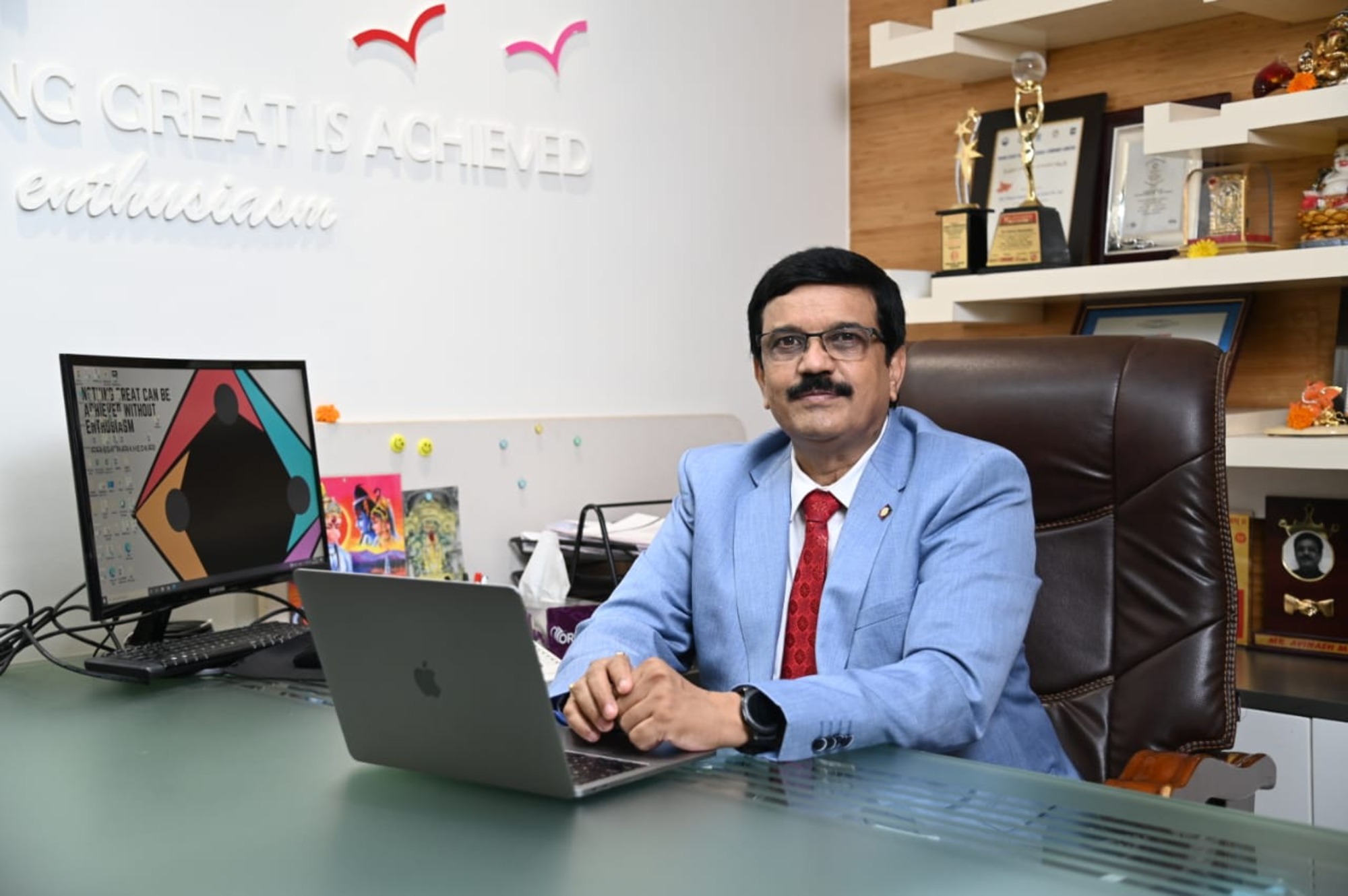
Interview: Rakesh Markhedkar, CMD, Vikran Engineering

From your perspective, how is the EPC landscape evolving, particularly in power and utility segments?
India’s EPC landscape is undergoing a significant transformation, driven by the country’s accelerating infrastructure build-out, energy transition ambitions, and the growing need for resilient, future-ready utility networks. In the power and utility segments specifically, we are witnessing increased investments in grid modernisation, transmission strengthening, renewable energy integration, and digital infrastructure upgrades. At the same time, project execution expectations are evolving, with greater emphasis on speed, technological integration, sustainability, and lifecycle efficiency. As infrastructure requirements become more complex, EPC players are increasingly expected to deliver not just execution capability, but also engineering expertise, operational agility, and end-to-end project management excellence.
With established capabilities across power transmission, water, and railways, alongside a growing focus on solar EPC, which segments will drive Vikran Engineering’s next phase of growth, and what role will renewable energy play in shaping your future business mix?
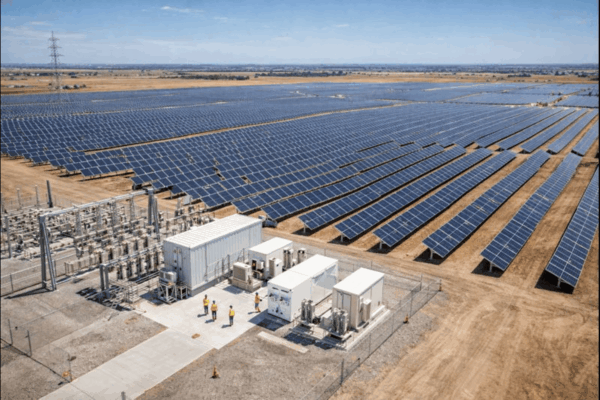
We remain focused on sectors aligned with India’s long-term infrastructure priorities, including renewable energy, power transmission, water infrastructure, transportation. Renewable energy, particularly solar-linked infrastructure, represents a strategically important opportunity as India accelerates its clean energy transition. Our recent acquisition of a 49% stake in NOPL Solar Projects reflects our intent to deepen our participation in the renewable energy ecosystem and enhance our capabilities in this evolving segment. Apart from our existing portfolio we are preparing ourselves for EPC of Data center and digital infrastructure.
With increasing competition in the EPC space, what differentiates Vikran’s execution model and positioning?
Our differentiation lies in our execution discipline, engineering expertise, domain knowledge across multiple infrastructure verticals, and commitment to quality and timely delivery. We have built our model around operational agility, strong project governance, and customer-centric execution, which enables us to deliver complex projects efficiently across geographies.
Many EPC companies struggle with margin pressures. How is Vikran managing cost optimisation while maintaining quality execution?
Managing margins in EPC requires disciplined execution across the project lifecycle. We focus on operational efficiency, strategic procurement, rigorous project monitoring, and process optimisation to enhance cost effectiveness while upholding stringent quality and safety benchmarks.
Vikran Engineering has seen strong momentum in project wins, including recent solar EPC contracts. What is the current order book composition, and how do you see it evolving over the next 2–3 years?
We currently maintains a diversified order book across its key business verticals, comprising approximately 5000+ Cr unexecuted order book with composition of Solar (60%), Power T & D (30%) and water (10%). Our focus remains on sustaining a balanced and resilient portfolio aligned with sectors central to India’s infrastructure development agenda, while selectively expanding into high-potential adjacencies.
Investor confidence in EPC companies often hinges on order visibility and cash flow discipline. How is Vikran strengthening financial resilience?
In a dynamic EPC environment, financial resilience is underpinned by disciplined capital allocation, prudent project selection, strong governance frameworks, and a balanced approach to growth. We remain focused on building institutional strength through operational discipline, robust risk management, and strategic financial planning to support sustainable long-term value creation.
How is Vikran leveraging technology in project execution – such as digital project management, automation, or smart grid solutions?
We have consistently prioritised technological integration to enhance operational excellence. As a pioneer in the industry, the company was the first to implement SAP S/4HANA Private Cloud Edition, utilizing custom SAP developments to monitor project lifecycles. To further strengthen efficiency and transparency, we have established a dedicated Center of Excellence focused on key areas such as data-driven operations and digital project management. Through data-driven operations, we are leveraging advanced AI/ML capabilities for predictive analytics, inventory forecasting, and cost control, enabling informed and data-backed business decisions. Simultaneously, our digital project management initiatives are streamlining execution through automated internal audits and centralised IT oversight, particularly for complex and multi-national EPC projects.
Given the recurring challenges around working capital, project delays, and approvals, what policy or structural reforms are needed from the government to strengthen the EPC ecosystem?
India’s EPC sector is central to the nation’s infrastructure and development agenda, but its efficiency can be significantly enhanced through structural reforms across financing, approvals, and contract management. One of the key priorities should be improving liquidity for EPC players through faster payment cycles, milestone-linked escrow mechanisms, and easier access to working capital financing. Equally important is the need to streamline approvals through single-window digital clearance systems and time-bound validation processes to reduce project delays. From a contractual standpoint, balanced risk-sharing frameworks, faster dispute resolution mechanisms, and performance-linked incentive structures can materially improve project execution outcomes. With the right reforms, India’s EPC ecosystem can become significantly more agile, globally competitive, and better positioned to support the country’s long-term infrastructure ambitions.
There is paucity of skilled manpower in EPC sector. How is Vikran Engineering attracting, retaining, and nurturing talent to support its growth?
Talent development is a strategic priority for us, particularly in an industry where execution quality is directly linked to workforce capability. We focus on building a strong talent pipeline through structured technical training, leadership development initiatives, and continuous capability enhancement across functions. Alongside this, we are committed to fostering a performance-driven and growth-oriented work culture that supports employee development, encourages internal mobility, and helps us attract and retain high-calibre talent required to execute increasingly complex infrastructure projects.
As India advances towards its $5 trillion economy ambition, the scale and complexity of infrastructure projects are set to increase. How is Vikran Engineering preparing to take on these challenges and contribute to this growth story?
As India progresses towards its $5 trillion economy ambition and the national vision of Viksit Bharat, infrastructure development will play a pivotal role in shaping the country’s next phase of economic transformation. The scale, complexity, and technical sophistication of projects across sectors are expected to increase substantially. In preparation for this, we are continuously strengthening our organisational and execution capabilities through investments in talent, technology, project management systems, and operational scalability. We are also enhancing our engineering and delivery frameworks to meet the evolving demands of modern infrastructure development. As a homegrown infrastructure player, we remain committed to contributing meaningfully to India’s nation-building journey and supporting the realisation of a developed, future-ready India.
Tags