Warehousing 2026 & Beyond: What India’s Record Leasing Numbers Signal for Investors

by Pawan Agarwal, Managing Director, NK Realtors
The global supply chain is no longer just a backend operational detail. Over the past few years, it has evolved into a frontline strategic differentiator. For decades, the Indian warehousing sector was synonymous with fragmented, unorganised, rapidly absorbing space, maintaining a healthy equilibrium that safeguards “godowns” characterised by leaky roofs, poor access roads, and manual labour. That era is definitely over.
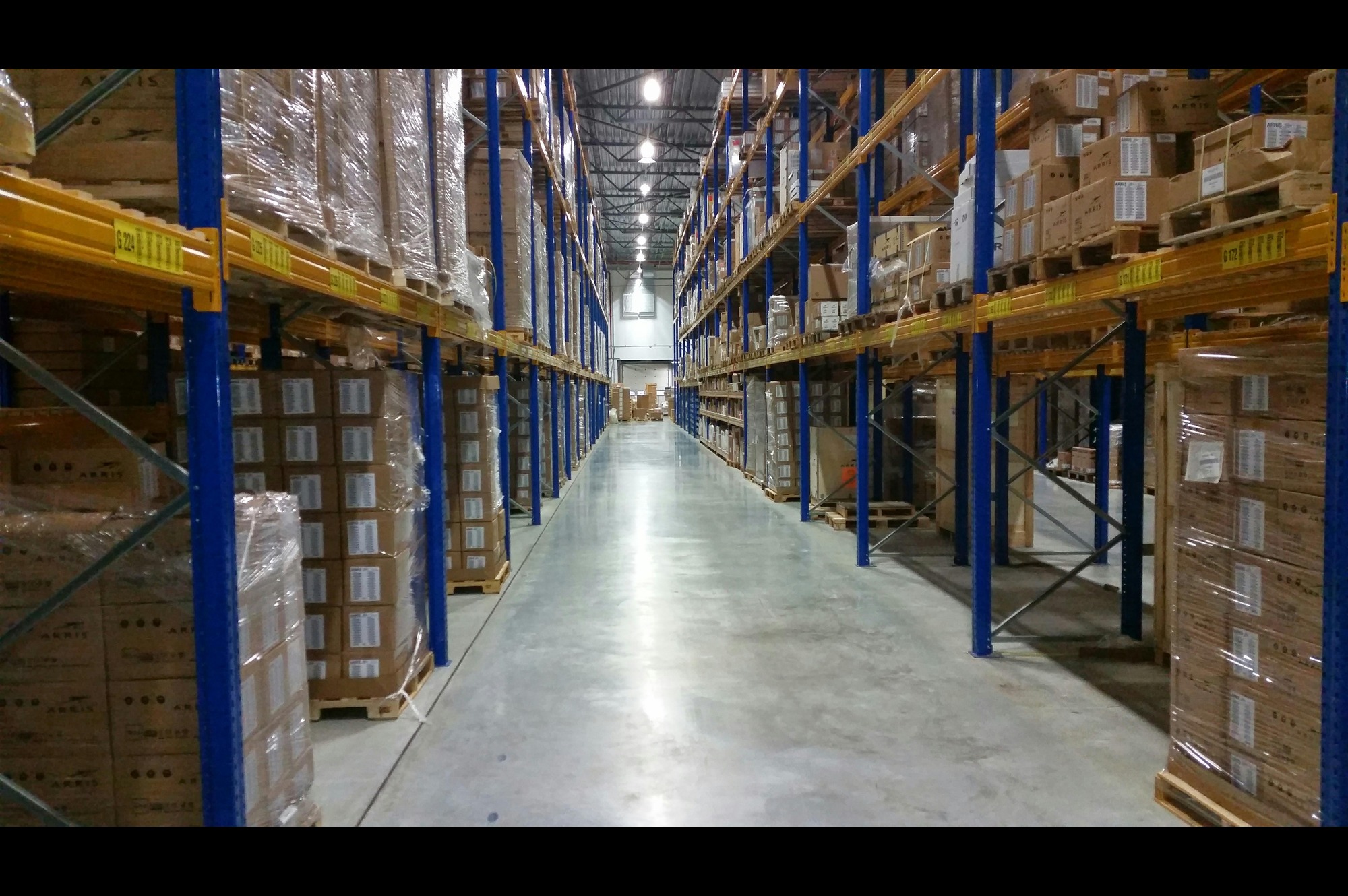
Today, stepping into a modern logistics park in India feels akin to walking onto the floor of a highly calibrated manufacturing plant. The sheer scale, automation, and operational rigour define an entirely new asset class. As global trade regimes realign and geopolitical headwinds force multinational corporations to rethink their manufacturing footprints, India has emerged not just as a reliable alternative but as a primary anchor for future growth.
The unprecedented surge in industrial and warehousing leasing across the subcontinent over the last twelve months is the clearest validation of this shift. For institutional capital, private equity, and independent developers looking at the horizon of 2026 and beyond, these numbers are not merely a post-pandemic rebound. They represent a fundamental, structural transformation of India’s economic scaffolding. Understanding the depth of this transformation is essential for anyone looking to allocate capital in the current real estate cycle.
Numbers often tell the most powerful stories of strength. According to the India Warehousing Market Report 2025 by Knight Frank, the market witnessed a record-breaking 72.5 million square feet of transactions across primary and secondary markets in FY 2024-25. This 29% increase from the previous year broke all previous records, making it the highest annual leasing volume ever recorded. As 2026 begins, any doubts about keeping this momentum going quickly went away. This growth is supported by a strong industrial foundation; as per PIB data, the Index of Industrial Production (IIP) rose by 7.8 percent in the first half of the preceding cycle, with the manufacturing and electricity sectors growing at 6.6 percent and 6.3 percent respectively.
Crucially, supply is moving in lockstep with this voracious appetite. New completions contributed to the total industrial and warehousing stock reaching 549 million square feet by the end of 2025, a 13% increase from the 486 million square feet recorded in 2024. This synchronised expansion between space absorption and new supply indicates a mature, sophisticated ecosystem. From electric vehicles and semiconductor assemblies to consumer electronics and heavy machinery, production lines are localising at a breakneck pace. Developers are acting on sustained, predictable demand from occupiers rather than taking speculative gambles. The market is absorbing space as fast as it can be built, maintaining a healthy equilibrium that protects rental yields and ensures strong occupancy rates.
Behind these macro figures lies a fascinating sectoral rotation that investors must pay close attention to. Historically, third-party logistics (3PL) and e-commerce were the twin engines hauling the warehousing sector forward. While they remain foundational, the underlying occupier base has diversified heavily. Manufacturing has decisively taken the mantle as the leading demand driver. Driven by the global strategy and reinforced by the Indian government’s aggressive Production Linked Incentive (PLI) schemes, manufacturing entities now command 44% of all newly leased space, as highlighted in the India Warehousing Market Report 2025. From electric vehicle components and semiconductor assembly to consumer electronics and heavy machinery, production lines are localising at a breakneck pace. This manufacturing boom requires massive adjacent warehousing for raw materials, work-in-progress inventory, and finished goods.
Simultaneously, the 3PL sector continues to provide the necessary flexibility for enterprises reluctant to lock up massive capital in physical real estate assets. Third-party operators remain the bedrock of the market, taking up substantial space as they optimise and consolidate distribution networks for their corporate clients.
Furthermore, the e-commerce sector has found a renewed vigour. After a period of digesting excess pandemic-era capacity, digital retail platforms are actively back in the leasing market. Their operational focus has sharpened heavily around rapid fulfilment and quick commerce. This model necessitates sprawling, mega-distribution centres at city peripheries that are seamlessly connected to hyperlocal, in-city fulfilment expense nodes.
Perhaps the most critical signal for the investment community is the uncompromising flight to quality. The majority of recent transactions have occurred within Grade A spaces, as modern corporate occupiers are simply no longer willing to compromise on structural integrity or operational efficiency. They demand higher floor load capacities to support heavy, automated retrieval systems. They require superior fire safety protocols, clear ceiling heights that allow for maximised vertical racking, and robust, uninterrupted power infrastructure.
Also, Environmental, Social, and Governance (ESG) compliance has gone from being a trendy term to a strict requirement that can’t be changed. These environmentally friendly buildings charge higher rents, lower the tenant’s operating costs, and make sure that tenants stay for a long time. For capital allocators, the message is unambiguous. The risk of holding obsolete Grade B or Grade C assets is increasing rapidly. Institutional money will increasingly target premium parks that align with the rigorous compliance mandates of global corporations. Upgrading existing older facilities or pivoting strictly to high-quality, built-to-suit developments is the only viable path for sustained, long-term yield.
The geographic spread of this logistics boom is just as interesting and offers a new opportunity for investment. Mumbai, the National Capital Region, and Bengaluru are still seeing huge amounts of business, but the areas where growth is happening are getting bigger. Pune, for example, has recently become a giant player, thanks to big investments in the automotive and manufacturing sectors.
However, the real frontier for aggressive growth lies beyond these established metropolises. Cities like Ahmedabad, Lucknow, Coimbatore, Guwahati, and Bhubaneswar are experiencing a genuine logistics renaissance. This decentralisation is not happening in a vacuum; it is directly driven by massive, state-sponsored infrastructure undertakings. The operationalisation of the Dedicated Freight Corridors (DFC) and the continuous expansion of the national highway network under the Bharatmala project have drastically reduced transit times. At the same time, rising disposable incomes and more people using the internet in rural areas mean that consumer goods and e-commerce deliveries need to get to smaller towns faster than ever. As a result, brands must now set up regional distribution hubs in these new markets. This opens up large areas of land for industrial real estate development.
The era of blindly acquiring agricultural land parcels, obtaining basic conversion certificates, and erecting generic sheds is over. Today’s real estate investor or institutional developer must act as a sophisticated partner in supply chain optimisation. Success hinges on precise, data-driven site selection. It requires understanding intricate micro-market dynamics, anticipating localised infrastructure developments before they are priced in, and negotiating complex, long-term lease structures with blue-chip tenants.
Developers need to focus on creating comprehensive ecosystems, not just isolated storage structures. Industrial parks that offer integrated, thoughtfully designed amenities will consistently outperform basic properties. Furthermore, property owners must heavily rely on strategic guidance to perfectly map their logistical nodes to changing consumption centres. The acquisition of land is fraught with regulatory complexities, title issues, and zoning laws. Engaging with specialised advisory frameworks that possess a granular, localised understanding of logistical workflows and regional real estate nuances is essential to mitigate upfront risk and maximise terminal asset value, particularly in the context of navigating the complexities of land acquisition and adapting to evolving market demands.
Looking toward the remainder of 2026 and into the next decade, India’s industrial and warehousing real estate stands at a historic inflection point. It is no longer a peripheral, alternative investment playing second fiddle to commercial office towers or residential high-rises. It is a core, high-yielding asset class that directly captures the physical manifestation of the world’s fastest-growing major economy.
Tags