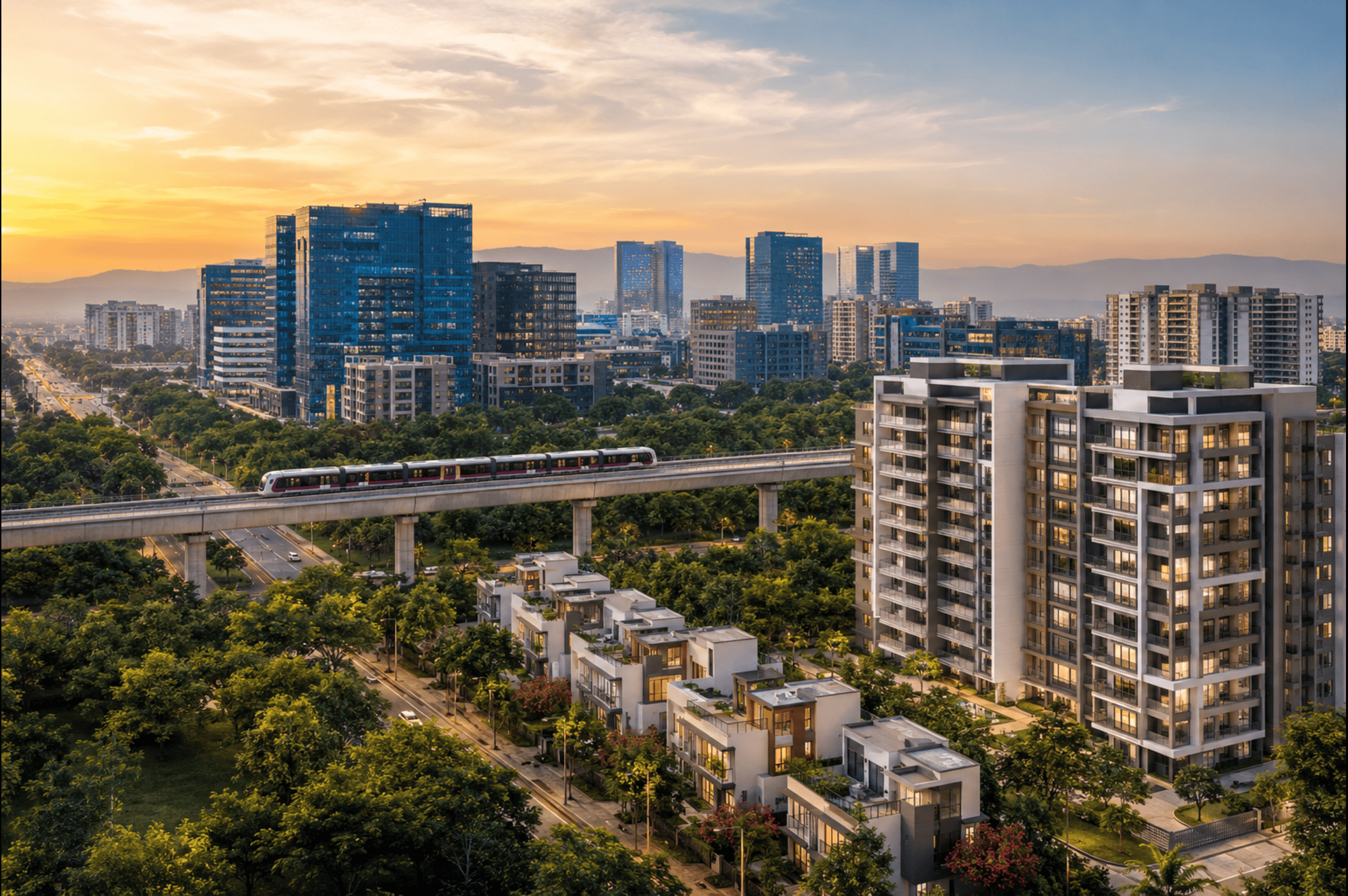
Why Pune Continues to be a Strategic Residential Investment Destination in India

by Jagmohan T, Director, Casagrand’s Pune Zone
In the past decade, Pune has steadily emerged as one of the most promising residential real estate destinations in India, with close to 81,000 houses being sold and a transactional value of ₹63,000 crore in 2025, marking a significant scale-up from approximately 45,000–50,000 units annually in 2020. What differentiates Pune from other metropolitan cities is its ability to sustain growth without compromising liveability. This balance has enabled Pune to evolve from a secondary IT hub into a structurally resilient residential market.
Urbanization and development notwithstanding, Pune continues to remain an attractive prospect for investments. This is fueled by consistent growth in job opportunities within the IT sector, manufacturing, and GCCs, as well as the establishment of better infrastructure through metro connectivity, road networks, and new business corridors collectively reinforcing Pune’s long-term investment appeal.
A Demand Engine Powered by Employment Hubs
The residential demand in Pune is fundamentally linked to the city’s employment infrastructure. The presence of IT parks, industries, and start-ups in the city ensures that there are always employees in the city. Kharadi, Hinjawadi, Magarpatta, and Talegaon have emerged as employment hotspots, drawing people from all over the country.
Such continuous inflows result in end-user demand for houses, thereby minimizing dependence on cyclical investments. This led to an increase of almost 26% in the number of new launches in the 2025 market cycles. This presents a unique advantage for both first-time buyers and investors seeking good rental returns.
A City of Micro-Markets Catering to Every Buyer Segment
The other key strength that Pune boasts is the presence of a diverse range of residential micro-markets. In Pune, there is a variety of choices available for consumers starting from low-cost housing in newly developing areas to high-end properties in mature neighborhoods. For example, low-cost locations can be found in South Pune, and the Eastern and Western Corridor provides middle-class and high-end real estate, both near the IT parks. This segmentation ensures that demand is not concentrated within a single buyer profile, enhancing overall market stability.
High-value housing continues to gain traction, with more than 14,000 units sold in the ₹1–2 crore range and over 3,300 units above ₹2 crore, while luxury housing contributes nearly 12–15% of total sales in 2025. Such distribution also helps maintain price equilibrium across the city, preventing excessive overheating in core locations while enabling growth in peripheral zones.
Emerging Hubs Redefining Pune’s Residential Landscape
Since the centrally located areas have matured, there will be greater emphasis on growth in the developing corridors. There is now increased significance to residential areas such as Upper Kharadi, Pisoli, Manjari, Punawale, Tathawade and others because of infrastructure availability, connectivity, and diffusion effects from nearby mature locations.
The particular strength of these new residential locations is at what stage they are in the growth process. What they do is provide cheaper entry levels in terms of prices when compared with already developed residential colonies, without any compromise on future appreciation. Additionally, these emerging micro-markets are witnessing a rise in gated and master-planned communities, where developers are able to utilise larger land parcels to create well-structured layouts with integrated amenities, enhanced security, and community-centric living environments. In addition to this, they also provide larger land holdings in planned societies, which appeal to the changing needs of today’s homebuyer.
Competitive Pricing with Modern Living Standards
Affordability remains a critical driver, particularly for first-time homebuyers. Pune is an example of a city where quality and other qualities are not always compromised in spite of a comparatively lower price. Pune offers competitive pricing despite rising demand, with the average home value reaching approximately ₹78 lakh, reflecting a 40%+ increase since 2021.
In terms of affordability when compared with other metropolitan cities, the pricing of homes in Pune seems to be relatively lower at mid-segment pricing rates of ₹8,800 to ₹9,000 per sq. ft. while being lower than that in Mumbai, which is ₹14,000+, and on par with or lower than Bengaluru where the average prices are around ₹8,900 per sq. ft. in 2026. This relative affordability has also influenced product design, with developers increasingly focusing on efficient layouts, functional design, and essential amenities—optimizing both cost and usability for end-users.
Long-Term Value Appreciation Driven by Urban Expansion
Pune’s price appreciation trajectory is closely linked to infrastructure-led urban expansion rather than speculative cycles. Previously peripheral areas are now being integrated into the city’s core growth framework. With improved connectivity and expanding commercial activity, these zones are witnessing increased housing demand and capital appreciation. This positions Pune as a fundamentally driven market, where real estate growth is supported by tangible economic and infrastructure development.
Connectivity as a Key Growth Catalyst
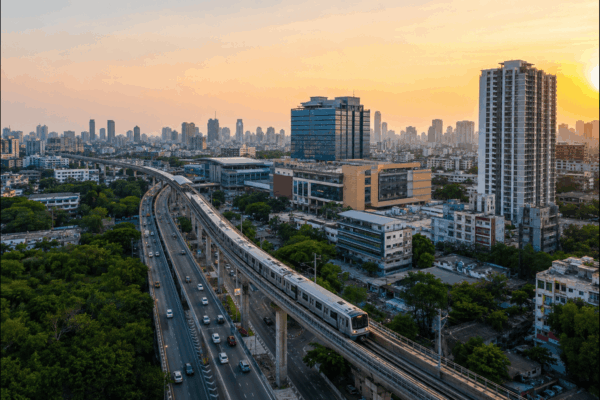
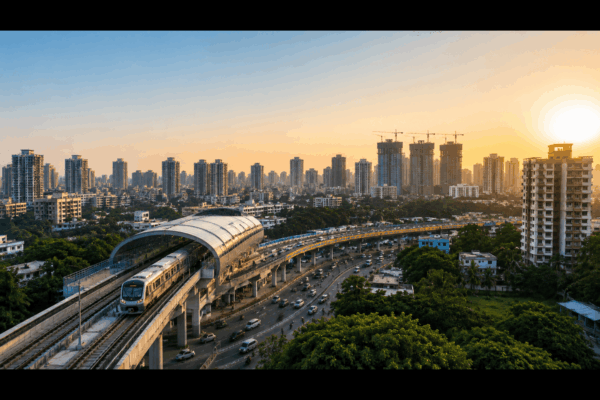
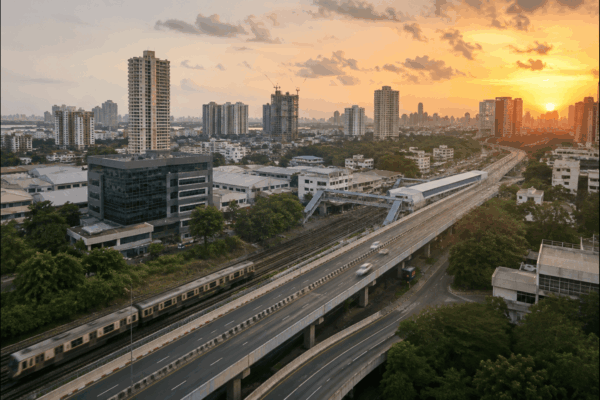
Infrastructure driven by connectivity has made an important impact on the growth of Pune’s residential sector, especially along important corridors of development. The development of infrastructure such as roads, ring roads, and metro rail connectivity is enhancing their attractiveness to potential buyers.
The existence of social infrastructure like educational institutes, health care facilities, shopping complexes, and entertainment facilities also increases the desirability of residential areas. These days, it has become necessary for buyers to find an area where the location is not only convenient for work but also for all other requirements. This holistic development of a city makes Pune very convenient for living.
Conclusion: A Future-Ready Residential Destination
The residential property market in Pune exhibits the perfect harmony between stability of demand, growth through infrastructure development, and changes in consumer preferences. What distinguishes Pune from others is its capacity to provide a value proposition that includes factors such as affordability, accessibility, quality of life, and scalability through an urban setup.
Pune has ceased to be an upcoming destination; today, it stands as a matured and structured destination that provides balanced opportunities with respect to risks and returns for all parties involved as the city develops further with time.
For all stakeholders, Pune offers unique prospects with respect to liveability as well as future investment prospects.
Tags