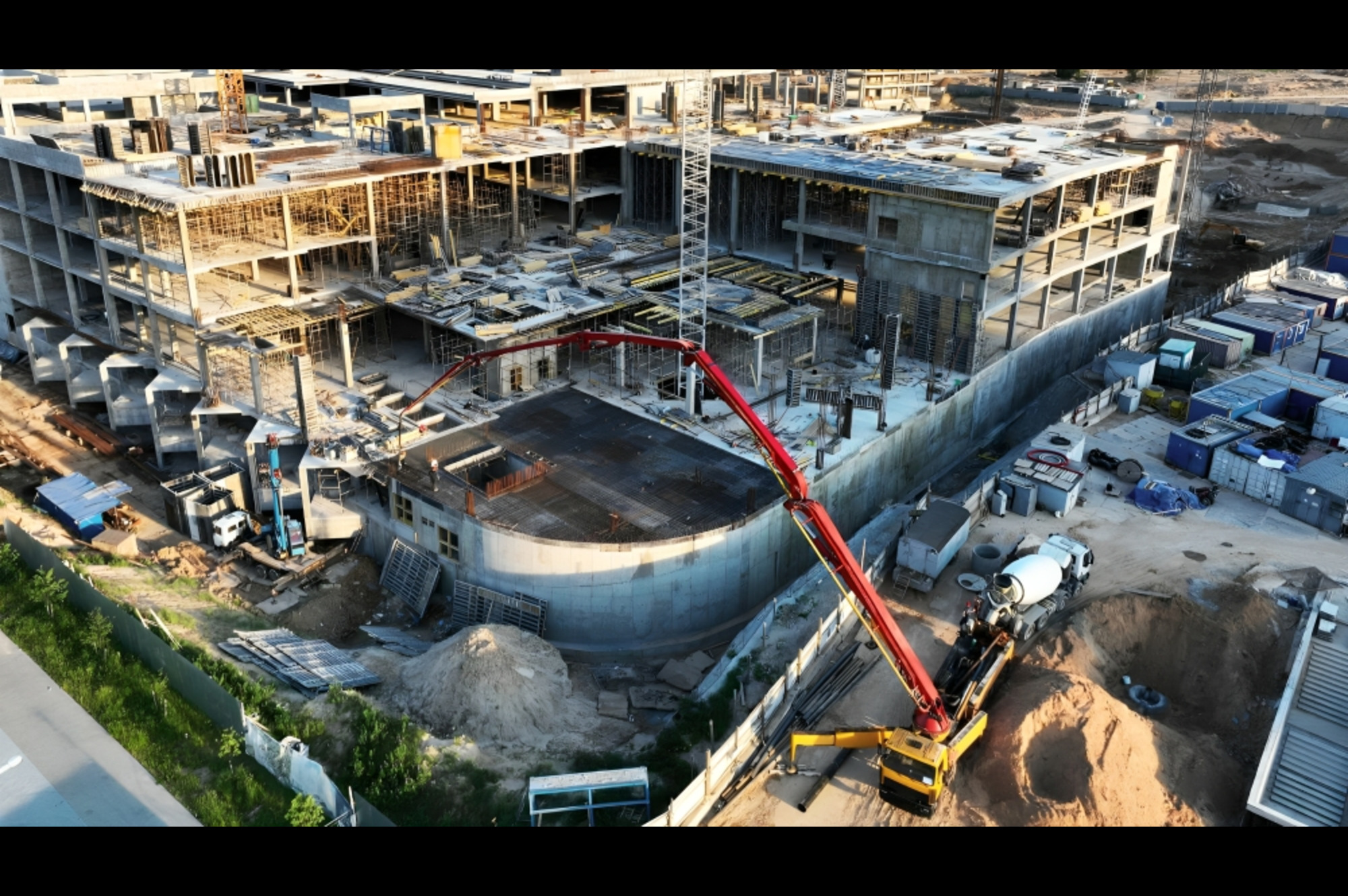
Concrete Equipment: Raising Compliance Standards

India’s infrastructure and real estate sectors are witnessing strong momentum, driving a steady rise in demand for concrete and advanced construction equipment. From high-rise developments to large infrastructure projects, the concrete equipment industry is evolving, with technology, sustainability, and efficiency becoming central to modern equipment solutions
In a span of just a few days, several announcements regarding the launch of new real estate projects—both residential and commercial—have been making the rounds. Emails from developers highlight project launches across major urban centres such as Mumbai, Bengaluru, Chennai, Hyderabad, and the National Capital Region (NCR), particularly Gurugram. Adding further momentum to this trend is the rapid emergence of Global Capability Centres (GCCs), which are driving demand for premium office spaces. At the same time, projects are increasingly reaching vertical extremes, with skyscrapers and high-rise developments becoming a defining feature of India’s urban landscape. A glance at any leading newspaper reveals full-page advertisements for new property launches across these cities, reflecting the strong momentum in the real estate sector.
Complementing this growth is the massive push in infrastructure development. With the government striving to transform India into a $5 trillion economy, large-scale investments are being channelled into highways, metros, airports, ports and urban infrastructure. Together, these developments are fuelling an unprecedented demand for concrete—the fundamental material that underpins modern construction.
Supporting this surge in construction activity is a sophisticated ecosystem of concrete equipment designed to ensure precision, efficiency and durability. Behind every successful concrete pour lies machinery such as batching plants, transit mixers, concrete pumps, placing booms and finishing equipment. Over the years, concrete machinery has evolved significantly to meet the demands of large-scale infrastructure development, faster project timelines and increasingly stringent quality standards. As India accelerates investments in highways, metros, high-rise construction and smart cities, advanced concrete equipment is playing a critical role in delivering consistent quality, improving labour productivity and ensuring timely project execution. It is therefore no surprise that the market for concrete equipment in India is witnessing strong and sustained growth. According to IMARC Group, the India concrete equipment market was valued at USD 630.23 million in 2024 and is projected to reach USD 836.56 million by 2033, registering a compound annual growth rate (CAGR) of 3.20% during 2025–2033. The report highlights that rapid infrastructure development, accelerating urbanisation, and sustained growth in the real estate sector are among the key factors driving the expansion of the country’s concrete equipment industry. “Government policies like the National Infrastructure Pipeline (NIP) and PM Gati Shakti have been the primary engines of growth, creating a predictable $1.4 trillion pipeline that justifies large-scale fleet investments. The recent Budget 2026 introduced the ₹200 crore Scheme for Enhancement of Construction and Infrastructure Equipment (CIE), specifically targeting the localization of high-value machinery like tunnel-boring machines and high-reach pumps to reduce import dependency. Furthermore, the mandatory transition to CEV Stage-V emission norms as of 2025 has forced a technological leap toward cleaner diesel and hybrid systems, aligning Indian manufacturing with global standards,” says VG Sakthikumar, Chairman & Managing Director, SCHWING Stetter (India).
Advancing Tech Transformation
The concrete equipment industry is steadily undergoing a significant transformation as infrastructure projects across the country are increasingly governed by strict timelines and execution benchmarks. To keep pace with the government’s emphasis on faster project delivery, equipment manufacturers are focusing on innovation, sustainability and improved operational efficiency. What was once a largely mechanical and labour-intensive process has gradually evolved into a highly digitised and intelligence-driven ecosystem, where automation, telematics and advanced monitoring systems are enhancing productivity and precision. “Concrete equipment has undergone a significant transformation, driven by tighter project timelines and the need for speed, precision, and sustainability. Modern concrete plants are designed to combine the flexibility of batch production with the predictability of continuous systems. Batching plants today operate on microprocessor-based platforms such as AS1 control systems. These systems enable precise material batching, in flight control, and real time water correction. Sustainability has seen strong progress as well. Equipment now supports the use of recycled aggregates and supplementary materials such as fly ash and slag. Energy consumption is reduced through efficient motors and optimised drives, while advanced dust control systems and water recycling technologies ensure compliance with environmental norms. Noise reduction features make operations viable in urban environments,” says Dheeraj Panda, Managing Director, Ammann India.
The rapid emergence of high-rise buildings in major urban centres has added a new dimension to the industry’s evolution. The growing preference for taller structures in the real estate sector has increased the demand for specialised equipment capable of handling high-volume and high-altitude concrete placement, further pushing manufacturers to develop more advanced and efficient solutions. “The evolution of concrete equipment has been closely aligned with the increasing complexity and diversity of infrastructure projects in India. We have seen demand shift towards application-specific, high-performance solutions whether it is high-rise urban construction requiring high-reach boom pumps like BSF 42.10H & SY 43 , BSF 47.10H and special machine 62m height boom pump, metro and tunnelling projects needing shotcrete machines and stationary pumps, or large infrastructure projects demanding high-capacity batching plants capacity from 60 cum to 120 cum and transit mixers 8 Cum & 9 Cum,” says Rom Prakash Bhagat, Business Head, Putzmeister Concrete Machines.
Concrete equipment manufacturers are increasingly shifting towards localisation to reduce costs and minimise reliance on imported raw materials, which not only ensures faster supply of components but also enhances adaptability to India’s construction requirements. “In recent years, the company has focused on localizing advanced engineering to suit India’s growing infrastructure and high-rise construction needs. Key innovations include the domestically manufactured 56-metre boom pump (S56SXF), enabling efficient high-rise concreting, and multifunctional solutions like the FBP 29 Truck Mixer Pump, which enhances productivity while reducing on-site equipment requirements. Our collaboration with MAXtruder GmbH has also strengthened capabilities in precast construction, supporting faster, off-site project execution,” says VG Sakthikumar, Chairman & Managing Director, SCHWING Stetter (India).
Cities Reshaping Equipment Needs
Rising concerns over dust pollution and its associated health risks are driving a shift in the concrete equipment industry towards cleaner and more controlled solutions such as batching plants, transit mixers, and concrete pumps. “Yes, regulatory restrictions in major urban centres – such as GRAP norms in Delhi-NCR and similar dust and noise controls in cities like Mumbai and Pune – have led to a clear shift in demand across concrete equipment categories,” says VG Sakthikumar.
To minimise the harmful effects of dust pollution on human health and reduce environmental degradation, the concrete equipment industry has increasingly adopted modern solutions that prioritise efficiency, safety, and sustainability. “Cities are increasingly limiting on site concrete production, which has accelerated the move toward centralized batching supported by transit mixers and concrete pumps. As a result, batching plants, pumps, and precast solutions are seeing strong demand. This is closely linked to large urban programs such as Smart Cities, housing initiatives, and metro expansion, where timelines are tight and consistency is critical. Equipment has evolved to address these challenges,” says Dheeraj Panda.
Modern batching plants are specifically designed to capture fine particles, thereby minimising dust emissions, while advanced noise suppression systems ensure compliance even in densely populated urban areas. Temperature-controlled concrete mixes further enhance operational efficiency, reduce energy consumption, and minimise material wastage, ensuring consistent quality across projects. In addition, electric and hybrid equipment is gaining early adoption, offering zero emissions and significantly lower noise levels, making them particularly suitable for urban construction sites and high-rise developments. “Electric and hybrid pumps are gaining preference in dense urban areas due to lower emissions and noise, while high-reach boom pumps help minimize on-site footprint. Restrictions on storing raw materials have further accelerated the adoption of RMC and large, dust-controlled batching plants, along with CNG and electric transit mixers for operations in low-emission zones,” says VG Sakthikumar.
On the technological front, real-time monitoring systems help maintain consistency, while predictive maintenance and automated diagnostics reduce unplanned downtime and extend the life of critical components. The focus of the industry is clearly shifting from reactive, on-site improvisation to planned, controlled, and environmentally compliant operations. Smart, fuel-saving concrete pumps, hybrid solutions, and fully electric pumps exemplify this trend, combining high performance with sustainability. As India’s infrastructure and real estate sectors continue to expand, these innovations are enabling contractors to meet stringent project timelines while adhering to environmental regulations, paving the way for a cleaner, safer, and more efficient construction ecosystem.
Compliance Meets Innovation
The concrete equipment industry is increasingly adapting to a complex regulatory landscape that governs emissions, noise, dust control, and urban operability. “Regulatory compliance today is not a constraint, it is a design principle. We adhere to all challenges as a motivation to serve better and sustainable to the world and we are having advance featured concrete pumps to cater and support higher emission norms engines,” says Rom Prakash Bhagat. Diesel-powered concrete mixers, pumps, and batching plants are required to comply with Bharat Stage (BS-VI) emission norms, which limit particulate matter, nitrogen oxides, and hydrocarbons to reduce air pollution. “We are navigating tightening regulatory landscapes by transitioning from a “diesel-only” to a “multi-fuel and electric” ecosystem. To comply with CEV Stage-V emission standards and urban pollution mandates like Delhi’s GRAP, we have localized the production of India’s first 100% Electric Transit Mixer (eRMC) and CNG variants, which allow for silent, zero-emission operations in sensitive city cores and tunnels,” says VG Sakthikumar.
Urban operability restrictions in major cities such as Mumbai, Delhi, and Bengaluru have driven faster adoption of electric, hybrid, and low-emission construction machinery. At the same time, energy efficiency guidelines issued by the Bureau of Energy Efficiency are encouraging the use of energy-optimised motors, advanced drive systems, and the integration of renewable energy within concrete plants, supporting both sustainable operations and compliance with regulatory requirements. “Our equipment integrates advanced hydraulics, smart control systems, and telematics, enabling customers to deliver consistent output across varied project conditions with optimized fuel efficiency along-with sufficient energy savings, reduced wear parts consumption, and better material utilisation. Operational efficiency is being redefined, customers expect higher pumping heights for higher concrete grades above than M50, faster cycle times, and near-zero downtime, and that is exactly where Putzmeister continues to lead,” says Rom Prakash Bhagat.
The Machines of Tomorrow
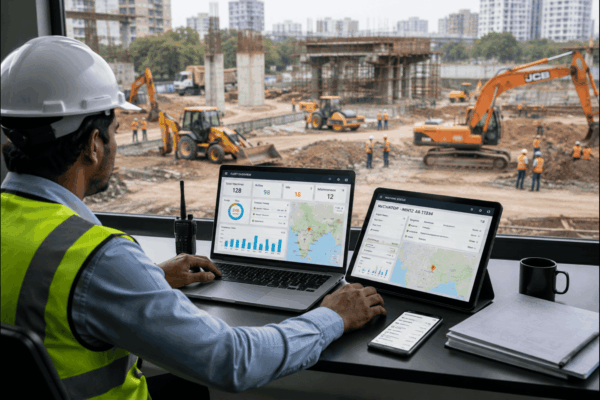
Change is constant – and technology is no exception. IoT, automation, and predictive maintenance are now standard features in concrete equipment, giving contractors and infrastructure players greater control over operations and enabling real-time monitoring of fuel consumption, concrete pressure, and equipment performance. This helps optimise utilisation, reduce idle time, and enhance overall productivity.
The concrete equipment industry is not all set to embrace the next wave of technology, and it will be shaped by autonomy, predictive intelligence, and sustainable energy systems. “The next phase of transformation will be driven by data and intelligence. For us, innovation has been at the core. We are everyday working on newer technologies and system to cater to our customers. Some of the key technologies include advanced telematics and real-time fleet management systems; AI-driven products with predictive maintenance to minimise downtime; Automation in pumping and batching for precision and repeatability and remote diagnostics and service interventions. In the long term, we will also see movement towards semi-autonomous operations and electrification, especially in controlled environments. The objective is simple maximum output, minimum uncertainty,” says Rom Prakash Bhagat.
“Looking ahead, the future will be driven by greater adoption of autonomy, artificial intelligence, and digital ecosystems. Equipment is expected to evolve toward semi-autonomous operations, with features such as AI-based navigation, auto-leveling, and collision avoidance enhancing safety and efficiency on job sites. The emergence of digital twin technology will enable real-time simulation and smarter decision-making, while innovations like 3D concrete printing will redefine construction by enabling faster, more resource-efficient execution. Sustainability will also be a key focus, with next-generation batching plants moving toward circular systems capable of recycling materials and reducing waste. Overall, the industry is progressing toward smarter, safer, and more sustainable construction solutions that significantly improve productivity, quality, and project delivery timelines, says VG Sakthikumar.
Paving a Smooth Road Ahead
As India accelerates towards its $5 trillion economy vision, the scale, speed, and complexity of construction will continue to intensify, placing concrete equipment at the very core of infrastructure development. The industry is no longer just supplying machinery—it is enabling transformation through intelligent, sustainable, and high-performance solutions. With rapid advancements in automation, electrification, and digital technologies, concrete equipment is evolving into a strategic asset that drives efficiency, ensures quality, and enhances project execution. Going forward, the convergence of innovation, environmental responsibility, and infrastructure demand will define the sector’s trajectory, making it a critical pillar in building India’s next-generation infrastructure landscape.
Tags