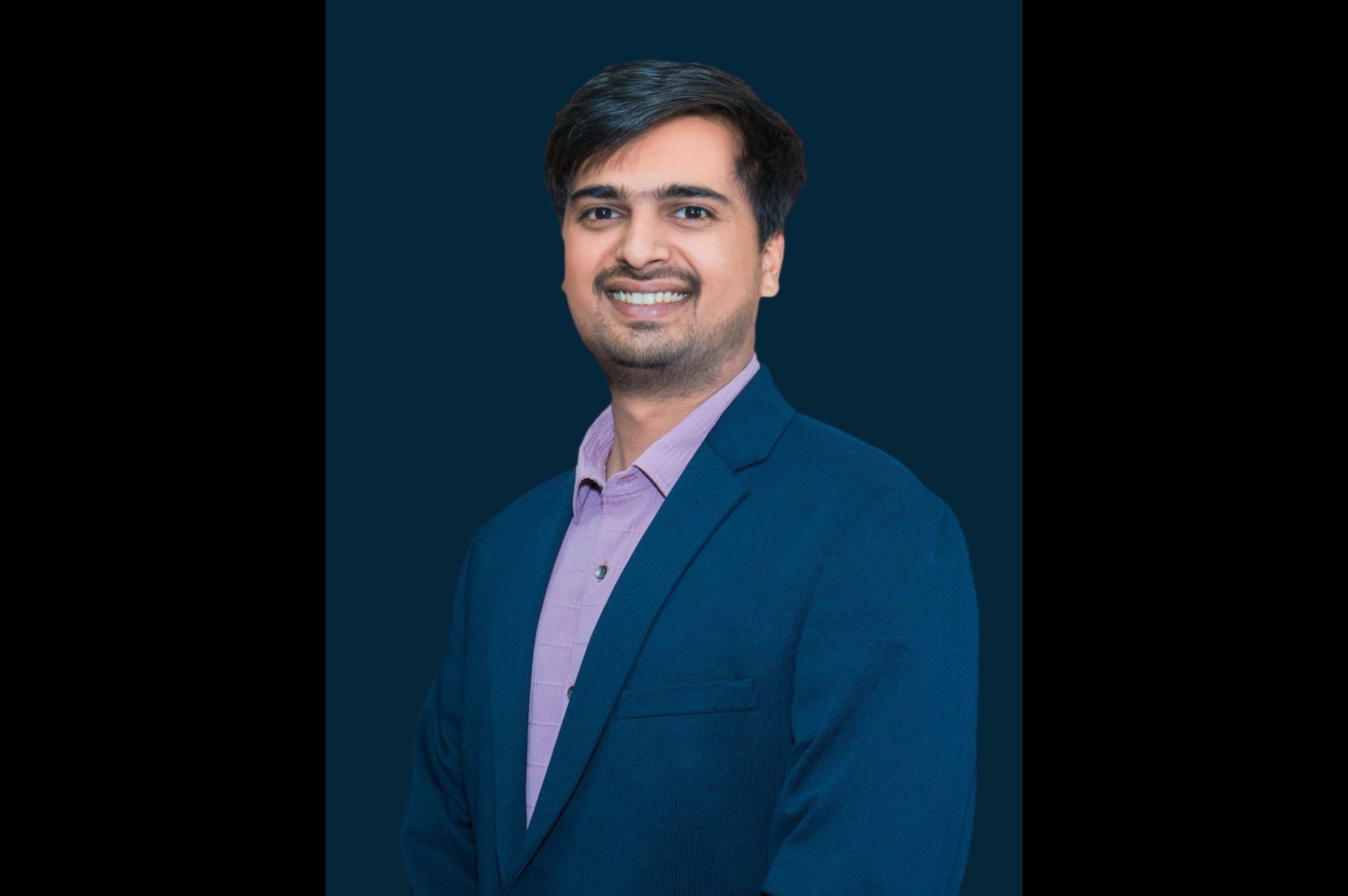
Interview: Yogesh Kudale, Co-Founder and CEO, TAYPRO

The solar industry has long acknowledged soiling and O&M inefficiency as performance killers, yet adoption of systematic, technology-led cleaning and monitoring solutions has remained surprisingly slow — in your direct experience across plant typologies and geographies, what is the actual magnitude of generation loss that asset owners are leaving on the table, and why has the industry been structurally slow to price that loss into its O&M investment decisions?
The honest answer is that asset owners are leaving between 10% and 25% of their annual generation on the table, and in Rajasthan during peak summer dust season, I have seen that number touch 40% on individual string clusters before any cleaning intervention. That is not a technical estimate; that is what our SCADA data from live deployments shows. The structural reason for inaction is how projects are financed and benchmarked. The revenue model for most Indian IPPs is built around a tariff and a designed capacity utilisation factor. Soiling loss erodes the DCF, but it erodes it silently and gradually. It does not trigger a contract breach, it does not show up as a headline in a board report, and it does not get a line item in O&M budgets that were set at financial close. The energy yield model at financial close typically assumes a soiling loss of 1 to 3% annually based on location data, not real-time monitoring. What we actually measure is 5 to 15% across our fleet. That gap between modelled soiling assumption and actual soiling reality is the money no one is accounting for. There is also an attribution problem. If a 100 MW plant produces 8% less than projected in a quarter, the asset manager first looks at irradiance variance, then inverter efficiency, then curtailment. Soiling is fourth on the list. Our intelligence platform changes this by isolating soiling loss at the string level using SCADA data, giving the asset manager a number with a rupee sign next to it. That is when the conversation changes from environmental responsibility to operational finance.
Robotic cleaning systems are not new to the solar sector, but reliability, inter-row adaptability, and total cost of ownership across diverse mounting configurations remain genuine engineering challenges — where has TAYPRO made its most consequential design choices in the hardware architecture of its cleaning robotics, and what failure modes in competing systems or earlier iterations fundamentally shaped the product you have today?
The single most consequential design decision we made was to build a dual-pass mechanism, air first, then microfibre, rather than choosing between them. Every competitor, when they started, made a binary choice. Israeli companies chose air because it is contact-free and eliminates panel warranty concerns. Indian companies often chose microfibre because it handles the sticky, humidity-cemented dust common in coastal and semi-arid zones. We decided early that choosing one was a product compromise that would eventually limit us to half the market. The failure mode that drove that decision was something we observed in the field before we commercialised. Air-only systems leave a thin adhesive film on the panel after removing loose dust, particularly in morning deployments when there has been any overnight humidity. That film hardens. Three cycles later, the panel glass looks clean to the naked eye but has a micro-layer of cemented particulate that air alone cannot remove, and which has measurably degraded the anti-reflective coating’s performance. We built our dual-pass specifically to address this. The second major design choice was around communication architecture. Our first-generation units used Wi-Fi and cellular. We had a 300 MW deployment where cellular coverage was inconsistent across different sections of the farm, and we lost telemetry from 40% of our fleet for a 72-hour window. Nothing broke, the robots kept cleaning, but we were operationally blind. That experience drove us to build the Hybrid LoRa Mesh system, where every robot is simultaneously a sensor node and a communication relay. The mesh self-heals when a node drops out. That failure became our most defensible technical differentiator. The third was battery management. We discovered that fixed power profile discharge wastes 30 to 40% of battery capacity on terrain that does not need it. Our AI terrain-mapping BMS addresses that, and the result is the 6 km range per charge that separates us from the 2 km ceiling that most competitors operate at. Every major product decision at TAYPRO was a direct response to a failure we observed. We do not engineer by spec sheet; we engineer by failure analysis.
Water scarcity is increasingly a project-level constraint, not merely an environmental talking point — many utility-scale solar sites in India’s high-irradiance zones are precisely where water access is most stressed; how does TAYPRO’s dry or waterless cleaning approach perform against wet cleaning on soiling removal efficiency metrics, and what performance ratio improvement data from real deployments can you point to that makes the case commercially rather than conceptually?
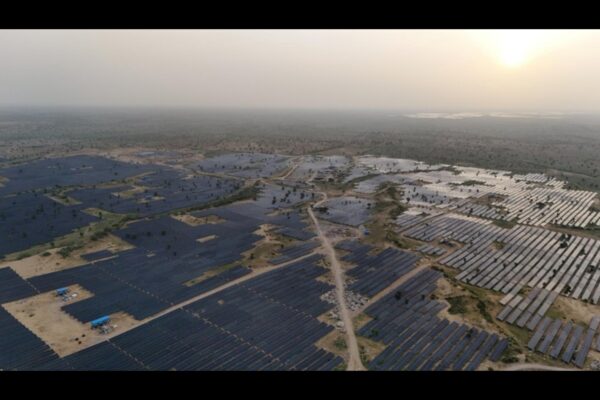
Let me separate the technical answer from the commercial one, because they make different arguments. On cleaning efficacy, our dual-pass system, high-velocity air followed by microfibre cloth, achieves a cleaning ratio of above 95% compared to a hand-cleaned reference panel in controlled NISE certification testing. For dry, loose particulate dust, which dominates in Rajasthan and Gujarat, a well-designed waterless system is at minimum equivalent to water-based cleaning and often superior because there is no residual water streak, no dissolved salt re-deposition, and no risk of cementation from mineral-rich water drying on the glass. For sticky, adhesive dust, the more challenging soiling type, our microfibre pass is specifically engineered to handle it without water. Wet cleaning’s real advantage is removing heavily cemented deposits after extended no-cleaning periods. What we tell customers is to run our system on a high-frequency schedule so that heavy soiling never accumulates. On the commercial case from deployments, across our 5,000-plus MW of served capacity, performance ratio improvement post-cleaning typically runs between 4% and 12% per cycle, depending on soiling history. The 360 MW Rajasthan project we completed in 2024 showed an average PR recovery of 6.8% per cleaning cycle against pre-cleaning baselines. Translated to revenue, at a tariff of INR 2.80 per kWh and 360 MW capacity, a 6.8% performance ratio recovery generates approximately INR 6 to 8 crore of incremental annual revenue. Our total system cost for that project, hardware plus AMC, was a fraction of that. That is a less-than-one-year payback. The water argument is increasingly regulatory and reputational. Several large IPPs now have explicit water-positive commitments in their sustainability reports. When we tell clients that our deployment will save tens of millions of litres of water annually, that becomes a reportable ESG metric.
AI and predictive analytics are being layered onto solar O&M by multiple players, but the quality of insight is only as good as the underlying sensor architecture and data resolution — how has TAYPRO structured its intelligence stack, what parameters are you actually monitoring and at what granularity, and how does your system translate raw plant data into maintenance decisions that meaningfully reduce downtime and degradation rather than simply generating dashboard outputs?
This is where most companies in this space have the architecture backwards. The industry tendency is to start with a dashboard and work backwards to the sensors. We started with the question: what decisions do we need to make, and what data do we need to make them correctly? There are three decisions that matter in solar O&M: when to clean, when to maintain the robot, and when something is failing at the plant level. Everything we built serves one of those three. For the cleaning decision, we monitor real-time dust density via onboard optical particle sensors, ambient humidity and temperature from our weather station integration, wind speed and direction, precipitation forecast from meteorological APIs with a 72-hour horizon, and critically, the soiling ratio computed from SCADA data at the string level. We run this at 15-minute intervals across the fleet. The AI model outputs a cleaning priority score for each row of each plant, weighted by the economic value of cleaning that row now versus waiting. A plant in Rajasthan during the May dust season gets a very different schedule than the same plant in December. For the robot maintenance decision, we monitor motor current draw in 10-millisecond sampling intervals, battery voltage curves during discharge and charge cycles, wheel encoder data, brush engagement resistance, and vibration frequency signatures from the cleaning head. Our ML model has been trained on breakdown event data from 3,500-plus deployed units over several years. When motor current shows a deviation pattern that historically precedes a bearing failure by 72 to 96 hours, we get an alert. We dispatch a technician before the failure occurs. This is the capability behind our same-day breakdown resolution guarantee. For plant-level intelligence, we correlate our robots’ soiling data with the plant’s actual generation output at the inverter level. Over time, this builds a soiling map of the plant showing which areas soil fastest, which have persistent shading from structural deposits, and which rows deliver the highest incremental yield per cleaning cycle. That map drives cleaning sequencing and becomes a valuable asset for the O&M team. What we have built is not a dashboard. It is a decision engine. Every alert in TAYPRO Console has a recommended action attached to it.
The CAPEX versus OPEX decision is frequently where technology adoption stalls — asset owners with constrained balance sheets or merchant risk exposure are reluctant to commit upfront capital for O&M technology, yet OPEX models require the technology provider to absorb performance risk; how is TAYPRO structuring its commercial models to move customers from evaluation to deployment, and where do you draw the contractual boundary around performance guarantees?
The CapEx versus OPEX question is the most important commercial design problem in this space. We run three models in parallel. The CapEx model, outright sale plus AMC, works for new plants where the developer is designing the cleaning solution into the project from day one. They are already spending the capital, they want asset ownership, and the payback math is clean. The OPEX pay-per-use model, what we call TAYPRO OPEX, is for legacy plants that were not designed for robotic cleaning. These are typically 3 to 7 year old plants where the asset owner has an O&M budget but no CapEx appetite. We send the robots, we do the cleaning, and we charge per cycle. The customer has no hardware risk, no maintenance cost, and a fixed cost per cleaning event. The willingness to pay per cycle is higher than the amortised cost of robot ownership, and that premium compensates us for carrying the asset risk. On performance guarantees, we guarantee uptime on the robot fleet. Same-day breakdown resolution is contractual. What we do not guarantee is a specific performance ratio improvement. Performance ratio depends on irradiance, curtailment, inverter health, module degradation, and temperature, most of which we do not control. We instead guarantee cleaning frequency, cleaning quality validated against a reference panel, and robot availability.
Scaling a hardware-plus-software O&M solution across hundreds of megawatts of installed capacity requires an entirely different operational discipline than pilot deployments — what does TAYPRO’s service delivery infrastructure look like at scale in terms of field teams, remote diagnostics capability, spare parts logistics, and response SLAs, and at what fleet size does your model begin to demonstrate the unit economics that justify institutional adoption?
Scaling a service-intensive hardware business is the hardest operational problem in this space. We built a service model designed for 10,000 units from the day we had 500. The first layer is remote. TAYPRO Console provides 24 by 7 visibility across every deployed robot. AI generates service tickets before a human identifies a problem. Software-level faults are resolved remotely, handling approximately 60% of all service events. The second layer is regional field teams. We have service hubs near India’s major solar belts, including Rajasthan, Gujarat, Madhya Pradesh, Andhra Pradesh, and Karnataka. Each hub carries standard spare parts. When a hardware fault is flagged, the nearest hub dispatches within the hour. This enables our same-day guarantee. The third layer is hardware design. We engineered field serviceability with modular components and standardised parts. A trained technician can complete most repairs in under 45 minutes on-site. On unit economics, the model becomes compelling for customers at around 50 to 100 robots, equivalent to roughly 15 to 30 MW depending on plant configuration. Beyond that scale, service cost per robot drops significantly, and AMC revenue funds further expansion.
India’s solar O&M market is fragmented between large EPC players with in-house maintenance arms, specialized O&M contractors, and OEM service agreements — where does TAYPRO sit in that ecosystem, are you positioning as a technology vendor, a service provider, or a performance partner, and how do you avoid channel conflict with the EPC firms that are simultaneously potential customers and potential competitors?
We position ourselves as a performance partner. A technology vendor sells a product. A service provider maintains it. A performance partner has skin in the game on asset output. That is where we operate. EPC firms are not competitors; they are our fastest-growing channel. An EPC building a large plant can either invest in developing a robotic cleaning capability or partner with us and offer a proven solution backed by market leadership and certifications. Most choose a partnership. We structure partnerships, so EPCs earn a commercial margin while maintaining the client relationship. We provide the technology and service backbone. Conflict arises only when an EPC has invested in a competing technology. In those cases, we compete directly at the asset owner level on technology and total cost of ownership.
Manufacturing depth and supply chain resilience have become strategic imperatives in Indian hardware companies following the disruptions of recent years — to what extent is TAYPRO’s robotics and sensor technology manufactured domestically, where are the critical component dependencies, and what is your roadmap toward deeper indigenization both as a cost lever and as a qualification advantage for government and PSU procurement?
Our manufacturing is 100% India-based from our Pune facility. This is a strategic choice and a competitive advantage. Mechanical components such as chassis, rails, drive systems, brush assemblies, and microfibre cloth are fully indigenised. PCBs and control electronics are designed in-house and manufactured locally. The AI and firmware stack is entirely our own. Import dependencies exist for certain sensor components, including optical dust sensors, IMU chips, and LoRa transceivers, primarily sourced from Taiwan and the US. These are multi-supplier dependencies rather than single-source risks. Our roadmap includes developing domestic alternatives within 18 months and leveraging India’s growing electronics manufacturing ecosystem over the next 3 to 5 years.
International markets — the Middle East, Southeast Asia, and parts of Africa — present high-irradiance, water-stressed solar portfolios with asset owners who arguably have a greater willingness to invest in performance technology than price-sensitive Indian IPPs; how advanced is TAYPRO’s thinking on export strategy, what market entry model are you evaluating, and what product or certification adaptations are required to make your solution genuinely deployment-ready outside India?
We are currently at the evaluation and early partner identification stage for international expansion. The Middle East is the highest-priority market due to severe soiling conditions and a higher willingness to pay. The primary product adaptation required is thermal engineering to support operation at temperatures up to 50°C. Southeast Asia is the second priority, where high-humidity adhesive dust conditions align strongly with our dual-pass system advantage. Our entry model is not direct sales. It is a technology licensing and channel partner approach. Regional EPC or O&M players will deploy and operate our systems using TAYPRO technology and platform access.
The long-term value creation question for any deep-tech O&M company is whether it remains a point-solution provider or builds toward becoming the operating system for solar asset performance — how does TAYPRO define its strategic destination over the next five to seven years, and what capabilities — whether in energy storage integration, grid-edge intelligence, or asset lifecycle analytics — are you building now that are not yet visible in the current product but are essential to that larger institutional ambition?
Our strategic ambition is to become the operating system for solar asset performance. The cleaning robot is the entry point, but the long-term value lies in data and intelligence. Every robot acts as a sensor node, generating data on soiling rate, panel condition, weather correlation, and generation impact. Over time, this builds a unique dataset across thousands of deployments. In the near term, we are developing module health scoring, predictive soiling models by geography and season, and benchmarking tools that allow asset owners to compare performance across similar plants. In the longer term, the platform will expand into module inspection, vegetation management, generation forecasting, and integration with energy storage decisions. The trajectory is clear. Cleaning generates revenue. Data builds the platform. The platform defines the company.
Tags