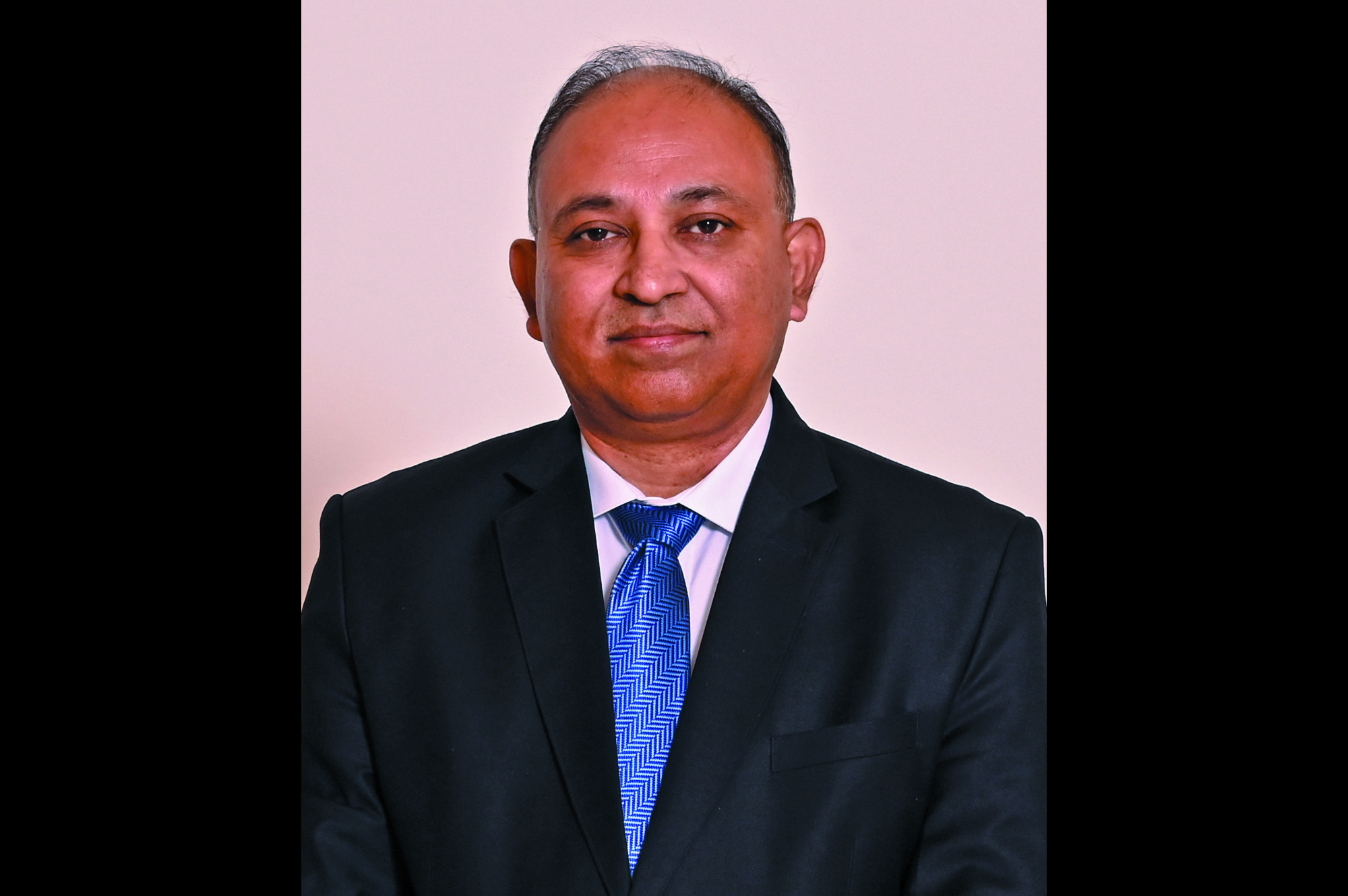
Interview: Indranil Roy, Director – Mining, Material Handling, Processing & Balance of Plant Business, TKIL Industries

Could you give us an overview of TKIL Industries’ metal and mining operations and your role in driving growth in this sector?
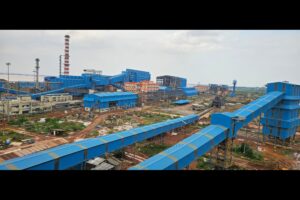
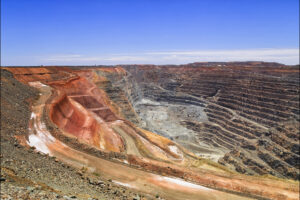
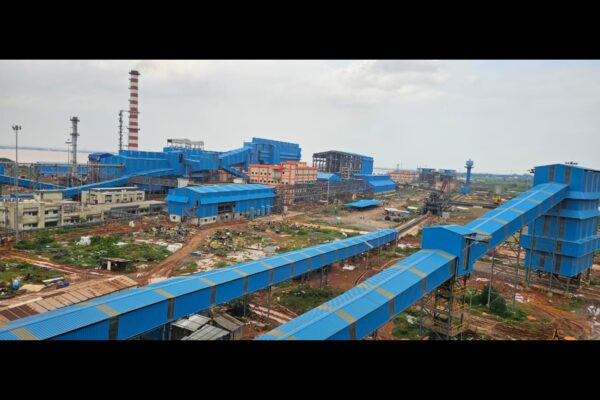
TKIL Industries formerly known as thyssenkrupp Industries India, is a leading player in EPC and heavy engineering in several core sectors including sugar, cement, energy and mining. In the Mining and Bulk Material Handling (M&BMH) space, we design, manufacture and commission advanced material handling systems including long distance conveyors, pipe conveyors, crushers, screens, ball mills, stackers, reclaimers, wagon tipplers, apron feeders, sizers, ship loaders/unloaders, bucketwheel excavators, etc, for both domestic and global customers. TKIL has recently acquired the know-how and intangible assets of Noen a.s. of Czech Republic which has expanded the product portfolio as well as the global outreach of TKIL Industries. Our mining and metals sector has a strong portfolio that encompasses open-cast mining methodologies, comminution (crushing and grinding), bulk material handling systems, and port logistics systems. Our factories in Pimpri (Pune) and Hyderabad have modern fabrication and machining capabilities that are certified by respectable standards including ASME, IBR, and ISO. Our focus is on delivering optimal engineering solutions tailor made to customers requirements and executed with necessary safety precautions to prevent incidents and accidents at the workshops, site and during operation. We also support our customers with spares parts support for the entire lifespan and operation and maintenance of the plants. We are now expanding to integrated solutions which incorporate mechanical robustness with digital intelligence-systems that both boards performance and reduces lifecycle costs . My focus in this space will be to continue to drive growth through strategic partnerships and technology partners as well as positioning TKIL Industries as India’s trusted partner for the modernization of India’s mining.
How do you see India’s metals and mining industry evolving in the next 3–5 years, especially in terms of domestic production versus imports?
India’s mining sector is in a transition phase characterized by policy amendments, critical minerals missions, and sustainability efforts toward self-reliance. Over the next 3-5 years, I expect to see the following three shifts occurring: First, domestic production is likely to increase significantly. With amendments to the Mines and Minerals (Development and Regulation) Act (MMDR Act) and the launch of the National Critical Minerals Mission, India is expected to accelerate exploration for minerals such as lithium, nickel, and rare earth elements. These initiatives will help reduce reliance on imports while strengthening domestic refining and processing capabilities. Second, the focus will gradually move towards value addition rather than the export of raw ore. India is expected to transition from being primarily a raw ore exporter to becoming a major mineral processor and refiner. This shift will drive investments in crushing, beneficiation, and processing plants. Finally, sustainability and technological advancement will play a critical role in shaping the future of the sector. Efficiency, safety, and environmental compliance will increasingly determine competitiveness in mining. Companies that successfully integrate advanced technologies such as AI, IoT, and renewable energy solutions will be better positioned to lead the next phase of growth in the industry.
How are raw material costs, supply chain disruptions, and global demand impacting your operations and strategy?
The fluctuation in raw material prices, particularly in steel and steel alloys, remains a challenge for equipment manufacturing margins; in response, we have localized a higher level of supply chain to decrease import reliance. Disruptions to the global supply chain since the pandemic have reinforced the need for resilience. TKIL Industries has broadened the supply chain, ramped up domestic sourcing, and implemented a digital monitoring system throughout the supply chain to ensure project continuity. On the demand side, the renewed focus on renewable energy and infrastructure at the global level has translated into robust mining activity, creating a spike in demand for all equipment, including crushers, conveyors, and bulk handling systems. We are adjusting our production and research and development planning to allow us to meet this increased global and domestic demand.
What are the key challenges faced by the Indian mining sector, and how is TKIL Industries addressing them?
The mining sector in India is challenged by regulatory delays, infrastructure challenges, skill shortages, and environmental restrictions. We have tackled these challenges by providing energy-efficient, dependable machinery to decrease miner operational costs; keeping five-star safety ratings at our facilities (British Safety Council); offering EPC services that help mitigate project delays; and developing systems for dust suppression, noise control, and energy recovery – helping customers meet sustainability needs, and compliance. Our strong in-house manufacturing and design capabilities give flexibility and reliability to adapt to India’s evolving mining landscape.
How do you see the role of technology and automation in enhancing operational efficiency and safety in mining?
Automation and technology change the game in mining. They bring less downtime – more accuracy – and ensure worker safety. We are embedding technologies and smart automated controls across our crushing and material handling systems. We are including features such as vibration and energy monitoring, predictive maintenance alerts, and automated lubrication as part of the design. We have also integrated SAP-based digital manufacturing systems into the production of our plants, safety automation tools which ensure tracking of compliance and performance. In design engineering we are focusing on exploring digital twins, real-time performance dashboards and AI predictive maintenance for both equipment and systems.
With the growing demand for green minerals critical to renewable energy and EVs, how is TKIL Industries positioning itself to explore, process, or supply these minerals sustainably and at scale?
The world is increasingly turning to renewable energy and electric vehicles. This has increased the importance of minerals like lithium, cobalt, and nickel. While we do not engage in the actual extraction of minerals, we are positioning ourselves as an important technology and infrastructure enabler for this green transition. We are developing solutions for more efficient mineral processing, waste recovery systems, and more energy-efficient handling equipment. Our new projects in green hydrogen and biogas, such as the partnership with SoHHytec (Switzerland), is evidence of our commitment to decarbonization and circular economy practices. This places us in a strong position as a partner in the clean energy value chain from mining to processing and hydrogen production.
How is TKIL Industries leveraging digital tools, AI, or IoT for predictive maintenance, process optimisation, or resource management?
Digitalization is integral to TKIL Industries’ operational perspective. Digitalization-enabled monitoring of machine health and maintenance through the use of IoT-connected sensors and analytics platforms allows TKIL Industries to minimize machine downtime. The same digital perspective applies to the execution of work and project management, where TKIL Industries uses digital project management and ERP systems to track the accuracy of planning and resource allocation (both direct labour and material), and is actively developing smart dashboards to allow clients to see near real-time plant performance metrics (energy consumption, equipment wear, throughput, and emissions). The digitalization process enables TKIL Industries and its clients to move from reactive decision-making to proactive decision-making, while also improving reliability.
With India focusing on infrastructure development, EVs, and renewable energy, what is TKIL Industries’ growth strategy for the next three years? Are there plans to expand capacity, enter new markets, or diversify your metal and mining portfolio?
Yes, our growth roadmap aligns closely with India’s development priorities. Over the next three years, our focus will be on scaling up our manufacturing facilities and exploring new sites to meet growing demand, while also expanding into green hydrogen, biogas, and waste-to-energy segments. Our partnership with SoHHytec marks the first step toward creating sustainable industrial ecosystems. We supply conveying, stockyard, crushing, and mining equipment and systems to markets such as the Middle East, Africa, and Latin America. We intend to strengthen this presence through local partnerships and service facilities. Our R&D centres are working on next-generation crushing and screening systems that are energy-efficient, low-maintenance, and digitally connected. As decarbonisation gathers pace across industries, we aim to lead the way by offering clean, dependable, and smart engineering solutions that contribute to India’s net-zero ambitions.
To conclude, how would you define TKIL Industriesrole in shaping the future of India’s mining and metals ecosystem?
Our legacy in engineering excellence and innovation uniquely positions us as India redefines its mining future. Our responsibility is to connect industrial growth with environmental sustainability–by designing technologies that are safer, cleaner, and more effective. We will not just be equipment providers, but also solution partners–enabling India’s transition to sustainable mining, critical mineral security, and low-carbon industrialization. For the next decade, we will combine engineering precision with digital to drive the next chapter of India’s metals and mining transformation.
Tags