Battling Dust Hazards in India’s Construction Sector

by Kamarajan M, Senior Head – Education, British Safety Council India
India’s construction industry is a burgeoning sector projected to reach INR 36.58 trillion by 2028. It currently contributes 8% to GDP and employs over 40 million people, according to the India Construction Industry Report 2024. However, rapid construction growth seems to have significantly increased dust pollution.
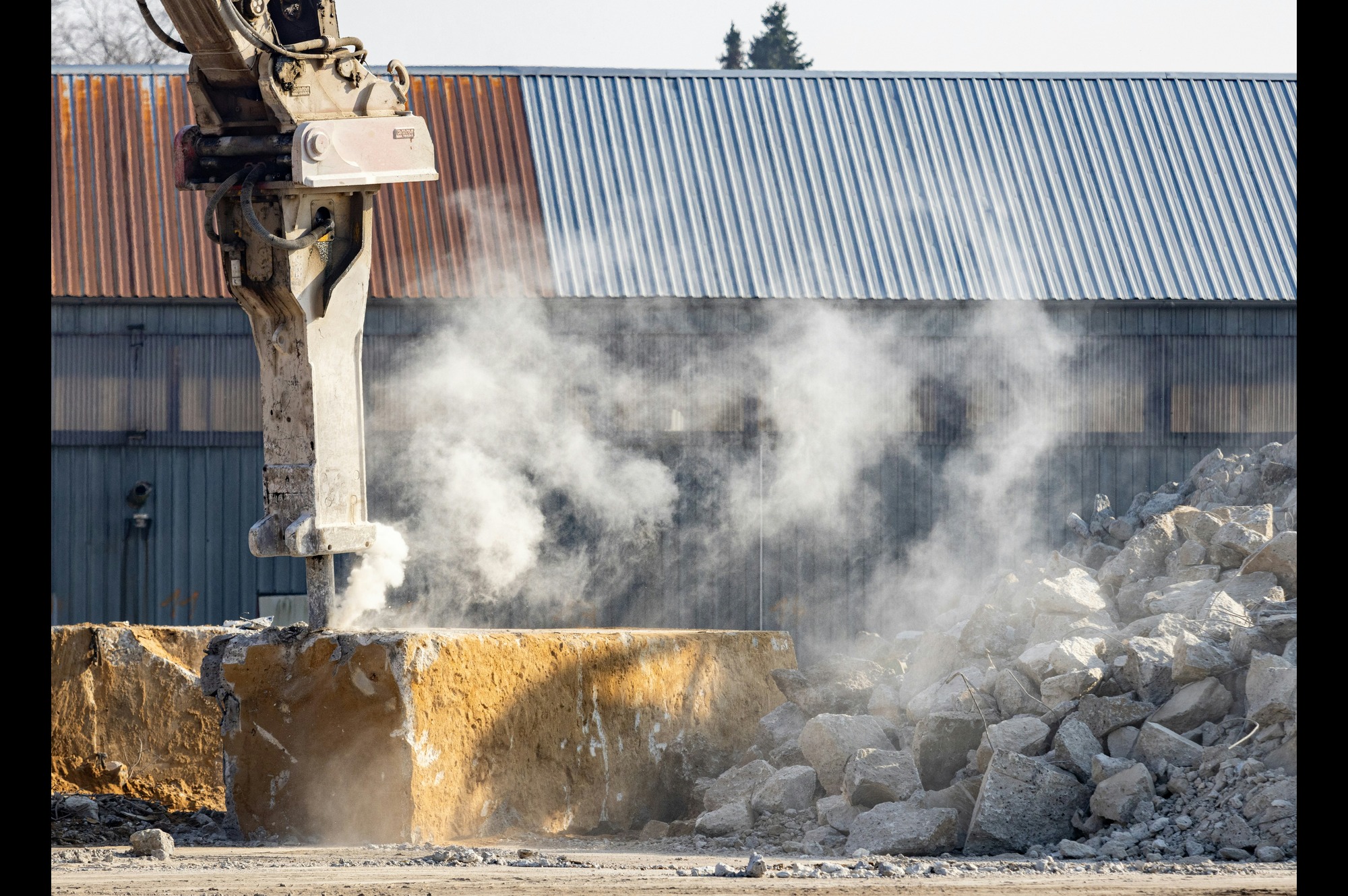
According to a CEEW (Council on Energy, Environment, and Water) study, construction site dust lowers air quality locally and regionally. In cities like Delhi, Amritsar, and Chandigarh, this re-suspended dust accounts for about 18% to 20% of PM2.5, leading to frequent criticism of the sector for poor air quality. According to CEEW, excavation, earthwork, roadwork, and especially vehicle movement are significant sources of dust pollution at work sites. Unpaved site roads can raise PM2.5 levels during vehicle movement by about 2.5 times compared to when no work is done.
Dust in the windpipe
Poor ventilation on construction sites leads to dust concentration, increasing workers’ risk of respiratory diseases by inhaling the polluted air throughout the day. Construction dust is hazardous due to its high concentration and respirable silica content. Research shows that silica levels in the atmosphere are especially elevated during finishing, bricklaying, carpentry, concrete drilling, demolition, mortar mixing, block wall laying, core drilling, cutting, dowel drilling, and grinding—much higher than in typical ambient particulate matter.
Dust is one of the invisible hazards, and hence the risk of its ill health effects is grossly underperceived. Research shows that construction dust causes serious health issues not only among workers but also to nearby residents. Respirable silica (the airborne crystalline silica) is small enough to reach the lungs’ gas exchange areas, called alveoli. High concentrations, especially from quartz, can cause lung diseases like silicosis, pneumoconiosis, COPD (chronic obstructive pulmonary disease), chronic bronchitis, emphysema, lung cancer, as well as renal disorders. Construction workers face elevated risks when cutting concrete. In Hong Kong, silicosis has been the leading occupational disease for decades, with up to 200 cases annually, mainly among construction workers.
The problem is especially severe in developing countries, where many laborers work in unsafe environments without awareness of the risks. Therefore, policymakers and industry leaders must prioritize assessment and control of dust through a coordinated approach to regulate and contain this widespread problem using a tool called as COSHH (control of substances hazards to health, which is specific form of risk assessment).
The push for better regulation
The push for stronger regulation presents India with a critical opportunity to address construction dust hazards. The Central Pollution Control Board (CPCB) and the Union government have introduced new Construction & Demolition (C&D) waste rules and standardized dust mitigation standard operating procedures for on-site materials. These measures are designed to establish consistent protocols for containment, covering, and disposal at both local and municipal levels across all Indian States. The framework provides construction companies with clear procedures and guidelines for compliance, while local authorities are ultimately responsible for enforcement. The expectations of the Government for self-regulation by the industries may work in developed countries with a responsible mindset, whereas India is not yet ready for the culture of self-regulation and hence is the need for enforcement. Builders and contractors must view compliance with regulations not only as an environmental duty but also as a business imperative, ensuring their workers work in as dust-free conditions as possible.
The provision of adequate respiratory protective equipment (RPE), continuous health monitoring every six months as required by law, and practical training of workers in ways and means of protecting themselves against dust hazards has become essential. Mandatory health check-up by the employers for their employees above the age of 40, which is introduced in the new OHSWC Code 2025 is one of the right steps towards health protection to detect possible effects of inhaling harmful dust. However, this is somewhat reactive in nature and a focus on primary controls to reduce the exposure of dust hazards in the workplace is a critical need of the day. This approach will not only protect workers’ health but also help keep healthcare costs low in the long term and sustain productivity in a sector fundamental to India’s economic progress.
Practical and scalable control measures
There are several effective ways to control dust emissions on construction sites. The most important of these are dust control through covering stockpiles of materials, using water sprays or misting systems in cutting and demolition works, and providing wheel washes. Ensuring that roads are either paved or stabilized with temporary materials further reduces dust emissions. Using localized extraction vacuums in cutting and grinding work, as well as simple windbreak fencing or barrier systems, can significantly help control dust emissions in the surrounding area. Prioritizing these measures, from design and procurement to daily operations, avoids dust being a hazard to the workers and the surrounding community.
In general, when selecting a control measure to mitigate dust exposure, it is preferable to follow the hierarchy of controls, with controlling dust at the source being the most effective, followed by protective equipment, which is the least effective.
Importance of Training, Safety Audits, and Behavior Change
Training and behavioral interventions play a supportive role to the technical measures in reducing the exposure to dust hazards. Employee use of properly fitting respirators, safety audits, health education on risk perception and symptoms, and frequent fit testing of the respiratory protective equipment (RPE) can help quickly reduce adverse events. Employers and principal contractors should integrate dust control measures into tender requirements and performance audits, ensuring subcontractors are evaluated on environmental performance as well as on other project metrics.
When dust control measures are specified in the tender specifications, contractors can make provision for them during their bidding process (budgeting). They thus won’t hesitate to provide them during the execution stage. Similarly, when contractors are evaluated for technical competence, appropriate weightage must be given to their environmental performance to ensure they take it seriously during construction. When clients specify dustless processes (wet methods in place of dry methods) and in-built vacuum devices for all dust-generating machines, contractors will be fully prepared with the necessary resources during execution.
Cities should embed construction dust control within broader air-quality management strategies. During winter and after festivals, construction dust combined with traffic emissions and stubble burning further deteriorates urban air quality indices (AQI). Targeted management of construction dust can lead to measurable reductions in residents’ daily exposure to pollution. Local governments should coordinate construction schedules, ban high-dust activities during periods of high pollution, and use mobile monitoring to track chronic sources of dust pollution.
Building capacity for sustainability
Long-term progress depends on incentivizing best practices and building industry capacity to manage dust risks. Financial incentives might encourage contractors to invest in dust-reduction technology, certify ‘low dust’ practices, and adopt comprehensive approaches to construction and demolition (C&D) waste recycling, thereby reducing both material consumption and emissions. Improving access to workplace health services, such as regular medical check-ups and compensation, will particularly benefit migrant laborers, who face the greatest risk.
Tackling construction dust is an imperative task, not only for the environment but also for public health. Effective construction dust management solutions can help to protect workers’ health. It can also help Indian cities in meeting cleaner air targets. With new regulations, India benefits from domestic research and global safety recommendations. The key to success is in the collaborative efforts of developers, the government, and society to ensure India’s progress is clean, safe, and sustainable.
Tags