
Union Budget FY2027: Signals Sustained Momentum for India’s Cement Industry

by Anupama Reddy, Vice President & Co-Group Head, Corporate Ratings, ICRA
The Union Budget for FY2027 is a positive for the cement sector with the Government’s continued focus on infrastructure capital expenditure (capex), affordable housing, rural development, multimodal logistics and sustainability‑linked incentives. Together, these measures support cement demand, new capacity additions, and improved revenue visibility for FY2027.
Increased outlay towards infrastructure and housing augurs well for sector
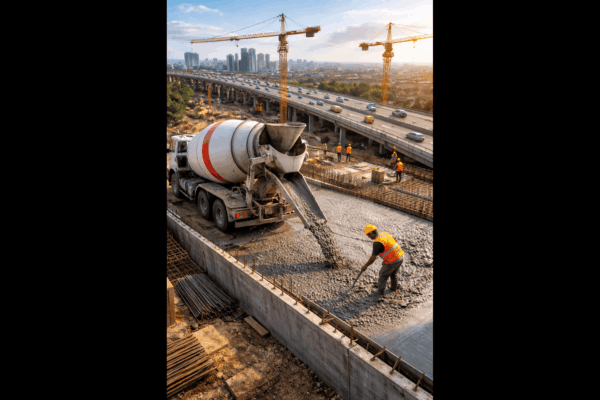
The Government of India’s (GoI) capex for FY2027 budgetary estimate (BE) stands at Rs. 12.2 trillion, up 11.5% over FY2026 revised estimate (RE). Apart from the capex, allocation for the GoI’s Grants in Aid for creation of capital assets has been hiked by 60% to Rs. 4.9 trillion for FY2027 BE, albeit on a downward revised print for FY2026 RE. This takes the effective capital expenditure to Rs. 17.2 trillion, a stellar 22.1% higher than the FY2026 RE. This infrastructure-led spending is expected to drive cement demand across roads, railways, industrial corridors, urban development, and logistics projects.
Further, there has been a 4.8% increase in the budgetary allocation towards the agriculture sector and rural development. Also, Pradhan Mantri Awas Yojana (PMAY)-Gramin programme has witnessed higher allocation by 69% at Rs. 549.2 billion for FY2027 BE compared to Rs. 325 billion for FY2026 RE. These will support income for farm households and thereby aid demand for rural housing, which is a significant contributor (35-36%) to the overall cement demand.
Simultaneously, allocation towards PMAY-Urban has witnessed an increase to Rs. 186.3 billion for FY2027 BE from Rs. 75 billion for FY2026 RE. Further, the GoI’s focus on Tier 2 and Tier 3 cities with population above 5 lakh and the creation of City Economic Regions (CERs) with an allocation of Rs. 50 billion per CER over five years, would accelerate construction activities across housing, transport and urban services, supporting broad-based cement consumption over the medium-to-long term horizon (3-5 years). The announcement of seven high speed rail corridors is also expected to stimulate regional development, which in turn is likely to support cement demand.
Eastern region expected to lead capacity expansion
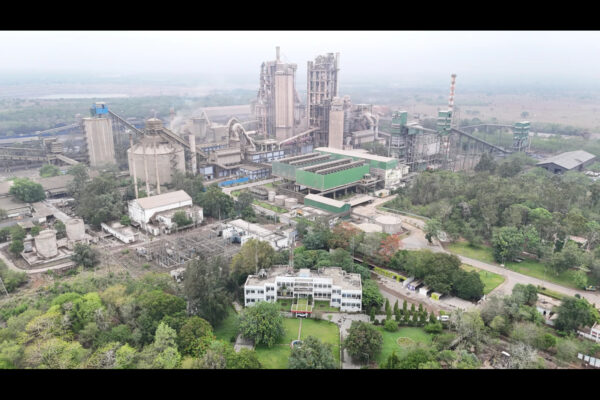
Amid healthy demand prospects, major cement companies are expanding their capacities, both through the organic and the inorganic routes, to further strengthen their market share. The industry is expected to add 42-44 million MTPA capacity in FY2027, after 43-45 million MTPA addition in FY2026. The eastern region is expected to lead the expansion and may add 28-30 MTPA followed by the southern region at 20-22 MTPA during FY2026-FY2027.
Pricing dynamics and cost structure remain exposed to geopolitical dynamics and commodity price movement
The cement prices are expected to rise by 2-4% on an average in FY2027, following a 3-5% increase in FY2026, supported by strong demand. Blended realisations have already increased by ~4% in 9M FY2026 on a YoY basis, with upward revisions across most regions except the West. On the other hand, input prices are expected to see a marginal uptick in FY2027, resulting in some moderation in earnings. Moreover, input prices, especially pet coke and freight, are linked to global crude prices, which in turn are exposed to international geopolitical dynamics and commodity price movements.
Share of renewables to accelerate further in the medium term
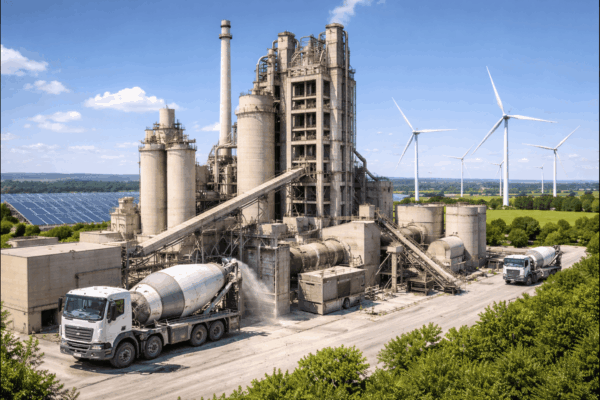
Traditionally, the cement industry has been energy intensive with one of the highest consumers of coal, resulting in greenhouse gas emissions, waste and pollution. While the domestic cement companies have been investing in alternative/renewable energy sources in the recent years, the Budget’s outlay of Rs. 200 billion over the next five years towards Carbon Capture Utilization and Storage (CCUS) technologies across five industrial sectors, including cement, will accelerate decarbonisation, enabling the sector’s path towards achieving net-zero carbon goals.
With cement being a bulk, transport-expensive commodity, market centres have been concentrated on a regional basis. The Budget announcement of new dedicated freight corridors (connecting Surat and Dankuni), operationalisation of 20 additional National Waterways over the next five years, launch of the Coastal Cargo Promotion Scheme to raise the modal share of waterways and coastal shipping from 6% to 12% by 2047 is expected to enhance multimodal freight efficiency, reduce logistics costs and improve the sector’s carbon footprint.
Outlook: Volumes expected to grow by 6-7% in FY2027
Overall, ICRA expects India’s cement industry to record a 6-7% growth in volumes in FY2027, supported by sustained demand from housing and infrastructure sectors. Cement demand remained strong in 9M FY2026, registering a 9.1% YoY growth. The OPBIDTA/MT for ICRA’s sample set of cement companies[1] is estimated to moderate slightly to Rs. 880-930/MT in FY2027, driven by rising input costs, after a 12-18% increase to Rs. 900-950/MT in FY2026. Despite this correction, the credit profiles of large cement producers are expected to remain stable, driven by a healthy growth in the operating income, steady operating margins and comfortable leverage metrics.
[1] ICRA’s sample set includes ACC Limited (ACC), Ambuja Cements Limited (ACL), JK Cements Limited (JKCL), JK Lakshmi Cement Limited (JKLC), The Ramco Cements Limited (RCL), UltraTech Cement Limited (UCL), Dalmia Bharat Limited (DBL), Birla Corporation Limited (BCL), Shree Cement Limited (SC), Sagar Cements Limited (SCL), and Heidelberg Cement India Limited (HCL), which cumulatively account for 74% of the industry capacity.
Tags