
The Rise of Digital Construction: Why BIM is Becoming the Default Language of Global Infrastructure

by Roy Aniruddha, Founder & Chairman, TechnoStruct Academy
As construction shifts decisively toward digital-first workflows, Building Information Modelling (BIM) and Virtual Design & Construction (VDC) are redefining how infrastructure is planned, built, and managed. With measurable gains in collaboration, cost control, and schedule reliability, BIM is no longer an optional tool but a foundational methodology shaping resilient, efficient, and inclusive infrastructure development worldwide
Market estimates for the Global BIM Industry indicate that by the end of 2025, the Total Addressable Market will be approximately USD 4.5 billion. As digital construction and digital workflows become standard across global infrastructure, the sector is witnessing strong growth. Over half of construction companies using BIM have reported significant reductions in rework and improved schedule reliability, confirming that digital construction is rapidly becoming an essential element of modern projects. These trends reflect an industry-wide transformation in how buildings and infrastructure are conceived and delivered, driven by BIM and VDC adoption worldwide.
Digital Templates, or Blueprints, with Real-World Consequences
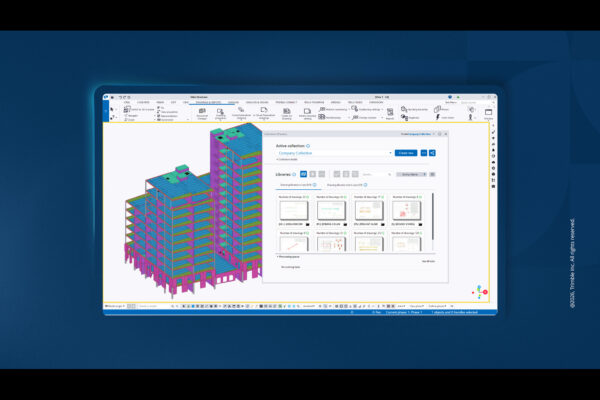
The benefits of coordinated collaboration are substantial when all stakeholders—architects, contractors, civil engineers, and site supervisors—work together on a shared digital model throughout the project lifecycle. Tools such as clash detection, 3D visualisation, scheduling, cost estimation, and material tracking operate within this unified structure. Unlike traditional printed drawings, these digital templates are stored electronically and updated in real time, reducing ambiguity and discrepancies across teams.
This results in fewer surprises on-site, reduced rework, faster schedules, and improved cost control. Designers no longer rely on static printed blueprints but instead work on continuously updated digital versions, minimising disputes over drawings and delays caused by inconsistent information. This shift represents not an incremental improvement but a fundamental revolution in project design and management.
Lasting Infrastructure: Planning for Long-Term, Not Just Launch Day
Historically, once construction was complete, most project data was archived or lost, with drawings filed away and critical knowledge retained only in the memory of project teams. BIM and VDC transform this by digitally modelling the entire lifecycle of infrastructure—from construction to maintenance, renovation, and eventual demolition.
For example, when engineers need to repair or refurbish a bridge, they can access a comprehensive digital record detailing how it was originally constructed. This continuity of data enables more resilient, safer, and environmentally sustainable infrastructure, while supporting smarter maintenance, upgrades, and adaptive reuse throughout the asset’s lifecycle.
Inclusion and Opportunity: Paving the Way for Broader Participation
BIM’s rise is also democratising access to complex infrastructure projects. Historically, large firms dominated due to superior documentation and coordination capabilities, while small and mid-sized contractors struggled to compete. Cloud-based BIM and VDC platforms now enable these smaller players to collaborate globally using sophisticated digital models, allowing them to participate more equitably in large-scale projects.
This digital accessibility creates new opportunities for talented engineers and agile contractors to succeed based on capability rather than organisational size. The impact is particularly significant in developing and emerging economies, where infrastructure demand is high but traditional capacity has often been limited.
The Challenges: Why Digital Transformation is Not Easy
Despite its advantages, digital transformation in construction comes with challenges. Successful adoption requires significant upfront investment in software, hardware, and workforce training. Issues such as interoperability, data standards, and the cultural shift from paper-based planning to digital models continue to present hurdles for many firms.
Companies must rethink how coordination, communication, documentation, and monitoring are managed across projects. For organisations accustomed to manual supervision and traditional workflows, this shift represents not just a technological change but a transformation in operational philosophy. However, these challenges are transitional rather than insurmountable, as the long-term benefits of efficiency, transparency, and cost control outweigh the initial barriers.
Future Engineers Should Adopt BIM Technology Now
For civil engineers, architects, project managers, and facility managers, BIM and VDC will soon become essential professional competencies rather than optional skills. Future projects will be digitally designed before construction begins, with global teams collaborating on unified models across multiple time zones.
Professionals will manage infrastructure assets over decades through continuous lifecycle data, enabling smarter maintenance, upgrades, audits, and compliance. Their performance will increasingly be judged not only on physical execution but also on efficiency, sustainability, cost management, quality, and traceability. As digital construction becomes the global standard, expertise in BIM will be a critical driver of future success in the industry.
Tags