The Intersection of Design, Technology, and Sustainability in Next-Generation Building Materials

by Sandeep Vaidya, Senior Vice President – Operations, Unitile
The building materials industry has experienced a significant revolution. Convergence of design intelligence, improving manufacturing technology, and imperatives of sustainability is redefining a landscape that used to be dominated by engineering that was function-driven. The unification of different services is no longer a trend but rather becoming a crucial factor in the market for EPC companies that are facing challenges of reduced timeframes, assurance of quality, and limited budgets.
There has been a remarkable transformation in the design ideologies related to building materials, and nowadays, factors such as durability and load-bearing capacity are not the only ones taken into consideration. Contemporary design merges aesthetics, functionality, constructability, and environmental performance into a single value proposition. Thermal performance, acoustics, fire resistance, durability, and life-cycle costs have become integral to core structural intent for designers. Sophisticated CAD, BIM, and simulation software allows everyone involved-engineering, procurement, and construction contractors, architects, brand owners, and end users-to see what the outcome will be at the concept stage, rather than post-specification. This early engagement reduces design conflicts, improves coordination, and shortens execution cycles.
The shift that is further defining the trend is the focus on design-for-manufacturing and design-for-assembly. Modularity, the ability to parametrize the design, and the other advantages of speedy on-site assembly and easy installation have been recognized to be of great significance in large EPC projects where they are able to completely change project economics. Traditional multilayered composite systems are gradually being replaced by monolithic materials that can perform various functions, which consequently leads to the reduction of materials, interfaces, and complexity of installation. The practice of standardization along with controlled customization, backed by the optimized SKUs and the enhanced packaging, has become more significant, primarily for the projects which need the scalability across different locations.
Manufacturing technology has reached a point where its development has not been so fast in any other times. Even in the scenarios where plants are equipped with CNC production lines, PLC-SCADA systems, Industry 4.0 frameworks, and even AI-powered quality control have now reached wonderful levels of precision, repeatability, and productivity which were previously regarded as unthinkable.
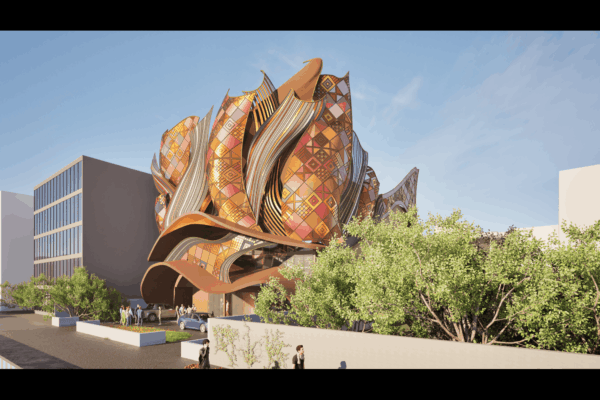
The advanced material science is at the forefront of this development. FRP and GFRP composites, recycled polymers, polymer-mineral blends, laminated composites, and structural-grade aluminum alloys provide geometric complexity, lighter structures, and enhanced durability. These materials that give the construction full artistic freedom are accompanied by the buildability and longevity factors which are crucial for the EPC contractors in mega infrastructure projects.
In addition to the above-mentioned benefits of tech adoption, it also aids in reducing waste, energy consumption, and rework through process control and predictive quality systems. Smart surface technologies such as self-cleaning, anti-microbial, pollution-absorbing coatings are very much similar to the mechanisms that make one product last longer while improving building hygiene and aesthetics.
Furthermore, the combination of sensor-equipped materials and SMART control systems is expanding the scope of structural health monitoring and energy-saving optimization. The combined controls of lighting, ventilation, and thermal performance let buildings interact and improve operational efficiency across the entire asset life based on usage patterns. Sustainability in building materials is turning truly fast into a core business and tender qualification requirement and this is happening through branding.
Sustainability is taking regulatory compliance not only as a factor but project eligibility, cost effectiveness, and access to the global market as well. Producers are utilizing high recycled content inputs like PET, fly ash, slag, agricultural waste, and industrial by-products. Simultaneously, many innovative method of low-energy and production techniques, such as cold-forming processes, low-temperature curing, heat recovery, and closed-loop water systems, are cutting down the environmental footprints of the businesses and their operating costs. The modern plants are increasingly adopting water-neutral or water-positive operations, energy recovery, and waste-to-resource models where by-products are turned into raw materials or sources of alternate revenue streams.
Lifecycle thinking is currently a fundamental aspect of product development via Life Cycle Assessment (LCA) and Environmental Product Declarations (EPDs). The longer life span of the product, corrosion-resistant aluminum and advanced alloys, and lower frequency of replacements are becoming more important for EPC projects looking at total cost of ownership. Green building certifications such as LEED, IGBC, GRIHA, and BREEAM have now become a prerequisite.
The fusion of design, technology, and sustainability is to reinvent future building materials as well as to change the design and delivery methods of EPC projects. Effective design tools, automated manufacturing systems, and innovative materials together lead to quick production, multifunctional performance, and minimal waste. Sustainability, which had been a compliance obligation in the past, has now become an assessable generator of economic and strategic advantages.
For EPC companies, this holistic approach means a combination of speed, predictability, durability, and lifespan efficiency; all of which are crucial in readying the infrastructure of the future. As these changes go on, building materials will cease to be passive elements and will become active ones that contribute to a smarter, greener, and more robust building process.
Tags