Oil & Gas: India’s $100 Billion Energy Power Play

India’s fuel consumption recently crossed historic highs, reinforcing its position as the world’s third-largest energy consumer and the single biggest driver of incremental global demand. With nearly a quarter of global energy demand growth now coming from the country and crude import dependence still hovering close to 85–89%, energy has moved to the centre of India’s economic and strategic planning. Backed by a projected $100-billion-plus investment pipeline across exploration, refining, gas infrastructure and clean fuels, India is executing one of the most ambitious hydrocarbon expansions in modern history—one designed not only to power growth, but to secure resilience and accelerate transition in an increasingly volatile global energy landscape. EPC World explores…
India’s fuel consumption recently touched a historic monthly high of over 21 million metric tonnes, underscoring the extraordinary scale of the country’s expanding energy appetite. As the world’s third-largest energy consumer and importer of crude, India today accounts for nearly one-quarter of global energy demand growth, making it the single largest contributor to incremental global consumption.
At the same time, India continues to import close to 85–89% of its crude oil requirements, a structural reality that places energy security at the heart of economic strategy. Rising demand, industrial expansion and rapid urbanisation are widening the gap between domestic production and consumption, reinforcing the urgency of strengthening supply chains and infrastructure.
Against this backdrop, India is executing one of the most ambitious hydrocarbon transformations in modern economic history. With a projected $100-billion-plus investment pipeline across exploration, refining, pipelines, LNG, biofuels and strategic reserves, the country is building an energy architecture designed not only to meet domestic demand but to shape global energy flows.
Petroleum and Natural Gas Minister Hardeep Singh Puri has repeatedly emphasised this strategic shift, noting that “India’s energy transition will be unique—driven by growth, guided by sustainability, and anchored in energy security.” This is India’s hydrocarbon renaissance: a high-investment, high-impact transformation where growth, resilience and transition converge.
Energy Security as Economic Strategy
Energy security has moved from policy priority to national doctrine. For a fast-growing economy with high import dependence, ensuring reliable and affordable access to fuel is critical not just for industry but for macroeconomic stability.
India’s strategic response has been multidimensional. Underground strategic petroleum reserves carved into rock formations along the coastline now serve as a national energy buffer. These reserves protect against global supply disruptions and geopolitical shocks, reinforcing the country’s ability to manage volatility in international markets. Expansion of storage capacity under public-private partnership models is underway, with new facilities and advanced storage technologies being explored to enhance resilience.
Diversification of crude sourcing has also become central to the security strategy. India has broadened its supplier base beyond traditional geographies, balancing imports across West Asia, Russia, the United States and emerging producers in Latin America and Africa. Flexible procurement strategies and government-to-government arrangements have strengthened negotiating leverage and helped maintain competitive refining margins even during periods of global price volatility.
Speaking at multiple industry forums, the petroleum minister has highlighted this evolving approach: “We are ensuring that India’s energy basket is not only diversified but also resilient. Our goal is to protect the consumer and sustain growth even in uncertain global conditions.”
This strategic shift reflects a deeper recognition—energy security today is inseparable from economic sovereignty.
Budget Signals and Policy Momentum
Recent Union Budget announcements and policy measures reaffirm the centrality of hydrocarbons to India’s growth trajectory. The petroleum sector continues to contribute significantly to government revenues while also serving as a key enabler of industrial and social development.
Budgetary allocations have focused on strengthening clean cooking access, expanding gas infrastructure and accelerating alternative fuels. Direct benefit transfer for LPG continues to ensure affordability for millions of households, supporting sustained adoption of clean cooking energy. The expansion of city gas distribution networks and pipeline connectivity remains a major policy priority, aligning with the broader goal of building a gas-based economy.
The Ministry of Petroleum and Natural Gas has also accelerated reforms under exploration and licensing frameworks to attract investment and enhance domestic production. Digital monitoring platforms and streamlined approval processes are reducing project delays and improving ease of doing business across the hydrocarbon value chain.
Officials have consistently underlined that hydrocarbons will remain indispensable to India’s growth even as the country advances toward cleaner energy pathways. As the Minister stated in a recent public address, “India will continue to rely on oil and gas to power its development, but we are determined to make this journey cleaner, more efficient and increasingly self-reliant.”
The Capex Super-Cycle: Expanding Capacity Across the Value Chain
India’s hydrocarbon ecosystem is currently in the midst of a capex super-cycle. Public sector undertakings and private companies are ramping up investments across exploration, refining, petrochemicals and distribution, signalling strong long-term confidence in demand growth.
Domestic exploration activity has intensified as new basins are opened and advanced technologies deployed to enhance recovery from mature fields. Efforts to improve production through enhanced oil recovery and deeper offshore exploration are aimed at stabilising domestic output while reducing import dependence over time.
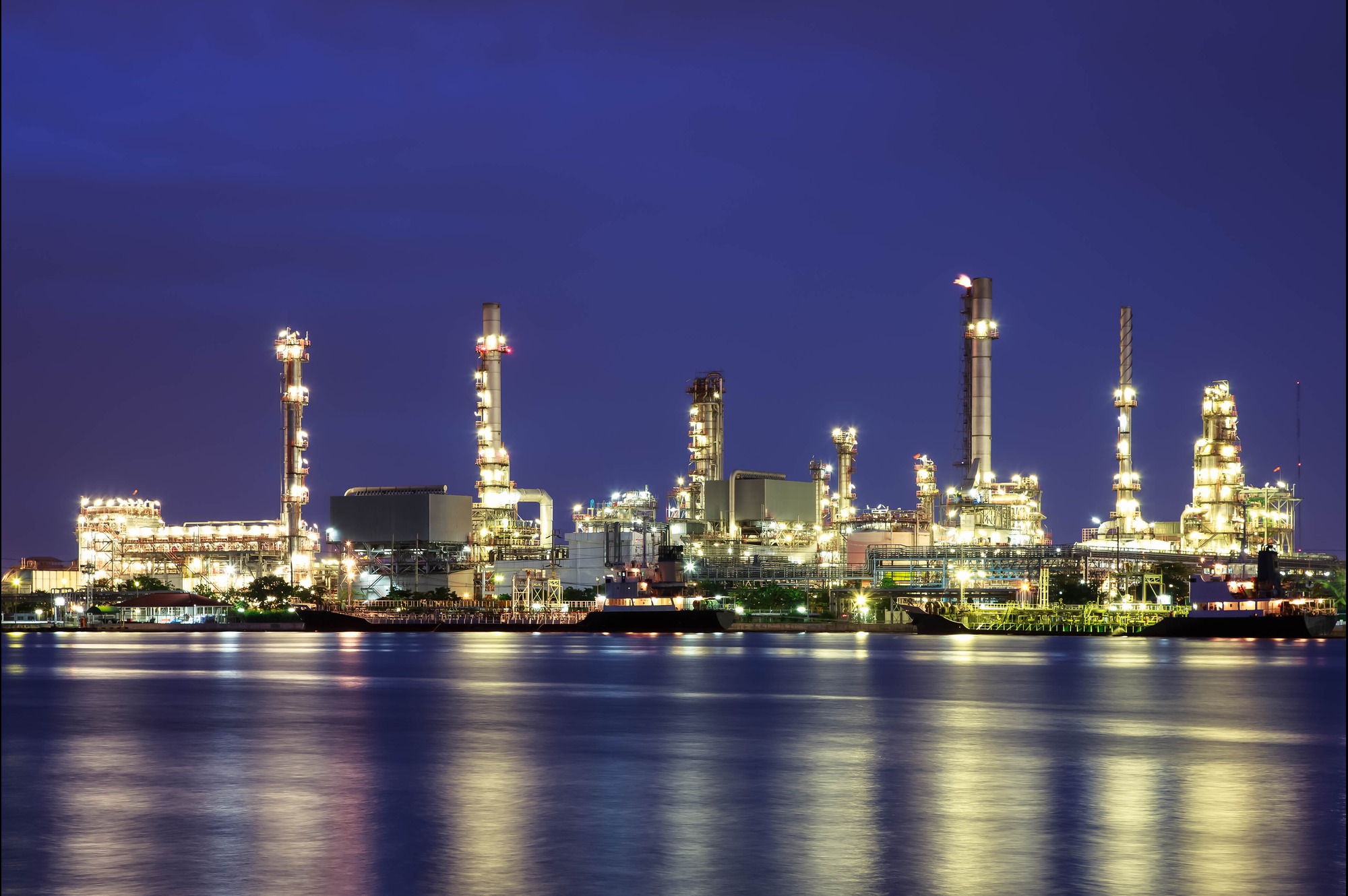
The refining sector remains one of India’s strongest strategic assets. With total refining capacity exceeding 250 million metric tonnes per annum, India ranks among the world’s leading refining hubs. Ongoing expansion projects are expected to raise capacity significantly by the end of the decade, reinforcing the country’s position as a major exporter of refined petroleum products.
The next phase of growth focuses on integration. Modern refinery expansions are being designed as integrated petrochemical complexes capable of producing high-value chemical feedstocks alongside transport fuels. This shift enhances value addition, reduces reliance on imported petrochemicals and strengthens India’s manufacturing ecosystem.
Digital transformation is further reshaping downstream operations. Artificial intelligence, predictive maintenance systems and digital twin technologies are improving efficiency, reducing downtime and optimising crude processing. Even marginal efficiency gains translate into substantial savings when applied across large-scale refining operations.
Ministerial leadership has highlighted the scale of ongoing investment, noting that “India’s energy sector is witnessing unprecedented capital deployment. From exploration to refining to clean fuels, this is one of the largest investments cycles the sector has seen.”
Gas, Biofuels and the Transition Imperative
While oil remains dominant, natural gas is emerging as the bridge fuel of India’s transition. Pipeline infrastructure now spans tens of thousands of kilometres, connecting industrial clusters, fertiliser plants and urban centres across the country. The government’s target is to raise the share of gas in the primary energy mix to 15% by 2030, a significant increase from current levels.
Unified pipeline tariffs and expanded LNG import capacity are making gas more accessible across regions. This has enabled industries to shift toward cleaner fuel, revived fertiliser production and expanded city gas distribution networks for households and transport. The vision of “One Nation, One Gas Grid” is steadily taking shape, creating a unified national gas market.
Biofuels represent another pillar of the transition strategy. India’s ethanol blending programme has achieved near-20% blending levels nationwide, a dramatic increase from negligible levels a decade ago. This has reduced crude import bills, supported farmer incomes and lowered emissions from the transport sector. Investments in ethanol storage and blending infrastructure have strengthened supply chains and ensured nationwide availability.
The compressed bio-gas programme is also gaining momentum, converting agricultural residue and municipal waste into clean fuel for transport and industry. This circular approach not only addresses waste management challenges but also creates new rural income streams and reduces environmental impact.
The petroleum minister has frequently emphasised the importance of this integrated transition, stating: “India’s energy future will be built on a balanced mix—oil and gas for stability, biofuels for sustainability, and emerging technologies for the long term.”
Market Dynamics and Global Positioning
India’s hydrocarbon sector today sits at the intersection of global geopolitics and domestic growth. Shifting trade patterns, supply disruptions and evolving pricing dynamics continue to influence procurement strategies. Yet India’s growing market size and diversified sourcing have strengthened its negotiating power in global markets.
Strong refining margins and improved financial performance among public sector oil companies have enabled sustained reinvestment in infrastructure and new technologies. Structural changes in the economy have also reduced vulnerability to crude price shocks, with oil imports as a share of GDP gradually declining over time.
India’s expanding refining capacity and product exports are enhancing its role as a regional energy hub. From supplying fuels to neighbouring countries to exploring LNG bunkering and re-exports, the country is steadily strengthening its energy diplomacy footprint.
At the same time, policy focus remains firmly on domestic priorities—ensuring affordability, expanding access and supporting industrial growth. As one senior ministry official observed at a recent industry forum, India’s approach is anchored in pragmatism: growth first, transition alongside.
The Road to 2030: Transition Without Disruption
India’s hydrocarbon future will be defined not by contraction but by calibrated transition. Even as electric mobility and renewable energy expand, oil and gas will remain essential to industrial growth, transport and petrochemical demand.
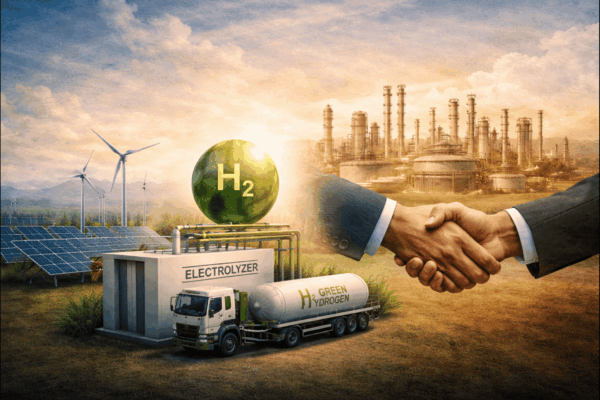
Public sector energy companies are already piloting green hydrogen production within refineries, leveraging existing infrastructure and technical expertise. Fuel retail outlets are evolving into multi-energy stations offering electric charging, CNG and eventually hydrogen refuelling. The objective is not to replace hydrocarbons overnight but to gradually integrate cleaner energy options into the existing ecosystem.
The challenge lies in balancing expansion with sustainability—ensuring that infrastructure built today remains viable in a decarbonising world. India’s approach, characterised by diversification, technological integration and phased transition, offers a pragmatic model for other emerging economies.
As the petroleum minister has articulated in public addresses, “For India, energy transition cannot be about disruption. It has to be about ensuring growth, jobs and security while moving steadily toward cleaner fuels.”
Powering the Next Phase of Growth
India’s hydrocarbon renaissance is ultimately a story of scale, strategy and transition. Record fuel demand, expanding refining capacity, growing pipeline networks and rising investments together signal a sector in transformation.
Strategic reserves and diversified imports are strengthening resilience. Integrated refineries and petrochemical complexes are enhancing value addition. Expanding gas networks and biofuel programmes are advancing sustainability. Together, these efforts are creating a robust energy foundation capable of supporting sustained economic growth.
The investments being made today will determine not only how India powers its economy but how it positions itself in the evolving global energy order. In a world searching for stable engines of growth, India’s energy sector is emerging as one of the most consequential arenas of the coming decade.
The message is unmistakable: India is not merely consuming energy—it is strategically shaping its future, and in the process, redefining the trajectory of global energy demand.
Tags