Metro Expansion & Urban Transit: The Geometry of a Moving Nation

by Tejasvi Sharma, Editor-in-Chief, EPC World
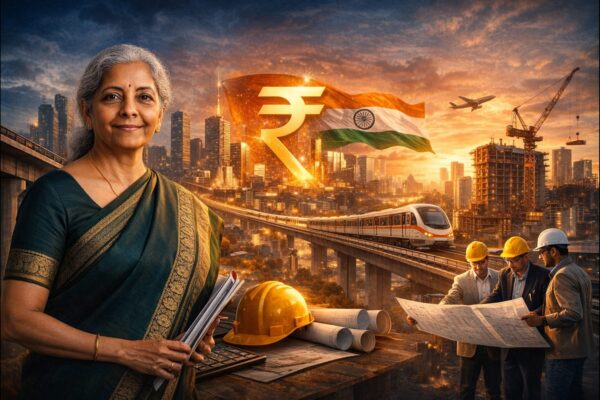
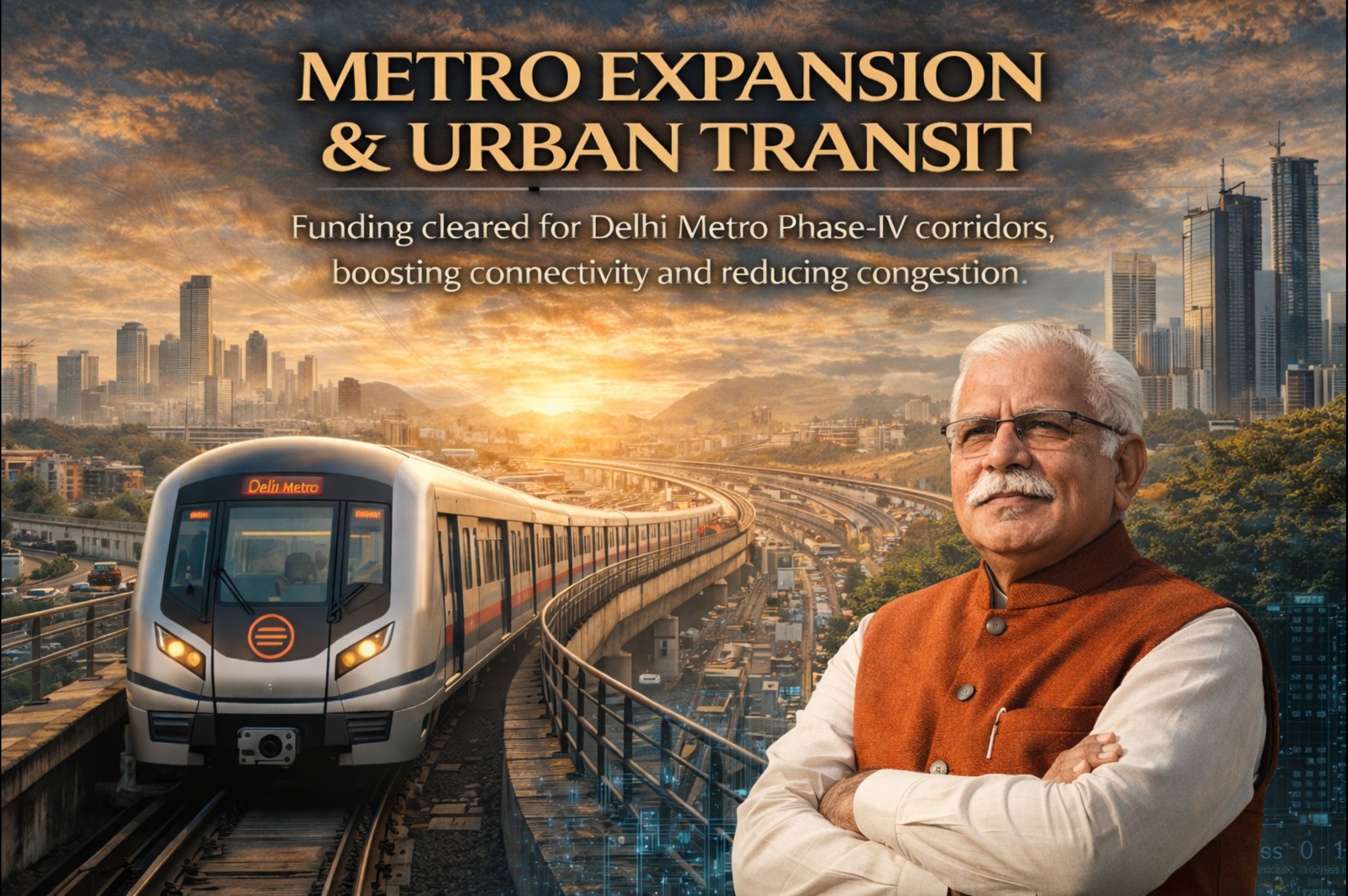
The clearance of funding for the Delhi Metro Phase-IV corridors (47.2 km) is more than an administrative milestone – it is a civilisational signal. It announces, with bureaucratic precision and infrastructural intent, that India’s cities are no longer content with survival logistics; they are engineering mobility sovereignty. In the grammar of urban development, metro corridors are not transport assets – they are spatial constitutions, redrawing how citizens inhabit time, space, and opportunity.
Delhi Metro Phase-IV is not merely an extension of lines; it is the extension of a philosophy. It deepens a doctrine where connectivity becomes productivity, and where transit is treated as an economic instrument rather than a commuter convenience. Every kilometre of metro steel compresses distance, monetises time, and redistributes access. Congestion is not simply reduced – it is structurally reprogrammed.
Urban India is now undergoing a mobility metamorphosis. The metro is no longer a project typology; it is an urban operating system. Cities are being reorganised around Transit-Oriented Development (TOD), station-area densification, multimodal integration, and last-mile ecosystems. Phase-IV corridors will not merely carry passengers – they will carry urban capital flows, revaluing land, restructuring real estate economics, and recalibrating municipal finance.
The contemporary metro is a convergence of disciplines. Digital twins, AI-based traffic modelling, BIM platforms, predictive maintenance algorithms, and smart energy systems are now embedded in transit planning. Urban mobility is becoming cyber-physical infrastructure – steel animated by software, concrete governed by code. The metro is not just built; it is orchestrated.
Delhi’s Phase-IV funding clearance also represents a deeper macro-economic logic. Urban transit is now recognised as a national productivity asset. Congestion drains GDP. Delays corrode competitiveness. Time loss is economic leakage. Every metro corridor is therefore a fiscal intervention – a public-capex multiplier that generates returns in labour efficiency, real estate value, logistics fluidity, and service sector velocity.
What is unfolding across India’s metros – from Delhi and Mumbai to Bengaluru, Chennai, Ahmedabad, Pune, and Hyderabad – is the birth of a multi-city transit civilisation. India is no longer building isolated networks; it is constructing an urban mobility lattice, where metro rail integrates with electric buses, suburban rail, cycling infrastructure, pedestrian corridors, and digital ticketing platforms.
Delhi Metro Phase-IV is emblematic of this new urban doctrine. The corridors are designed not as transport lines, but as urban development spines. Stations become economic nodes. Depots become industrial ecosystems. Interchanges become commercial districts. Transit is no longer peripheral to city planning – it is its structural core.
The language of modern metro systems is equally ecological. Urban transit is now climate policy in motion. Electrified rail corridors reduce vehicular emissions, compress carbon footprints, and enable modal shifts that fundamentally reconfigure urban pollution dynamics. The metro is no longer a commuter solution; it is an environmental instrument.
India’s metro expansion is also catalysing a domestic industrial ecosystem. Indigenous manufacturing of rolling stock, signalling systems, platform screen doors, AFC systems, power electronics, and station MEP is generating a deep supply chain. The metro economy is producing not only mobility, but manufacturing capacity, skilled employment, and export potential.
Funding clearance for Phase-IV is therefore not simply a Delhi story—it is a national narrative. It signals continuity of public capital investment, confidence in urban infrastructure as an economic strategy, and alignment with the Viksit Bharat 2047 vision of integrated, resilient, and productive cities.
Urban transit today is where policy, capital, technology, sustainability, and social equity converge. Metro systems are becoming instruments of inclusion, connecting peripheral populations to central opportunity. Mobility becomes access. Access becomes equity. Equity becomes economic participation.
What makes this moment historic is not the length of corridors, but the philosophy of integration. Urban transit is now embedded in logistics planning, housing policy, energy systems, digital infrastructure, and municipal finance. The metro is no longer a department – it is a platform.
Delhi Metro Phase-IV will reduce congestion. It will boost connectivity. It will improve commute times. But more importantly, it will reconfigure the urban contract between the citizen and the city. It will redefine how Delhi works, moves, grows, and breathes.
India’s cities are not merely expanding – they are evolving. The metro is not a train system – it is a civilisational infrastructure.
Because when a nation builds metros at scale, it is not just laying tracks – it is laying the geometry of its future.
Tags
Related Posts