
Interview: K. Kanna Babu, IAS, Commissioner, Andhra Pradesh Capital Region Development Authority

In this exclusive interaction, K. Kanna Babu, IAS, Commissioner, Andhra Pradesh Capital Region Development Authority (APCRDA), shares insights into the original vision, strategic planning, and progress of Amaravati as Andhra Pradesh’s world-class capital. He outlines how the city is being shaped through sustainable urban design, smart mobility, digital governance, global partnerships, and a strong investment framework—positioning Amaravati as a future-ready, inclusive, and economically vibrant capital for India
What was the original vision behind establishing Amaravati as the capital of Andhra Pradesh? How is it being strategically planned to stand out in terms of urban design, sustainability, and innovation among other Indian capital cities?
Amaravati was envisioned as a people-first, world-class capital city that reflects Andhra Pradesh’s cultural roots while embracing global standards of modernity. An aspirational city being designed to generate employment, create wealth, and alleviate poverty. We want it to be a model city that balances economic growth with environmental responsibility, a place where citizens can live, work, and prosper. Conceived, after the state’s bifurcation, its vision goes beyond governance to symbolize progress, inclusivity, and economic growth. Strategically, Amaravati stands out with iconic urban design, sustainability at its core, and innovation-led growth. The city masterplan integrates blue and green network like green corridors, waterfronts, and iconic public institutions. It emphasizes green energy, efficient public transport, water conservation, and digital-first governance. Dedicated zones for finance, health, knowledge, and technology are being developed to make it a hub of innovation. With its blend of tradition and technology, Amaravati aspires to be India’s first truly people-centric, sustainable capital, setting new benchmarks in liveability and smart urban development.
Could you provide an overview of the major infrastructure projects currently underway in Amaravati? What is the status of key components such as road networks, housing schemes, and landscaping efforts?
Significant progress has been made in Amaravati’s development, with 79 projects tendered and 75 projects already awarded and under execution across key sectors.
Housing & Buildings:
Construction is underway on major landmarks, including the Legislative Assembly, High Court, Integrated Secretariat with HoD Towers, multi-storied residential complexes for MLAs, MLCs, AIS, Gazetted and Non-Gazetted Officers, and bungalows for Hon. Judges, Ministers, and senior officials.
Trunk Infrastructure:
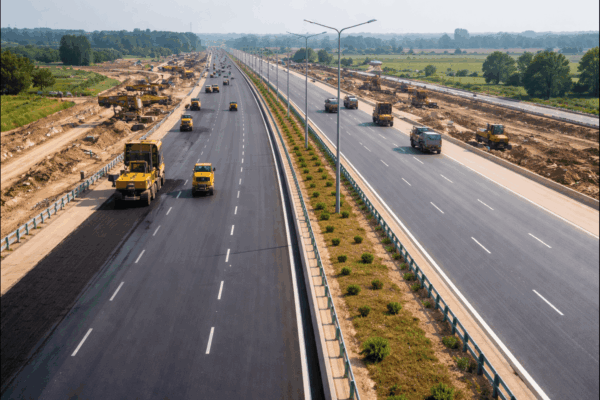
A strong mobility framework is being built through 50–60 m wide arterial roads laid out in a grid network, featuring integrated underground and over-ground utility corridors.
LPS Infrastructure:
Neighbourhood roads are being developed with comprehensive underground utilities—water, power, ICT, sewerage, stormwater, and recycled water—aligned with Urban Design Guidelines to ensure walkability, cycling tracks, universal access, and shaded, pedestrian-friendly streets.
Flood Management:
Flood resilience measures include deepening and widening of vagus, reservoirs, and gravity-based drainage channels.
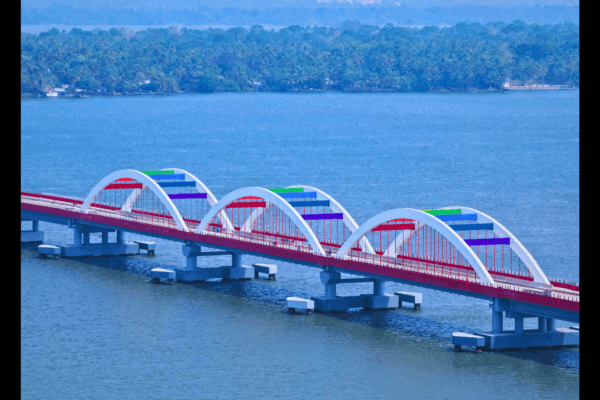
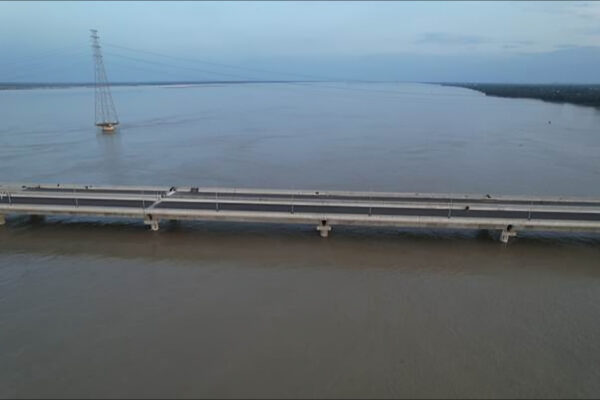
Additionally, projects such as the Iconic Bridge, NTR Statue, and Elevated Corridors are at an advanced DPR stage and will be tendered shortly.
What specific measures are being undertaken to make Amaravati a model green and sustainable city? How is APCRDA incorporating eco-friendly technologies and practices into its development framework?
Amaravati is being developed as a model green and sustainable city, guided by comprehensive planning and eco-friendly technologies. Nearly 30% of the master plan area is dedicated to blue and green spaces, including neighbourhood, township, and city-level parks, preserved water bodies, reserve forests, and hill ecosystems. Sustainability is reinforced through green buffers along canals, underground stormwater drainage, rainwater harvesting, and a mandatory minimum 10% open space in all plots. A citywide greening and beautification strategy is supported by Streetscape Guidelines covering trunk roads, LPS areas, central medians, and avenue plantations. Key parks include Sakhamuru Recreation Park, Malkapuram Park, Lung Space Park at Ananthavaram, and the Biodiversity Park at Kuragallu. A 600-acre Central Park within the Amaravati Government Complex is proposed to enhance biodiversity and create a major ecological asset.
Special focus is placed on riverfront and waterbody revitalisation, including greening along Kondaveeti Vagu, Palavagu, and the Gravity Canal, development of the Krishna riverfront as a tourism destination, reservoirs at Krishnayapalem and Neerukonda, and green belts across surrounding hills and localities spanning over 600 acres. Sustainability is further strengthened through integrated solid waste management, solar energy adoption, green building standards, IGBC/EDGE-certified housing, and smart mobility with walkable streets, cycling tracks, efficient public transport, and clean fuel solutions—positioning Amaravati as an eco-friendly, future-ready capital.
What are the forward-looking mobility and transportation solutions being planned or already implemented in Amaravati? How does the city aim to ensure efficient, inclusive, and sustainable urban transit?
One of the key priorities in Amaravati’s development has been to create a seamlessly integrated transport system that makes commuting efficient, reduces travel time, and supports sustainable mobility. To achieve this, we are focusing on the integration of Inter-City Bus Terminals, Bus Depots, Bus Rapid Transit (BRT) system, Metro, and Rail Terminals at strategically planned locations across the capital region. This ensures that passengers can switch between different modes of transport with minimal inconvenience enabling smooth transfers for both daily commuters and long-distance travellers thus ensuring last mile connectivity. We are also establishing three major transport hubs at Tadepalli, Anantavaram, and Nidamarru, which will function as central nodes for inter-city and intra-city connectivity. Alongside this, the intra-city network will be supported by intra-city bus terminals and depots, spread across the city for better accessibility.
On the rail infrastructure side, we’re developing 3 major railway stations in Amaravati. The existing Krishna Canal Junction and Mangalagiri Railway Station are being modernized to handle higher passenger volumes and offer world-class amenities. Additionally, we are developing a new Amaravati Railway Station, which will become a landmark transport gateway for the capital. In essence, Amaravati’s transport plan is not just about building infrastructure, but about creating a connected, future-ready, and commuter-friendly urban mobility system that sets a benchmark for other Indian cities.
Which sectors are being prioritized for economic development and investment in Amaravati? What incentives, policy measures, or support mechanisms has APCRDA introduced to attract both domestic and international investors?
Amaravati is being developed as a next-generation economic hub, focused on attracting non-polluting, high-value manufacturing, education, and service industries. Its growth is anchored around nine Economic Theme Cities—Knowledge, Health, Sports, Tourism, Electronics, Media, Finance, Justice, and Government—ensuring balanced, sector-led development and positioning the city as a major investment destination. APCRDA is actively engaging public and private players, with social infrastructure such as schools, hospitals, and universities being developed through Quality-Based Selection, and commercial and tourism assets—including hotels, convention centres, and malls—through PPP models. Prestigious institutions like VIT, SRM, BITS Pilani, XLRI, LV Prasad Eye Hospital, and Basavatarakam Cancer Institute, along with global hotel brands such as Taj, Hyatt, Marriott, Hilton, Crowne Plaza, and Novotel, have already committed to Amaravati. Initiatives like HAPPYNEST reflect the city’s focus on affordable, sustainable housing.
To attract investments, APCRDA and the Government of Andhra Pradesh offer a robust incentive framework. Fiscal incentives include stamp duty and SGST reimbursements, electricity duty exemption for 5–10 years, capital and interest subsidies for MSMEs and anchor units, and customized packages for mega investors. Non-fiscal support ensures ease of doing business through 21-day fast-track land allotment, a Single Desk Portal, and a one-stop investor support system. This strategic mix of incentives and support positions Amaravati as a highly competitive, investor-friendly destination, accelerating economic growth and fostering innovation across sectors.
Are there any significant partnerships or collaborations—national or international—that have played a pivotal role in Amaravati’s development journey so far?
Amaravati’s development is being driven through strategic national and international collaborations under the leadership of APCRDA, enabling global best practices in planning, financing, and sustainability. Internationally, Singapore prepared the Amaravati Master Plan, Foster + Partners (UK) is designing iconic institutions including the Legislative Assembly, Secretariat, and High Court, and JICA (Japan) has supported multimodal traffic and transport planning. On the financing and advisory side, the World Bank and ADB have supported infrastructure development and institutional reforms, while HUDCO committed ₹11,000 crore for Phase I construction. NaBFID is providing transaction advisory support for innovative PPP and revenue models. To advance sustainability, APCRDA is working with IGBC and EDGE to promote green buildings, including a Net Zero Energy APCRDA headquarters and EDGE-certified housing projects. Collectively, these partnerships are shaping Amaravati into a world-class, sustainable, and future-ready capital city.
How is APCRDA leveraging innovation and digital governance in Amaravati’s planning and administration? What role will smart city technologies play in its future growth?
Amaravati is being developed as a world-class, sustainable capital under the leadership of APCRDA, with digital governance at its core. A Unified Digital Dashboard integrates contractors, consultants, and departments, enabling real-time monitoring of projects, procurement, resources, and disbursement-linked outcomes, ensuring transparency and accountability. Advanced tools such as GIS, BIM, drone surveys, and remote sensing support accurate planning, construction oversight, and sustainability compliance aligned with global standards.
Smart city solutions—including digital service portals, IoT-enabled water, waste, and energy systems, intelligent traffic management, EV infrastructure, and digital twins—are embedded across urban services, enabling efficient, resilient, and future-ready development. By leveraging innovation and technology, Amaravati is setting a benchmark for India’s smart and sustainable capitals, ensuring inclusive, transparent, and environmentally responsible development while preparing for a scalable, future-ready urban landscape.
As Amaravati continues its transformation, what message would you like to share with our readers about the city’s journey, its aspirations, and the opportunities it offers to citizens, investors, and stakeholders?
Amaravati is more than just a capital—it is the embodiment of Andhra Pradesh’s aspirations for a sustainable, inclusive, and future-ready world class city. As it continues its transformation, Amaravati represents a unique opportunity to witness the creation of a capital that blends cultural heritage with world-class urban design, and cutting-edge innovation. For citizens, it promises a city designed around quality of life—with green spaces, smart mobility, and people-friendly neighbourhoods. For investors and businesses, it offers a thriving ecosystem with dedicated hubs for finance, health, education, and technology, backed by transparent governance and forward-looking policies. For all stakeholders, Amaravati stands as a long-term opportunity to be part of one of India’s most ambitious and future-focused urban projects. In essence, Amaravati’s journey is about building not just a capital, but a global city that generations will be proud to call their own.
Tags