India’s Steel Industry: Building Sustainable Competitiveness

The sector faces mounting challenges, including volatile raw material prices, dependence on imported coking coal, global overcapacity, dumping by surplus-producing nations, and rising freight and energy costs amid geopolitical tensions. To address these pressures, the government has adopted proactive measures to safeguard the domestic industry and strengthen self-reliance, introducing trade protection mechanisms and policy support to enhance competitiveness and ensure long-term stability
The volume of steel a country consumes is a strong indicator of its economic growth. Steel is integral to almost every infrastructure segment, from transport and energy to urban development. The scale of infrastructure development undertaken and completed in India over the past decade clearly indicates that this metric has been on a steep upward trajectory. From the recently inaugurated Navi Mumbai International Airport to the engineering marvel of the Chenab Rail Bridge, Atul Tunnel, Umling La Road, Delhi-Mumbai Expressway, 6-lane sea bridge 21.8 km, Mumbai Trans Harbour Link,to the ever-expanding metro rail networks across major cities, steel has remained the backbone of nation-building.
The relentless expansion of railway lines, the laying of new tracks for high-speed corridors such as the Mumbai–Ahmedabad High-Speed Rail Corridor, Delhi-Meerut RRTS Corridor, the Sagarmala and Bharatmala Pariyojana and the ambitious push toward achieving 500 GW of renewable energy capacity are all intensely steel-driven undertakings. Numerous bridges, flyovers, and expressway projects aimed at reducing travel time and decongesting cities further underscore the material’s critical role. Projects like the missing link on the Mumbai–Pune Expressway exemplify how modern infrastructure fundamentally rests on structural steel, reinforcing the close interdependence between infrastructure creation, steel consumption, and India’s accelerating economic ascent.
India’s steel sector continues to demonstrate strong production momentum and structural depth. During FY26 (April–October 2025), finished steel consumption reached 92.50 MT, while crude steel production stood at 96.08 MT and finished steel output at 91.98 MT, reflecting sustained domestic demand and stable capacity utilisation, as per the Ministry of Steel. In FY25, the country’s total steelmaking capacity rose to 200.33 MT and is projected to scale up to 300 MT by FY30, in line with the National Steel Policy roadmap. Notably, secondary steel producers, including MSMEs, accounted for 47% of crude steel capacity in FY25, underscoring their critical role in India’s decentralised steel ecosystem.
On the trade front, steel exports during FY26 (April–July 2025) stood at 1.7 MT, while imports were marginally lower at 1.67 MT. In comparison, FY25 recorded exports of 4.85 MT against imports of 9.53 MT, highlighting the continuing trade imbalance in certain value segments. The top exported products in the first four months of FY26 included GP/GC sheets and coils, HR coils and strips, pipes, bars and rods, and CR coils and sheets. Backed by abundant iron ore reserves and an annual production potential of 700 MT as of April 2025, India is strategically positioned to strengthen raw material security and potentially emerge as the world’s second-largest iron ore producer. Looking ahead, the green transition is expected to gather pace, with domestic demand for green steel projected to rise from negligible levels today to 4.49 MT by FY30, scaling further to 24 MT by FY35, 73 MT by FY40 and peaking at 179 MT by FY50, driven primarily by construction, infrastructure and automotive sectors.
Q3 FY26: Strong Topline, Divergent Profit Trends
In the Q3 FY26, JSW Steel reported a 198 per cent year-on-year jump in consolidated net profit to ₹2,139 crore, compared with ₹717 crore in the corresponding quarter of the previous financial year. On a sequential basis, profit rose 31.8 per cent from ₹1,623 crore. Revenue from operations stood at ₹45,219 crore, registering a 10.9 per cent year-on-year increase from ₹40,793 crore, while sequential revenue growth remained modest at 1.5 per cent over ₹44,560 crore. While Tata Steel reported a sharp 723 per cent year-on-year increase in consolidated net profit to ₹2,689 crore in Q3 FY26, compared with ₹327 crore in the year-ago period. Revenue from operations rose 6 per cent to ₹57,002 crore from ₹53,648 crore. The company’s India business contributed ₹35,725 crore to revenue. EBITDA stood at ₹8,291 crore, translating into a margin of 23 per cent, while crude steel production grew 12 per cent year-on-year to 6.34 million tonnes. Overall EBITDA increased 39 per cent to ₹8,199 crore, with margins improving by 340 basis points to 14.4 per cent. In Q3 FY26, Jindal Stainless reported a 26.6 per cent year-on-year rise in consolidated net profit to ₹828 crore, compared with ₹654 crore in the corresponding quarter last year. EBITDA grew 16.6 per cent year-on-year to ₹1,408 crore. Revenue increased 6.2 per cent to ₹10,518 crore, supported by steady domestic demand from sectors such as automotive, infrastructure, pipes and tubes, railways, metros and white goods, even as exports were impacted by policy uncertainties in the US and the European Union. However, Jindal Steel reported a mixed performance, with higher volumes supporting revenue growth but margins under pressure due to elevated costs. Revenue increased 10.9 per cent year-on-year to ₹13,026 crore. EBITDA declined 25.2 per cent to ₹1,632 crore, reflecting higher raw material costs, while operating margin contracted to 12.5 per cent from 18.6 per cent in the year-ago quarter. Net profit fell 80 per cent year-on-year to ₹188.5 crore from ₹951 crore. Operationally, the company reported strong sequential improvement, with steel production rising 25 per cent quarter-on-quarter to 2.51 million tonnes and sales increasing 22 per cent to 2.28 million tonnes, indicating improved capacity utilisation.
In Q3 FY26, Steel Authority of India (SAIL) reported its cumulative financial performance for the nine months ended 31 December 2025 (9M FY26), reflecting resilient operations and improved profitability. Crude steel production rose 2 per cent to 14.35 million tonnes from 14.08 million tonnes, indicating stable operating performance. Sales volume increased 16.3 per cent, driven by stronger retail outreach, improved dispatches and inventory drawdown. Revenue grew by around 9–10 per cent to ₹79,997 crore from ₹73,162 crore, broadly in line with higher volumes. Profit after tax surged nearly 60 per cent, supported by operational efficiencies, cost optimisation and inventory liquidation. The company also reduced its debt by approximately ₹5,000 crore during the nine-month period. In Q3, APL Apollo Tubes reported a 42.9 per cent year-on-year (Y-o-Y) increase in net profit to ₹310 crore, compared with ₹217 crore in the year-ago quarter. Revenue for the quarter rose 7 per cent to ₹5,815 crore from ₹5,433 crore in the corresponding period last year. Operating performance improved significantly, with EBITDA jumping 36.5 per cent to ₹472 crore from ₹346 crore a year earlier, while the EBITDA margin expanded to 8.1 per cent from 6.4 per cent. Overall, Q3 FY26 results reflect a sector marked by volume growth and revenue expansion, but divergent margin trajectories. While integrated players with stronger cost controls and domestic exposure delivered robust profitability, companies more exposed to raw material volatility experienced margin compression. The quarter underscores a key structural theme — growth momentum remains intact, but profitability increasingly hinges on cost efficiency, value-added product mix and raw material security.
Driving Sustainable Transformation
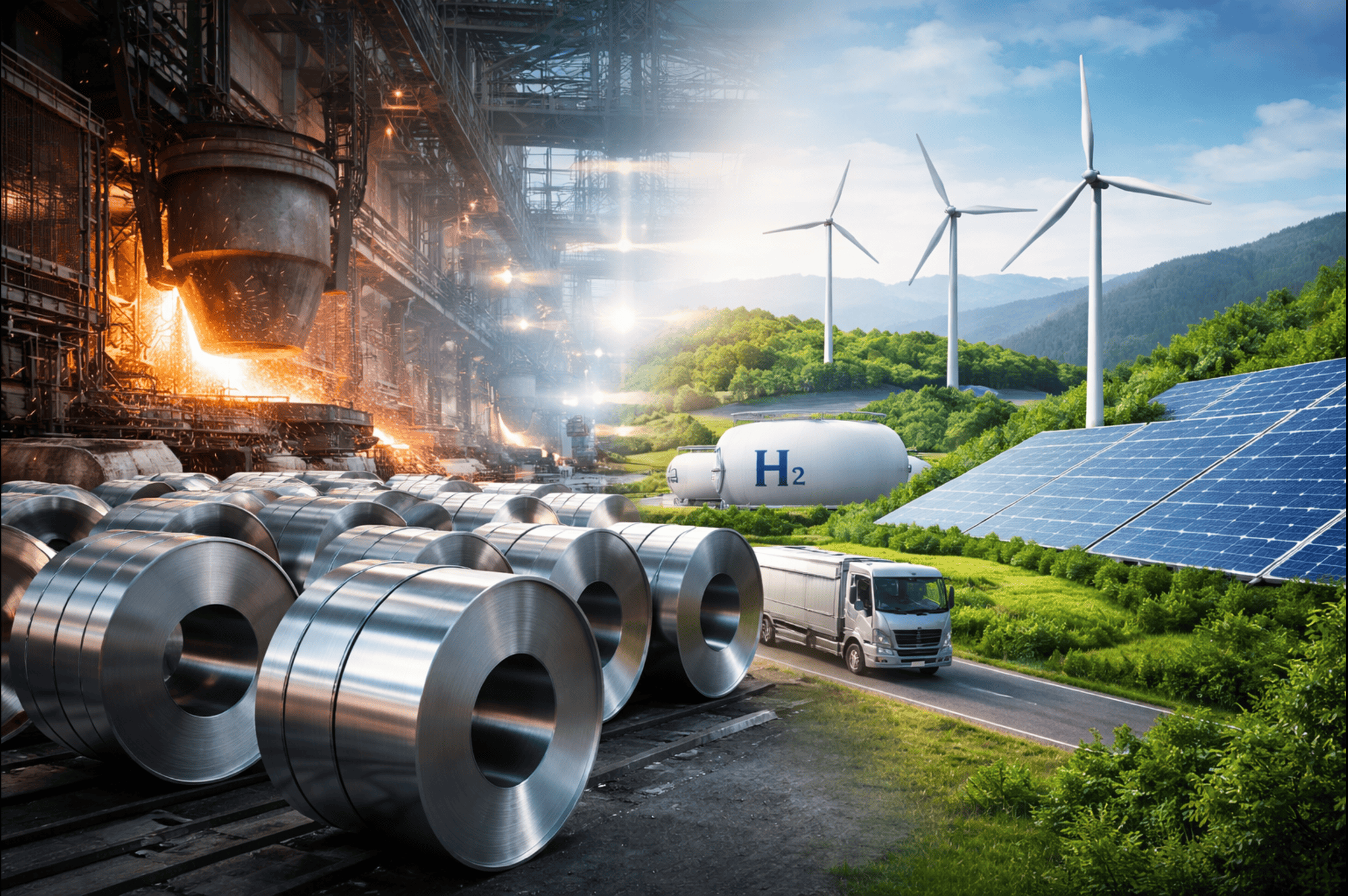
At COP26 in 2021, India committed to reducing its total projected carbon emissions by one billion tonnes between 2021 and 2030. The steel sector is widely recognised as one of the most carbon-intensive industrial sectors due to the energy-intensive processes involved in steelmaking. Producing steel generates significant greenhouse gas emissions, prompting the industry to prioritise decarbonisation. In response, steel producers in India and globally are increasingly investing in cleaner technologies, energy efficiency improvements and low-carbon solutions to align with climate goals and reduce their environmental footprint. The Government of India has undertaken several initiatives to accelerate decarbonisation in the steel sector. The Ministry of Steel has introduced a Green Steel Taxonomy and released the report “Greening the Steel Sector in India: Roadmap and Action Plan”, outlining the pathway towards sustainable steel production and the 2070 net-zero target. Under the National Green Hydrogen Mission, seven pilot projects have been awarded to explore hydrogen-based steelmaking, while the National Solar Mission supports renewable energy adoption. The Vehicle Scrappage Policy aims to boost scrap availability and promote circularity. Additionally, the Carbon Credit Trading Scheme has been notified to operationalise the Indian Carbon Market. Central Public Sector Enterprises under the Ministry of Steel are also collaborating with global technology providers and research institutions to advance low-carbon steel production and carbon capture technologies.
Tata Steel has incorporated sustainability deeply into its strategy, including climate action, resource efficiency, and responsible practices. It has developed capabilities in Life Cycle Assessment (LCA) and regularly discloses climate data, helping manage carbon footprint across its value chain. The company also pioneered initiatives such as Carbon Bank and hydrogen-ready steel products, and its major plants hold ResponsibleSteel™ certifications. JSW Steel has strengthened its sustainability roadmap through multiple decarbonisation initiatives. The company recently launched GreenEdge, a low-emission steel brand designed to help customers reduce Scope 3 emissions through a certified book-and-claim mechanism aligned with global standards. JSW Steel is also expanding its renewable energy capacity, targeting significant clean power integration by 2030, while advancing energy efficiency, waste heat recovery and alternative fuel use under its decarbonisation programmes. In addition, it is exploring green hydrogen-based steelmaking, enhancing water recycling and zero liquid discharge systems, and promoting circularity through slag utilisation and scrap optimisation.
Steel Authority of India (SAIL) has strengthened its sustainability efforts through ISO 14001-aligned environmental management systems, energy-efficient technologies such as coke dry cooling and waste heat recovery, and extensive water recycling initiatives. The company is expanding renewable energy capacity, including solar projects, and exploring hydrogen-based steelmaking and carbon capture technologies. The company also promotes circularity through 100 per cent utilisation of blast furnace slag, systematic waste management under the 4R principle, and large-scale afforestation and mine reclamation programmes. AM/NS India has set a roadmap to reduce carbon emission intensity by about 20 per cent by 2030, supported by a range of decarbonisation measures. The company is increasing renewable energy uptake — including power from a 1 GW hybrid solar and wind project that now supplies clean electricity to its Hazira plant, reducing emissions and supporting its targets — and plans additional renewable capacity investments across India. The company has also achieved Green Steel certification under India’s new Green Steel Taxonomy for its products, enabling customers to lower Scope 3 emissions.
Towards Self Reliance
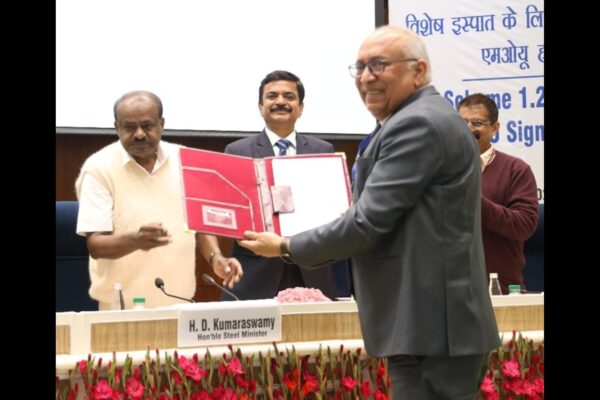
The Government of India is steering the steel sector towards a capacity of 300 MTPA by 2030–31 through a comprehensive and forward-looking policy framework. The National Steel Policy 2017 outlines the vision of building a globally competitive, technologically advanced and sustainable steel industry. Complementing this, the Production Linked Incentive (PLI) Scheme for Specialty Steel, with an outlay of ₹6,322 crore under Phase 1.1, promotes domestic manufacturing of high-value steel grades and reduces import dependence. To strengthen self-reliance, the Domestically Manufactured Iron & Steel Products (DMI&SP) Policy mandates the use of locally produced steel in government procurement, while the Steel Import Monitoring System (SIMS 2.0) digitally tracks imports to safeguard domestic producers.
On sustainability and decarbonisation, the government is promoting green steel initiatives through hydrogen-based pilot projects under the National Green Hydrogen Mission and energy efficiency improvements under the Perform, Achieve and Trade (PAT) scheme. The Vehicle Scrappage Policy further supports circularity by improving scrap availability for steelmaking. Research and innovation are being strengthened through the Steel Research and Technology Mission of India (SRTMI) and the government-funded scheme, “Promotion of Research and Development in the Steel Sector”, which provides financial assistance for indigenous technology development. Key thrust areas include green steel production, hydrogen-based steelmaking, carbon capture, utilisation and storage (CCUS), waste utilisation and resource efficiency.
In parallel, the Ministry of Steel is encouraging the adoption of artificial intelligence (AI) and digital technologies to enhance efficiency, lower costs and improve sustainability. Leading public sector enterprises are deploying advanced solutions such as drone-based mineral exploration, remote sensing, smart fleet management, real-time stockpile monitoring, automated sampling, integrated command and control centres (ICCC), smart metering and AI-driven process optimisation tools, including automated zinc coating control, coal blend optimisation and blast furnace silicon prediction models. These initiatives are enabling data-driven decision-making and strengthening the sector’s operational competitiveness. Collectively, these measures aim to enhance capacity, technological capability, competitiveness and environmental performance across the Indian steel industry.
Harnessing Challenges, Seizing Opportunities
The Indian steel sector faces a complex mix of challenges and opportunities as it progresses towards the 300 MTPA capacity target by 2030–31. One of the foremost challenges is the volatility in raw material prices, particularly India’s heavy dependence on imported coking coal, which exposes producers to global supply disruptions and currency fluctuations. Global overcapacity, trade protectionism and the risk of dumping in international markets add further competitive pressure. Infrastructure bottlenecks in logistics, port capacity and rail connectivity can affect cost efficiency, while increasingly stringent environmental norms and decarbonisation commitments require substantial capital investment. Securing affordable, long-term finance for green technologies, hydrogen-based steelmaking and carbon reduction initiatives remains a critical requirement.
At the same time, the sector stands at the cusp of significant opportunity. Robust domestic demand, driven by large-scale infrastructure development, housing, railways, defence manufacturing, capital goods and renewable energy expansion, provides a strong growth foundation. Rising per capita steel consumption in India compared to global averages indicates substantial headroom for expansion. The strategic shift towards specialty and value-added steel under policy support schemes enhances export competitiveness and reduces import dependence. Greater scrap utilisation, circular economy practices, digitalisation, automation and AI-driven process optimisation are improving productivity and cost control. The push for green steel and low-carbon technologies, if executed effectively, can position India as a competitive and responsible steel producer in an increasingly sustainability-conscious global market.
Towards Sustainable Growth
As India advances towards becoming a $5 trillion economy, the steel sector will remain a foundational pillar of industrial and infrastructure growth. Backed by strong policy support, rising domestic demand and an accelerating green transition, the industry is entering a phase of structural transformation. While challenges around raw material security, global competition and decarbonisation persist, sustained investments in capacity expansion, technology, circularity and low-carbon solutions can position India as a globally competitive and sustainable steel powerhouse. The coming decade will be defined not just by higher output, but by smarter, cleaner and more value-added steel production.
Tags