How Glazing and Metal Systems Are Shaping High-Performance Luxury Buildings

by Rajesh Nair, Head, Glazing & Metal Works Division, Sobha Ltd
Glass has been part of architecture for centuries, but in the modern realty environment it has taken on an entirely different role. Internationally, a majority of the flat glass production has long been consumed by the building sector, reflecting the importance that glazing is to architecture. In India, this evolution has been especially visible over the past three decades. In India, the evolution of glazing has become increasingly prominent with the flat glass market valued at around USD 3.7 billion in 2024 and expected to grow to USD 6.3 billion by 2033. What began as a design statement in premium hotels and corporate offices is now a defining element of high-end residential and commercial developments.
Today, glazing is no longer treated as a surface treatment. It is a process that directly influences energy efficiency, resident comfort, sustainability benchmarks, and long-term asset value.
Some key drivers of the demand for advanced glazing and metal systems
For luxury developments, there is a strong demand for systems that can be shown to reduce energy use, improve indoor comfort, withstand weathering and fire, and simplify maintenance. Homeowners, today, expect facades to meet high safety standards, enhance everyday living comfort, and justify premium pricing.
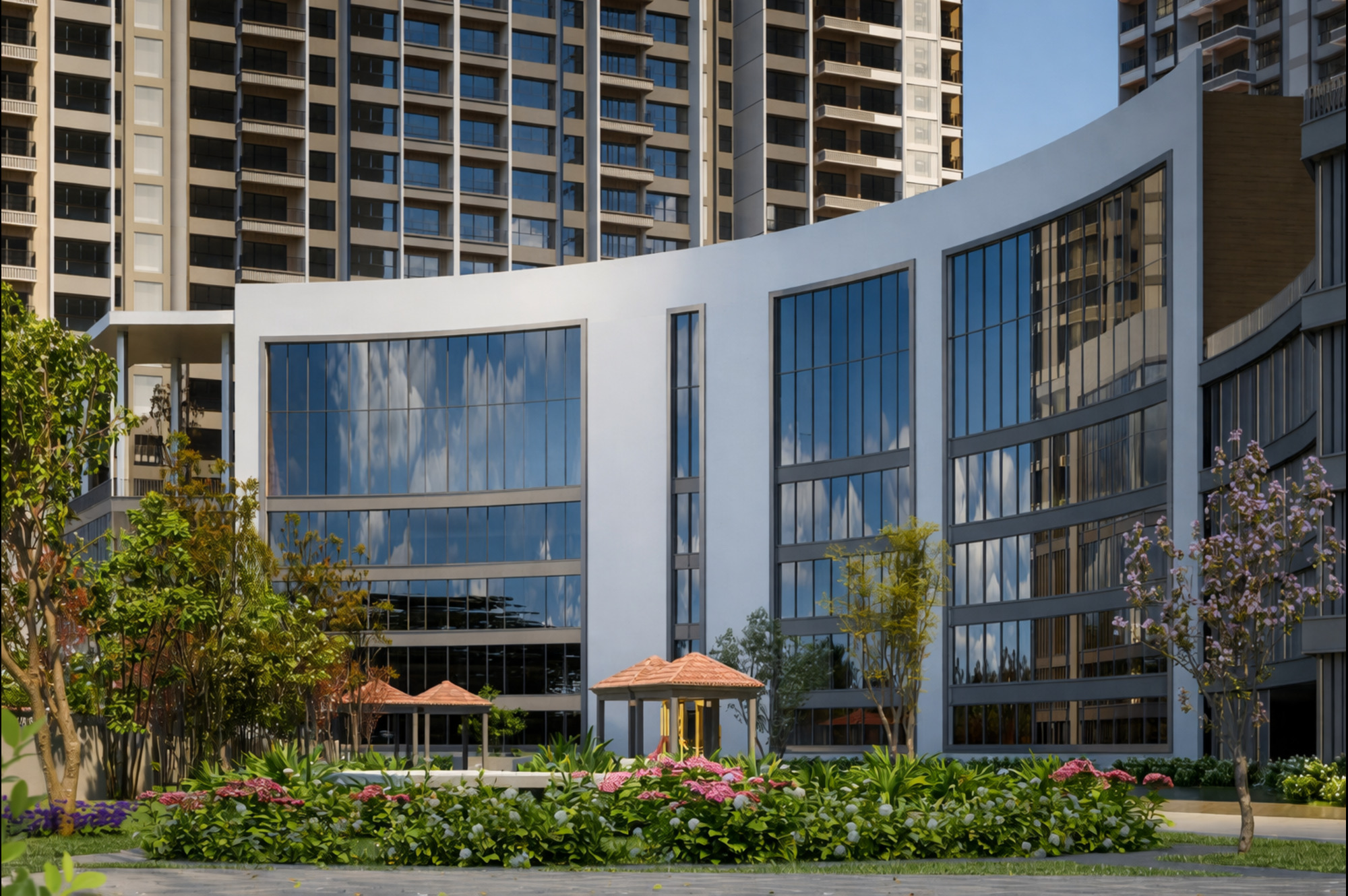
Modern solutions that preserve transparency, thin sightlines, and rich textures include unitized curtain walls, ventilated rainscreens with luxury stone or terracotta finishes, thermally fractured aluminium frames with high-performance insulating glass, and integrated slab-edge fire barriers. In addition to lowering on-site unpredictability and future maintenance labor, modular, factory-assembled components and long-lasting surface treatments help preserve the building’s long-term asset value and aesthetic intent.
Energy-efficient facades
It is important to call out the high demand and preference for energy-efficient or sustainable façades. Developers also weigh the building’s contribution to energy and carbon performance. According to a global report by UNEP, buildings account for a large share of global energy use and emissions. Building and construction sectors are commonly cited as responsible for roughly one-third to two-fifths of global final energy use and energy-related CO2 emissions. Poorly specified glazing can undermine whole-building targets and hence high-performance glazing, and metal systems matter for luxury projects where occupant comfort is paramount.
Energy modelling and lifespan analysis are now used to drive facade requirements. Designers aim to optimize U-values and solar heat gain coefficients (SHGC), incorporate thermal breaks, and use recyclable aluminium systems to meet green building standards like LEED or IGBC.
Unitized solutions
For mid- and high-rise luxury constructions, factory-assembled unitized curtain wall systems are becoming increasingly popular. Unitized solutions improve dimensional accuracy, decrease on-site variability, and expedite installation timetables by transferring intricate joinery and sealing into controlled manufacturing facilities. These advantages result in fewer flaws, less rework, and a faster project handover, all of which save soft costs and preserve premium brand expectations.
Safe and compliant systems
Regulations governing façade combustibility and fire performance have altered procurement and design options. Leading façade engineers prioritize fire compliance over paperwork. They specify A2-grade non-combustible cladding, integrate slab-edge fire barriers and vertical fire-stopping, and require third-party testing and material traceability. High-value residential and commercial projects require solutions that decrease risk, simplify permitting, and increase occupant safety.
Ventilated façades that meet design requirements
Ventilated rainscreen systems made of engineered stone, terracotta, or composite panels combine luxury materiality with rainscreen performance and better temperature regulation. These methods separate the cladding from the structural frame, enhancing moisture control and serviceability while allowing architects to create unique looks.
The way forward for the façade industry
Whether for fire protection, acoustic attenuation, thermal comfort, or air/water infiltration, high-end projects are increasingly favoring glazing and metalwork that satisfy international performance standards. The procurement checklist for premium initiatives now includes traceable materials, verifiable test proof, and repeatable factory procedures, raising the standard for suppliers. The end effect is a market that values technical precision just as highly as aesthetics.
Glazing and metal work are no longer decorative components on high-end structures; rather, they are determining factors that influence lifespan cost, energy consumption, occupant comfort, and safety. Thermally broken aluminium frames, high-performance DGUs, non-combustible claddings, and unitized façades, together with operational design, are becoming more popular due to increased regulatory stringency, need for ESG compliance, and informed buyer expectations.
The capacity to combine aesthetics with measurable performance will characterize luxury architecture in the future, and the façade is where that fusion is made possible.
Tags