How Design Thinking is Reshaping Work Environments from Infrastructure to Experience

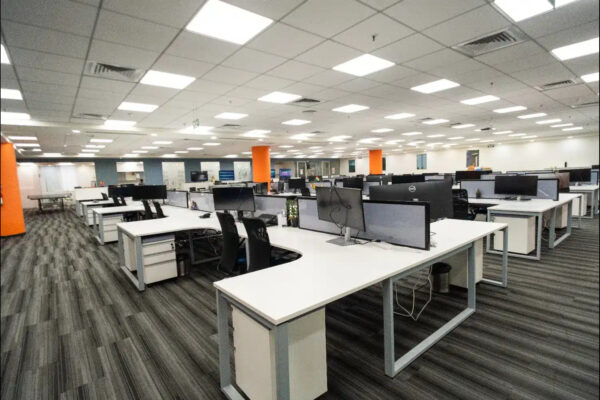
For much of the last century, the office was viewed primarily through the lens of efficiency. Architects and real estate leaders optimised for occupancy—rows of desks, standardised meeting rooms, and long-term leases that locked in assumptions about how work would happen. The logic was straightforward: stability creates performance. Design once. Fill well. Move on.
That era is over.
Work today operates in a fundamentally different reality. Teams assemble and dissolve in weeks. Collaboration happens in intense bursts, followed by periods of deep focus. Culture emerges through intentional moments, not enforced proximity. Hybrid work is no longer an anomaly; it is the structural foundation of how organisations now operate. Agility is no longer a competitive advantage—it is table stakes.
Yet most offices remain designed for a world that no longer exists.
The shift underway is not simply from traditional offices to flexible ones. That framing misses the real transformation. What we are witnessing is a fundamental move from viewing space as fixed infrastructure to designing it as an operating environment for human performance.
This distinction changes everything—how space is planned, who leads the design process, how success is measured, and what competitive advantage organisations extract from their real estate.
The Death of Assumptions
For decades, office design rested on a set of deeply embedded assumptions.
Hierarchy should be visible in space. Headcount should determine layout. Departments should occupy territories. Collaboration should emerge naturally from proximity. And the office, once built, should remain largely unchanged for years.
Every one of these assumptions has cracked under the pressure of modern work.
Hierarchy in knowledge organisations is now fluid and often invisible—distributed across networks, rotating leadership, and project-based teams. Headcount no longer maps cleanly to seat allocation; a 200-person organisation may only need space for 120 on any given day, and that number fluctuates continuously. Departments no longer operate as fixed territories; cross-functional squads form and reform, based on needs rather than organizational charts.
Collaboration, too, has been misunderstood. Proximity without intention often produces distraction, not innovation. The informal conversations that drive progress require deliberately designed environments—acoustic balance, spatial cues, and protection for focused work. Innovation is not accidental. It is designed.
And finally, the office is no longer a finished product. It is an evolving environment, continuously shaped by use, friction, and changing business priorities.
The organisations succeeding today are the ones that stopped designing offices and started designing workplaces.
Design Thinking: From Assumption to Observation
The rise of flexible workspaces is often portrayed as a real estate trend—shorter leases, shared amenities, smaller footprints. That is the surface story. The deeper shift is methodological: a wholesale move from designing based on assumptions to designing based on observation.
This is design thinking applied to the built environment.
Traditional office design works backwards. It starts with a template of how work should happen and expects behaviour to conform. When it doesn’t, the space blames the user.
Design-thinking-led workplace strategy reverses this logic. It begins by observing how people actually work. When do they need focus? When does collaboration add value? Where does cognitive or social friction emerge? How does energy fluctuate across the day? Which rituals form organically?
Once these patterns are understood, design becomes precise. Not generic openness, but layered workspace environments deliberately calibrated to support different modes of work. Not fixed meeting rooms, but flexible settings that adapt to changing group sizes and purposes.
This approach reveals a critical insight: high-performance workplaces always balance collaboration with retreat. Teams do not collaborate constantly. They oscillate—between deep focus and intense teamwork. The office must support both with equal intent.
Collaboration Must Be Engineered, Not Assumed
There is a persistent myth in workplace design that proximity produces innovation. That simply putting smart people together will lead to breakthroughs.
In reality, proximity without design often suppresses collaboration. Noise, interruption, and lack of privacy undermine the focused work that precedes meaningful interaction.
Modern workplaces treat collaboration as a designed outcome, not a cultural accident. Collaboration zones today function as collaboration engines—environments where teams can move seamlessly from discussion to execution. Shared project tables, writable surfaces, acoustically tuned huddle rooms, informal lounges, and integrated digital tools all enable this flow.
Equally important is what surrounds these spaces. Focus rooms and quiet zones—often undervalued—are what make collaboration sustainable. Without retreat, collaboration becomes cognitive overload. Burnout follows.
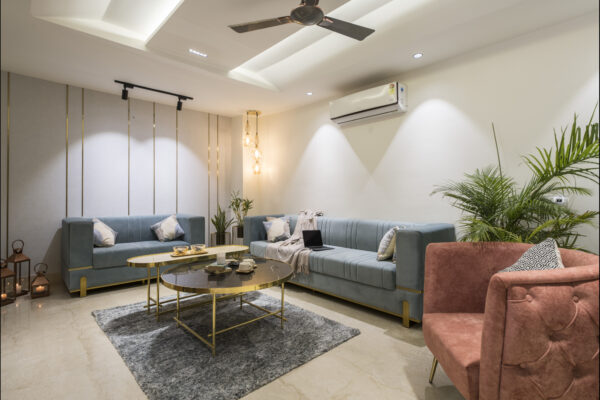
This is why activity-based working matters. Instead of assigned desks that assume uniform workdays, people choose spaces aligned to their task. The office becomes a portfolio of experiences, unified by designed intentionality rather than rigid rules.
Wellbeing Is Not a Policy. It Is Productivity Infrastructure
Organisations often treat wellbeing as something that happens after the office is built—through programmes, perks, or policies. These matter, but they cannot compensate for environments that work against human biology.
Light, air quality, acoustics, ergonomics, material choices, and spatial density directly influence stress, attention, and energy. When these fundamentals are ignored, no amount of programming can fix what the environment broke.
Wellbeing begins at the design stage
Natural light supports circadian rhythms and cognitive performance. Air quality directly impacts decision-making and focus. Acoustic design determines whether collaboration energises or overwhelms. Ergonomic flexibility accommodates different bodies and work styles. Quiet, low-stimulation zones allow mental recovery in high-intensity environments.
These are not indulgences. They are productivity infrastructure—and organisations that treat them as such see measurable gains in engagement, retention, and performance.
Designing for Uncertainty at Scale: From Permanence to Reversibility
Perhaps the most underappreciated challenge in modern workplace design is uncertainty at scale.
Teams grow, contract, hybridise, and redistribute across geographies faster than traditional real estate can respond. Yet conventional office design assumes permanence—layouts fixed for years, infrastructure locked in by long-term leases.
Flexible workspaces succeed because they assume change.
Modular layouts, reconfigurable furniture systems, and multi-purpose zones allow environments to evolve without major disruption. Technology layers—access systems, space booking platforms, hybrid collaboration tools—enable seamless movement across locations and work modes.
From a design philosophy perspective, this marks a decisive shift from permanence to reversibility. Instead of assuming certainty, workplaces are designed to adapt as organisations learn.
The Enterprise Imperative
What began as a startup phenomenon has become a defining enterprise strategy. Flexible environments are no longer peripheral solutions; they are now core components of enterprise real estate strategy.
For large organisations, this enables faster market entry without long-term risk, the ability to pilot new ways of working before committing capital, environments aligned with contemporary talent expectations, and physical spaces that evolve alongside business models.
In this context, workplace design becomes a critical interface between business ambition and human experience. Real estate is no longer just a cost to manage—it is a strategic lever for organisational agility and performance.
The Workplace as a Living System
The workplace of the near future will not be defined by size or location, but by behaviour.
It will be distributed yet cohesive, branded yet adaptable. Most importantly, it will function as a living system—continuously informed by how people use it, where friction emerges, and what value it creates.
This demands a new mindset across the ecosystem. Developers must think beyond square footage. Designers must observe before prescribing. Operators must continuously tune environments. Leaders must ask different questions—not how to enforce presence, but when presence truly matters.
The competitive advantage is no longer real estate. It is design intelligence.
The office is not dead.
But the way we think about offices must be.
The future of work will belong to organisations that design environments around how people actually work—environments that enable focus, foster collaboration, support wellbeing, and evolve as fast as the business itself.
The question is whether organisations will lead that transition—or wait until competitive pressure forces it.
Tags