
Highway Development in India: Evaluating PPP, EPC, and TOT Project Models

by Sanjay Kumar Sinha, Founder & Managing Director, Chaitanya Project Consultancy
India’s highway expansion is entering a crucial phase, with large-scale investments planned to strengthen national connectivity. The success of this push depends not only on funding but also on effective project delivery models such as EPC, PPP, HAM, and TOT, which determine execution efficiency, risk sharing, financing viability, and long-term infrastructure performance
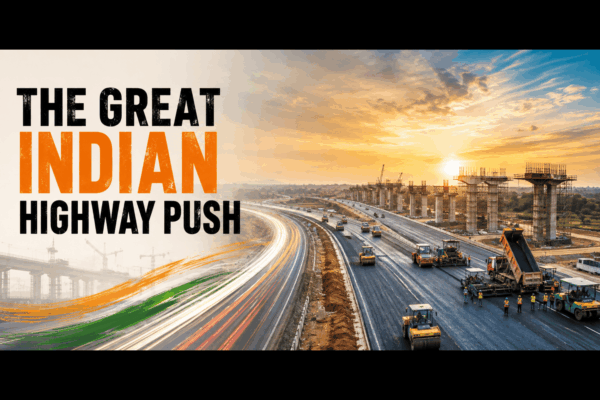
India’s road infrastructure push is entering one of its most decisive phases. Over the last decade, programmes such as the National Highway Development Programme and Bharatmala Pariyojana have shifted the focus from isolated highway stretches to building a connected, high-capacity national network. This ambition is reflected in the government’s plan to bid out 124 highway projects worth nearly Rs 3.4 lakh crore in FY26. Delivering projects at this scale is not simply a matter of allocating budgets or awarding contracts. It depends on how efficiently projects are structured, how risks are distributed, and how execution is managed from design to operations. This is where project delivery models become critical. The choice between EPC, PPP, HAM, or TOT directly influences construction speed, financing comfort, risk exposure, and the long term performance of highways and expressways that form the backbone of India’s mobility and logistics ecosystem.
How Project Models Evolved in India’s Highway Sector
The current mix of project models in India’s highway sector is the result of years of experimentation and course correction. In the early stages of large-scale highway development, Build Operate Transfer models were seen as the most effective way to bring private capital into infrastructure. Toll-based BOT projects placed responsibility for construction, operations, and revenue generation on private developers. While this helped expand the highway network rapidly, it also exposed the sector to challenges. Traffic growth did not always match projections, financing costs increased, and several projects struggled to remain financially viable.
These experiences prompted a rethink. Policymakers recognised that traffic and revenue risks could not always be efficiently borne by private developers, especially in regions where demand visibility was limited. The Engineering Procurement and Construction model gained traction as a way to ensure steady execution while keeping revenue risk with the government. Later, the Hybrid Annuity Model was introduced to bridge the gap between pure public funding and full private risk. By sharing costs and risks, HAM reduced financing stress and improved project bankability. This evolution shows how India’s highway policy has been shaped by practical learning rather than rigid adherence to any single model.
Major Project Models
The EPC model is the most straightforward. Under this approach, the government fully funds the highway project, while contractors are responsible for design and construction. Payments are released against defined milestones, which brings predictability to execution and cash flows. EPC is particularly useful for greenfield corridors, strategic border roads, or stretches where traffic potential is uncertain and private revenue models may not work. The focus here is on timely delivery rather than traffic monetisation.
Public Private Partnership models cover a wider spectrum. Traditional BOT toll projects require the concessionaire to invest capital, build the road, operate it, and recover costs through toll revenues. This model works best where traffic volumes are predictable and robust. The Hybrid Annuity Model, on the other hand, splits the construction cost, typically with around 40 percent paid by the government during construction and the remaining 60 percent invested by the private developer. The developer is then repaid through fixed annuities over the concession period. HAM reduces traffic risk while still leveraging private sector efficiency in construction and maintenance.
The Toll Operate Transfer model focuses on monetising existing assets rather than creating new ones. Under TOT, operational highway stretches are leased to investors for a fixed period in return for an upfront concession fee. This upfront revenue is then used to fund new highway projects. TOT helps unlock value from mature assets and attracts long-term institutional capital, making it an important tool in India’s infrastructure financing strategy.
Opportunities: What These Models Enable
The diversity of project models has expanded what is possible in highway development. One of the biggest advantages is faster project delivery. By aligning risks with the parties best equipped to manage them, projects face fewer financial roadblocks during execution. These models also reduce pressure on public finances, either by spreading capital commitments over time or by recycling existing assets through monetisation.
Private sector participation has also deepened. Developers and investors are now involved not just in building highways but also in operating and maintaining them over long periods. Asset recycling through models such as TOT has created a steady pipeline of capital for new investments. At the same time, improved highway and expressway connectivity has supported the growth of logistics parks and industrial clusters. This is visible along major expressways in Uttar Pradesh, where road connectivity is being leveraged to support manufacturing, warehousing, and supply chain efficiency. Highways are no longer seen as standalone assets but as catalysts for regional economic development.
Risks and Key Challenges in Implementation
Despite these opportunities, each project model comes with its own set of risks. Toll-based BOT projects remain vulnerable to revenue fluctuations when traffic assumptions do not hold or when economic conditions change. EPC projects, while simpler to execute, place a significant fiscal burden on the government and require disciplined budget management.
Across all models, common challenges persist. Land acquisition delays can stall projects even before construction begins. Regulatory approvals, environmental clearances, and utility shifting often disrupt timelines. Contract design and risk allocation also require careful attention. If risks are unevenly distributed or responsibilities are unclear, projects can face disputes, delays, and cost overruns. Understanding these trade-offs is crucial, as the choice of project model directly shapes how risks play out during implementation.
Project Highlights
Recent examples from the ground clearly show how different highway development models are being put to use in practice. Asset monetisation initiatives, backed by detailed technical due diligence across more than 2,250 kilometres of national highways, have helped unlock transactions worth over Rs 35,000 crore. This reflects how models such as TOT and InvITs are becoming increasingly important for recycling capital and funding new infrastructure development.
In Maharashtra, the Hybrid Annuity Model is playing a key role in large-scale road upgradation programmes being implemented under initiatives led by the Maharashtra State Infrastructure Development Corporation. These projects focus on upgrading and concreting more than 6,000 kilometres of state highways and major district roads spread across 34 districts, including Jalgaon, Nashik, Pune, Sambhajinagar, Buldhana, Yavatmal, Satara, and Kolhapur. The idea is simple but impactful: improve everyday road connectivity in industrial and semi-industrial regions so that movement of goods, raw materials, and people becomes faster and more reliable.
The work covers a wide range of activities, from reviewing designs and monitoring construction to ensuring quality standards across pavement works, drainage systems, junction improvements, and road safety features. Spread across different regions of the state, these HAM packages show how annuity-based projects can bring execution certainty, encourage private sector participation, and support long-term regional development without placing the entire burden of risk on a single stakeholder.
Conclusion
India’s national highway development programme has matured into a multi-model ecosystem. EPC, PPP, HAM, and TOT are no longer alternatives competing with each other but complementary tools used to address different project needs. The success of future highway expansion will depend on choosing the right model based on traffic potential, financing capacity, risk appetite, and long-term objectives. As asset monetisation pipelines grow and financing mechanisms continue to evolve, project models will remain central to how India builds a resilient, efficient, and future-ready highway network that supports economic growth and regional connectivity.
Tags