Construction Equipment: Connected. Intelligent. Value-driven.

We are entering a new era in construction equipment. Equipment is now controlled by electronics and sensors, connected through telematics and IoT, and increasingly guided by data and intelligent systems. As India’s infrastructure ambitions grow, technology is redefining productivity, efficiency, sustainability and machine performance
The government’s thrust over the last decade has been firmly on infrastructure development. In the Union Budget 2026–27, the government allocated ₹1.2 lakh crore for infrastructure development. Backed by favourable policies and continuous monitoring by the authorities, the country’s infrastructure landscape has taken a significant leap. The road and highway network, for instance, grew by about 61%, expanding from 91,287 km in 2014 to 1,46,572 km by March 2026, while the mining sector has registered record production over the past decade. Similar growth is visible across infrastructure sectors, including power, renewable energy, real estate and others.
Behind this remarkable progress in infrastructure is also the stringent timeframe imposed for project execution. The government incentivises early completion and penalises delays in commissioning. As projects became more demanding, the role of construction equipment became increasingly critical. “The main factor behind this revolution is how infrastructure projects are carried out these days. Timeframes of the projects are becoming shorter, and consequently, a higher intensity of equipment use and increasing levels of mechanisation are required,” says Dimitrov Krishnan, Managing Director, Volvo CE.
As project scales increased, with infrastructure becoming more complex and challenging and execution timelines tightening, construction equipment came under greater pressure to deliver higher output, longer uptime and greater efficiency. The question was no longer simply how much a machine could do, but how efficiently, reliably and consistently it could perform through the life of a project. “India’s infrastructure projects are becoming larger, faster and more demanding. Customers now expect higher uptime, lower operating costs, better fuel and energy efficiency, and real-time visibility of equipment,” says V G Sakthikumar, Chairman & Managing Director, Schwing Stetter India
The push for greater efficiency was reinforced by another factor — the growing focus on emissions. As governments and industries stepped up efforts to reduce carbon emissions, environmental performance began to influence equipment design alongside productivity and cost. Global commitments such as the Paris Agreement, coupled with tighter emission norms in India, raised the bar for engine and machine technology. Manufacturers responded with cleaner engines, more efficient hydraulic systems, better fuel-management systems and electronic controls designed to deliver more output with lower fuel consumption. The transition to BS/CEV Stage V emission standards from January 2025 has given this shift another push, accelerating the move towards cleaner and more technologically advanced machines. “India’s construction equipment industry is moving from standalone mechanical assets to connected production systems because infrastructure execution itself is changing. Large expressways, metro networks and urban projects demand higher precision, faster execution and consistent quality, while tighter environmental standards raise the technology threshold. The adoption of machine-controlled construction and the transition to CEV Stage V standards from January 2025 are accelerating this shift further,” says Dheeraj Panda, Managing Director, Ammann India.
Connecting the Fleet
What began as a need for greater machine efficiency has evolved into a broader technology transition. The industry has moved from predominantly mechanical machines to electronically controlled and fuel-efficient equipment, and subsequently to connected machines powered by telematics and IoT. For contractors, who remain the primary buyers and users of construction equipment, this transition has brought a new level of visibility and control over their assets. “India is moving towards autonomous construction, but I’d describe the market as being in transition rather than ready for widespread full autonomy. Semi-autonomous technologies already show value where precision, repeatability and safety are critical. Some forward-looking construction companies are already allocating close to a third of their technology budgets here. The immediate opportunity is therefore semi-autonomy. GPS-guided grading, automated screed levelling and sensor-based paving improve precision on large projects, while computer vision, obstacle detection and collision avoidance reduce safety risk,” says Dheeraj Panda.
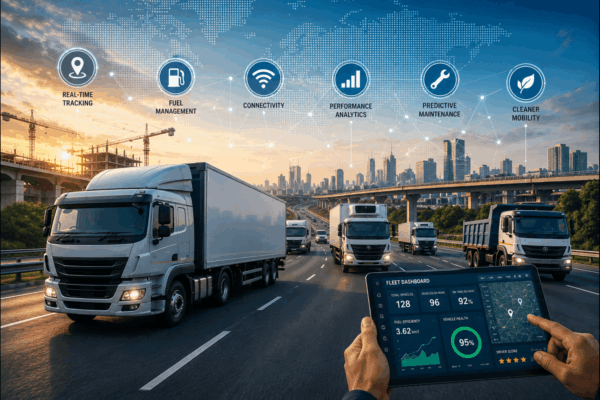
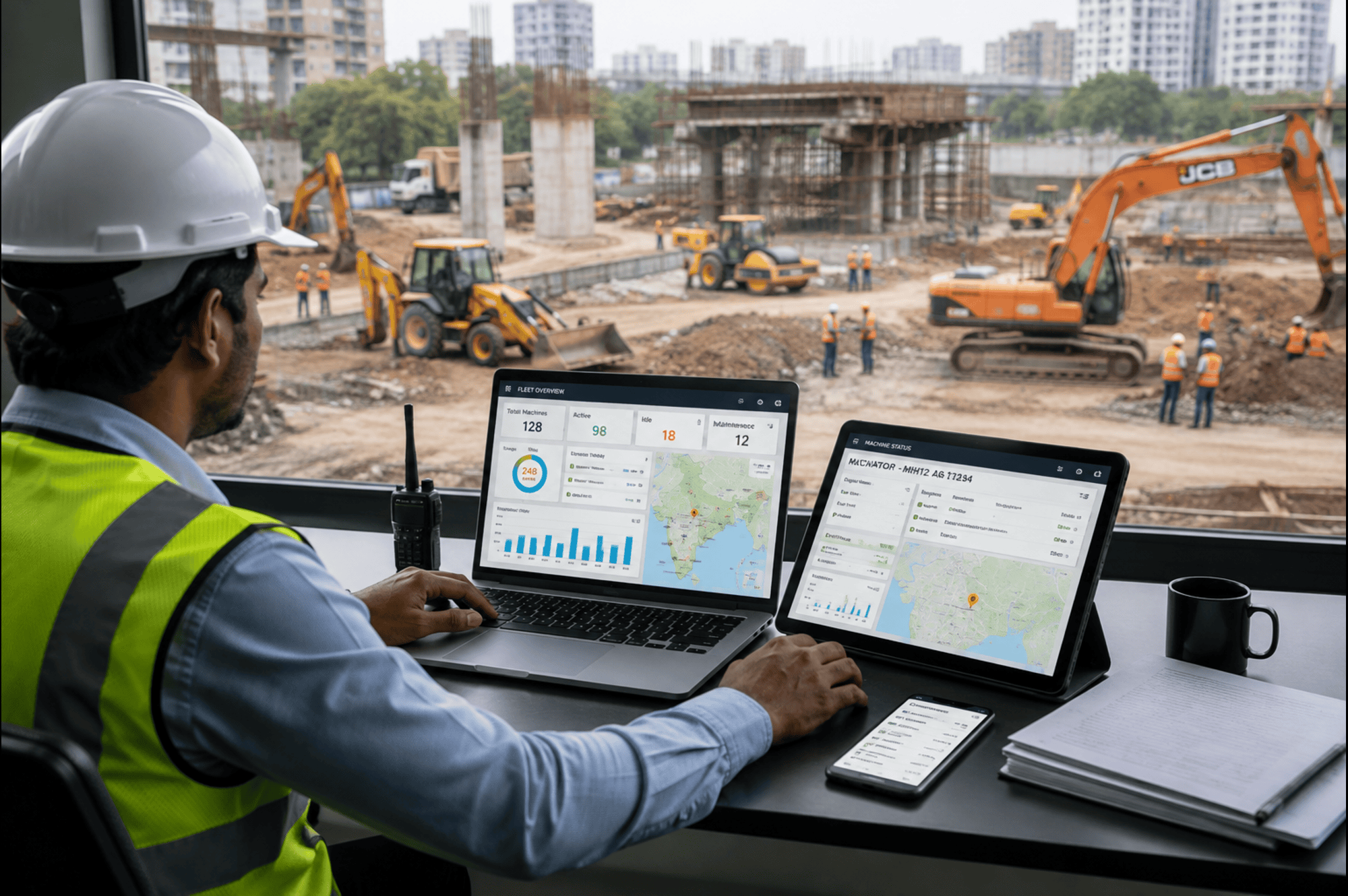
With machines generating and transmitting data, contractors can monitor equipment utilisation, operating hours, fuel consumption and location across project sites. They can also gain insights into operator behaviour, identify excessive idling or inefficient machine usage and take corrective measures. More importantly, machine data enables preventive maintenance to be planned around actual operating conditions rather than fixed schedules. This helps contractors reduce unplanned downtime, improve machine availability and extend equipment life. For contractors managing large fleets across multiple projects, the value is even greater. Instead of relying solely on operators or site teams for updates, fleet managers can remotely track the performance and health of machines and make more informed decisions on deployment, maintenance and replacement. In an industry where equipment downtime can directly affect project schedules and costs, this visibility is steadily becoming a competitive advantage. As technology became increasingly integrated into equipment, construction projects were becoming more complex and demanding. Machines were no longer just performing tasks; they were generating a growing volume of data on utilisation, fuel consumption, operating conditions, health and performance.
Data Moves Beyond Monitoring
The next question was obvious: how could this data be put to better use? For contractors, collecting data was only the first step. The real value lay in turning that information into insights that could improve the economics of equipment ownership and operation. Knowing where a machine was or how many hours it had worked was useful, but contractors increasingly wanted to know whether it was being used efficiently, when it would require maintenance and whether a potential fault could be detected before it led to an unexpected breakdown. “Data is increasingly becoming an important part of equipment management. When machine information is available, customers can better understand utilisation, operating patterns and maintenance requirements. This can support preventive maintenance, improve fleet planning and help identify potential issues earlier,” says Nischal Mehrotra, Sr. Vice President, LiuGong India.
This brought the next layer of technology into focus — data analytics, remote diagnostics and predictive maintenance. Machine data could be analysed alongside operating patterns and historical performance to identify inefficiencies, unusual behaviour and early signs of component failure. Maintenance could consequently move from being largely schedule-driven to being increasingly based on the actual condition and usage of the equipment. For contractors, this meant fewer unplanned stoppages, better machine availability, longer asset life and tighter control over operating costs.
The industry was, in effect, moving from visibility to intelligence. Telematics and IoT made it possible to know what was happening with a machine; analytics helped explain why it was happening and what could happen next. That shift laid the groundwork for the next phase of equipment technology — artificial intelligence, advanced automation, machine control and, increasingly, semi-autonomous operations. “Data is converting equipment from something contractors monitor periodically into an asset measured continuously. Telematics, IoT sensors and AI provide visibility into location, operating hours, fuel consumption, engine load and machine health, letting fleet managers act on actual conditions rather than assumptions. The financial impact is significant. Predictive diagnostics can identify abnormal patterns in vibration, temperature and hydraulic pressure, with systems achieving 85 to 95% accuracy in forecasting potential issues, allowing maintenance to be scheduled during planned downtime rather than after a breakdown, reducing emergency repairs, cost and lost operating hours while extending asset life,” says Dheeraj Panda.
Sustainability
Alongside this shift towards greater intelligence and automation, sustainability has continued to shape the evolution of construction equipment. The focus on reducing fuel consumption and emissions has long driven improvements in engine technology, hydraulics and overall machine efficiency. However, with increasingly stringent emission regulations and a wider push to decarbonise construction, manufacturers are now exploring the next set of solutions, including electrification, alternative fuels and other technologies that can reduce the environmental footprint of equipment without compromising productivity and operating economics. “Sustainability is increasingly becoming part of the core engineering equation for construction equipment, particularly as customers seek to balance productivity with operating costs and environmental performance,” says Puneet Vidyarthi, Head of Brand Marketing, CASE Construction Equipment, APAC & India. This balance is driving manufacturers to pursue multiple pathways rather than relying on a single technology. Improvements in fuel efficiency and engine performance continue to play an important role, while electrification and alternative fuel solutions are gaining attention for applications where they can offer both environmental and operational benefits.
Equipping Operators for a Digital Future
The days when fleet owners had to depend largely on operator feedback to understand machine performance are gradually giving way to a more data-driven approach. Earlier, higher fuel consumption could be attributed to traffic, difficult operating conditions, excessive utilisation or other factors, often leaving fleet owners with limited visibility into what was actually happening on site. Connected equipment is changing this equation. Telematics and onboard systems can now provide detailed insights into machine location, operating hours, fuel consumption, idling, speed, utilisation and operating patterns. Data on braking behaviour and other parameters can further help fleet owners assess how equipment is being operated and identify areas of inefficiency. This greater visibility is also bringing a new level of accountability to equipment operations. Excessive idling, inefficient operating practices, abnormal fuel consumption or repeated instances of harsh braking can be identified through machine data, enabling fleet managers to take timely corrective action. Rather than relying solely on periodic reports, they can monitor equipment performance remotely and make decisions based on actual operating conditions. The result is better fleet utilisation, tighter control over fuel and operating costs, and greater transparency across project sites.
At the same time, the digitalisation of equipment is transforming the role of the operator. Modern machines increasingly come equipped with digital displays, electronic controls, machine-control systems, alerts and connected features, requiring operators to develop skills beyond conventional machine handling. Training and upskilling are therefore becoming an integral part of the technology transition. Leading construction equipment manufacturers are also investing in operator training programmes to familiarise users with new technologies, promote efficient machine operation and ensure that operators are adequately trained to harness the capabilities of increasingly sophisticated equipment. The shift is consequently not simply from mechanical to digital machines; it is towards a more digitally enabled workforce operating increasingly intelligent equipment. Operators need to understand the information generated by the machine and use it to operate equipment more efficiently and safely. As construction equipment becomes more connected and automated, the ability to work with technology, interpret machine information and follow data-driven operating practices will become as important as traditional machine-handling skills.
Localisation: From Machines to Ecosystems
The government is increasingly focusing on strengthening domestic manufacturing, reducing import dependence and building local value chains. In the Union Budget 2026–27, ₹200 crore was allocated towards promoting the manufacturing of construction and infrastructure equipment. The move is expected to encourage greater domestic production and deeper localisation of equipment and critical components.
The industry, meanwhile, has already been moving in this direction. Leading construction equipment manufacturers are expanding their manufacturing and engineering capabilities in India, while working with local suppliers to increase domestic sourcing. Localisation is increasingly extending beyond final assembly to component manufacturing, R&D, technology development and supplier capability building.
For manufacturers, the objective is not simply to make equipment in India, but to build a stronger ecosystem around it. Greater localisation can help reduce supply-chain risks, improve cost competitiveness and enable equipment to be better suited to Indian operating conditions. As technology becomes more sophisticated, developing a reliable domestic supply base for critical components will be central to the industry’s next phase of growth.
A Little Bumpy but Promising
Despite the rapid evolution of construction equipment, several challenges remain before advanced technologies can achieve wider adoption across the industry. Higher upfront costs remain a key consideration, particularly when contractors evaluate investments in connected, automated or low-emission equipment against the expected returns over the machine’s lifecycle. While technologies such as telematics, predictive maintenance and automation can improve productivity and reduce operating costs, their benefits need to be clearly demonstrated to justify the initial investment. The availability of skilled operators and technicians is another important factor. As equipment becomes more sophisticated, the industry needs personnel who can not only operate machines but also understand digital systems, interpret machine data and respond to technology-driven alerts. At the same time, deeper localisation of critical components and the development of a robust domestic supply chain will be important to reduce import dependence and improve cost competitiveness.
For manufacturers, the challenge is therefore to balance technological advancement with affordability, reliability and ease of adoption. Technologies developed for the Indian market must deliver tangible value while being capable of handling diverse project conditions, varying levels of operator expertise and the demanding operating environments in which construction equipment is deployed. Overcoming these barriers will determine how quickly the industry can move from pockets of advanced adoption to a broader technology-led transformation.
The road ahead, however, remains one of significant opportunity. The government’s continued focus on infrastructure development, backed by large investments in roads, highways, railways, urban infrastructure, energy and other sectors, is expected to sustain demand for construction equipment. With projects becoming larger, execution timelines tighter and technology increasingly embedded in equipment, the industry is entering a phase where productivity, connectivity, sustainability and localisation will increasingly define competitiveness. While challenges around cost, skills and technology adoption remain, the scale of India’s infrastructure ambition provides a strong foundation for the construction equipment industry to evolve, innovate and support the country’s next phase of growth.
Tags