Concrete Equipment: Powered by AI | Fast | Smart | Precise

India’s construction boom is driving unprecedented demand for advanced concrete equipment. From high-rise residential towers to mega infrastructure projects like high-speed rail and national highways, modern batching plants, boom pumps, and self-loading mixers are enabling faster execution, superior quality, and operational efficiency. As urbanisation and government-backed initiatives accelerate, high-performance concrete machinery has become a critical enabler, shaping the future of India’s infrastructure landscape
With concreting work taking place on an unprecedented scale across India, the demand for advanced concrete equipment has surged rapidly. The real estate sector, in particular, is witnessing strong growth driven by rapid urbanisation, rising housing needs, and a shift towards high-density, high-rise developments. As a result, modern residential and commercial projects increasingly rely on sophisticated batching plants, boom pumps, transit mixers, and self-loading concrete mixers to ensure quality, speed, and production efficiency. Beyond real estate, mega infrastructure initiatives such as the Mumbai–Ahmedabad High-Speed Rail (Bullet Train) corridor, metro network expansions, expressways, airport modernisation, industrial corridors, and large-scale public utilities are further accelerating the adoption of high-performance concreting technologies. Simultaneously, urban local bodies across states are pushing for widespread concretisation of city roads and systematic pothole repairs after the monsoon, driving demand for compact and reliable concrete machinery at the municipal level. Simultaneously, urban local bodies across states are pushing for widespread concretisation of city roads and systematic pothole repairs after the monsoon, driving demand for compact and reliable concrete machinery at the municipal level. At the state level, flagship programmes such as multimodal corridors, regional ring roads, irrigation modernisation, and integrated township development are generating sustained demand for high-capacity batching plants, boom pumps, and slip-form pavers. At the national level, marquee initiatives – including Bharatmala, Gati Shakti, high-speed rail networks, logistics parks, national highway expansions, and airport modernisation – are significantly increasing the requirement for technologically advanced, high-output concrete equipment. Together, these municipal, state, and national efforts are creating a robust, multi-tiered demand pipeline, firmly positioning concrete machinery as a critical enabler of India’s infrastructure growth.
Supportive government policies
According to TechSciResearch, India Concrete Equipment Market was valued at USD 923 million in 2024 and is expected to reach USD 1,728 million by 2030 with a CAGR of 11.48% during the forecast period. This growth trajectory reflects the construction sector’s accelerating shift towards mechanisation, driven by the need for faster project execution, improved quality control, and reduced dependency on manual labour. As project timelines tighten and quality standards rise, contractors across real estate, roads, metros, and industrial infrastructure are increasingly investing in high-performance batching plants, boom pumps, transit mixers, and self-loading concrete mixers to enhance productivity and consistency on site. Government policies and initiatives are playing a pivotal role in supporting the concrete equipment market’s rapid growth. The National Infrastructure Pipeline (NIP), launched with the vision of boosting infrastructure investment across sectors, has laid the foundation for large-scale projects ranging from highways and metro corridors to industrial clusters and energy infrastructure. These projects inherently demand high-volume, high-quality concrete, creating a strong pull for advanced machinery such as high-capacity batching plants, boom pumps, transit mixers, and self-loading concrete mixers. The Smart Cities Mission is another significant driver, pushing for urban modernisation with a focus on smart and sustainable city development. Under this initiative, urban local bodies are expected to adopt mechanised and technology-driven construction practices to ensure timely completion, improved durability, and sustainable use of resources. This translates directly into increased demand for compact, high-efficiency concrete equipment that can operate effectively within dense urban environments while maintaining high productivity standards.
Highways, expressways, and national road development projects supported by agencies like the National Highways Authority of India (NHAI) further reinforce this trend. With ambitious targets to expand India’s road network and reduce logistics bottlenecks, these projects necessitate consistent, high-quality concrete delivery over long distances. This not only accelerates mechanisation but also encourages the adoption of innovative technologies such as mobile batching plants, truck-mounted pumps, and automated transit mixers, which ensure precision and efficiency in large-scale civil works. Moreover, the government’s emphasis on sustainable construction practices, aligned with India’s net-zero commitments, has spurred incentives for the adoption of energy-efficient and low-emission machinery. Initiatives promoting the use of electric or hybrid concrete equipment, alongside policies encouraging recycling of construction and demolition (C&D) waste, are gradually shaping the market towards cleaner and more sustainable construction operations. Contractors and developers are now increasingly conscious of lifecycle costs, environmental impact, and regulatory compliance, which further drives demand for modern concrete equipment that is not only productive but also energy-efficient and environmentally responsible. State-level policies also play a complementary role. Many state governments are prioritising urban road upgradation, metro expansions, and industrial corridor development within their jurisdiction. By providing financial support, faster project approvals, and concessional loans for equipment modernisation, state authorities are enabling smaller contractors and local construction agencies to invest in mechanised solutions. This not only strengthens local supply chains but also helps in improving project delivery timelines and quality standards at regional levels. At the municipal level, urban local bodies are focusing on post-monsoon road repair, city-wide concretisation projects, and the modernisation of public infrastructure such as flyovers, bridges, and drainage channels. These projects typically require agile, compact, and high-output machinery capable of navigating narrow streets and dense construction zones. Self-loading concrete mixers, portable batching plants, and mini boom pumps are finding increasing adoption in this segment due to their mobility, ease of setup, and ability to deliver high-quality concrete with minimal manpower.
Challenges facing the sector
Despite robust demand and technological advancements, the concrete equipment sector in India faces several challenges that impact adoption, operational efficiency, and overall growth. One of the most significant hurdles is the high capital cost of advanced machinery. Equipment such as high-capacity batching plants, boom pumps, and 3D concrete printers involve substantial upfront investment. Small and mid-sized contractors often struggle to justify this expenditure, especially when project timelines are short or budgets are tight. While mechanisation improves efficiency and reduces dependency on manual labour, the initial purchase cost remains a key barrier for widespread adoption. Operational constraints also pose challenges. Many construction sites in India are located in remote, congested, or urban areas with limited access, making it difficult to transport and operate large machinery. Narrow roads, uneven terrain, and a lack of onsite storage for raw materials can reduce equipment utilisation and increase operational costs. Additionally, modern concrete equipment requires trained operators and technicians to handle advanced features such as telematics, automated batching, and AI-assisted placement systems. The shortage of skilled personnel limits the full utilisation of high-tech machinery, and although companies are increasingly investing in training programs, the learning curve remains a hurdle, particularly for contractors transitioning from conventional methods.
Maintenance and service are also critical concerns. High-tech equipment requires regular upkeep and timely replacement of wear parts, but after-sales support and spare parts availability can vary regionally, leading to downtime and project delays. Predictive maintenance through IoT and telematics is helping mitigate these issues, but its adoption is still evolving across the industry. At the same time, the sector is gradually transitioning to sustainable and electric equipment. While electrification and hybrid solutions are gaining traction, challenges such as the lack of standardised charging infrastructure, high battery costs, unstable grid supply, and payload limitations for electric truck mixers continue to impede rapid adoption. These factors affect operational efficiency and logistics for Ready-Mix Concrete delivery, especially in remote and dispersed project locations. Regulatory compliance adds another layer of complexity. Contractors and manufacturers must adhere to stringent environmental norms, emission standards, and safety regulations. While these measures encourage sustainability, they also increase equipment costs and operational complexity. The market is further complicated by fragmentation and competition, with numerous domestic and international manufacturers vying for market share. Although competition drives innovation, it also creates pricing pressures, particularly in standard equipment segments, as contractors often prioritise cost over advanced features. The industry faces supply chain and technology challenges. High-tech machinery relies on specialised components such as precision hydraulics, electronics, chips, and high-density batteries. Global supply chain disruptions can affect availability, lead times, and costs, particularly for electric and hybrid equipment. While manufacturers are investing in localisation strategies, some critical components still need to be imported, creating vulnerability to international market fluctuations. Awareness and adoption of digital solutions such as telematics, AI-driven platforms, and remote monitoring remain limited among smaller contractors due to low familiarity or perceived complexity. Bridging this knowledge gap is essential to unlock the full potential of smart, data-driven equipment.
Technological innovations and trends
Manufacturers are increasingly integrating advanced features such as automated controls, intelligent hydraulics, and IoT-enabled telematics into their machinery to enhance efficiency and operational reliability. Real-time monitoring systems now allow operators to track key performance parameters, including concrete mix consistency, batching accuracy, pump output, and equipment health. By providing predictive insights into maintenance needs and potential faults, these innovations significantly reduce downtime and extend machine life, while also optimising fuel consumption and energy use. “SSI’s telematics framework – IoT In, IoT Ready, and IoT Abled – provides real-time monitoring and control across its equipment range. It tracks production parameters such as concrete volume, batch cycle times, mix consistency (via MCI 550), and full material traceability to ensure consistent quality. Mobile plants benefit from GPS-based location tracking, while critical performance data such as hydraulic pressure, temperature, pump hours, stroke count, and actual output enable accurate machine health assessment. VECTOR-based remote diagnostics deliver instant alerts and faster troubleshooting, improving uptime,” says V G Sakthikumar, Chairman and Managing Director, SCHWING Stetter India.
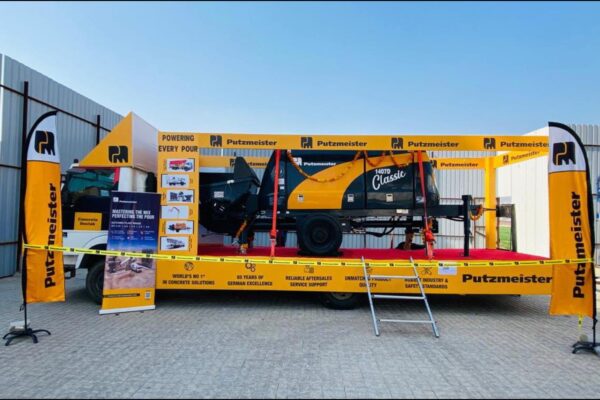
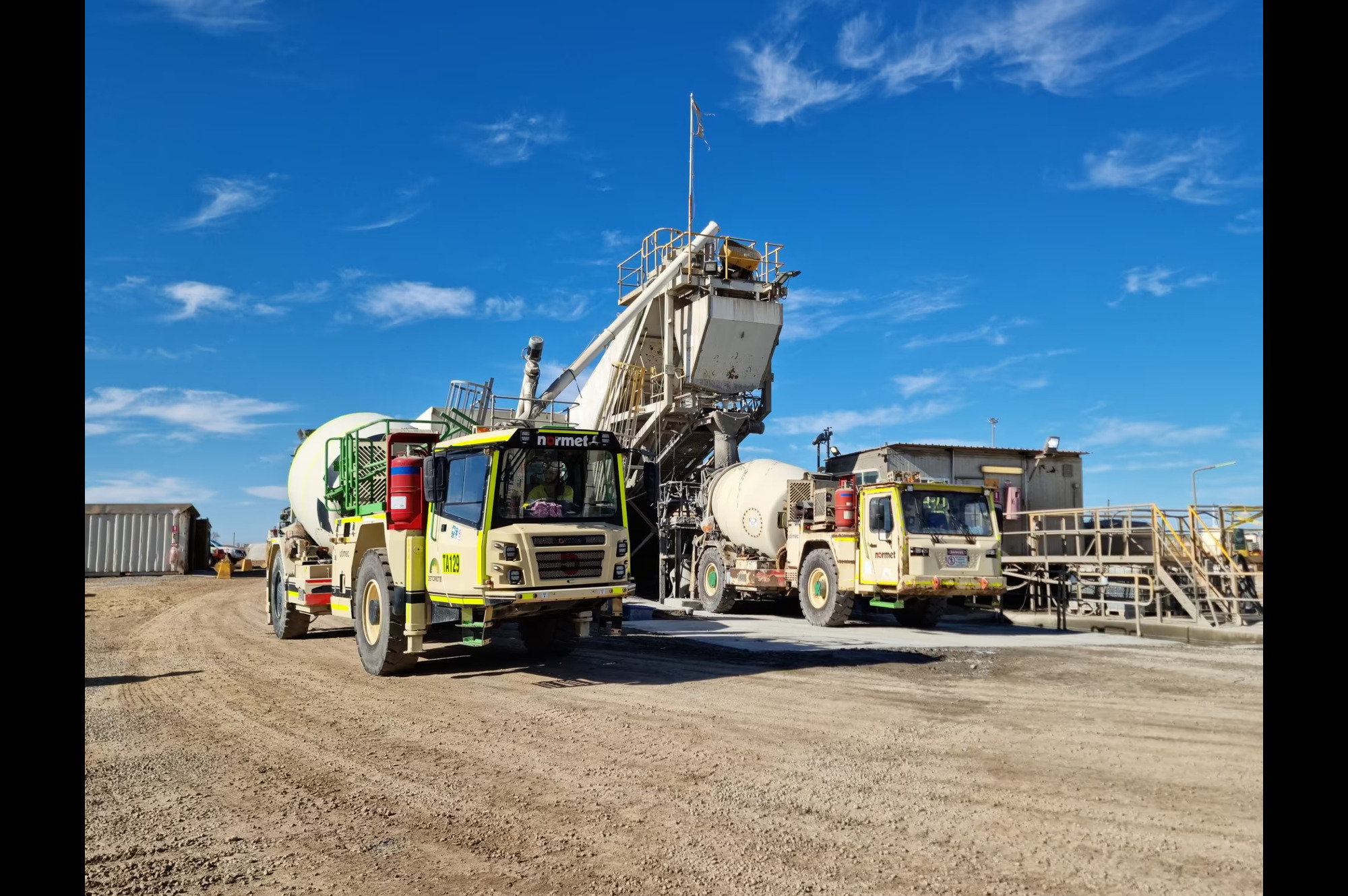
Another notable trend is the development of high-capacity and high-reach machinery. Modern boom pumps, for instance, are capable of placing concrete at greater heights and over extended distances with minimal manual intervention. Compact yet powerful truck mixers and self-loading concrete mixers are designed for dense urban projects, enabling faster site mobilisation and delivery while maintaining consistent quality. Additionally, modular and mobile batching plants allow for rapid setup and relocation, making them particularly suitable for sprawling infrastructure projects such as highways, metro lines, and industrial corridors. “Our latest range of boom pumps, known for delivering precise, safe, and high-reach concrete placement through advanced control systems and reliable, operator-friendly design. With intelligent hydraulics and advanced control systems, these boom pumps enhance output consistency, fuel efficiency, and operator safety. They’re engineered for high productivity even in space-restricted project environments, marking an important step forward in automated concreting,” says Shubhabrata Saha, MD & CEO of AJAX Engineering.
Sustainability
Sustainability has emerged as a critical focus area in equipment design. Manufacturers are increasingly offering hybrid and fully electric machines, along with solutions compatible with alternative fuels such as biodiesel and CNG. Electrification reduces direct emissions on-site and lowers operational noise, which is especially valuable for urban construction environments. At the same time, recycling technologies, including concrete recycling plants and C&D waste crushers, are helping contractors re-use materials efficiently, contributing to India’s broader net-zero and circular economy goals. Cutting-edge innovations extend to digital and AI-driven platforms as well. Smart diagnostic systems, remote monitoring apps, and AI-powered support tools are increasingly embedded in modern concrete equipment. These platforms enable operators to troubleshoot issues, calibrate machinery, and optimise performance using real-time data. For instance, AI-driven guidance systems can analyse pump strokes, hydraulic pressures, and material input in real-time, offering actionable recommendations to improve throughput and reduce wear on critical components. The integration of such digital intelligence not only enhances operational efficiency but also supports workforce training, ensuring that even less-experienced operators can handle complex machinery safely and effectively.
Forging Ahead
India’s concrete equipment sector is poised for robust growth, driven by a combination of escalating infrastructure projects, rapid urbanisation, and the government’s strategic push for mechanisation and sustainable construction. While challenges such as high capital costs, operational constraints, skill gaps, and evolving regulatory requirements persist, technological advancements, digital integration, and a shift toward greener, more efficient machinery are steadily transforming the landscape. With manufacturers increasingly focusing on high-performance, IoT-enabled, and environmentally responsible solutions, the sector is not only enhancing productivity and project quality but also laying the foundation for a more resilient, sustainable, and future-ready construction ecosystem. As India continues to scale ambitious infrastructure and real estate initiatives, modern concrete equipment will remain an indispensable enabler, ensuring timely, high-quality, and eco-conscious delivery across the nation.
Tags