Cement-Free Construction: The Industry India Can No Longer Ignore

by Sourabh Kumar, Founder, Eco Path Innovations
India is building at a speed the world has rarely seen. Highways stretch across states, townships rise on city edges, and infrastructure is no longer a sign of progress. It is progress.
But buried inside this growth is a material choice we have stopped questioning.
Cement.
It binds our roads, our walls, our drains, our cities. And it is also quietly becoming one of the largest contributors to climate change.
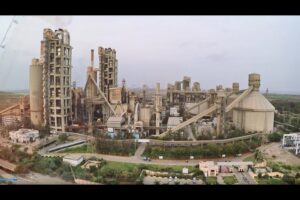
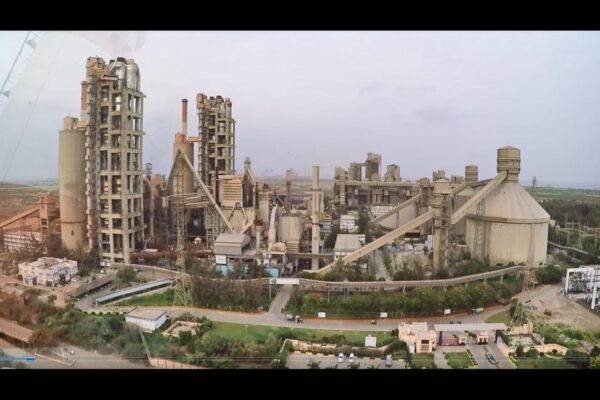
Globally, cement accounts for nearly 8 percent of total CO₂ emissions. In India alone, the industry emits close to 300 million tonnes of CO₂ annually. That is not a marginal footprint. That is a structural problem.
And yet, for decades, the assumption has remained unchanged: if you want to build, you need cement.
That assumption is now breaking.
The Invisible Carbon Beneath Our Feet
The irony of cement is that it is not energy inefficiency that makes it carbon-heavy. It is chemistry. At the heart of cement production is the calcination of limestone, a reaction that releases CO₂ as a direct output. Even if every kiln ran on renewable energy, emissions would still persist. For every tonne of cement produced, nearly one tonne of CO₂ enters the atmosphere.
Now scale that across roads, footpaths, compound walls, drainage systems, and parking lots. The infrastructure we rarely think about is, in fact, one of the largest hidden sources of emissions.
A road may last five years.
The carbon it emits will last hundreds.
Concrete Isn’t the Problem. Cement Is.
This distinction is critical.
Concrete as a material is unmatched in scalability, strength, and affordability. It is the reason modern infrastructure exists. But cement, which makes up just 10–15 percent of concrete, contributes almost the entire carbon footprint.
This means the solution is not to abandon concrete. It is to reinvent it.
And that is exactly where cement-free construction enters the conversation.
Rewriting Concrete: The Rise of Geopolymer Chemistry
Cement-free concrete, often referred to as geopolymer concrete, flips the equation.
Instead of using limestone-derived clinker, it uses industrial by-products like fly ash and steel slag. These materials, rich in aluminosilicates, are activated chemically to form a binder that performs like, and often better than, traditional cement.
The impact is immediate:
- Up to 80 percent lower carbon emissions
- No water curing required
- Reduced dependence on virgin raw materials
But the real shift is not environmental. It is structural.
For the first time, the industry has a way to decouple construction from cement.
Performance That Challenges the Status Quo
Sustainability alone does not drive adoption in construction. Performance does.
And this is where cement-free systems are forcing a rethink.
Geopolymer and Eco-Concrete materials show:
- Higher resistance to acids and chemicals
- Superior fire resistance
- Lower shrinkage and cracking
- Higher durability under load cycles
In many applications, they are not alternatives. They are upgrades.
India’s Missed Opportunity Is Now an Advantage
India produces enormous quantities of industrial waste: fly ash from thermal power plants and slag from steel manufacturing. Historically, this has been treated as a disposal problem. In cement-free construction, it becomes a resource. This is not just sustainability. It is circular economics at scale.
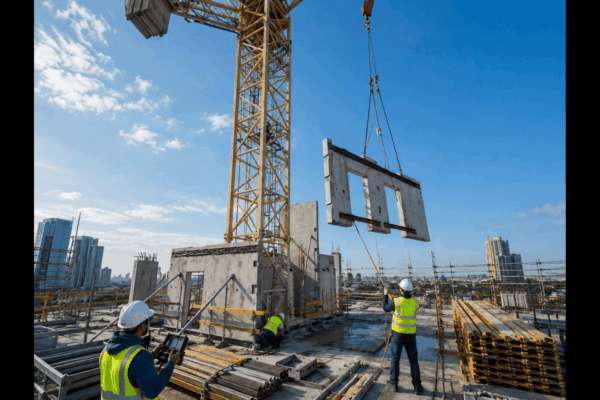
At the same time, India’s push toward precast infrastructure is creating the perfect entry point. Precast manufacturing allows tighter quality control, consistent output, and scalable production.
While IS codes like IS 17452 already allow geopolymer concrete for precast applications, cement-free systems are still early. That is exactly why they are disruptive.
From Theory to Ground Reality: Ecopath’s Execution
For years, geopolymer concrete remained confined to research papers and pilot projects. The gap was not technology. It was execution. Ecopath has closed that gap.
Its material, Eco-Concrete, eliminates cement entirely and replaces it with industrial by-products, delivering up to 80 percent lower carbon footprint without compromising performance.
But the real proof is not in theory. It is on the ground:
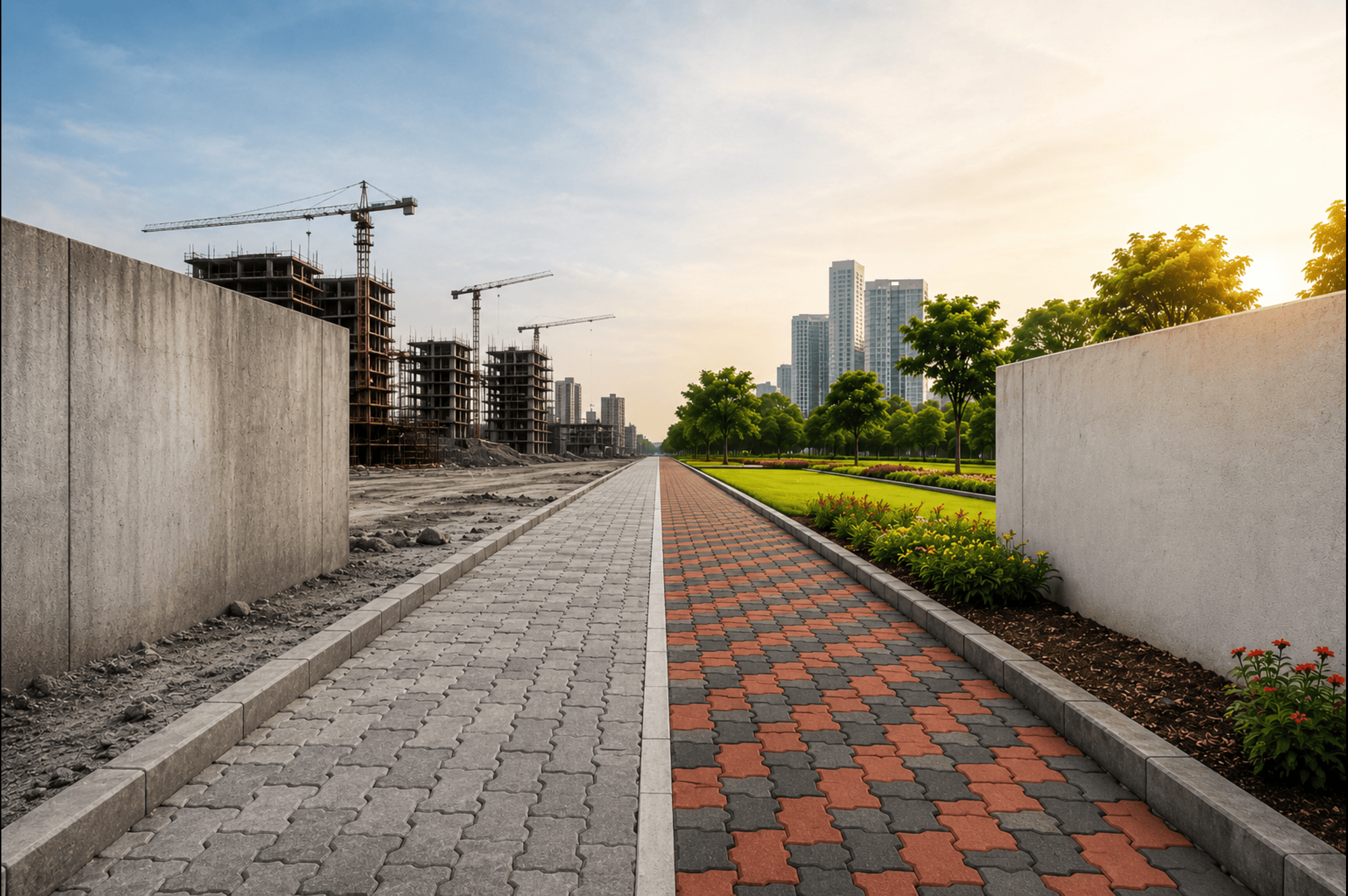
- Pavers & Kerbstones installed at Lodha, Bangalore
- Large-scale Eco-Concrete road development at Army Public School, Bangalore
- Drains and Kerbstones with Hosachiguru Farmlands
- Carbon-negative road & concrete projects in Bangalore
These are not pilots. They are real, functioning infrastructure.
Why This Shift Is Inevitable
Every industry transformation starts as niche and becomes default. Cement-free construction is on that path.
Three forces are accelerating it:
- Climate pressure on infrastructure emissions
- The need to utilize industrial waste efficiently
- Rapidly improving economics
For developers, this is no longer about sustainability messaging.
It is about staying ahead of the curve.
The Question Is No Longer ‘If’
India will build at massive scale in the coming decades. The materials used today will define emissions for generations.
Cement-free construction offers a rare alignment:
- Lower carbon
- Better performance
- Comparable or lower cost
- Scalable supply
And most importantly, it already exists.
Tags