Alstom Powers Namo Bharat RRTS Balance Stretch and Meerut Metro

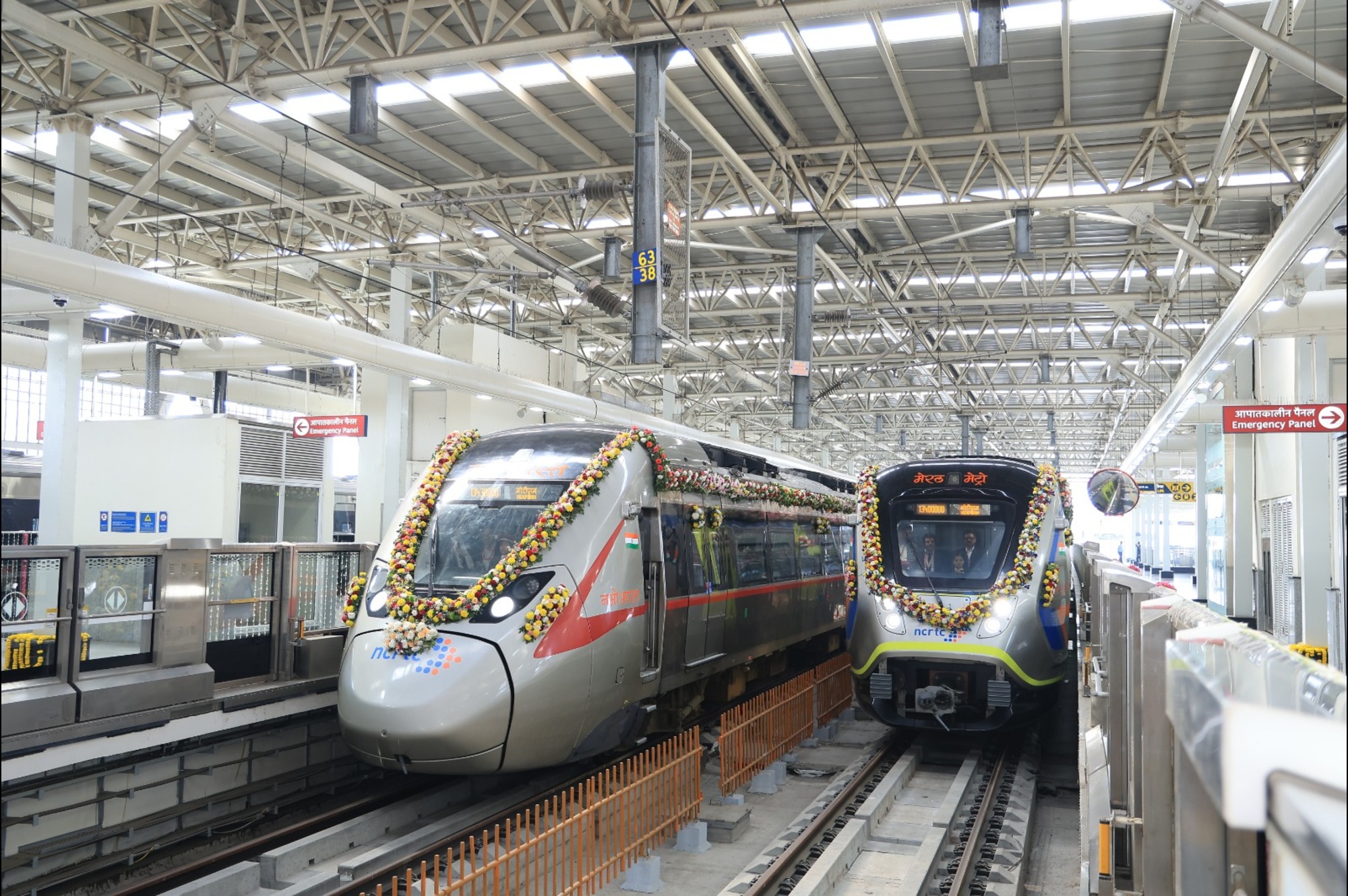
Alstom has commenced commercial operations of the balance stretch of the Namo Bharat corridor, India’s first Regional Rapid Transit System (RRTS) connecting Delhi-Ghaziabad-Meerut and the Meerut Metro, an urban Mass Rapid Transit System (MRTS) for the city of Meerut, powered by Alstom’s India-made trainsets and advanced ETCS Hybrid Level 3 over LTE 4G signalling solutions. The inauguration of the balance section of the Delhi-Ghaziabad-Meerut Namo Bharat Corridor includes sections connecting New Ashok Nagar to Sarai Kale Khan (5.5 km) and Meerut South to Modipuram (21 km) along with the Meerut Metro section (21 km).
This milestone, spearheaded by the National Capital Region Transport Corporation (NCRTC), is a significant step in enhancing urban mobility in the National Capital Region and intra-city commute for the residents of Meerut. This also makes Meerut Metro India’s first metro system to be powered by the European Train Control System (ETCS) Hybrid Level 3 signalling over Long-Term Evolution (LTE) 4G, a significant technological leap promising enhanced safety, efficiency, and operational flexibility.
Commenting on the milestone, Olivier Loison, Managing Director, Alstom India said, “NCRTC created a breakthrough with RRTS and now Meerut Metro and we are proud to be their preferred partner in this journey. The opening of the complete corridor for RRTS and commencement of revenue service for Meerut Metro will unlock inter and intra city growth opportunities through this advanced urban rail network. It will be our endeavour to support NCRTC in this feat in every possible way.”
Designed at Alstom’s Hyderabad engineering centre and manufactured at Savli (Gujarat), these trains are 100% made in India, in line with the government’s ‘Make-in-India’ and Aatmanirbhar Bharat ambition. The propulsion systems and electricals have been manufactured at Alstom’s facility in Maneja (Gujarat).
Committed to support urban mobility with advanced solutions for the Meerut Metro project
The new Meerut Metro (MRTS) commuter trains provide an attractive sustainable choice for the promotion of public transport, with outstanding ergonomics, safety and comfort, low life cycle costs and high recyclability, while reducing traffic congestion, air pollution and fuel consumption. They will save travel costs and time, changing the lives of millions of citizens by connecting suburban places with the economic centre of the region.
The MRTS trains, which are part of Alstom’s Adessia commuter train family offer passenger-centric amenities, including overhead luggage racks, information screens within the coaches, and USB sockets near the seats. They also feature wheelchair spaces for individuals with disabilities and stretcher space for emergency medical transfers. Emergency communication capabilities are integrated into the cars, designed, and manufactured in alignment with International Safety Standards.
The Meerut Metro Line covers a 21-km stretch, connecting Meerut South to Modipuram via 12 stations. Four stations on this line will integrate seamlessly with the Delhi-Meerut Namo Bharat RRTS, offering residents enhanced inter-city and intra-city travel.
Providing world-class solutions for the Namo Bharat Regional Rapid Transit System
In 2020, Alstom was awarded the contract, with a scope of work including:
- Design, manufacture, and deliver 180 RRTS train cars (30 trainsets) and 30 MRTS train cars (10 trainsets) based on the Adessia commuter platform.
- Design, supply and install the signalling, train control and telecommunication system, platform screen door & LTE radio communication
- Provide comprehensive maintenance services for 15 years
The primary purpose of this Regional Rapid Transit System (RRTS) is to relieve the traffic congestion in the national capital by enabling allowing faster commute between nearby satellite towns. Since 2002, after the opening of the first section of Delhi Metro , the metro network has grown at a rapid pace. The RRTS network will complement the metro.
Alstom designed the train and unveiled it in September 2020. It is a game changer in the commuter and inter-regional rail transport space which is set to change the way India travels.
Tags