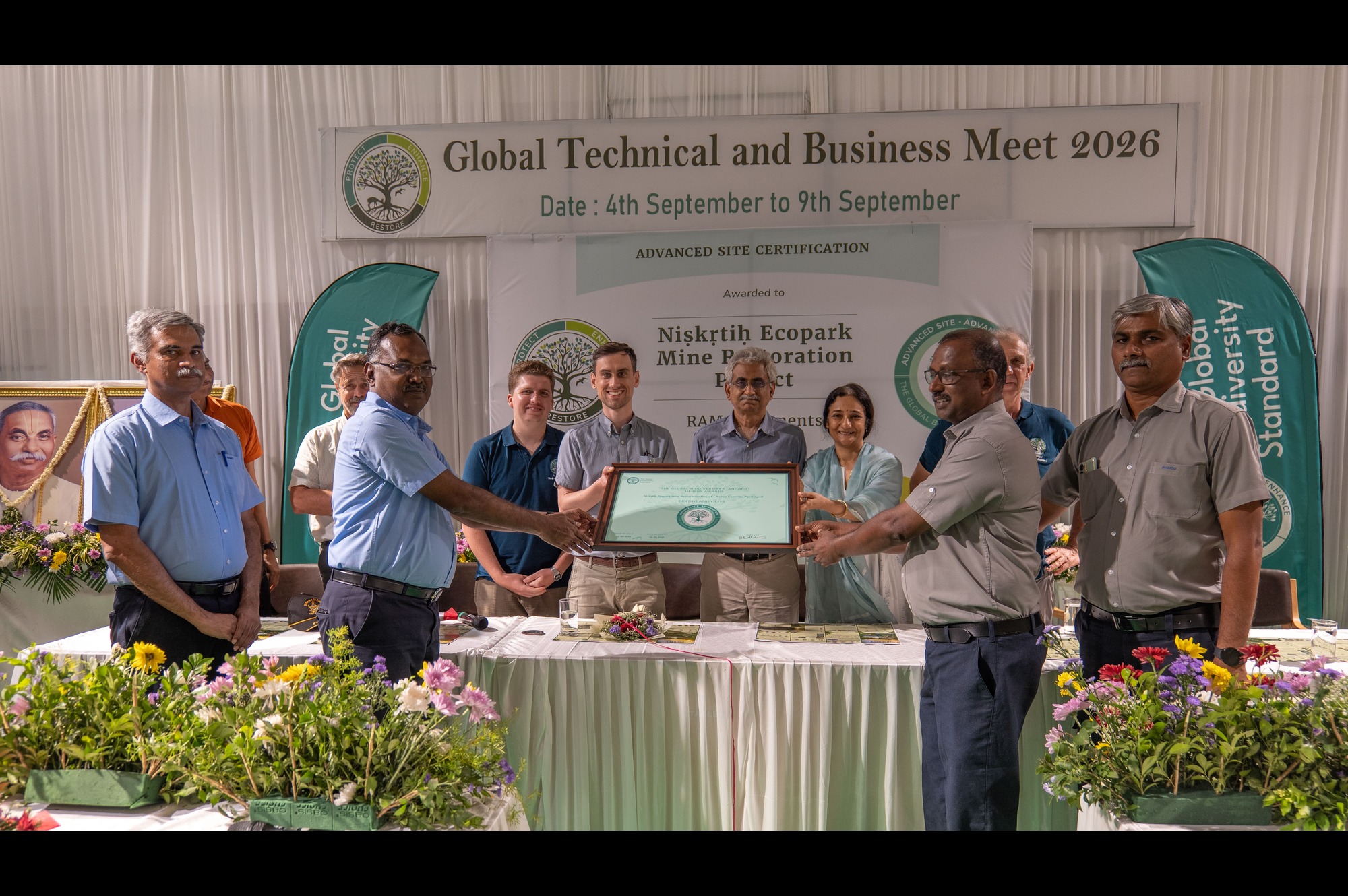
Ramco Cements’ Pandalgudi Mine Restoration Earns International Biodiversity Recognition

The ecological restoration of the limestone mine in Pandalgudi, in the Virudhunagar District of Tamil Nadu, carried out by Ramco Cements, has received international recognition. It has been awarded the Advanced Certification by The Global Biodiversity Standard (TGBS) — the first site to be recognised at in Peninsular India. It now stands alongside other certified restoration sites of the world, such as the Jane Goodall Institute and Ecosia’s work in Uganda and the restoration project of Kadoorie Farm and Botanic Garden in Hong Kong.
TGBS is recognized by the International Union for Conservation of Nature (IUCN) and the Convention on Biological Diversity (CBD), and is supported by over 250 scientists and academics around the world as a rigorous and adept certification for indicating a project’s contribution to the protection and recovery of biodiversity. The certification also ensures that the work is positively contributing to the local communities of the area.
The project area covers over 500 acres of worked-out mines, within which a 234-acre site has been assessed and certified. Work was initiated in 2018 with the technical support of Auroville Botanical Gardens, the first plantations started at the end of 2019, work is ongoing and is expected to be completed by 2027. So far over 430,000 native trees and shrubs, from 150 species of ecological significance to the area, have been planted at the site. Since the inception of the project, over 72 species of birds and 53 species of butterflies have been recorded on the site — which was once a barren mine with no significant biodiversity present. It is also estimated that the site has captured around 10,000 tonnes of carbon dioxide over the past seven years.
The area was officially opened in 2022 by the Chief Minister of the State and has since received over 13,000 visitors as part of organised educational experiences for local schools and colleges, as well as state and national-level training institutions. It has also provided the inspiration and support for the development of the Rajapalayam Masterplan and the subsequent declaration of Rajapalayam as one of four towns in Tamil Nadu on a fast track to carbon neutrality by 2041.
“The Ramco Group is committed to supporting a wide range of initiatives that advance the country’s transition to a sustainable and carbon-neutral future,” said P. R. Venketrama Raja, Chairman of the Ramco Group. “We hope that the work completed here in Pandalgudi will serve as an inspiration and a blueprint for the entire mining industry of the country.”
“Pandalgudi demonstrates the leadership that high-integrity restoration demands: ambitious delivery on the ground, combined with a willingness to have biodiversity outcomes independently assessed and to use the findings to improve. Through long-term commitment and local ecological expertise, Ramco Cements and Auroville Botanical Gardens have transformed a severely degraded mine into a recovering native ecosystem. TGBS makes clear where recovery is credible, where risks remain and how outcomes can be strengthened over time,” said Dr David Bartholomew, CEO, The Global Biodiversity Standard.
Tags