The ₹20 Lakh Crore Mobility Transformation

India’s EV transition is rapidly evolving into one of the country’s biggest infrastructure and industrial opportunities. From charging corridors and smart grids to battery gigafactories and renewable energy integration, the sector is expected to unlock nearly ₹20 lakh crore in investments, reshaping mobility, energy systems, and the future of infrastructure development
India’s electric vehicle (EV) industry has crossed a defining inflection point. What was once a niche urban mobility segment has now evolved into a national industrial and infrastructure mission. The country is no longer merely experimenting with electric mobility; it is restructuring transportation, energy systems, manufacturing ecosystems, and urban infrastructure around it.
The transition is being driven by hard economic realities. India imports nearly 85% of its crude oil requirements, making the country vulnerable to global energy shocks and price volatility. At the same time, worsening urban pollution, rising fuel costs, and climate commitments are accelerating the push towards electrification. EV adoption, therefore, is no longer viewed as an environmental aspiration alone – it has become an economic and strategic necessity.
The numbers reflect this momentum. India sold around 130,000 EVs in 2020. By 2024, annual EV sales had crossed 1.5 million units, with electric two-wheelers and three-wheelers leading adoption. Industry estimates suggest that by 2030, EVs could account for 30% of private cars, 70% of commercial vehicles, and nearly 80% of two- and three-wheelers sold in the country.
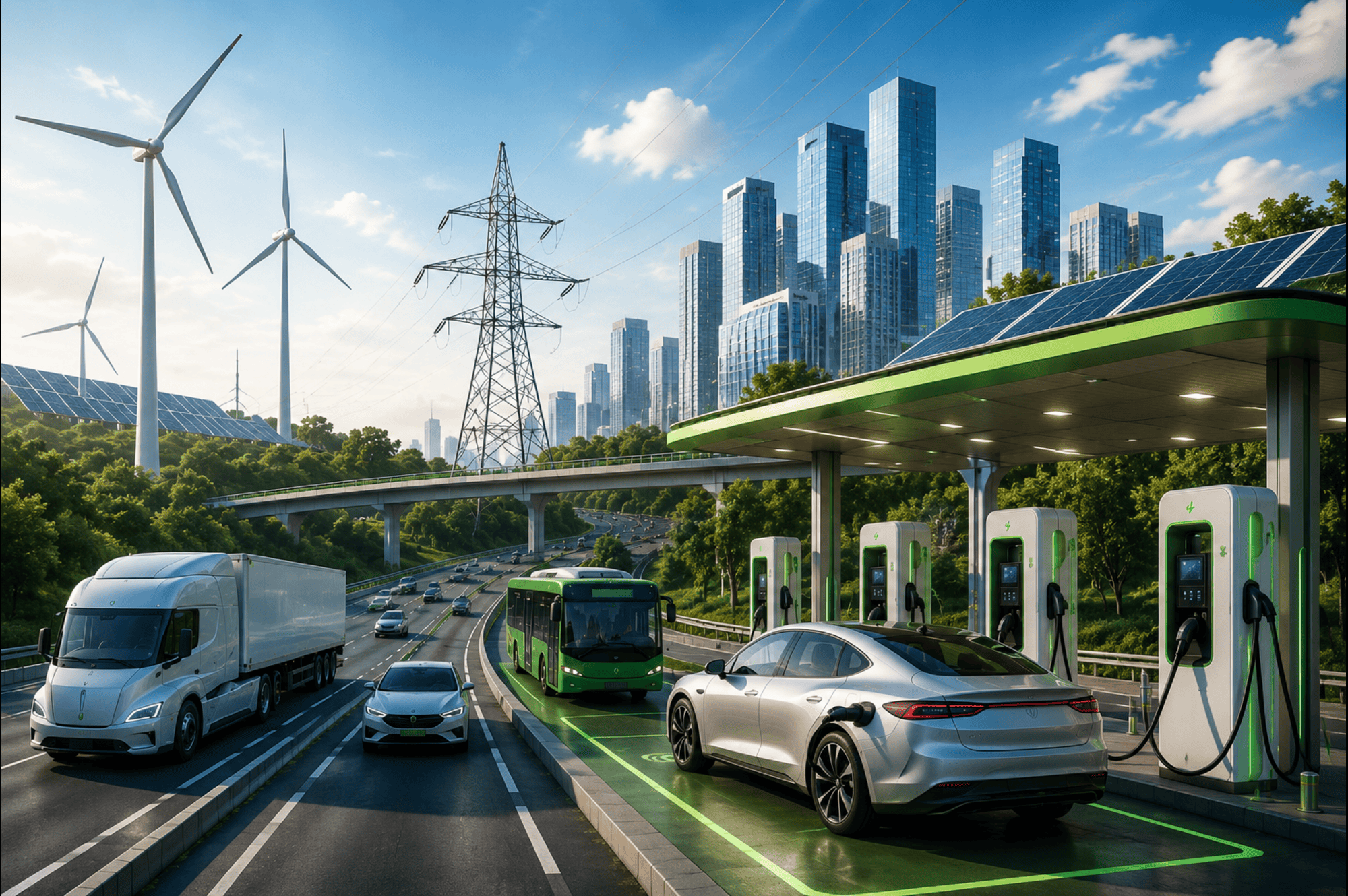
However, the real story is not simply about manufacturing electric vehicles. The larger transformation lies in building the massive infrastructure ecosystem required to support them. Charging networks, grid modernization, battery manufacturing, renewable energy integration, smart energy systems, and highway electrification together represent a capex opportunity estimated at nearly ₹20 lakh crore over the next decade.
This infrastructure revolution is creating one of the largest opportunities India’s EPC sector has witnessed since the expansion of highways, airports, and renewable energy.
The Infrastructure Challenge
India currently has over 85,000 public charging points, but this number is far below future requirements. According to projections by NITI Aayog and the Central Electricity Authority, the country will require more than 1 million public charging stations and millions of residential chargers by 2030. The challenge is not merely quantitative; it is structural. India’s charging ecosystem must cater to diverse vehicle categories, including two-wheelers, passenger cars, buses, freight vehicles, and commercial fleets. Each segment requires different charging technologies, grid capacities, and operating models.
Residential charging remains the first bottleneck. Nearly 70% of urban Indians live in apartments or housing societies where dedicated parking and electrical access are limited. Retrofitting existing residential buildings with EV charging infrastructure involves transformer upgrades, additional cabling, smart meters, and new electrical distribution systems. Several states, including Maharashtra, Delhi, and Tamil Nadu, have mandated EV-ready provisions in new residential developments. Yet retrofitting millions of existing apartments remains a slow and capital-intensive exercise. This creates a major opportunity for electrical contractors, utilities, and EPC companies specializing in urban infrastructure upgrades.
Highway Electrification: India’s Next Big Infrastructure Push
One of the most transformative developments in India’s EV journey is the emergence of highway charging corridors. Long-distance EV mobility depends entirely on the availability of reliable fast-charging infrastructure across national highways and expressways.
The Ministry of Road Transport and Highways and the National Highways Authority of India (NHAI) are now integrating charging infrastructure directly into highway planning. Policy mandates suggest that fast chargers should be available every 25-40 kilometres along major corridors.
The Delhi-Mumbai Expressway represents the most advanced example of this strategy. Charging hubs are being integrated into the highway’s design, featuring multiple fast chargers, food courts, rest areas, and smart payment systems. Similar models are expected on the Bengaluru-Hyderabad, Mumbai-Nagpur, and Chennai-Bengaluru corridors.
Developing a single highway charging station can require ₹3-8 crore in investment, including land acquisition, civil works, electrical infrastructure, transformers, substations, and charging equipment. Collectively, highway charging alone could generate ₹30,000-60,000 crore in infrastructure spending over the next decade.
For EPC contractors, this opens opportunities across Civil and electrical works, Transformer and substation installation, Underground cabling and transmission systems, Smart energy management systems, Operations and maintenance contracts and Renewable energy integration. However, profitability remains a challenge. Most highway charging stations currently operate at low utilisation levels because EV penetration is still developing. Infrastructure therefore needs to be built ahead of demand, creating financing and viability concerns for investors.
Urban Charging: The Real Estate Opportunity
Urban charging infrastructure is emerging as one of the most commercially viable segments of the EV ecosystem. Shopping malls, office parks, airports, parking structures, hotels, and commercial real estate developments are increasingly installing EV chargers. For developers, charging infrastructure is becoming a competitive necessity. Properties without EV-ready parking may face declining relevance as EV ownership expands. Commercial spaces benefit from higher charger utilization because vehicles remain parked for longer durations. Malls and office campuses also gain from increased customer dwell time and improved sustainability credentials.
As a result, EV charging is now being integrated into India’s broader commercial real estate expansion. Developers are incorporating charging bays, upgraded transformers, energy management systems, and rooftop solar integration into new projects. This shift is significantly increasing demand for electrical EPC services, smart building systems, and integrated energy solutions.
Grid Modernisation: The Silent Infrastructure Revolution
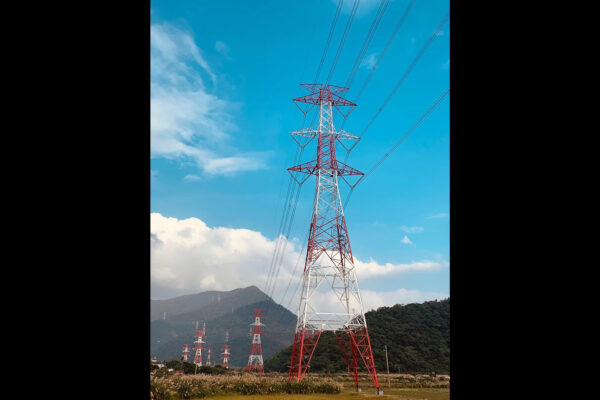
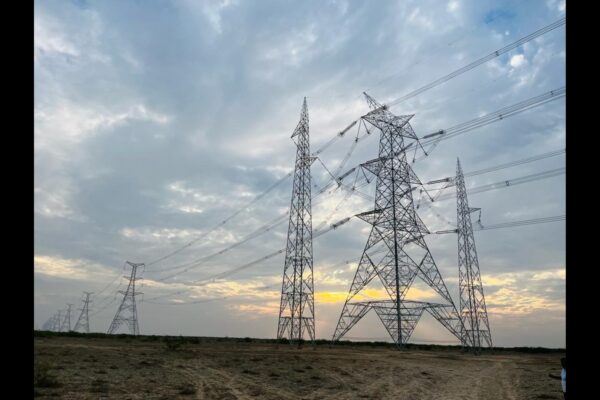
While charging stations attract public attention, the biggest challenge lies beneath the surface – the electricity grid itself. An all-electric mobility ecosystem could add nearly 180-200 GW of additional peak electricity demand by 2035. This would require massive upgrades in transmission, distribution, substations, transformers, and energy management systems. India’s existing distribution infrastructure was never designed for clusters of high-capacity fast chargers. A single ultra-fast charging station can draw 200-300 kW of power, while fleet charging depots may require megawatt-scale supply. To support EV adoption, India will need thousands of new substations, large-scale transformer upgrades, expanded medium-voltage distribution networks, smart grids and real-time monitoring systems, time-of-use electricity pricing systems, renewable energy integration and grid-scale battery storage systems. The estimated capex for grid modernization linked to EV adoption is projected at ₹4-5 lakh crore. The challenge is compounded by the financial stress of India’s distribution companies (DISCOMs), many of which continue to operate under heavy debt burdens. These utilities must evolve from passive electricity distributors into intelligent energy management operators capable of balancing dynamic EV demand. This transition will accelerate investment in smart meters, AI-based load forecasting, demand response systems, and distributed energy management platforms.
Renewable Energy and Battery Storage
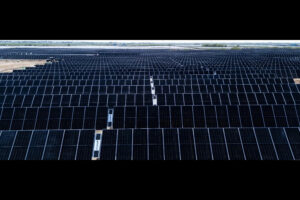
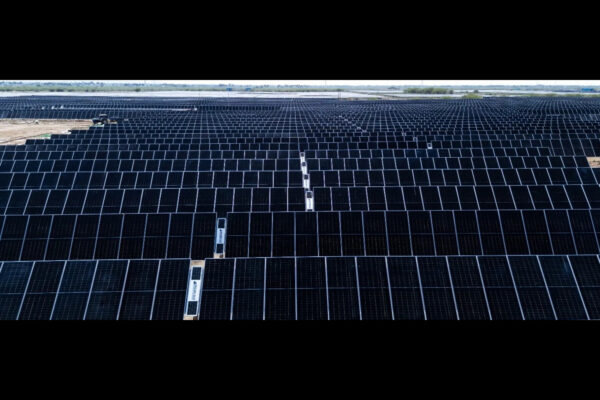
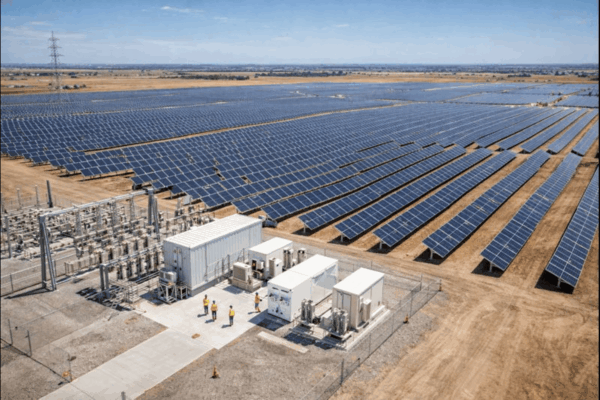
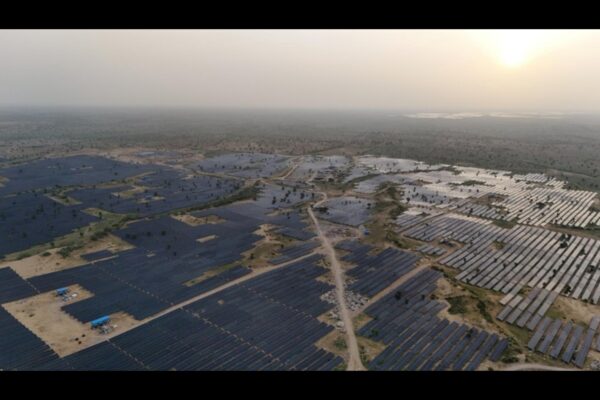
India’s EV transition cannot succeed without parallel growth in renewable energy. The government has set a target of achieving 500 GW of renewable energy capacity by 2030. Solar and wind generation are expected to become the primary energy sources powering electric mobility. However, renewable energy generation is intermittent, while EV charging demand is concentrated during evening peak hours. This mismatch creates the need for large-scale battery energy storage systems. India currently has limited grid-scale battery storage capacity, but demand is expected to rise rapidly. Battery storage facilities will play a critical role in balancing renewable power, stabilizing the grid, and supporting fast-charging infrastructure. This creates another major EPC opportunity involving Battery storage facilities, Solar-plus-storage projects, Smart inverters and control systems, Grid balancing infrastructure, and Microgrids and distributed energy systems.
Microgrids are becoming especially important for industrial parks, commercial campuses, and remote charging corridors. These systems combine solar power, battery storage, and intelligent load management to reduce pressure on the central grid.
Battery Manufacturing: India’s New Industrial Frontier
India’s EV strategy increasingly revolves around localizing battery manufacturing. Until recently, India depended almost entirely on imported lithium-ion cells, primarily from China. Today, government-backed Production Linked Incentive (PLI) schemes are encouraging domestic battery manufacturing and attracting investments worth tens of thousands of crores. Companies such as Reliance Industries, Tata Group, Mahindra, Ola Electric, and ACC are investing heavily in gigafactories across Gujarat, Tamil Nadu, and Maharashtra. By 2030, India’s battery manufacturing capacity could reach 250-300 GWh annually, creating one of the world’s largest battery ecosystems. Battery manufacturing is not limited to cell production alone. It involves a complete industrial supply chain which includes Raw material processing, Cell manufacturing, Pack assembly, Thermal management systems, Battery management software, and Recycling infrastructure.
Each gigafactory requires extensive EPC work, including Civil construction, Clean-room facilities, HVAC systems, High-capacity electrical infrastructure, Fire safety systems and Waste management and recycling plants
The Rise of Electric Freight and Logistics
Electrification is also beginning to reshape India’s freight and logistics sector. Commercial trucks and logistics fleets consume massive quantities of diesel annually, making them a priority for electrification. Logistics operators are now piloting electric trucks across major industrial corridors. This transition requires entirely new infrastructure categories, including Depot-based fleet charging, Megawatt charging systems, Battery swapping hubs, Smart fleet management systems and Dedicated transmission infrastructure. Battery swapping is gaining traction for commercial fleets and three-wheelers because it minimizes downtime. Instead of waiting to recharge, operators can replace depleted batteries within minutes. Oil marketing companies and private operators are investing in battery swapping networks, creating new opportunities in automated storage systems, charging depots, and energy management infrastructure.
Technology Transformation and Smart Charging
The charging ecosystem itself is evolving rapidly. Home charging systems remain dominated by AC charging, suitable for overnight charging. However, urban mobility and highway travel increasingly rely on DC fast chargers capable of charging vehicles within 20-30 minutes. The industry is also moving towards ultra-fast charging systems exceeding 350 kW, particularly for premium vehicles and commercial fleets. Simultaneously, India is witnessing the rise of smart charging technologies involving AI-driven load balancing, Remote charger monitoring, Smart payment integration, Vehicle-to-grid (V2G) systems and Dynamic pricing models.
Vehicle-to-grid technology could become especially transformative. In the future, EVs may function as distributed battery banks capable of supplying electricity back to the grid during peak demand. This convergence of mobility and energy systems is creating a completely new category of digital infrastructure.
Key Risks and Challenges
Despite the strong momentum behind India’s EV transition, the sector continues to face several structural and operational challenges that could slow down the pace of adoption and infrastructure deployment. One of the biggest concerns is the low utilization of public charging stations. Many charging networks are being developed ahead of actual EV demand, especially on highways and in smaller cities. As a result, several charging stations are operating below profitable utilization levels, putting financial pressure on operators and increasing project payback periods. Another major challenge is the growing stress on India’s electricity grid. Rapid EV adoption could significantly increase peak power demand, particularly during evening hours when electricity consumption is already high. If grid modernization, renewable energy capacity, and transmission infrastructure do not expand at the same pace, local power shortages and grid instability could emerge in urban clusters and industrial corridors. India’s dependence on imported battery raw materials also remains a critical vulnerability. The country still relies heavily on imports of lithium, cobalt, nickel, and advanced battery cells. Any geopolitical tensions, supply chain disruptions, or commodity price volatility could sharply increase battery costs and affect EV affordability. Financing remains another key hurdle. EV charging infrastructure projects typically require high upfront investment while offering relatively long payback periods. Many private investors remain cautious because charger utilization is still evolving, making government incentives and viability gap funding essential for large-scale deployment.
Urban retrofitting presents an equally complex challenge. Most Indian cities were not designed for EV-ready infrastructure. Retrofitting old residential societies, office buildings, and parking structures with charging systems requires transformer upgrades, new cabling, smart metering, and regulatory approvals. Fragmented ownership structures and slow decision-making in housing societies further delay implementation. Safety concerns surrounding battery fires and charging systems continue to impact consumer confidence. Although such incidents remain limited, poor-quality batteries, substandard charging equipment, and inadequate thermal management systems can create significant risks if strict quality standards and certification mechanisms are not enforced.
Land acquisition is emerging as another bottleneck, particularly for highway charging corridors and large charging hubs. Acquiring strategically located land near highways and urban centers involves lengthy approvals, rising land prices, and complex regulatory procedures, all of which increase project costs and delay execution timelines. The shortage of skilled manpower is also becoming a concern for the industry. India requires trained technicians, electrical engineers, battery specialists, and charger maintenance professionals at a much larger scale. Without proper workforce development and technical training programmes, the industry could face execution and maintenance challenges in the coming years. Interoperability and standardization issues continue to create uncertainty across the charging ecosystem. Multiple charging standards, payment systems, software platforms, and connector technologies often lead to compatibility issues for consumers and operators. Greater standardization will be essential to ensure seamless charging experiences nationwide.
Cybersecurity is another emerging challenge as EV charging infrastructure becomes increasingly digital and connected. Smart chargers, payment gateways, grid management systems, and vehicle-to-grid technologies are vulnerable to cyber threats and data breaches. Protecting critical energy and mobility infrastructure will require robust cybersecurity frameworks and real-time monitoring systems. Finally, policy consistency remains crucial for long-term investor confidence. Frequent changes in subsidy structures, taxation policies, import duties, and state-level regulations can affect project viability and delay investments. Sustained policy clarity and coordination between central and state governments will be essential to maintain the momentum of India’s EV and charging infrastructure revolution.
The Road Ahead
By 2035, India’s mobility ecosystem could look dramatically different. Highways may feature seamless charging corridors integrated with renewable energy systems. Electric freight vehicles may dominate logistics routes. Residential buildings, office parks, malls, and industrial facilities may function as integrated energy ecosystems combining solar power, battery storage, and EV charging. India’s oil import dependence could reduce significantly, strengthening energy security and lowering vulnerability to global crude price shocks. At the same time, India has the potential to emerge as a global hub for EVs, batteries, charging technology, and energy management systems.
For the EPC industry, the implications are enormous. The EV revolution is not simply about vehicles; it is about building a completely new layer of national infrastructure. Charging stations, substations, smart grids, renewable energy systems, battery factories, transmission corridors, and microgrids together represent one of the largest infrastructure opportunities in modern Indian history. The companies that invest early in technical capability, execution expertise, and integrated energy solutions will define the next phase of India’s infrastructure growth. India’s EV revolution has already begun. The question is no longer whether the transition will happen, but who will build the ecosystem powering it.
Tags