Building the Future: The Role of AI and Digitalisation in India’s Construction Growth Story

by Iesh Dixit, CEO & CO Founder, Powerplay
India is moving into what could easily become one of the most demanding infrastructure decades it has ever taken on. Highways, metro systems, logistics parks, renewable energy assets, large-scale urban redevelopment – the pipeline is broad, and the pace is picking up. Government programmes like the National Infrastructure Pipeline (NIP), Gati Shakti, and the steady push of urbanisation are all adding pressure in the same direction: projects need to move faster, output has to improve, and cost discipline can’t slip.
Even with that momentum, the sector is still wrestling with problems that have been around for years. Delays are routine. Cost overruns show up more often than anyone would like. Productivity, frankly, hasn’t kept up with other industries. Underneath all of this sits a structural issue that’s hard to ignore – construction remains one of the least digitised, and one of the most fragmented, parts of the economy.
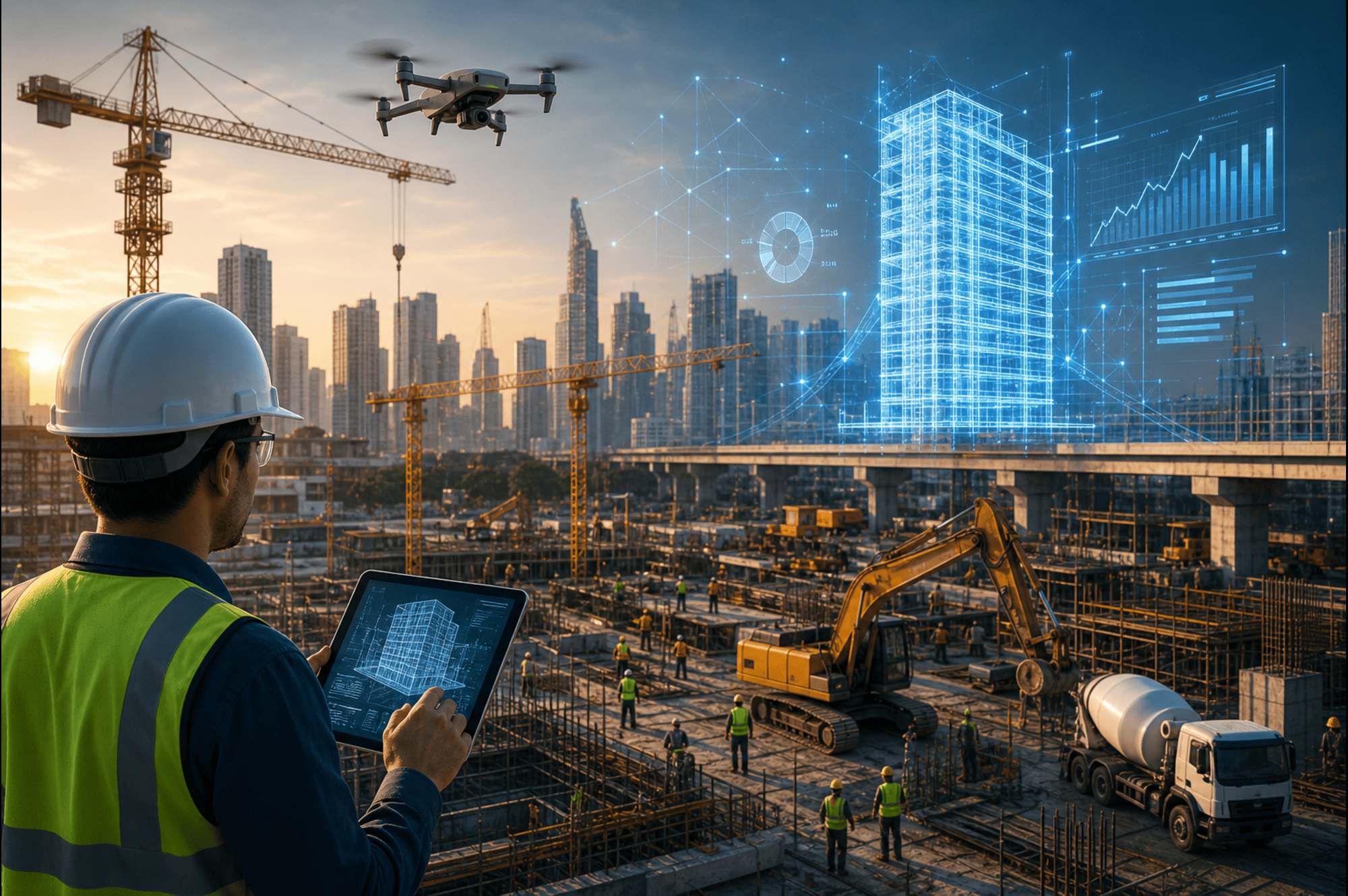
As the country tries to build at greater scale and with tighter timelines, digitalisation and artificial intelligence are starting to look less like optional upgrades and more like core infrastructure in their own right.
The Productivity Gap in Construction
Across the world, construction productivity has grown at roughly 1-2% a year over the last two decades. That’s a modest figure, especially when compared with sectors like manufacturing or logistics. In India, the gap tends to feel wider because of the inherent complexity of projects here. A single job site can involve owners, contractors, subcontractors, consultants, suppliers, and large labour forces – often spread across locations that operate very differently from one another.
A lot of coordination still happens through manual processes. Spreadsheets, phone calls, scattered documents or whatsapp messages. Critical information – drawings, procurement details, site progress, cost updates – often sits in separate systems or in isolated pockets of data. Visibility becomes partial at best. Decisions then follow that pattern. They tend to be reactive.
You see it in simple ways. A material delivery slips, and the delay only becomes obvious after the work has already stopped. A design revision doesn’t reach every team in time, so rework creeps in. Cost overruns surface late, when the room to correct them is already limited and expensive.
None of this reflects a lack of capability or effort on the ground. More often, it comes down to systems that were never built to handle the speed and scale that modern infrastructure now demands.
Digitalisation as the Foundation of Modern Construction
The first real shift in the industry has been digitalisation – moving away from paper-heavy workflows toward digital platforms. Over the last decade, tools like Building Information Modelling (BIM), project management systems, and cloud-based collaboration platforms have started to gain ground.
The benefits show up quickly. Documentation becomes more accurate. Teams can collaborate remotely without losing context. Data starts to live in one place instead of many. Compliance and reporting also become easier to track, and the risk of losing information drops.
Still, digitalisation on its own doesn’t solve everything. Taking a manual process and placing it inside a digital tool can make it faster, but it doesn’t automatically change how decisions get made or how early problems are spotted.
That next shift is less about digitising work and more about making sense of the data behind it.
From Data to Decisions: The Emergence of AI in Construction
Construction sites generate enormous volumes of data every day – drawings, schedules, procurement records, safety reports, financial transactions, daily progress logs. Historically, much of that information has gone underused because analysing it manually takes time and sustained effort.
Artificial intelligence changes the mechanics of that process.
Large datasets can be easily processed using AI systems, in real time. It helps identify patterns and bring forward insights that teams can actually use. Instead of waiting for problems to fully surface, project teams can see risks taking shape earlier and make adjustments before the situation escalates. And rather than spending hours pulling updates together from different systems, managers can put more of their time into planning and making decisions that move the project forward.
In practice, that could look like forecasting material requirements based on project schedules and historical consumption. It might involve picking up early warning signs of cost overruns by tracking where spending starts to drift from the original budget. In some cases, teams may reassign resources after noticing productivity differences across sites. Safety is part of this as well – identifying risk conditions early enough to intervene before an incident occurs.
The change itself isn’t dramatic on the surface, but it matters. Management gradually shifts from responding to events after they happen to staying a step ahead of them.
Addressing the Fragmentation Challenge
Fragmentation is almost built into the construction industry. Large projects regularly involve dozens of contractors and hundreds of workers operating at the same time. Each group arrives with its own processes, its own tools, and its own communication habits.
That fragmentation carries a cost. Miscommunication leads to rework. Approvals take longer than planned. Coordination gaps slow progress and push expenses upward.
Digital platforms supported by AI can serve as a unifying layer across these moving parts. When information from design, procurement, finance, and site operations lives in one shared environment, teams start to see performance more clearly across the full project lifecycle. Gaps become easier to spot. Dependencies are less likely to slip through unnoticed. It gives people a more grounded view of what’s actually happening, not just what individual teams are reporting.
In the Indian context, that level of visibility carries extra weight. Projects here often stretch across regions where supply chains behave differently and site conditions can change quickly. A centralised, intelligent system gives project leaders a steadier handle on progress. They can see bottlenecks forming sooner, make adjustments earlier, and respond when conditions shift – without waiting for problems to compound.
Enabling Sustainable and Resilient Infrastructure
Sustainability is no longer sitting on the sidelines. It’s becoming a core expectation in infrastructure development across India. Projects are now expected to manage environmental impact more carefully, use resources efficiently, and meet stricter regulatory expectations.
Digitalisation and AI play a practical role here.
Advanced analytics can help reduce material waste, optimise energy use, and improve resource planning. Predictive maintenance can extend the useful life of assets while lowering operating costs. Real-time monitoring helps ensure that environmental and safety standards are consistently met.
These capabilities support sustainability goals, but they also strengthen resilience. Fewer disruptions, fewer surprises, and more predictable performance over time.
The Road Ahead
India’s construction sector is at a turning point. Demand for infrastructure is accelerating, but traditional execution models are starting to show their limits. Meeting the country’s development ambitions will require new tools, and just as importantly, new operating habits.
Digitalisation lays the groundwork. Artificial intelligence increases the pace.
Together, they can shift construction from a fragmented, reactive environment toward one that is more coordinated and driven by data. Projects can move faster. Risks can surface earlier. Decisions can happen with better information behind them.
In the years ahead, the defining factor may not just be the structures that get built, but the systems used to build them. Intelligence, in that sense, becomes as essential as the physical materials on site.
Tags