The Architects of Connectivity: How EPC is Building India’s Power Grid for a Viksit Bharat

India’s energy transition is quickly moving from power generation to grid readiness, with transmission and distribution at the heart of this change. As investments increase and technologies develop, EPC players are emerging as key drivers of a smarter, more resilient, and future-ready power network. EPC World explores
Engineering India’s Energy Future
India’s power sector has entered a defining decade, marking a decisive transition from an era dominated by generation deficits to one shaped by infrastructure intelligence, grid resilience, and system-wide integration. From peak deficits of over 10% a decade ago, India has transitioned into a near power-surplus nation, with energy shortages reduced to negligible levels.
Yet, this success has ushered in a more complex challenge. The focus is no longer on generation, but on efficiently transmitting, distributing, and managing electricity across a rapidly expanding and decentralised economy. As India targets 500 GW of non-fossil fuel capacity by 2030, the spotlight has shifted to grid infrastructure.
The Scale of the Surge
India’s electricity demand is undergoing a structural transformation. Installed capacity has crossed 520 GW, while peak demand has surpassed 250 GW. The Central Electricity Authority projects peak demand to reach approximately 446 GW by 2034–35.
This growth is driven by urbanisation, industrial expansion, electric mobility, and energy-intensive data centres, reshaping consumption patterns across the country.
The ₹50 Lakh Crore Opportunity
India is responding with an infrastructure push of historic proportions. Investments of ₹9.15 lakh crore are planned for transmission alone, with total sector investments expected to exceed ₹50 lakh crore by 2032.
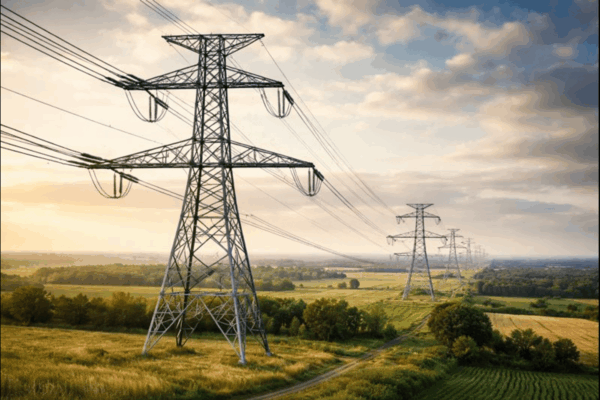
The transmission network is projected to expand beyond 6.48 lakh circuit kilometres, while transformation capacity will significantly increase, enabling higher power flows.
Projects Driving Momentum
Key projects include the Ladakh–Kaithal HVDC line, Green Energy Corridor Phase II, and the Gujarat Hybrid Renewable Energy Park. Urban grid modernisation and underground cabling projects are also gaining momentum.
These initiatives reflect a shift toward integrated, multi-layered infrastructure ecosystems.
Green Energy Corridors & HVDC
Green Energy Corridors are enabling renewable evacuation, while HVDC systems support efficient long-distance transmission. India is deploying advanced ±800 kV systems, enhancing grid resilience and flexibility.
Renewable Integration
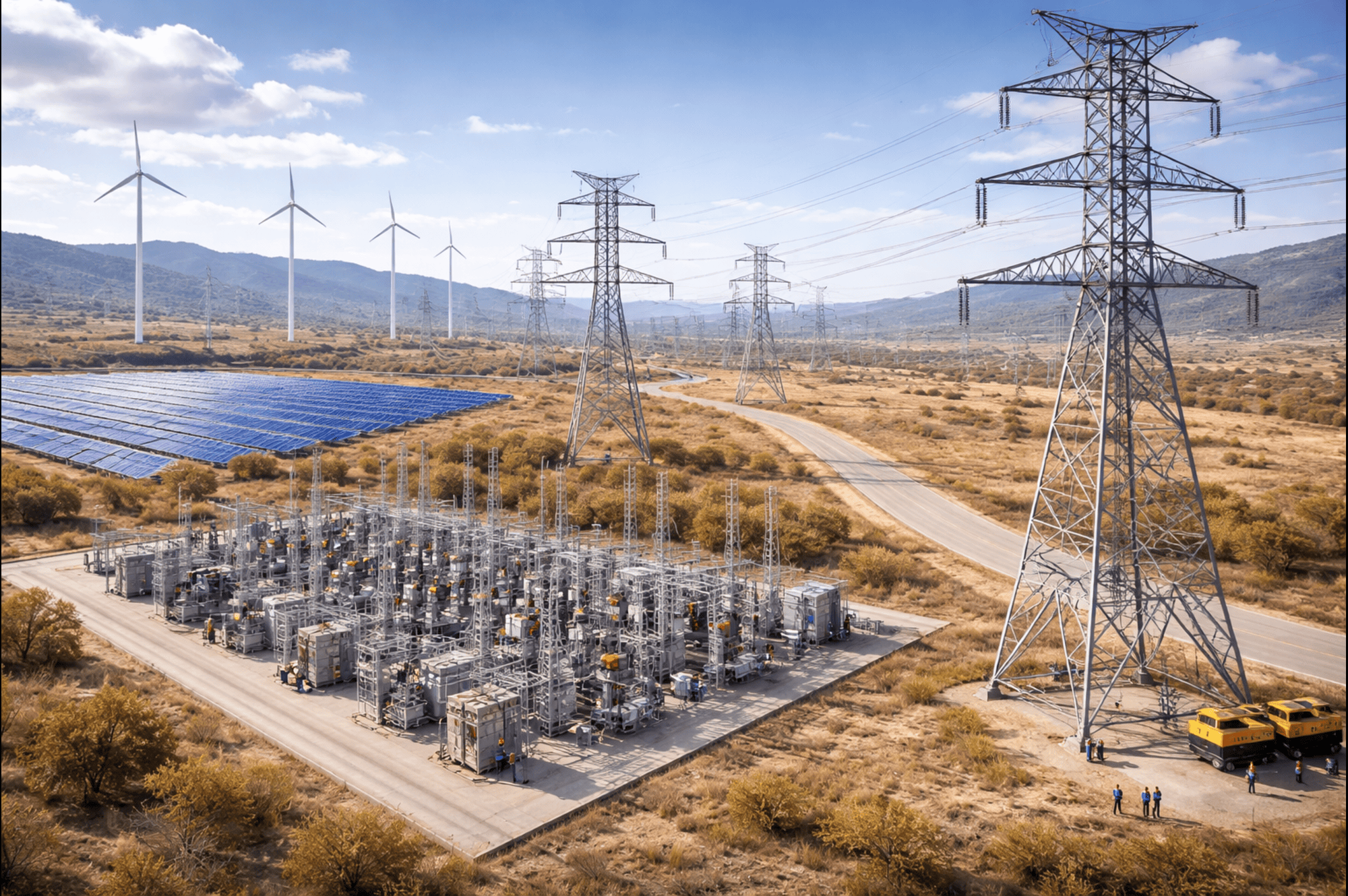
The rise of renewable energy is driving demand for flexible grid solutions. Battery Energy Storage Systems (BESS) and hybrid renewable infrastructure are becoming critical components of future grid design.
- Battery Energy Storage Systems (BESS)
- Hybrid renewable infrastructure
- Flexible transmission systems
Smart Grids & Digitalisation
Under RDSS, investments are accelerating in smart metering and automation.
- Over 4 crore smart meters installed
- Reduction in AT&C losses
- Improved supply reliability
Digital substations, SCADA systems, and automation technologies are transforming grid operations.
Private Participation
Tariff-based competitive bidding (TBCB) is increasing private sector participation, bringing capital, efficiency, and global expertise into the transmission sector.
The EPC Evolution
EPC players are evolving from contractors to strategic partners, delivering integrated, technology-driven solutions across complex infrastructure projects.
Challenges Ahead
Key challenges include land acquisition delays, commodity price volatility, and the need for skilled manpower to manage advanced technologies.
Conclusion
India’s power sector transformation is fundamentally an engineering challenge. As demand rises and renewable integration accelerates, the need for a robust, flexible, and intelligent grid becomes critical.
At the centre of this transformation is the EPC sector—designing, building, and integrating the infrastructure that will power India’s future.
Because in India’s growth story, it is not just power that matters—but the grid that delivers it.
Tags