
Interview: Shashank Agarwal, Managing Director, Salasar Techno Engineering

India is entering what many are calling a defining decade for infrastructure. From your vantage point, what structural shifts are you seeing in EPC demand across the power and telecom sectors?
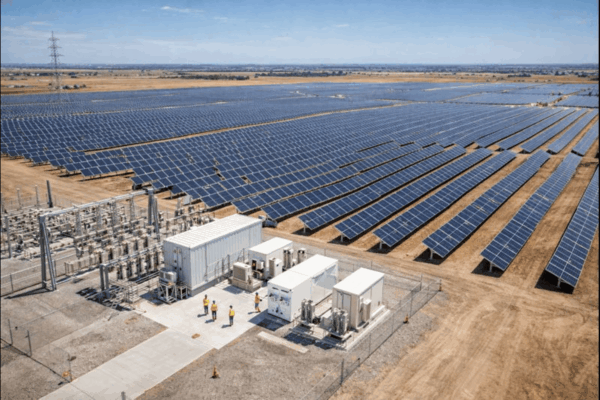
The Indian infrastructure sector is fundamentally shifting from fragmented, project-based interventions to a cohesive, national-level strategic framework. The coming decade will be characterised by unprecedented public capex momentum, with the Central Government positioning infrastructure as the primary engine for economic growth. Within this macroeconomic environment, structural shifts in EPC demand are especially prominent in the power and telecommunications sectors, where technological evolution and capacity scaling are occurring simultaneously. In the power sector, the demand shift is driven by the mandate for renewable energy integration. India aims to achieve 500 GW of non-fossil fuel capacity by 2030, a goal that requires a massive overhaul of the transmission grid. The traditional model of power transmission, which focused on local distribution from thermal plants, is being replaced by high-capacity corridors designed for the long-distance evacuation of power from renewable-rich zones to high-demand industrial centres. This has necessitated a move toward Extra-High Voltage (EHV) and Ultra-High Voltage (UHV) systems, specifically 765 kV AC and ±800 kV HVDC lines, which offer higher transmission efficiency and lower losses over long distances. Similarly, the telecommunications sector is witnessing a structural migration. Unlike previous generations, 5G requires a significantly higher density of towers and small cells to support high-frequency spectrums and lower latency requirements. This demand is manifesting not just in the quantity of towers but in their structural versatility. The industry is moving away from purely voice-centric infrastructure toward data-heavy networks that require fibreised towers and smart poles capable of hosting a variety of IoT devices. Overall, clients are increasingly preferring partners with wide manufacturing depth, distributed production ecosystems, and strong quality systems that can support parallel project execution. We are seeing a clear shift toward future-ready assets rather than single-purpose installations – a transition where integrated design, manufacturing, and EPC must function as one coordinated system.
How has the transition from conventional lattice towers to monopoles reshaped national infrastructure planning, particularly in urban and high-density corridors?
The transition from conventional lattice towers to monopoles represents one of the most significant shifts in urban infrastructure planning in the last decade. Lattice towers, while robust, possess a large footprint that requires substantial land area—typically 40 to 60 feet in diameter for the base. In the context of India’s rapid urbanisation and resulting land scarcity, lattice towers have become increasingly difficult to site, leading to prolonged RoW disputes and project delays. Monopoles, standing on a single tubular shaft, offer a compact alternative that requires up to 75% less land. This space efficiency allows infrastructure to be installed on sidewalks, road medians, and in tight urban spaces where land acquisition would otherwise be cost-prohibitive. Beyond land savings, monopoles offer an aesthetically pleasing design that faces less community opposition in residential and heritage zones. Additionally, they enable consolidation of multiple utilities—telecom antennas, smart lighting, CCTV, and sensors – reducing urban clutter. From a planning perspective, monopoles significantly accelerate project timelines, enabling completion 30–40% faster than lattice tower-based projects. They have effectively become enablers of modern urban digital infrastructure.
Speed and predictability are now critical metrics for infrastructure success. How does integrated manufacturing help address India’s chronic project timeline and execution challenges?
In view of India’s chronic infrastructure delays, speed and predictability have become critical success metrics. Traditional EPC models rely on fragmented supply chains, where delays at any stage – raw materials, fabrication, or galvanising – can derail project timelines. Integrated manufacturing consolidates the supply chain under a single roof. We operate as a vertically integrated player, offering in-house engineering, design, procurement, fabrication, and one of the largest galvanising facilities in Northern India. This integration enables real-time coordination between design and fabrication, allowing for a “Just-In-Time” delivery model. It also ensures better quality control, reducing the risk of on-site rework. In an industry tied to strict completion milestones, controlling manufacturing timelines is the most effective hedge against execution risk.
Salasar operates as a vertically integrated engineering and EPC player. How does this model translate into tangible advantages for clients executing complex, large-scale projects?
For clients executing complex, large scale projects, the vertically integrated model translates into three primary advantages: cost efficiency, single-point accountability, and design flexibility. In a standard multi-vendor EPC contract, the client must manage a complex web of designers, material suppliers, fabricators, and on-site contractors. Each layer adds a margin, and any coordination failure creates a liability gap. By contrast, Salasar’s integrated model provides reduced total cost of ownership by eliminating intermediate vendor margins and optimising logistics between the plant and the site, thereby offering a more competitive price point without compromising on quality. It also ensures single-point responsibility, with the client having one entity accountable for every phase – from initial structural design to final erection – significantly reducing administrative burden and legal complexity. Additionally, the model enables enhanced customisation, as close coordination between the design team and the manufacturing shop allows for rapid iterations; any changes in site conditions can be addressed almost immediately, unlike in a fragmented model where such adjustments would take considerably longer.This model is particularly advantageous for high-value contracts in the railway and power sectors, where safety and precision are non-negotiable.
India is witnessing an unprecedented push in transmission infrastructure to support renewable integration and regional grid strengthening. How well positioned is Salasar to capitalise on this opportunity?
Salasar is exceptionally well positioned to capitalize on this opportunity due to its recent acquisition of EMC Limited, a specialist in high-voltage power transmission and distribution. The acquisition of EMC Limited marks a milestone in Salasar’s evolution, as it qualifies the company to bid for 765 kV transmission line projects, substations, and industrial power system projects. Prior to this acquisition, Salasar’s expertise was concentrated in lower voltage segments and tower supply. The inclusion of EMC’s technical pedigree, coupled with Salasar’s manufacturing capacity of 211,000 MTPA, creates a
powerhouse capable of handling mega-projects valued at thousands of crores. Recent order wins confirm this upward trajectory. In November 2025, we secured two major contracts from Rail Vikas Nigam Limited (RVNL) worth Rs. 695.18 crore for distribution infrastructure in Himachal Pradesh. With a projected investment requirement of over Rs. 9.15 trillion in the transmission sector till 2032, Salasar’s technical readiness and expanded order book provide high revenue visibility for the next decade.
With growing emphasis on smart cities, renewables, and high-capacity transmission, how are engineering requirements for steel structures evolving?
As India pivots toward smart cities, renewables, and high-capacity transmission, the engineering requirements for steel structures have become vastly more stringent. Steel structures are no longer viewed as simple supports but as precision-engineered components that must meet specific environmental, technological, and safety standards. In smart cities, poles are being redesigned to handle “Smart City” loads, which include the weight and power requirements of Wi-Fi routers, EV chargers, and HD cameras, all while maintaining a slim profile and high wind resistance. For renewable and high-capacity transmission, the evolution is about strength, height and resilience. The move toward 765 kV and 1,150 kV lines requires structures that can support significantly heavier conductor loads over larger spans. Wind and solar farms are often in harsh environments so the steel structures must endure extreme wind speeds, corrosion, and weather variability. Accordingly, Salasar has employed advanced fabrication techniques, such as automated multi-torch CNC plasma cutting and 7-axis CNC drilling, to ensure that connections are precise and joints are fail-safe. We are also using high-tensile steels and improved galvanization techniques to ensure longevity. Furthermore, we are engineering transmission monopoles for very heavy conductor loads and taller heights now, since more circuits and higher voltages are being carried on single structures to optimize land use. The design codes themselves are evolving: safety factors are higher for wind loading, and standards for dynamic loading are more stringent. To comply, we have to carry out robust structural design simulations. Another key trend is pre-fabrication and standardization to speed up construction. Clients want steel structures that are easier to assemble on site with minimal welding or modification. So our engineering is focusing on bolted splices and modular sections that can be handled and erected faster. The push for higher capacity lines also means innovations like compact towers and insulated cross arms in transmission. With renewables, there is also a push on monitoring and smart maintenance so we are starting to integrate features like mounts for sensors or drone-friendly structures for inspection.
What role does design-led engineering play in future-ready infrastructure, especially for heavy steel structures like bridges and industrial plants?
Design-led engineering is the bedrock of future-ready infrastructure. It shifts the focus from purely construction-based execution to a pre-construction phase dominated by simulation, optimization, and digital twin technology. For heavy steel structures like bridges and industrial plants, design-led engineering ensures that every kilogram of steel is utilized effectively, reducing material costs while enhancing the structure’s resilience. By utilizing advanced software suites like STAAD.Pro and Bentley’s iTwin, Salasar can conduct sophisticated structural analyses that include seismic, wind, and thermal
loading. This design precision is critical for the heavy structural division, where detected design clashes can be resolved in the digital model before a single piece of steel is cut, avoiding the expensive field rework that plagues traditional projects. Furthermore, design-led engineering allows for the incorporation of “Smart” features from the inception. For instance, the placement of IoT sensors for real-time monitoring of a bridge’s structural integrity can be integrated into the design, allowing the client to track stress levels and vibrations throughout the asset’s life. As India embarks on massive projects like the Delhi-Meerut Expressway and seven new high-speed rail corridors, the ability to deliver design-validated, precision-fabricated heavy structures will be the primary differentiator for EPC players.
With increasing order inflows, how is Salasar strengthening its manufacturing capacity, galvanising facilities and project execution capabilities to avoid bottlenecks?
With a burgeoning order book and the government’s aggressive infrastructure targets, the risk of manufacturing bottlenecks has never been higher. Salasar has addressed this by strategically expanding its production and galvanizing facilities. The company currently operates 4 state-of-the-art plants with a combined annual capacity of 211,000 MTPA, after a recent plant expansion in Bhilai to leverage proximity to steel raw material and ports. A centerpiece of this expansion is a brand new hot-dip galvanizing plant in Uttar Pradesh. With a capacity of 96,000 MTPA, a 13-meter bath length and 3-meter width, it is one of the largest such facilities in Asia. This facility is designed to process the massive components required for high-voltage monopoles and heavy industrial frames, ensuring that galvanizing a common bottleneck in the industry does not delay project delivery. Salasar is also leveraging automation to improve throughput and consistency through the installation of advanced technologies, including automated multi-torch CNC plasma cutting for high-speed, precise cutting of complex steel shapes; twin-wire advanced welding systems from Corimpex (Italy) to ensure superior weld strength and quality for heavy structural components; 7-axis CNC drilling machines for automated, precision drilling that ensures perfect alignment during site assembly; and automated blasting and painting systems for multi-coat applications that protect structures against extreme environmental conditions. These investments in infrastructure and technology ensure that Salasar can maintain its commitment to strict turnaround times (TAT) even as it scales its operations to handle a multifold increase in order inflows.
From a global perspective, which best practices in power transmission – across project planning, execution, quality standards and safety – do you believe India should adopt more widely, and how would their implementation strengthen the country’s transmission infrastructure?
To truly strengthen India’s transmission infrastructure, the focus must shift from mere scale to qualitative benchmarks, drawing on global best practices in planning, execution, and safety to build a grid that is resilient and sustainable. Integrated Program Management (IPM) can play a critical role by adopting digital dashboards that provide real-time visibility across the project lifecycle—from procurement to field erection—thereby reducing execution delays. While PM Gati Shakti is a step in this direction, its full potential will be realised only with deeper integration into the internal systems of EPC firms. Equally important is the quality of Detailed Project Reports (DPRs). Weak DPRs not only delay execution but also affect contractor selection. Currently, India spends just 0.5% to 1% of project costs on DPR preparation, compared to 5% to 10% in advanced markets. Increasing and optimising this investment can significantly reduce delays and cost overruns. Robotic welding and automation are also essential, as global leaders are increasingly using robotic welding cells for high-mix fabrication, reducing defect rates to below 0.5% and improving worker safety by limiting exposure to hazardous conditions. Mechanised foundation work, including the use of precast and grillage foundations, can substantially reduce construction time, particularly in environmentally sensitive or geographically challenging regions. Safety must be institutionalised as a core work ethic rather than treated as a compliance requirement. This involves adopting structured Risk Management Frameworks (RMF), conducting regular safety audits and drills, and ensuring the use of certified personal protective equipment (PPE) across large-scale EPC projects. Finally, predictive maintenance is becoming increasingly important, with AI and machine learning enabling utilities to analyse data from grid sensors, anticipate failures in advance, and shift the maintenance approach from reactive repair to proactive reliability.
As renewable energy capacity continues to expand, transmission networks will need to scale rapidly to evacuate power efficiently. How do you see the demand for high-capacity transmission lines evolving over the next 5-7 years, and what role does Salasar Techno Engineering aim to play in this transformation?
The next 5-7 years will witness a radical transformation of the Indian transmission landscape. As renewable energy becomes the mainstay of the power mix, the demand for high capacity transmission lines will escalate exponentially. The CEA’s National Electricity Plan projects the addition of nearly 33 GW of HVDC bi-pole links and over 1,91,000 circuit-km of lines by 2032. Salasar Techno Engineering aims to be a cornerstone of this transformation, with its role evolving from a supplier to a strategic partner in grid strengthening. Over the next five to seven years, several key trends are expected to shape the sector. The rise of 765 kV and higher voltage systems will see high-capacity AC corridors dominate the national grid, alongside a strategic shift toward upgrading existing corridors—such as from 220 kV to 400 kV—using monopoles to optimise land use. At the same time, offshore wind evacuation will emerge as a major opportunity, with around 10 GW of offshore wind capacity planned along the coasts of Gujarat and Tamil Nadu, driving demand for specialised subsea and coastal transmission infrastructure. Transmission systems will also need to scale rapidly to support green hydrogen and ammonia hubs at key coastal locations such as Mundra and Vizag. Additionally, as emerging markets in Africa and Southeast Asia accelerate their own energy transitions, Indian EPC players with integrated manufacturing capabilities and cost advantages are likely to benefit from significant global export opportunities.
Tags