Warehousing: Delivering Instant Gratification

As supply chains become more complex and consumer expectations continue to rise, warehouses are no longer merely storage spaces but strategic hubs powering India’s logistics ecosystem. Driven by policy support, infrastructure development, technology adoption and the growth of e-commerce, the sector is rapidly evolving into a sophisticated and critical component of modern supply chains and the broader economic growth story
The warehouse sector has witnessed strong growth in recent years. Once considered merely an allied segment of the logistics industry – often limited to basic sheds located on the outskirts of cities – the sector has undergone a significant transformation. Today, warehousing has evolved into a critical component of modern supply chains, driven by changing consumption patterns and the rapid expansion of e-commerce. From medicines and groceries to electronics and everyday essentials, almost every product ordered online passes through a warehouse before reaching the customer. “Consumption is surging due to rising disposable incomes, growth in e-commerce & q-commerce and the formalization of the economy. These structural tailwinds are driving the demand for Grade A logistics and industrial spaces in the country. The demand is growing at around 28% CAGR, projected to rise from 44 million sq ft in 2024 to nearly 149 million sq ft by 2029,” says Urvish Rambhia, Chief Executive Officer, Horizon Industrial Parks.
As supply chains become more dynamic and consumption patterns evolve, sectors such as e-commerce, FMCG and manufacturing are increasingly relying on warehouses for efficient storage and distribution of goods. “E-commerce and FMCG contribute a significant share of demand, alongside engineering and manufacturing occupiers. Additionally, quick commerce and omni-channel models are reshaping demand toward both large distribution hubs and in-city logistics assets,” says Neeraj Balani, Chief Customer Officer, Welspun One.
According to a report by JLL, India’s warehousing sector has rapidly evolved from fragmented regional operations into a professionally managed, integrated asset class. “What we are witnessing is a structural repricing of the Indian warehousing sector – from a fragmented, cost-driven function to an institutionalised, yield-bearing asset class. Grade A stock has scaled meaningfully, now exceeding ~350 million sq ft across key markets, with sustained absorption levels of 30–35 million sq ft annually,” says Abhijit Malkani, Chief Executive Officer, ESR India. For years, India’s organised warehousing market was concentrated in eight Tier-1 cities—Delhi NCR, Mumbai, Pune, Bengaluru, Chennai, Hyderabad, Ahmedabad and Kolkata—owing to strong consumption bases and superior infrastructure. However, as supply chains expand and consumption deepens, warehouse development is increasingly spreading beyond these traditional metropolitan hubs.
Conquering New Frontiers
The growing economic activity in Tier-II and Tier-III cities, coupled with improvements in highway connectivity, dedicated freight corridors and industrial corridors, is creating fresh opportunities for logistics infrastructure in these regions. According to JLL, while India’s warehousing market continues to be dominated by eight major metropolitan hubs, the next phase of growth is increasingly being driven by emerging Tier-2+ cities such as Indore, Nagpur, Lucknow, Jaipur, Kochi and Guwahati. With improving connectivity and strategic locations, these cities are attracting developers and logistics firms seeking to build modern warehouses closer to consumption centres, optimise transportation costs and improve delivery timelines. “We begin with a granular analysis of freight flows, consumption density, and industrial clustering, and then overlay infrastructure visibility. Connectivity to arterial road networks, expressways, and multimodal nodes is a baseline requirement, but what we are fundamentally assessing is whether a location can sustain logistical relevance over a 10–15 year horizon. We also prioritise land parcels that allow for institutional-scale development. The ability to create integrated parks, where tenants can expand within the same ecosystem, is central to our strategy,” says Abhijit Malkani. As companies seek to optimise delivery timelines and reduce logistics costs, strategically located warehouses are becoming critical nodes in the supply chain, enabling faster distribution and more efficient inventory management. “Site selection today is a multi-layered decision. It’s moved well beyond the old equation of cheap land near a highway. The most strategic locations sit at the intersection of established industrial corridors and emerging demand catchments – allowing occupiers to serve both manufacturing supply chains and mid- or last-mile distribution from a single park. We look at multi-modal connectivity – road, rail, port, air cargo – along with land aggregation potential, clear titles, and zoning,” says Urvish Rambhia.
Policy Initiatives Boosting Growth
Recognising the strategic role of warehousing in strengthening supply chains, the Government of India has launched initiatives to modernise the logistics ecosystem. Projects such as expressways, Dedicated Freight Corridors and Multimodal Logistics Parks are reshaping warehouse location strategies across the country. “Major infrastructure initiatives such as expressways, multimodal logistics parks, and Dedicated Freight Corridors are fundamentally reshaping warehousing location strategies in India. With over 95% of the Eastern and Western DFCs now operational, freight efficiency and transit reliability have improved significantly, enabling faster movement between ports and hinterland markets. This is driving a shift from traditional metro-led warehousing to corridor-led development in emerging logistics hubs,” says Neeraj Balani. At the policy level, the National Logistics Policy (2022) aims to reduce logistics costs and improve freight efficiency through integrated planning and digitalisation, while the PM Gati Shakti National Master Plan (2021) seeks to coordinate infrastructure development through a unified platform. Together, these initiatives are strengthening India’s organised logistics and warehousing ecosystem. “Infrastructure initiatives by the Government of India have transformed warehousing from a fragmented, tax-driven network into a strategically located, efficiency-driven system aligned with transport corridors and consumption centers. They have shaped the growth and geographic distribution of warehousing across the country by improving connectivity, reducing logistics costs, and enabling hub-based development,” says Urvish Rambhia. At the state level, several governments have introduced policies to promote logistics and warehousing development. Tamil Nadu is moving towards a dedicated warehousing and integrated logistics policy, while Karnataka’s Industrial Policy 2020–25 and State Logistics Plan prioritise logistics parks and multimodal infrastructure. Maharashtra, Gujarat and Uttar Pradesh have also introduced policies to encourage modern storage facilities and logistics hubs, creating a favourable ecosystem for private investment and strengthening regional distribution networks.
Technology Addressing Manpower Constraints
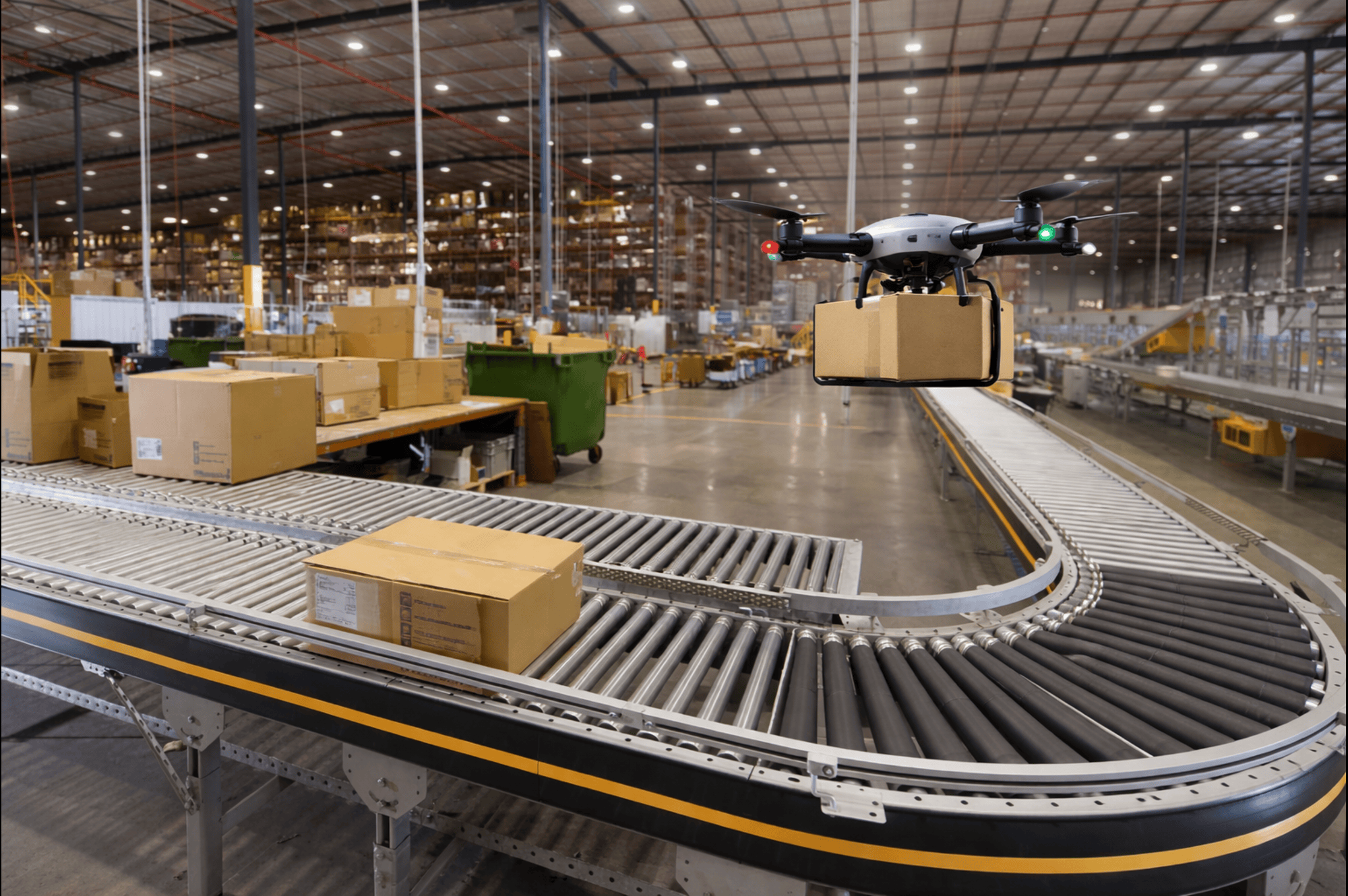
The rapid expansion of the warehousing sector has also brought with it a growing shortage of skilled manpower, particularly as modern warehouses become larger and more complex to operate. In response, the industry is increasingly turning to advanced technologies to address this gap. Automation, digital inventory systems and advanced warehouse management solutions are transforming how storage and distribution facilities operate. “Technology is becoming central to addressing manpower constraints and driving efficiency in warehousing. Automation and digital solutions are enabling 20-30% improvements in throughput in high-volume operations, while reducing reliance on manual processes. AI supports demand forecasting and inventory optimisation, while WMS platforms provide real-time visibility and process control. Robotics and AGVs are increasingly being deployed for repetitive tasks such as picking and sorting, improving accuracy and turnaround times, while IoT sensors and RFID enhance asset tracking and predictive maintenance,” says Neeraj Balani.
According to JLL, warehouse automation adoption is set to rise sharply from 4% in 2024 to 76% by 2030, as companies seek greater efficiency, accuracy and scalability. The India Warehouse Automation Market is also expanding rapidly, projected by Mordor Intelligence to grow from USD 560 million in 2025 to USD 1.5 billion by 2031 at a CAGR of 17.84%. Strong e-commerce growth, GST-led supply chain consolidation, PLI-driven SKU expansion and the rise of quick-commerce are accelerating the shift from labour-intensive operations to automated systems.
Rise of Built-to-Suit Warehousing
As the warehousing sector matures, occupier preferences are also undergoing a noticeable shift. Companies are increasingly opting for built-to-suit (BTS) warehouses that are specifically designed to meet their operational requirements. Unlike standard warehouse facilities, built-to-suit developments allow occupiers to customise layouts, storage configurations, floor load capacities and technology integration according to their supply chain needs. “Built-to-Suit (BTS) facilities are increasingly being preferred, owing to the tailored customisations that match their exact operational, technological, and regulatory needs,” says Urvish Rambhia. This flexibility is particularly important for sectors such as e-commerce, FMCG, retail and third-party logistics providers, where efficient inventory handling and faster order fulfilment are critical. “The shift towards built-to-suit (BTS) warehouses is being driven by occupiers seeking greater customization, operational efficiency, and readiness for automation. Today, BTS accounts for an estimated 35 – 40% of leasing in key markets, particularly led by 3PL, e-commerce, and automotive sectors. Unlike standard facilities, BTS enables optimization of layout, clear heights, docking, and integration of robotics and technology. As supply chains become more complex and time-sensitive, occupiers are prioritising facilities tailored to their throughput, storage, and process requirements rather than adapting to generic spaces,” says Neeraj Balani.
The growing complexity of supply chains and the increasing adoption of automation are further driving demand for such customised facilities. “The migration towards built-to-suit is a natural consequence of increasing supply chain complexity and capital intensity at the tenant level. Large occupiers are making significant investments in automation, process optimisation, and inventory management systems. These investments necessitate infrastructure that is purpose-built rather than retrofitted. Standardised warehousing simply cannot support these operational requirements,” says Abhijit Malkani. Sustainability is also emerging as a key priority in warehouse development as occupiers and developers increasingly focus on reducing the environmental footprint of logistics operations. Modern warehousing facilities are now being designed with energy-efficient lighting systems, rooftop solar installations, rainwater harvesting mechanisms and improved insulation to optimise energy consumption. “When you design a park with renewable energy, water recycling, and energy-efficient systems from the blueprint stage, you’re directly lowering operating costs – energy bills, water costs – while creating healthier work environments. It’s not an add-on; it’s embedded into how we design, build, and operate,” says Urvish Rambhia. Many developers are also pursuing green building certifications and incorporating environmentally responsible construction practices. “Our developments incorporate green building certifications such as IGBC and LEED, along with features like solar-ready rooftops, energy-efficient lighting, natural ventilation, water recycling, and EV-ready infrastructure. We are also focused on optimising energy and water consumption at scale, ensuring that our parks are not only environmentally responsible but also deliver measurable cost efficiencies for occupiers over the long term,” says Neeraj Balani. These initiatives are not only helping companies meet their sustainability commitments but are also improving operational efficiency and lowering long-term operating costs, making green warehousing an integral part of the sector’s future growth.
Growth Momentum to Accelerate
As India’s economy expands and consumption patterns continue to evolve, the warehousing sector is poised to play an even more strategic role in the country’s logistics ecosystem. The combination of policy support, infrastructure development, rapid e-commerce growth and increasing technology adoption is transforming warehouses from simple storage spaces into sophisticated logistics hubs.
At the same time, the emergence of new logistics corridors, growing demand for built-to-suit facilities and increasing focus on sustainability are reshaping how warehouses are designed, located and operated.
Going forward, the sector is expected to witness deeper institutional investment, greater automation and wider geographic expansion into emerging markets.
Tags







.jpg "Titagarh Rail Systems delivers Driverless Made-in-India Trainset to Bengaluru Metro’s Yellow Line")