Beyond Interiors: Integrating AV, IT and Automation in Workplace Infrastructure

by Vibhor Garg, Director – Technology (AV & IT), ANJ Group
For many years, workplace development was largely defined by architecture, civil works and interior design. Technology systems such as audio-visual equipment, networking infrastructure or automation were often introduced at later stages as operational add-ons. Today, that approach is rapidly changing.
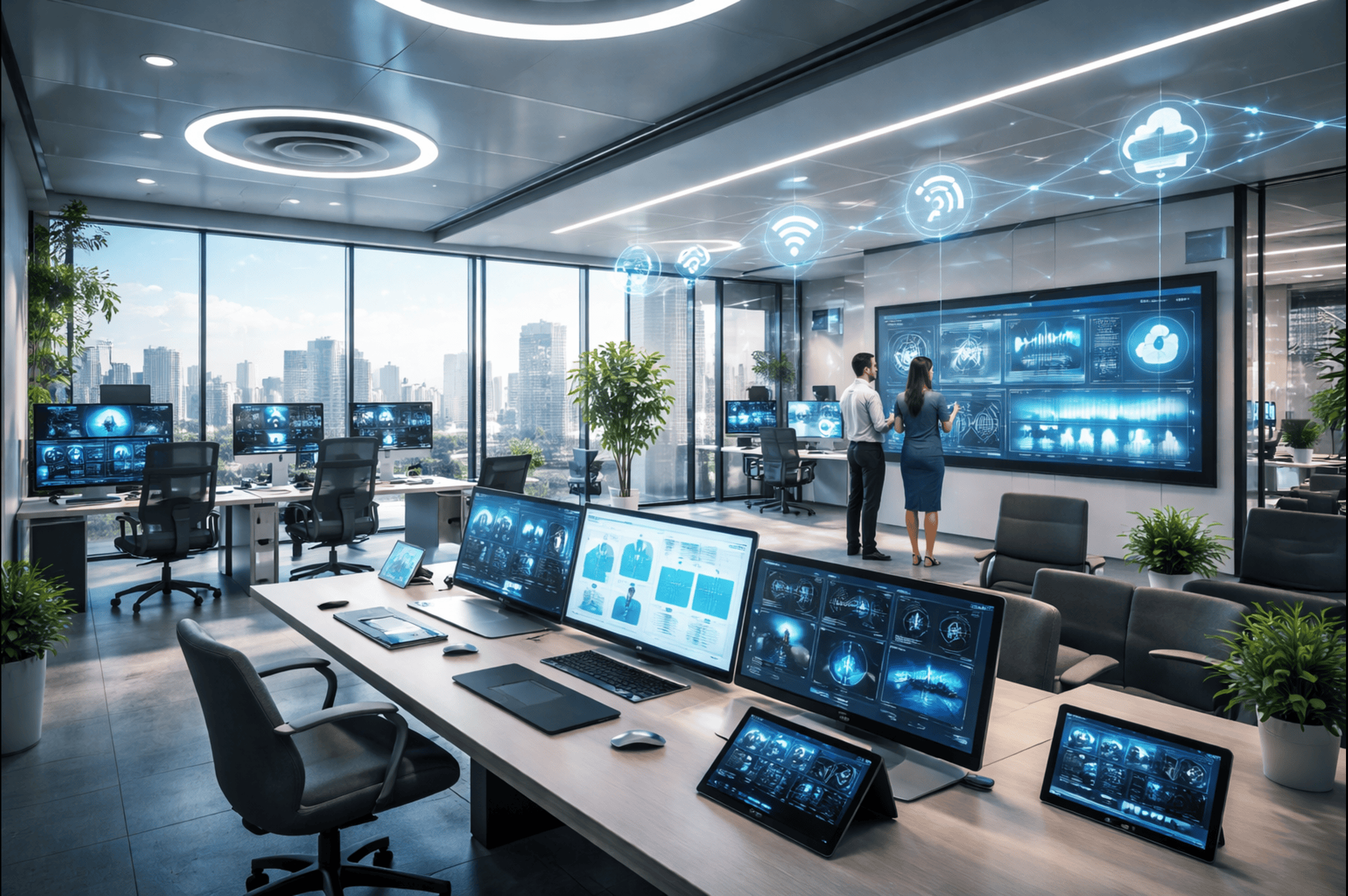
Modern workplaces are evolving into complex technology ecosystems where AV systems, IT infrastructure and building automation must function as an integrated layer within the built environment. This shift is transforming the way enterprise offices are designed, engineered and delivered.
As organisations increasingly operate in digitally connected and distributed environments, the office is no longer just a physical workspace. It has become a technology-enabled collaboration platform that supports hybrid work, real-time communication and seamless digital engagement. For the engineering, procurement and construction ecosystem, this evolution represents an important structural change in how workplace infrastructure is conceived and executed.
The Convergence of Workplace Infrastructure and Technology
Across global markets, enterprises are investing significantly in workplace technologies that support digital collaboration and operational agility. The professional AV industry alone has been experiencing steady global growth, driven by enterprise demand for unified communication systems, immersive collaboration environments and integrated workplace infrastructure.
India is witnessing particularly strong momentum in this space. The rapid expansion of global capability centres, technology firms and financial institutions has created a new generation of offices that must support hybrid teams operating across multiple geographies. Cities such as Bengaluru, Hyderabad, Mumbai and Pune are seeing significant demand for intelligent office environments that combine architectural design with advanced digital infrastructure.
However, the transformation goes far beyond installing large displays or video conferencing systems. Organisations today require a tightly integrated ecosystem of technology within the workplace. AV systems, network infrastructure, power distribution, acoustic engineering and automation controls must work together seamlessly.
Meeting rooms, for example, are no longer simple enclosed spaces with presentation screens. They are increasingly engineered as integrated collaboration hubs equipped with ceiling microphones, unified conferencing platforms, digital control systems and automated environmental settings. These systems ensure that both physical and remote participants experience the meeting environment in the same way.
Similarly, training and learning environments are evolving to support hybrid engagement models. Spaces must accommodate in-person workshops, digital training sessions and remote collaboration simultaneously. Large social areas such as cafeterias are also being designed to function as townhall venues capable of supporting company-wide communications through integrated AV infrastructure.
The workplace is therefore becoming an interconnected system where technology infrastructure is embedded into the building itself. For EPC stakeholders, this requires closer coordination between design, engineering, technology and construction disciplines than ever before.
Integration Is Changing Project Execution
One of the most significant shifts in workplace infrastructure today is the timing of technology integration. In earlier project cycles, AV and IT systems were often considered during the later stages of construction. This frequently resulted in design compromises, retrofitting challenges and operational inefficiencies. Today, successful projects incorporate technology planning from the earliest design phases. Network pathways, control systems, acoustic requirements, power infrastructure and spatial layouts must be coordinated in parallel with architectural and interior design development.
This integrated approach allows organisations to build workplaces that are both technologically advanced and operationally efficient. It also reduces rework, ensures compatibility between systems and improves long-term maintainability of infrastructure.
For engineering and construction firms, the ability to manage this convergence of disciplines is becoming a key differentiator. Delivering intelligent workplaces requires expertise not only in physical construction but also in digital infrastructure, automation and systems integration.
Expanding Technology Infrastructure Capabilities
At ANJ Group, the demand for technology-enabled workplaces has led to the expansion of our AV, IT and automation capabilities as an integrated part of project delivery. Our approach focuses on creating workplace environments where digital infrastructure and physical design operate as a unified system.
One example of this integration can be seen in our EV90 workplace design, where fully automated boardrooms integrate AV systems with centrally controlled blinds, lighting and environmental controls. Training rooms are designed to be divisible and adaptable to varying group sizes, enabling organisations to conduct workshops, presentations and collaborative sessions within the same environment.
In many cases, cafeterias are also designed as multifunctional spaces that can transform into townhall venues supported by integrated AV systems. These environments enable organisations to communicate with large employee groups while maintaining flexibility for everyday use.
Our recent completion of the AV integration scope for Hitachi Energy’s Chennai office reflects the increasing importance of technology infrastructure within workplace environments. The project involved the implementation of advanced AV systems designed to support seamless communication and digital collaboration.
The market demand for integrated technology infrastructure is also reflected in several recent project wins. ANJ has secured AVIT works for Euronet in Mumbai, AV integration for PayTM in Mumbai, and MEP works for M3M The Line in Noida, strengthening our presence in technology-driven workplace infrastructure.
In addition, our teams are currently executing several projects involving advanced technology integration, including Capital Group in Mumbai, and Brookfield Waterstone Foodcourt in Mumbai, where AV, IT and building infrastructure systems are being implemented to create seamless digital environments.
These engagements illustrate how the demand for integrated workplace technology is expanding rapidly across sectors, including financial services, technology companies and large enterprise campuses.
The Emerging Future of Intelligent Workplace Infrastructure
Looking ahead, the integration of AV, IT and automation within workplace environments is likely to accelerate further as new technologies reshape how offices operate. Artificial intelligence and data analytics are expected to play a growing role in workplace infrastructure management. AI-enabled systems can analyse meeting room utilisation, optimise energy consumption and automatically adjust environmental settings such as lighting, temperature and acoustics based on occupancy patterns.
Sensor-enabled workplaces are also gaining traction. These systems provide organisations with insights into how spaces are being used, enabling more informed workplace planning and infrastructure decisions.
Another emerging development is the adoption of unified workplace platforms that connect AV systems with enterprise collaboration tools and building automation systems. Through a single interface, employees will be able to manage room bookings, conferencing systems, digital displays and environmental controls.
From an infrastructure perspective, these developments will require stronger integration between building management systems, IT networks and workplace technology platforms. For EPC stakeholders, this means workplace projects will increasingly involve multidisciplinary engineering capabilities where digital infrastructure becomes as important as physical construction.
A Leadership Perspective
From my perspective, the transformation of workplace environments represents a broader shift in how organisations think about infrastructure. Offices are no longer static physical assets. They are dynamic systems that support communication, collaboration and organisational culture.
When AV, IT and automation systems are integrated thoughtfully within workplace design, they enable employees to connect and collaborate without technological friction. The workplace becomes an environment that adapts to the evolving needs of the organisation.
As enterprises continue to rethink the future of work, the integration of digital infrastructure into the built environment will become a defining characteristic of next-generation workplaces. For the engineering and construction ecosystem, this represents a significant opportunity to redefine how workplace infrastructure is designed and delivered.
Tags