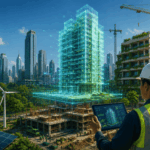

How Dry Construction Is Changing the Way India Builds

by Sumit Bidani, CEO, Knauf India
India is building at a pace that few countries can match. New homes, hospitals, factories, data centres, airports, schools, and offices are rising across cities and emerging corridors. This scale creates a clear pressure on the construction ecosystem. We must deliver faster, with predictable quality, and with smarter use of water, energy, and raw materials.
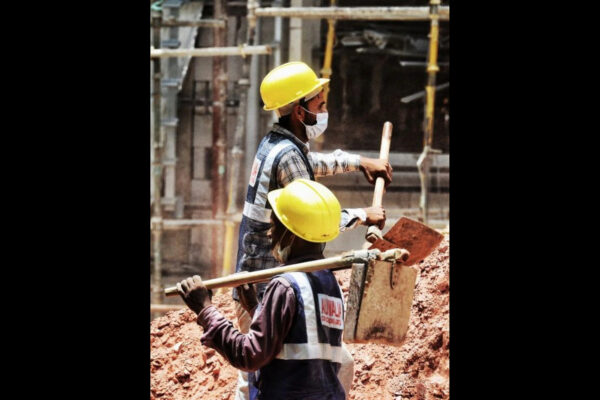
For decades, wet construction has shaped how projects are planned and executed. Brick, blockwork, cement mortar, on-site plastering, and curing cycles remain familiar across regions. This approach has served India well, yet it is increasingly challenged by tight timelines, skilled labour gaps, and the urgent need to reduce waste while improving performance standards.
Dry construction is now changing the conversation. It is no longer a niche alternative. It is becoming a modern, mainstream way to build, particularly for interior partitions, ceilings, wall linings, dry floors and performance-driven building envelopes. Globally, the dry construction market was valued at roughly USD 245 billion in 2024 and is projected to reach USD 400 billion by 2034, reflecting growth at about 5.1% annually. The shift is practical, measurable, and aligned with how Indian construction is evolving.
The Shift from Wet to Dry Construction is Accelerating
Dry construction replaces many on-site wet processes with factory-made systems. These systems typically include boards, metal framing, insulation, compounds, and engineered accessories that work together as a tested assembly. Installation becomes more like manufacturing and less dependent on site improvisation.
This shift matters because wet construction depends heavily on local site conditions. Wet construction is mainly for structure/foundations. Weather affects curing, moisture impacts finishes, and inconsistencies in mixing or workmanship can lead to variable outcomes. Dry construction reduces that variability because materials are standardised and performance is validated through system design.
Developers and contractors also value how dry systems support cleaner sequencing. Services such as electrical and plumbing can be integrated with greater clarity. Openings and modifications can be executed with less disruption. Finishes can be achieved with tighter tolerances. These changes translate into visible improvements in project delivery.
Another reason for faster adoption is the changing nature of Indian real estate and infrastructure. Modern buildings demand acoustic comfort, fire performance, and thermal efficiency, particularly in commercial spaces, healthcare, hospitality, and education. Traditional partitions can meet some requirements, yet they frequently need additional layers and rework. Dry systems are designed to deliver performance as part of the base specification.
Faster Timelines and Improved Labour Efficiency
Time has become a critical currency in construction. Every delayed handover affects revenue, leasing, financing costs, and customer confidence. Dry construction helps compress timelines because installation is faster and far less dependent on drying and curing periods.
Dry partitions and ceilings can be installed alongside other activities. This parallel workflow reduces waiting periods common in wet trades and improves overall site coordination. Fewer processes depend on water availability or extended finishing windows, allowing projects to move with greater certainty.
Labour efficiency improves through repeatable installation practices supported by structured training. Industry benchmarks indicate that modern construction techniques can improve productivity by about 30% through coordinated workflows and reduced dependence on traditional wet trades. Dry construction relies on trained installers who follow defined system guidelines using standard tools. Government-led skill development initiatives and certification frameworks are strengthening this talent base, supporting consistent workmanship and safer execution.
Quality control also becomes more manageable. Supervisors can verify alignment, fixings, joint treatment, and finishing steps against clear benchmarks. When quality is embedded into the process, rework reduces significantly. India’s construction sector benefits not only from faster infrastructure delivery, but also from sustained investment in skilled labour and long-term workforce capability.
Sustainability, Waste Reduction and Resource Optimisation
Sustainability is now tied to regulatory expectations, investor priorities, and brand responsibility. It is also linked to basic economics. Water availability varies across India, and construction water demand remains high for wet processes. Dry construction reduces on-site water use because many steps do not require mixing, curing, or prolonged wet finishing.
Waste reduction is another significant advantage. Evidence suggests highly prefabricated systems can reduce construction waste by around 60–70%, compared to conventional site-intensive methods. Wet construction generates debris from cutting, breakage, plaster waste, and rejected batches. Dry systems allow accurate material planning and better coordination. Offcuts are reduced through precise design, and site waste can be managed more systematically.
Resource optimisation extends beyond waste management. Lighter wall systems can reduce dead loads, influencing structural design decisions in certain building types. Improved thermal and acoustic performance contributes to lower operational impact, particularly in air-conditioned environments. Fire performance and indoor comfort also support safer, healthier buildings over the long term.
An important sustainability shift is the move from material-based decisions to system-based thinking. When walls and ceilings are designed as systems, performance can be engineered and measured. This approach aligns well with green building frameworks and responsible procurement practices, where compliance and documentation matter.
Regulatory Influence on Modern Construction Practices
India’s construction ecosystem is becoming increasingly formalised as codes, approvals, safety norms, and performance benchmarks evolve across asset classes. Developers working with institutional capital, global occupiers, and public infrastructure must now demonstrate compliance with defined regulatory and quality frameworks. Dry construction supports this shift through system-based specifications that are tested, certified, and performance-rated. Fire resistance, acoustic insulation, structural stability, and moisture control are validated through recognised standards and certified assemblies, reducing site-level interpretation. Procurement processes reinforce this approach, with documented product certifications and installation standards simplifying approvals, audits, and long-term compliance.
Scope & Limits
The efficiency of a building project is often determined by how well Dry and Wet construction methods are balanced, in the modern building landscape. Traditional wet masonry has dominated for centuries. At present, the industry has transitioned towards a clear technical boundary: Wet methods for the foundations and structural ‘bones’, and Dry methods for everything else – from the building envelope to the interiors.
In spite of the speed of dry methods, they have certain physical limits surrounding compressive strength, mass, and underground durability.
What does this mean for India’s construction future?
Dry construction does not replace every building activity, yet it is reshaping how interior spaces are delivered and how performance is achieved. Structural and foundational work will continue to rely on wet methods, while interiors move toward faster, system-driven execution. This transition places equal emphasis on capability building across the value chain. Architects must design with integrated systems in mind. Consultants must define performance with clarity. Contractors must invest in planning, training, and execution discipline. Supported by government-led skill development and workforce formalisation, modern construction methods are strengthening both infrastructure delivery and people development. The next phase of growth will reward consistency, accountability, and skilled execution at scale.
Tags