Strengthening Green Steel Adoption

India’s steel industry stands at a critical crossroads — balancing its role as a growth engine with the urgent need to decarbonise. As emissions intensify scrutiny at home and abroad, the sector must accelerate efficiency gains, renewable adoption and policy-driven transformation to remain competitive in a low-carbon global economy
by Girishkumar Kadam, Senior Vice-President and Group-Head, & Sumit Jhunjhunwala, Vice-President and Sector-Head, ICRA
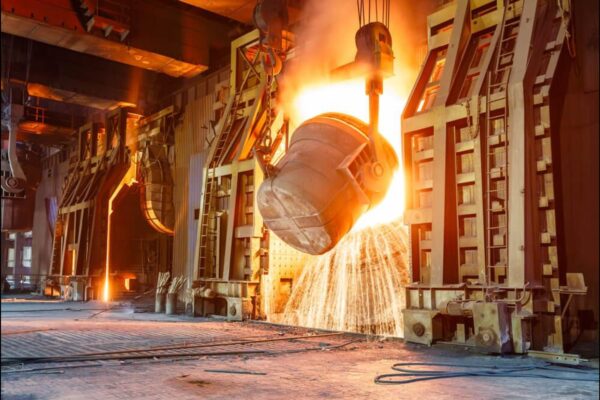
India’s steel industry plays a key role in the country’s economic development. However, it is also one of the largest sources of carbon emission. On an average, producing one tonne of steel in India releases about 2.5 tonnes of carbon dioxide (CO₂). This is roughly 12% higher than the global average for the traditional blast furnace-based oxygen furnace (BF-BOF) method. As countries around the world commit to reducing emission, India’s steel sector is under growing pressure to lower its carbon footprint.
To support this shift, the Government of India introduced a Green Steel Taxonomy in December 2024 under the National Mission on Green Steel. This framework sets clear standards for what qualifies as ‘green’ steel. It uses a star-rating system based on how much CO₂ is emitted during production. Steel with emission between 2.0 tonnes and 2.2 tonnes of CO₂ per tonne of finished steel earns a three-star rating. A four-star rating is given to steel with emission in the range of 1.6-2.0 tonnes, while five-star steel must emit less than 1.6 tonnes. At present, most Indian steelmakers are above even the three-star level, showing that there is a long way to go.
One of the main reasons for this high emission level is India’s heavy reliance on the BF-BOF route, which uses coal. Plans to add 80–85 million tonnes of new capacity by FY2031 will increase the share of BF-BOF to 51% from 45%. This means that the industry will continue to depend on high-emission methods in the near future. As a result, any major reduction in emission before 2030 will be possible only if the current operations are improved rather than making a switch to new technologies.
To address this, Indian steel companies are focusing on steps that can lower the emission by 2030. These efforts aim to bring down the average emission intensity to about 2.0 tonnes of CO₂ per tonne — a 19% drop from the current levels. The biggest improvements are expected from the use of more renewable energy and making the production processes more efficient. Major primary producers have already announced plans to install around 9-gigawatts of renewable power, including solar and wind, to run their steel plants. If fully implemented, this could cut the emission by about 13% for BF-BOF plants and up to 22% for direct reduced iron (DRI)-based units.
In addition to renewable energy, companies are adopting other efficiency measures. These include systems to recover waste heat, better cooling methods and improved equipment. Upgrading iron ore through beneficiation — removing unwanted materials — can also reduce the energy needed for steelmaking. Using more scrap metal and recycling by-products like slag and dust helps lower the need for new raw materials, which also reduces the emission.
However, bringing down the emission level further after 2030 will require bigger changes. One of the most promising methods is using green hydrogen in DRI production, combined with electric furnaces. But this approach is still very costly. For it to be competitive with the coal-based method (BF-BOF), the price of green hydrogen would need to fall to around $1.5–1.6 per kilogram. Currently, it costs more than $3 per kilogram. The price of green hydrogen is unlikely to fall in the near to medium term, which means large-scale green steel capacity addition will remain constrained over the medium term.
Another option is carbon capture, utilisation and storage (CCUS). But this technology is still new and not yet proven for large-scale steelmaking. It is also expensive and difficult to install in the existing plants. Without strong Government support or a price on carbon emission, it is not a practical solution for now.
Scrap-based electric arc furnace (EAF) steelmaking is another low-emission method, producing only about 0.7 tonne of CO₂ per tonne of steel. But this too faces challenges. Around 70% of the available scrap is already used by induction furnaces, and about 25% is imported. Without a strong domestic system for collecting and processing scrap, it will be hard to expand the EAF production.
On the demand side, green steel is not yet widely used in India. High costs and limited supply are the main reasons. Still, there are signs that demand will grow over time. Many large companies in sectors such as automotive, infrastructure and manufacturing are setting goals to reduce the emission in their supply chains. As they work toward these goals, they are likely to seek low-carbon steel.
Government spending on infrastructure could also help. Public projects account for about 25% of India’s steel demand. Any Government regulation to encourage the use of green steel in roads, railways and other projects could support the green steel demand. While the current price premium of $190 per tonne may limit a higher proportion of green steel, the cost impact is manageable at lower levels. As technology improves and the prices come down, more public projects are expected to use green steel.
Exports are another important factor. Starting in 2026, the European Union introduced the Carbon Border Adjustment Mechanism (CBAM), which will add carbon tax to imports based on their carbon emission. Indian steelmakers will need to reduce their emission to stay competitive in these markets. If they don’t, they could face taxes of up to $160 per tonne by 2034. Hence, upgrading technology and reducing emission will be key to protecting the export sales and prices.
Looking ahead, the demand for green steel in India is expected to grow after 2035. This will be driven by stricter environmental rules, pressure from global customers and Government policies. Industries like automotive, infrastructure and capital goods will play a big role as they try to reduce their own emission. While India’s goals for green steel match the global trends, the shift will take time. The pace of change will depend on how quickly the technology becomes affordable and the extent of policy support.
In summary, India’s move toward green steel is necessary but will take time. The industry is starting with practical steps like using more renewable energy and improving the efficiency. These actions can bring a meaningful progress by 2030. But achieving deeper cuts in emission will require new technologies, better access to scrap and strong support from both the Government and the market. Green steel may not become mainstream overnight, but it is clearly the direction the industry must take to stay relevant and sustainable in the years ahead.
Tags