India’s Silent Water Infrastructure Crisis: Why Efficiency Reform Is the Next Big Economic Lever

India’s growth story today is defined by momentum. Expressways stretch across multiple states, freight corridors are redefining logistics, ports are expanding capacity, and manufacturing ecosystems are scaling at unprecedented speed. Public capital expenditure has become a powerful engine of economic acceleration, and government initiatives have created a visible infrastructure transformation that underpins investor confidence and public optimism alike.
Yet beneath this visible expansion lies a less visible system – one that quietly determines whether growth compounds or stalls: water infrastructure. It is a system whose efficiency will increasingly decide not only developmental outcomes but economic resilience.
India’s water challenge is often framed around scarcity. But scarcity, by itself, does not fully capture the structural risk ahead. The deeper issue is performance: how effectively water is stored, transmitted, treated, and reused across urban, industrial, and agricultural systems.
India supports nearly a fifth of the world’s population with roughly only 4% of global freshwater resources. Urbanisation, industrialisation, and agricultural demand continue to rise steadily, placing structural pressure on distribution networks, storage systems, and groundwater reserves. The challenge is no longer simply about expanding supply; it is about how the system functions and how much value each litre of water delivers.
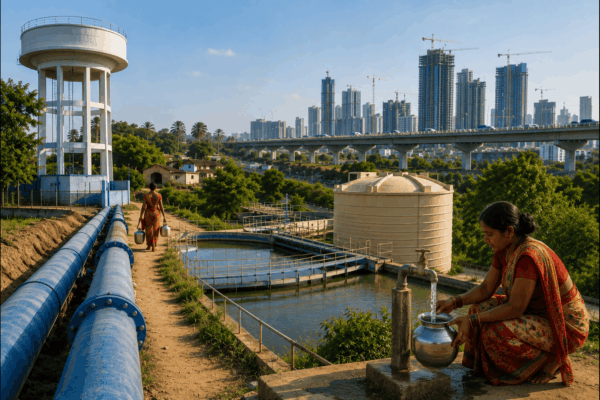
Over the past few years, government programmes such as Jal Jeevan Mission and AMRUT 2.0 have significantly expanded access to tap water across rural and urban India. Millions of households now have reliable water connections that did not exist before—a truly transformative social achievement.
But access is not the same as reliability. The reality in many cities is that a meaningful share of water never reaches the end user due to leakages, ageing pipelines, and intermittent supply cycles.
Agriculture presents a similar duality. Irrigation expansion has strengthened food security and rural incomes, yet water intensity remains uneven across regions. Agriculture accounts for nearly 80–85% of India’s total freshwater consumption, with close to 60% of irrigation dependent on groundwater sources.
Technology now allows precision irrigation, micro-distribution networks, and water accounting systems far beyond what was imaginable a decade ago. The opportunity is not to reduce productivity—it is to increase output per drop, improving both efficiency and sustainability.
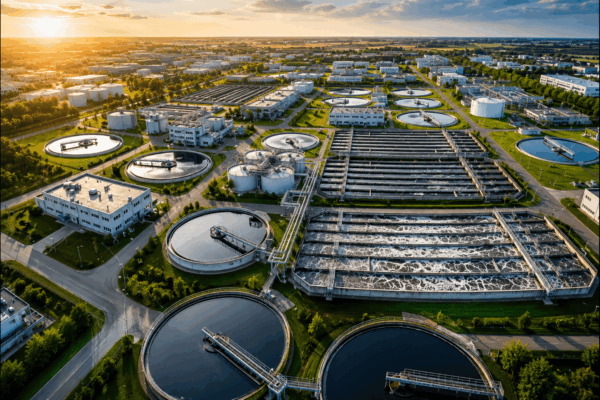
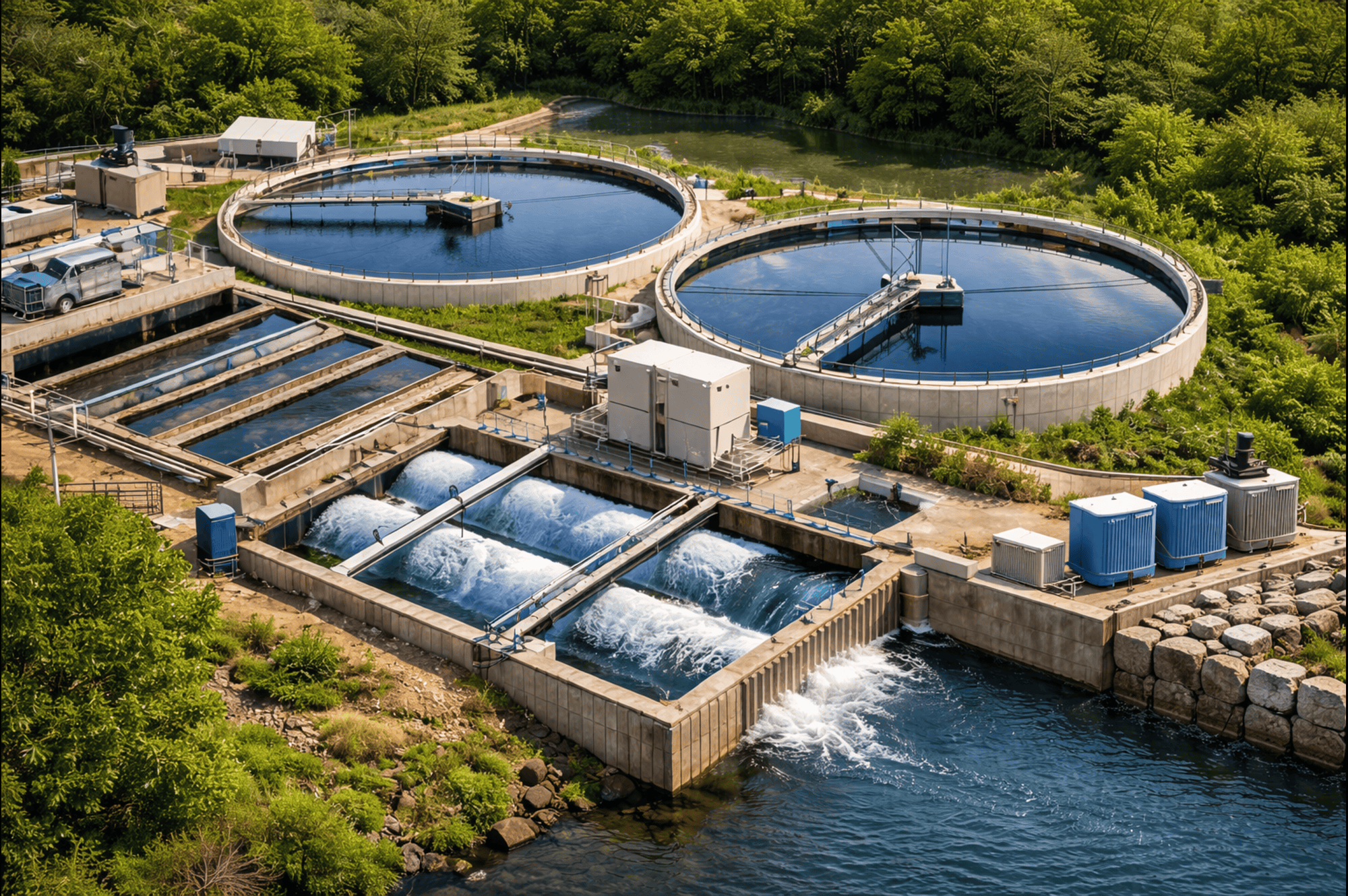
Wastewater represents another underutilised economic lever. Globally, treated wastewater is increasingly recognised as a valuable resource stream rather than a disposal problem. In India, this transition from linear use to circular water systems is underway but far from scaled.
India generates approximately 72,000 million litres per day (MLD) of sewage, yet treatment capacity remains limited to roughly 30–35% of the total sewage generated. Reuse levels also remain significantly below global benchmarks, with a large share of treated wastewater not reintegrated into industrial or urban systems.
Climate variability further sharpens the equation. India now experiences intense rainfall events and extended dry spells within the same year. Flood management and water scarcity are, in effect, two sides of the same design challenge: how intelligently infrastructure captures, stores, distributes, and recycles water.
Cities such as Chennai, Surat, Nagpur, Indore, and Hyderabad that embrace integrated storm water systems, aquifer recharge, and modern storage infrastructure will not just survive climate variability—they will thrive in it.
The next chapter of India’s infrastructure story may therefore hinge less on expansion and more on optimisation. Efficiency in water systems is not a marginal technical improvement; it is a macroeconomic stabiliser.
Every percentage reduction in transmission loss, every increase in reuse integration, and every improvement in storage reliability enhances the return on public capital already deployed. It strengthens the resilience of urban populations, secures industrial continuity, and stabilises agricultural productivity—all without additional land or water resource expansion.
For industry, this shift is equally significant. Infrastructure companies, manufacturers, and EPC partners increasingly operate in an environment where performance expectations extend beyond installation to lifecycle durability.
Engineering discipline, material longevity, and smart monitoring are becoming differentiators. The companies that internalise this shift will define the next era of infrastructure leadership, creating solutions that are both commercially viable and nationally strategic.
Water is gradually moving from being treated as a social service input to being recognised as strategic economic capital. Every infrastructure project—industrial park, housing cluster, logistics hub, or smart city—carries implications for how water flows, is stored, and is reused.
Embedding efficiency into design, not as an afterthought but as a core principle, is now central to economic competitiveness.
Public–private collaboration will be a defining factor in this transition. The government has set policy frameworks, expanded access, and initiated ambitious national programmes. The private sector now has the opportunity to combine technical innovation, operational excellence, and lifecycle management to ensure these systems perform optimally.
Performance-linked contracts, reuse-focused networks, and predictive maintenance models will allow infrastructure to deliver long-term economic value while supporting national water security objectives.
The lessons of the last decade are clear: India can invest heavily and still experience stress if efficiency is ignored. Optimising water infrastructure is not just a policy goal; it is a business imperative, an industrial priority, and a societal responsibility.
India’s infrastructure transformation is real and accelerating. The foundations are strong. Investment momentum remains robust, and policy intent is clear.
Water infrastructure must transition from reactive provisioning to engineered optimisation:
- Measure every litre.
- Minimise every loss.
- Maximise reuse.
- Strengthen resilience.
For industry, this is a moment of responsibility. As infrastructure leaders, manufacturers, and EPC partners, efficiency must be embedded into design thinking from day one. Advanced storage solutions, durable distribution networks, and lifecycle-focused asset management are no longer optional—they are central to economic and operational outcomes.
Water must be viewed as strategic economic capital, with every project embedding water balance planning, reuse systems, and storage optimisation at its core. The companies that internalise this shift will not only support national priorities but will define the next era of infrastructure leadership.
The foundations have been laid. Access has expanded. Investment momentum is strong.
The next decisive step is performance efficiency.
Because in a high-growth economy, durability matters as much as speed, and water efficiency will play a defining role in determining how durable India’s growth story ultimately becomes.
Tags