Beyond Capacity: Engineering India’s Firm, Financeable Renewable Power System

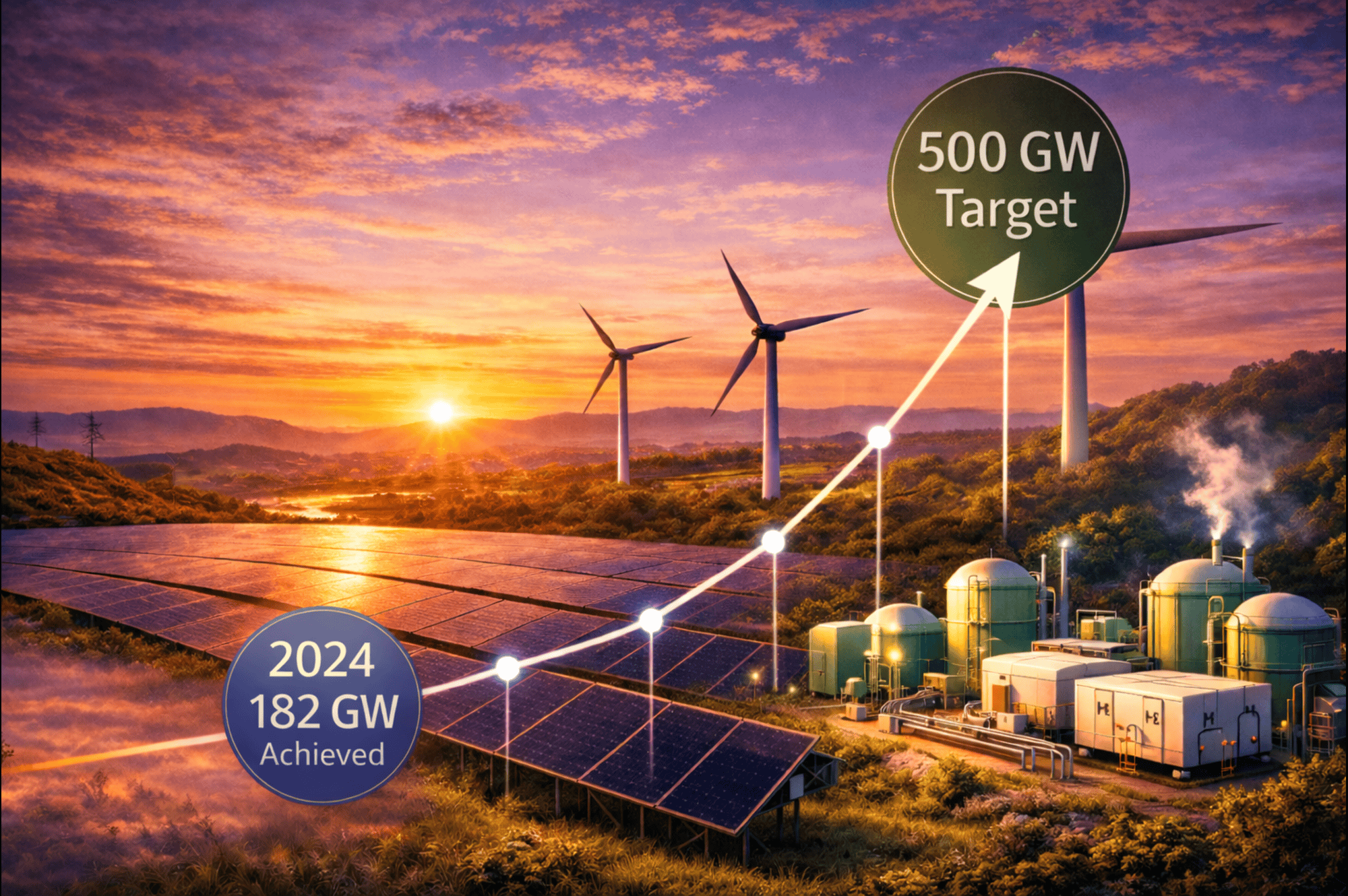
India’s renewable-energy transition has reached a decisive inflection point where ambition must be matched by execution. As clean power moves to the core of the national energy system, the central challenge is no longer capacity addition, but reliable, affordable, and credible delivery. With a 500 GW non-fossil electricity target by 2030, India is not simply expanding renewables – it is re-engineering its power economy. In this report, Tejasvi Sharma, Editor-in-Chief, EPC World, examines how policy, finance, technology, and grid integration are converging to determine whether the next phase is driven by scale – or defined by system strength
India’s renewable-energy transition has outgrown the vocabulary that once described it. This is no longer a story of “adding green capacity” on the margins of a coal-heavy system. It is the architecture of a new power economy – one in which clean electrons are expected to be abundant, industrially priced, bankable, traceable, and increasingly firm. The country’s ambitions are explicit: India’s updated climate commitments include a headline milestone of 500 GW of non-fossil electricity capacity by 2030, and a structural shift toward non-fossil dominance in the installed-capacity mix.
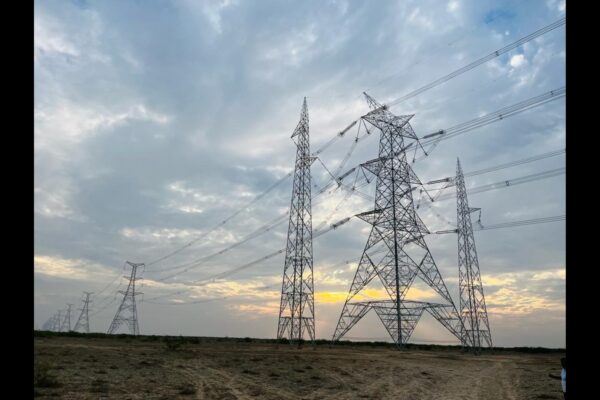
What makes this moment different is not merely the speed of solar and wind deployment, but the maturity of the ecosystem that surrounds them – transmission corridors planned like national highways, increasingly sophisticated procurement formats, domestic manufacturing policy, and a finance landscape that is rapidly learning to price grid risk, curtailment risk, and counterparty risk with greater nuance. In parallel, India’s industrial decarbonisation agenda is evolving beyond power into molecules: green hydrogen and green ammonia are being positioned as a bridge between renewable electricity and hard-to-abate sectors.
Yet, the next phase will not be won by capacity alone. It will be won by capability – the ability to integrate variable renewables at scale, deliver clean power when demand peaks, de-risk payment and evacuation bottlenecks, and finance massive build-outs without compromising balance sheets. This sector report examines all major renewable sources (solar, wind, hydro, biomass/bioenergy, waste-to-energy, and emerging frontiers), the policy spine and government schemes, the investment and FDI landscape, the funding modes and bankability mechanisms, and the technology innovations that will define the 2025–2030 runway.
Where India stands today: scale, momentum, and what the numbers really mean
India’s renewable portfolio is no longer a set of pilot projects – it is national infrastructure. As per MNRE’s physical progress reporting (as of 30 November 2025), India’s installed renewable capacity includes approximately 132.85 GW solar and 53.99 GW wind, alongside biomass and waste-to-energy capacities of smaller but meaningful scale. This installed base matters for two reasons:
- It validates execution capability – land, EPC throughput, tendering systems, and O&M.
- It exposes the next bottleneck – integration and firmness. As renewables become system-defining, the premium shifts from “cheap kWh” to “deliverable kWh.”
That is why India’s policy discourse is increasingly grid-centric: storage, hybrid procurement, forecasting, open access frameworks for demand aggregation, and payment security mechanisms to make contracts financeable.
The Policy Spine: Targets, Market Design, and the Government’s Integration Playbook
National targets and the procurement pipeline
India’s public milestone of 500 GW non-fossil capacity by 2030 is repeatedly reflected in Government communications about the renewable roadmap and key initiatives. This target is not symbolic – it shapes annual bidding trajectories, central procurement strategy through implementing agencies, and transmission planning.
Green open access: turning corporates into market makers
One of the most consequential policy shifts for scaling demand is the Green Energy Open Access framework (June 2022), which widened the addressable market by allowing consumers with 100 kW and above load to procure renewable energy through open access, across sources including solar, wind, hydro, and waste-to-energy. This reform does more than increase renewable offtake – it changes the sector’s risk geometry. Corporate offtakers often have stronger credit profiles than certain distribution utilities, improving bankability for developers and enabling structured products such as hybrid PPAs and “firm green supply” contracts.
Inter-state transmission incentives and regulatory de-risking
MNRE’s solar policy overview notes measures such as 100% FDI under automatic route and the waiver of Inter State Transmission System (ISTS) charges for inter-state sale of solar and wind power for projects commissioned by a specified cut-off (as notified). Such measures directly impact project IRRs by reducing delivered cost and improving the economics of locating projects in resource-rich states while selling power across borders.
Payment security: the quiet foundation of bankability
India’s renewable sector has learned—sometimes the hard way—that a good tariff is meaningless without reliable cashflows. The Government has explicitly highlighted de-risking mechanisms such as Letters of Credit, Payment Security Funds, and Tripartite Agreements to strengthen payment discipline and investor confidence. Standardised PPAs by agencies like SECI also reference payment security mechanisms and the ability to create payment security funds to support timely payments.
Virtual PPAs: new compliance and procurement flexibility
A notable recent development is the regulator’s move toward a framework for virtual PPAs, designed to help large consumers meet renewable goals without physical delivery arrangements—expanding flexibility for compliance and procurement strategies. If implemented with clarity and market confidence, virtual PPAs can catalyse a deeper “green attributes” market for corporates, especially those with distributed loads.
Government schemes and incentives: the operating system of scale
India’s renewable acceleration is not driven by a single flagship policy; it is a layered architecture of schemes, subsidies, guidelines, and tender formats—each designed to unlock a specific bottleneck.
Rooftop solar at mass scale: PM Surya Ghar (Muft Bijli Yojana)
India’s rooftop solar push has received a major fiscal instrument through PM Surya Ghar Muft Bijlee Yojana, which Government communication describes as a scheme with an outlay of ₹75,021 crore aimed at enabling one crore households, with subsidies such as ₹30,000 for 1 kW, ₹60,000 for 2 kW, and ₹78,000 for 3 kW and above rooftop systems. The strategic importance is profound: rooftop solar is not merely generation—it reduces distribution losses, flattens peak demand growth in urban feeders, and can become a gateway to household storage and smart energy management over time.
Agriculture and decentralisation: PM-KUSUM
PM-KUSUM remains among the most structurally significant programmes because it links renewables to irrigation economics and rural resilience. MNRE programme details frame KUSUM across components supporting solar pumps and broader solarisation objectives. For developers and financiers, KUSUM’s challenge is not technology—it is aggregation, last-mile execution, and contracting discipline. For the country, the upside is enormous: a pathway away from diesel pumps and unstable rural supply.
Bioenergy support: National Bioenergy Programme (FY 2021–22 to 2025–26)
Bioenergy is often underestimated in mainstream discussions, but it holds unique value because it is potentially dispatchable and rural-economy linked. MNRE’s schemes and guidelines indicate the continuation of the National Bioenergy Programme for FY 2021–22 to 2025–26, with Phase-I budget outlays referenced in the programme approvals. The most effective bioenergy pathways are those that treat feedstock sustainability as a first principle rather than an afterthought.
Waste-to-energy programme (FY 2021–22 to 2025–26)
MNRE’s waste-to-energy programme outlines objectives to support projects generating biogas/BioCNG/power/syngas from urban, industrial, and agricultural wastes, and notes the programme period through FY 2025–26. WtE has a uniquely urban relevance, sitting at the intersection of municipal governance, public health, and circular economy.
Domestic manufacturing incentives: PLI for Solar PV
Domestic manufacturing is increasingly central to India’s energy security strategy. Government-facing summaries indicate that PLI for high-efficiency solar PV modules has been designed to build large integrated capacity, and official programme descriptions and sector summaries highlight substantial capacity creation aims. This is not simply industrial policy—it is risk management for project pipelines in a world where supply chains can be disrupted by geopolitics, trade disputes, and sudden price cycles.
State-level accelerants: integrated RE policies and storage focus
The next growth wave will be shaped by state-level policy sophistication—especially on grid connectivity, single-window approvals, and storage integration. A recent example is Gujarat’s Integrated Renewable Energy Policy 2025, which explicitly emphasises BESS integration for grid stability and energy services. Such policies signal a shift: states are not only competing to host projects; they are competing to host integrated energy ecosystems.
All Renewable Sources, Clearly Mapped: What Each Brings to the System
Solar: the flagship, still evolving
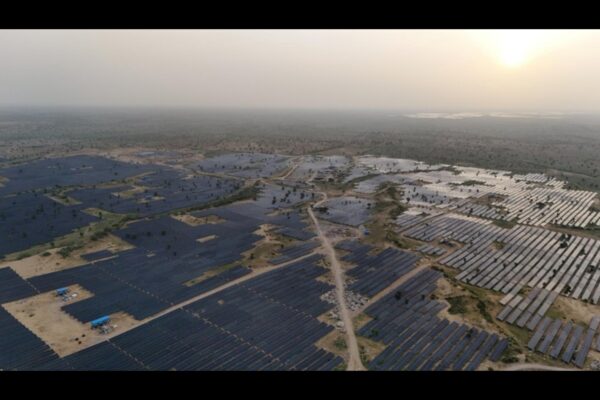
Solar remains India’s primary volume driver. But the solar conversation is changing from “lowest tariff” to “best system value.” India’s utility-scale solar engine is mature—solar parks, central tenders, and a large EPC ecosystem. The competitive edge increasingly lies in:
- land strategy and approvals,
- grid-connection certainty,
- module supply bankability,
- and the ability to pair solar with storage and/or wind.
Rooftop solar is a demand-side revolution in slow motion, now being accelerated through PM Surya Ghar. Over time, distributed solar will increasingly integrate with batteries, smart meters, and dynamic tariffs—turning consumers into “prosumers.”
Floating solar can reduce land conflict and improve module performance in certain thermal conditions. While not always cheaper, it can be strategically attractive near load centres.
Wind: the underappreciated workhorse
Wind complements solar seasonally and diurnally in many corridors, making it indispensable for firming strategies. Onshore wind is increasingly about:
- repowering older turbines with modern high-capacity machines,
- hybrid wind-solar projects sharing evacuation assets,
- advanced forecasting and scheduling.
India’s offshore wind potential is long-term strategic. MNRE notes that the National Offshore Wind Energy Policy was notified in October 2015. Offshore wind’s role may expand once tender structures, port/vessel readiness, and transmission plans converge.
Hydropower: flexibility, storage, and the balancing backbone
Hydropower is being re-valued not just as generation, but as system stabiliser.
- Large hydro provides inertia and balancing services but has long gestation and ESG complexities.
- Small hydro supports local resilience in suitable geographies.
- Pumped storage is arguably the most strategic hydro segment because it enables multi-hour shifting and seasonal balancing when paired with high renewable penetration.
Biomass and bioenergy: dispatchable renewables with rural economics
Bioenergy can provide dispatchable power and fuels—but only if feedstock is sustainable and logistics are well designed. MNRE’s continued support through the National Bioenergy Programme underscores its policy relevance. BioCNG and biogas pathways are particularly compelling where municipal wet waste and agricultural residues can be aggregated reliably.
Waste-to-energy: the “governance-heavy” renewable
WtE’s success is primarily a governance question: waste segregation, contract discipline, emissions compliance, and transparent monitoring. MNRE’s programme aims to support a range of output formats, including BioCNG and power, across waste categories.
In the long run, the most credible urban pathway is likely a portfolio: biomethanation for wet waste, recycling and material recovery for dry waste, and carefully designed WtE where feedstock and compliance conditions support it.
Emerging frontiers (geothermal, ocean energy)
These remain niche today—optionality rather than volume. But they may matter for specific use cases such as island grids, remote resilience, or industrial clusters that can monetise local resource advantages.
Technology Innovations: The Next Five Years Will Be About Integration
India’s renewable transformation now hinges on technologies that make variable generation grid-friendly, firm, and predictable.
Storage: the missing middle between ambition and reliability
Storage is no longer optional. It addresses peak shifting, grid services, and curtailment reduction. State policies and tender frameworks increasingly position BESS as a core integration asset. Over time, the market will reward storage not merely for energy shifting, but for capacity availability, fast response, and ancillary services.
Hybrid and firm power procurement
Wind-solar hybrids reduce transmission congestion risk by smoothing output. Solar-plus-storage enables evening supply. The winners will be those who can engineer portfolios that deliver contractual firmness at competitive blended tariffs.
Digital grid: forecasting, analytics, and predictive O&M
As renewables rise, forecasting errors become expensive. AI-driven weather forecasting, digital twins for assets, predictive maintenance, and real-time dispatch optimisation will define the O&M competitiveness of the next era.
Green hydrogen and green ammonia: electrification meets molecules
India’s green hydrogen push is becoming a centrepiece of industrial decarbonisation and export competitiveness. Government sources describe the ambition to expand green hydrogen production capacity and support related manufacturing capacity.
The economics will be determined by the cost of renewable electricity, electrolyser capex, water management, and—most importantly—bankable offtake.
Funding Modes and Finance: How Renewable Projects are Paid for
India’s renewables are a capital-intensive infrastructure programme, financed through a layered stack of instruments—each with different risk appetites and return expectations.
Core project finance: the workhorse
Most utility-scale renewables in India still rely on classic limited-recourse project finance, backed by long-term PPAs. Lenders price:
- offtaker creditworthiness,
- payment security mechanisms,
- evacuation and curtailment risk,
- module/OEM bankability,
- and regulatory stability.
Payment de-risking mechanisms—LCs, payment security funds, tripartite agreements—are critical to making debt cheaper and more available.
Corporate finance and balance-sheet funding
Large integrated groups sometimes fund projects on balance sheet, then recycle capital through partial sell-downs, platform investments, or asset monetisation.
Asset recycling: InvIT-style thinking (and global analogues)
Infrastructure markets mature when they can recycle operating assets into long-duration yield products. While renewables globally use YieldCos and infrastructure funds, India’s equivalent logic increasingly appears through:
- infrastructure funds taking operating portfolios,
- secondary sales to pension/sovereign capital,
- and structured vehicles that separate development risk from operating yield.
Green bonds and sustainability-linked debt
Green bonds, sustainability-linked loans (SLLs), and transition finance instruments are becoming more common as corporates and developers align their capital strategy to ESG-linked mandates. The real advantage is not branding—it is access to a broader investor base and, sometimes, improved pricing.
Multilateral and development finance: catalytic capital
International DFIs and multilaterals play a crucial role in crowding in private capital through concessional structures, guarantees, and project support. The IEA’s World Energy Investment analysis notes that 83% of power sector investment in India in 2024 went to clean energy, and that India was the world’s largest recipient of DFI funding in 2024 (around USD 2.4 billion) in clean energy generation interventions. Such flows reduce risk perception and help finance first-of-a-kind structures—especially in storage and grid upgrades. ADB-linked public reporting also indicates continued sovereign lending focus on energy transition.
New contracting formats that shape finance
Procurement innovation is finance innovation. Hybrids, storage-linked tenders, peak-power tenders, and virtual PPA frameworks can broaden the market of offtakers and de-risk revenue streams—if contract language is clear and enforcement predictable.
FDI and Investment Scenario: Why Global Capital is Still Bullish on India
FDI policy posture
Government-facing sector overviews emphasise that India permits 100% FDI under the automatic route in relevant renewable domains. This matters because India’s renewable ambitions are too large to be funded only by domestic capital. Global infrastructure funds, pension capital, strategic investors, and sovereign capital are essential participants in the next wave.
Cumulative FDI and recent investment momentum
Invest India’s sector page cites that FDI in non-conventional energyfromMarch 2000 to June 2025is about$23 billion. Meanwhile, investment trackers show strong near-term deal flow: an Economic Times Energy report (citing BloombergNEF’s tracker) states India attracted $11.8 billion in renewable energy investments in H1 2025, with solar dominating.
What global investors are actually buying
Global capital in India is increasingly drawn to:
- operating portfolios with stable cashflows (lower risk, yield-like returns),
- platforms that can scale pipelines,
- manufacturing + generation integrated strategies,
- storage-linked and firm-power assets (higher sophistication, potentially higher value capture).
Recent reported commitments by global and industrial players further illustrate this momentum, including large-scale investment announcements in renewables and associated infrastructure.
The Real Bottlenecks: What Could Slow the 2030 Runway
India’s renewable story is powerful, but it is not frictionless. The constraints are known—and therefore solvable, if treated as engineering and governance problems rather than rhetorical ones.
DISCOM health and payment discipline
The sector’s single greatest bankability lever remains payment security. That is why LCs, payment security funds, and tripartite structures are so central.
Land and social acceptance
Renewables require space—and communities require trust. Faster approvals without social legitimacy can backfire in the form of legal delays and political reversals.
Storage economics and revenue mechanisms
Storage cannot scale on hope; it scales on revenue. Market frameworks must compensate storage for capacity and grid services, not only for energy arbitrage.
Supply-chain resilience and quality control
Manufacturing policy can reduce import exposure, but quality and bankability standards must remain globally competitive, or cost of capital will rise.
Outlook 2026–2030: The Market will Reward “Firm, Financeable, and Verifiable”
India has moved beyond the era where renewables were celebrated primarily for being clean. They are now celebrated because they are strategic—for energy security, industrial competitiveness, and macroeconomic resilience. The country’s direction remains anchored to the 2030 non-fossil capacity ambition and the national programme stack that supports it.
In the next five years, three shifts will define winners and losers:
- From capacity to capability: Storage, hybrids, grid services, forecasting, and digital O&M will separate serious platforms from commodity installers.
- From singular PPAs to portfolio contracting: Corporates, virtual PPAs, green open access, and firm power products will broaden the revenue base.
- From domestic scale to global relevance: FDI, multilateral finance, and export-linked industrial demand (especially through green hydrogen and green ammonia) will reshape capital flows.
The next chapter of India’s renewable sector will not be written only in megawatts. It will be written in delivery assurance, financeability, policy credibility, and system resilience. The prize is enormous: a power system that is not merely cleaner, but smarter—able to support high-growth manufacturing, electrified mobility, modern cities, and globally competitive exports with energy that is both affordable and defensible.
That, ultimately, is the promise of India’s renewable revolution: a new energy infrastructure that becomes the spine of a stronger economy—and a more strategically autonomous nation.
Tags