Simon India and IIT Bombay Join Forces to Accelerate Green Technology and Carbon Innovation

Simon India (SIL) has entered into a strategic Memorandum of Understanding (MoU) with the Indian Institute of Technology Bombay (IIT Bombay), through its National Centre of Excellence in Carbon Capture, Utilization and Storage (NCoE-CCUS), Department of Earth Sciences, to co-develop next-generation green and low-carbon technologies.
The partnership marks a decisive step in strengthening India’s industrial transition toward sustainability, combining IIT Bombay’s advanced research capabilities with Simon India’s engineering execution strength and industrial deployment expertise.
A Strategic Collaboration for India’s Energy Transition
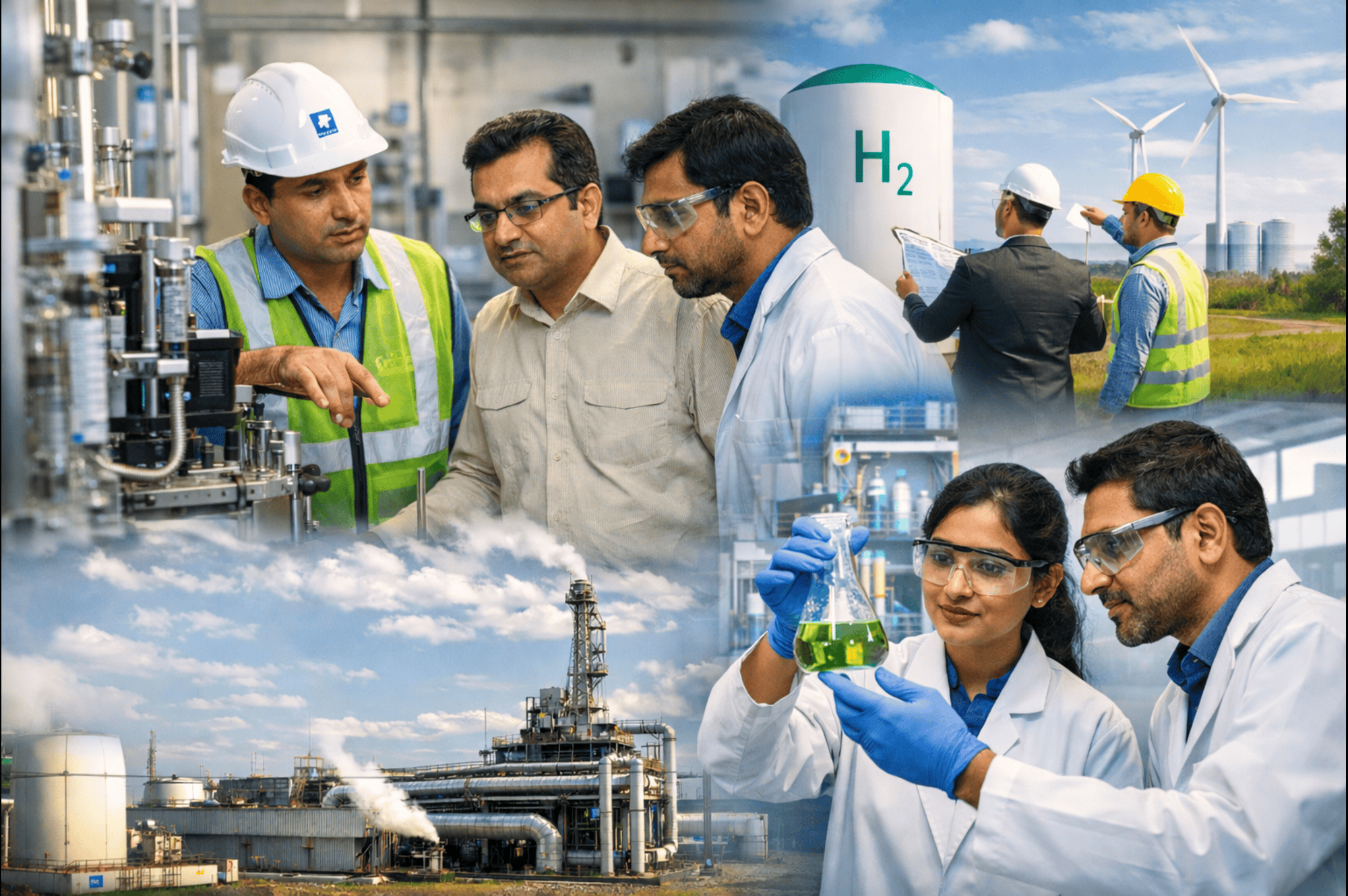
The MoU establishes a structured framework for collaboration across critical areas of green and climate-focused technologies including green hydrogen and green ammonia, carbon capture, utilization and storage (CCUS), circular economy and waste-to-value solutions, energy efficiency and low-carbon industrial processes, as well as rare earth recovery and advanced fertilizers and chemical derivatives. The collaboration is designed not merely for academic exchange but for co-development, pilot validation, technology transfer, and commercialization of scalable industrial solutions.
From Research to Industrial Deployment
Under the agreed scope, both institutions will collaborate on intellectual property creation and protection in catalysts, joint research and development programs and pilot projects, research grant proposals including international submissions, technology transfer and commercialization pathways, capacity building and faculty–industry exchange, along with student internships, industrial training, and experiential learning initiatives.
IIT Bombay will provide access to laboratory infrastructure, conduct bench-scale validations, develop engineering models, and generate CAPEX and OPEX estimates to support pilot-scale design. Simon India will contribute industrial expertise, implementation pathways, and engineering support to translate validated research into deployable projects.
India’s path toward energy transition and climate resilience requires not only policy ambition but strong industrial capability. This MoU positions Simon India and IIT Bombay to jointly address critical challenges across hydrogen, carbon management, green chemicals, and sustainable process technologies. By integrating research excellence with engineering implementation, the collaboration aims to shorten innovation cycles and strengthen India’s competitiveness in global clean technology markets.
Commenting on the collaboration, Prof. Vikram Vishal, Convener, National Centre of Excellence in CCUS, IIT Bombay, stated, “Through this partnership, we aim to bridge the gap between research and real-world industrial applications in the areas of carbon management and green technologies. By working closely with Simon India Limited, we are confident of developing scalable solutions that can significantly contribute to India’s sustainability and decarbonization goals.”
Prof. Arnab Dutta, Associate Professor, Chemistry Department and Associate, Centre for Climate Studies, IIT Bombay, added, “Collaborative platforms such as this are essential for translating fundamental chemistry and catalytic research into impactful climate solutions. By integrating academic research with industrial engineering capabilities, we can accelerate the development of next-generation carbon utilization technologies and sustainable process innovations that are both scientifically robust and commercially viable”.
Speaking on the occasion, Aashutosh Aggarwal, CEO of Simon India Limited, said, “This collaboration with IIT Bombay reflects our strong commitment to advancing sustainable industrial innovation. By combining academic excellence with our engineering and execution expertise, we aim to accelerate the development and deployment of India’s own proprietary green and low-carbon technologies that will support India’s clean energy transition and long-term industrial growth.”
Tags