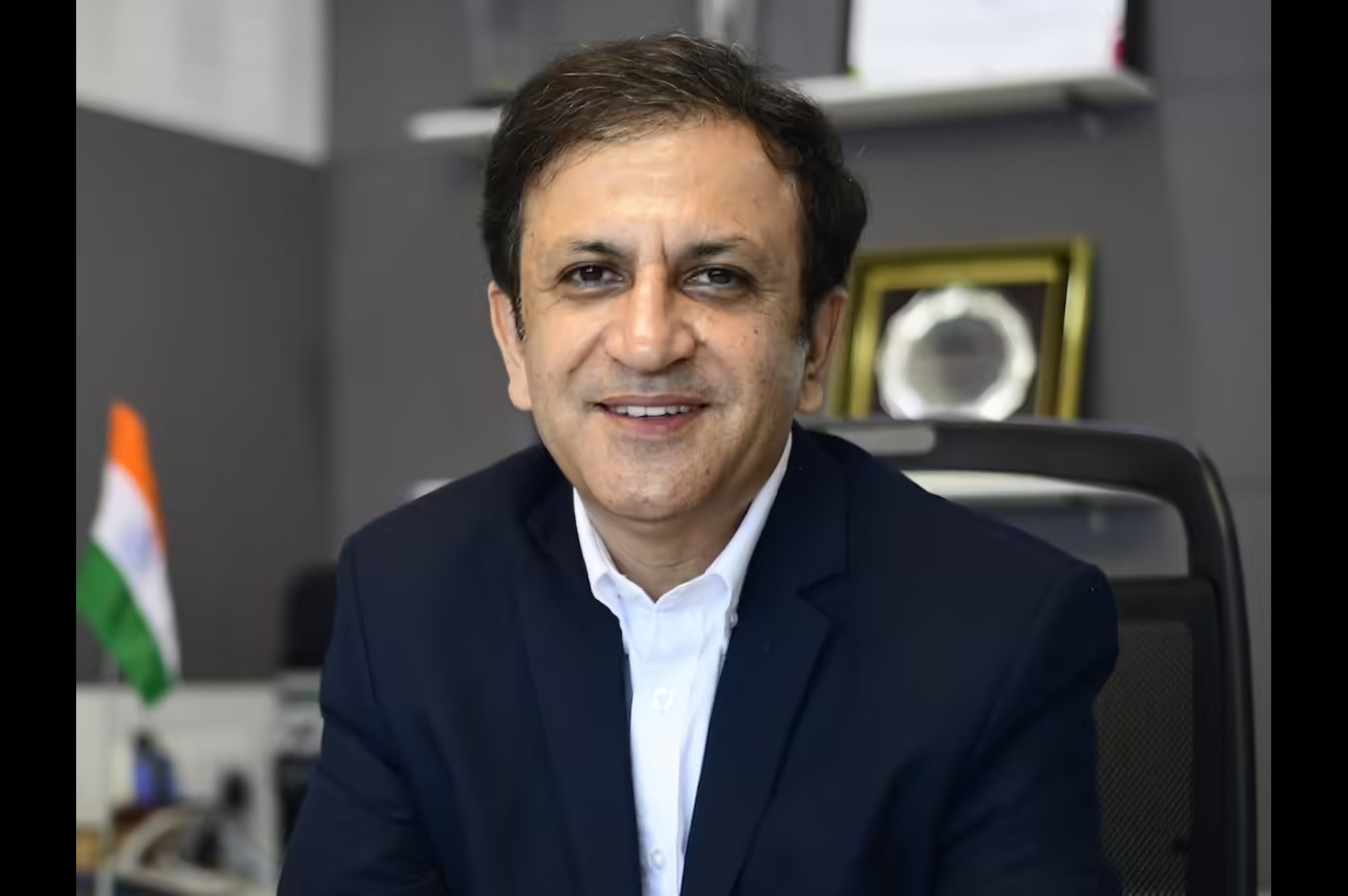
Interview: Amit Gossain, Chairman and Managing Director, KONE Elevators India & South Asia

Elevators are the heart of a building, and when vertical mobility is planned well from the beginning, it significantly improves how the entire urban space functions
India’s urban vertical growth is accelerating rapidly. From your vantage point as Managing Director of KONE India, how do you interpret the changing role of elevators and vertical mobility systems in shaping the next phase of urban infrastructure?
India’s urban growth is no longer concentrated in a few metros. Many Tier 2 and Tier 3 cities are rapidly emerging as new economic and employment hubs, driving infrastructure development and real estate growth across the country. As buildings rise in these cities, the demand for elevators and escalators is increasing, making vertical mobility a critical enabler of urban expansion. At the same time, elevators and escalators are becoming more digital and safety-focused. With lakhs of systems in operation, faster entrapment response, higher reliability and remote monitoring through connected technologies are essential to ensure uptime and user confidence. Sustainability is also central to the future of vertical mobility. Energy-efficient systems, regenerative drives and low-carbon technologies are increasingly important in reducing environmental impact. This commitment is reflected in our platinum-rated, zero-carbon manufacturing facility, with full water recycling and renewable energy use – principles we are steadily extending to our elevator solutions to support sustainable urban growth.
KONE has consistently positioned itself at the forefront of intelligent mobility. What core technological innovations will define KONE’s elevator and escalator solutions in 2026, particularly in terms of efficiency, safety, and user experience?
From our perspective, our one of the most significant innovations is our 24×7 connected remote monitoring system, which predicts failures before they occur. In an elevator, even a short entrapment can feel prolonged, so predictive maintenance and continuous connectivity are critical for safety and reliability. Another key innovation is UltraRope technology. As buildings get taller, UltraRope offers a safer and more sustainable solution. It is almost one-fifth the weight of conventional steel ropes, enabling faster travel, lower energy consumption and a much longer lifespan of up to 150 years, compared to 30–40 years for traditional ropes. We are also focusing on modernization across the elevator lifecycle. In line with the Lift Act, periodic upgrades every five to ten years improve efficiency, safety and user experience, while extending the life of the elevator. Finally, user experience remains a strong focus. Our Vastu-inspired and Navratna elevator designs enhance aesthetics, while features such as music and digital screens create a more engaging and comfortable experience, even during short elevator journeys.
Sustainability has moved from aspiration to obligation. Could you elaborate on how KONE’s energy-efficient systems, regenerative drives, and low-carbon materials are being engineered to meet future environmental benchmarks?
Yes. Regenerative drives, by design, focus on regeneration and reuse. These drives are recycled and reused in a way that makes them effectively brand new, allowing materials to be retained instead of discarded. This significantly reduces material waste while maintaining performance from the very beginning. From the perspective of low-carbon materials, the focus is on both engineering and testing. These materials are specifically engineered to reduce carbon emissions and are then rigorously tested to ensure performance and safety. This requires strong engineering capabilities supported by dedicated testing infrastructure. In Chennai, we have built a test tower with eight elevator testing facilities. This allows us to continuously digitalise, re-engineer and refine regenerative designs, ensuring elevators operate efficiently. While solar energy alone may not fully power an elevator, it can still contribute meaningfully by supporting the system’s overall power requirements
Cybersecurity is emerging as a critical concern in connected building systems. How is KONE addressing data security and system resilience as elevators become increasingly integrated into smart building ecosystems?
Cybersecurity is a critical focus for us, not just for elevators but across all our systems, including laptops and internal digital infrastructure. Preventing hacking and ensuring system integrity is extremely important, especially as elevators become more connected. At the same time, safety is built with multiple layers of resilience. Every KONE elevator continues to have a manual feature, which has not been removed. Even if something were to go wrong digitally, the elevator can still operate manually, ensuring that passengers are safe and not trapped inside.
Could you provide insight into KONE India’s upcoming product portfolio, particularly solutions tailored for high-rise residential, commercial complexes, metros, hospitals, and transit-oriented developments?
For high-rise residential and commercial complexes, we offer a wide range of elevator solutions designed for different building requirements. One of the key differentiators is speed. Our portfolio ranges from elevators operating at 0.7 metres per second for smaller buildings to high-speed elevators reaching up to 8 metres per second. In fact, the fastest elevator in India, operating at 8 metres per second, is a KONE installation at Oberoi 360 and a few other locations. For high-rise applications, we also deploy UltraRope technology, which uses a lightweight carbide rope, making it particularly suitable for tall buildings. Elevator specifications vary significantly depending on the application, and we offer different machine sizes accordingly. Importantly, we intentionally over-spec our technology to enhance safety. For example, the same machine used in the world’s largest elevator at Jio Centre is also used in slightly smaller elevators elsewhere. This approach ensures higher safety margins and greater comfort, which is critical in high-rise environments. All these systems are integrated with KONE’s 24×7 connected services, enabling continuous remote monitoring. Supporting this capability are our two technology centres in Chennai and Pune, where around 2,000 professionals work on design, remote monitoring and round-the-clock system oversight. These centres monitor elevators not only across India but also in several other parts of the world.
The aftersales and service ecosystem is often the true differentiator in this sector. How is KONE strengthening its service centre network, response times, and technician capability across Indian cities and emerging urban clusters?
After-sales service is a key focus area for us, and we are strengthening our presence by expanding rapidly into Tier 2 and Tier 3 cities. Just in the last year, we inaugurated 10 new offices, bringing us closer to our customers and significantly reducing travel time for service technicians, which directly improves response times. Another important differentiator is our service model. All our service technicians are directly employed by us – we do not subcontract services. This ensures that when we take on an annual maintenance contract, the technicians are fully aligned with our’s processes, standards and accountability. Today, we have around 2,500 service technicians working across India, forming a strong and dedicated service workforce. Capability building is equally critical. We operate five training centres across India where all our service technicians are trained. In addition, we use select engineering institutes as training labs, which support skill development not only for our technicians but also for subcontractors, ensuring consistent service quality across the ecosystem.
How would you assess KONE India’s performance trajectory over the past few years in terms of growth, market share, and operational resilience?
Over the past four to five years, particularly in the post-COVID period, KONE India has seen very strong growth. We have grown rapidly year-on-year and have more than doubled, and in some cases tripled, our business during this period, which reflects the strength of both the market and our execution. In terms of market share, we typically state that one out of every four elevators in India is a KONE elevator. This is based on value rather than unit volumes, as exact industry-wide sales numbers are not always available, but it gives a clear qualitative sense of our position in the market. Operational resilience has been a key strength for us. Our focus has always been on people – training, engagement and retention. Attrition levels are low, and we strongly believe that happy employees lead to happy customers. We invest continuously in keeping our teams engaged and well trained so they can deliver consistently high service levels. In India, KONE has around 6,000 direct employees and works closely with about 2,500 subcontractors, primarily installers. These subcontractors are an integral part of the KONE ecosystem, with many families having worked with KONE across generations. We continuously train and engage them, and over time many have built strong teams and developed their work with KONE into long-term businesses.
With rapid technological advancement, how is KONE investing in talent development, skill upgradation, and leadership capability within its Indian workforce?
Talent development is a strong focus area for us in India. We invest consistently in leadership capability through structured leadership training programmes across levels. At the middle-management level, we run a dedicated Future Leadership Development Program (FLDP), developed in collaboration with select institutes and tailored specifically for KONE. This programme is designed to prepare leaders to move to the next level, and many of our branch managers and regional leaders have progressed through this pipeline to take on national leadership roles. Our approach is centred on identifying the right talent early, developing people from within the organisation, and creating clear pathways for growth. By focusing on internal development and continuous upskilling, we ensure leadership continuity and long-term organisational strength.
Looking ahead, what is your strategic vision for KONE India over the next five years, and how does it align with India’s broader urbanisation and infrastructure ambitions?
Looking ahead, our strategic vision for KONE India is closely aligned with the country’s urbanisation and infrastructure growth. As demand increases, we will continue to expand our offices and manufacturing capabilities to support this growth. More importantly, our focus will remain on delivering elevators that are the safest and technologically the best. When safety and technology are right, business growth follows naturally. A key pillar of this vision is developing our own people – both in leadership and technical capabilities – based on their roles and responsibilities. By building strong, skilled teams internally, we ensure that our customers are served by the best possible talent. Ultimately, our goal is to keep our customers consistently happy, which remains at the core of everything we do.
Finally, from a leadership perspective, what advice would you offer to developers, infrastructure planners, and city authorities as they integrate vertical mobility into future ready urban environment?
From a leadership perspective, speed of development is important, but it must be backed by a clear and foolproof plan. This includes where buildings will come up, how green belts will be developed, how pollution will be managed, and how the overall wellbeing of people will be protected. In that context, vertical mobility plays a significant role in supporting daily life and wellbeing in urban environments. It is essential to integrate sustainable vertical transportation solutions in the right locations, and this requires close collaboration with urban planners right from the early planning stages. Elevators are the heart of a building, and when vertical mobility is planned well from the beginning, it significantly improves how the entire urban space functions. This is an area where we believe early engagement can add real value.
Digitalisation will also play a major role in creating future-ready cities. Just as payments have moved to UPI and digital platforms, elevators too need to become more digitally enabled. From operating elevators through mobile phones to managing security, entrapment release, digital contracts and online payments, these tools make systems faster, safer and more convenient. By combining thoughtful planning, sustainability and digital innovation, we can make urban living simpler, safer and more efficient for people.
Tags