Case Study: ONGC Digitally Assesses Unmanned Wellhead Jacket Steel Platforms off the Western Coast of India

SACS Saves 30% to 40% in Analysis Time, Optimizing Structural Integrity and Ensuring Sustained Production
Enhancing Production of Existing Offshore Platforms
Striving for energy independence, India has been stepping up its quest for oil, prompting the need for additional offshore facilities and the adoption of newer technologies to deliver better recovery ratios. As the country’s largest government-owned oil and gas explorer and producer, Oil & Natural Gas Corporation (ONGC) is helping support this initiative. “ONGC is taking up a number of redevelopment projects for enhanced production, which require installation modifications, such as the addition of clamp-on conductors, additional risers and riser protectors, new facilities, and deck extensions, resulting in increased hydrodynamic [and] gravity loads on these structures,” explained Amit Jain, chief engineer for civil at ONGC. To ensure the existing offshore platforms can safely accommodate the additional facilities and loads, ONGC is performing structural assessments.
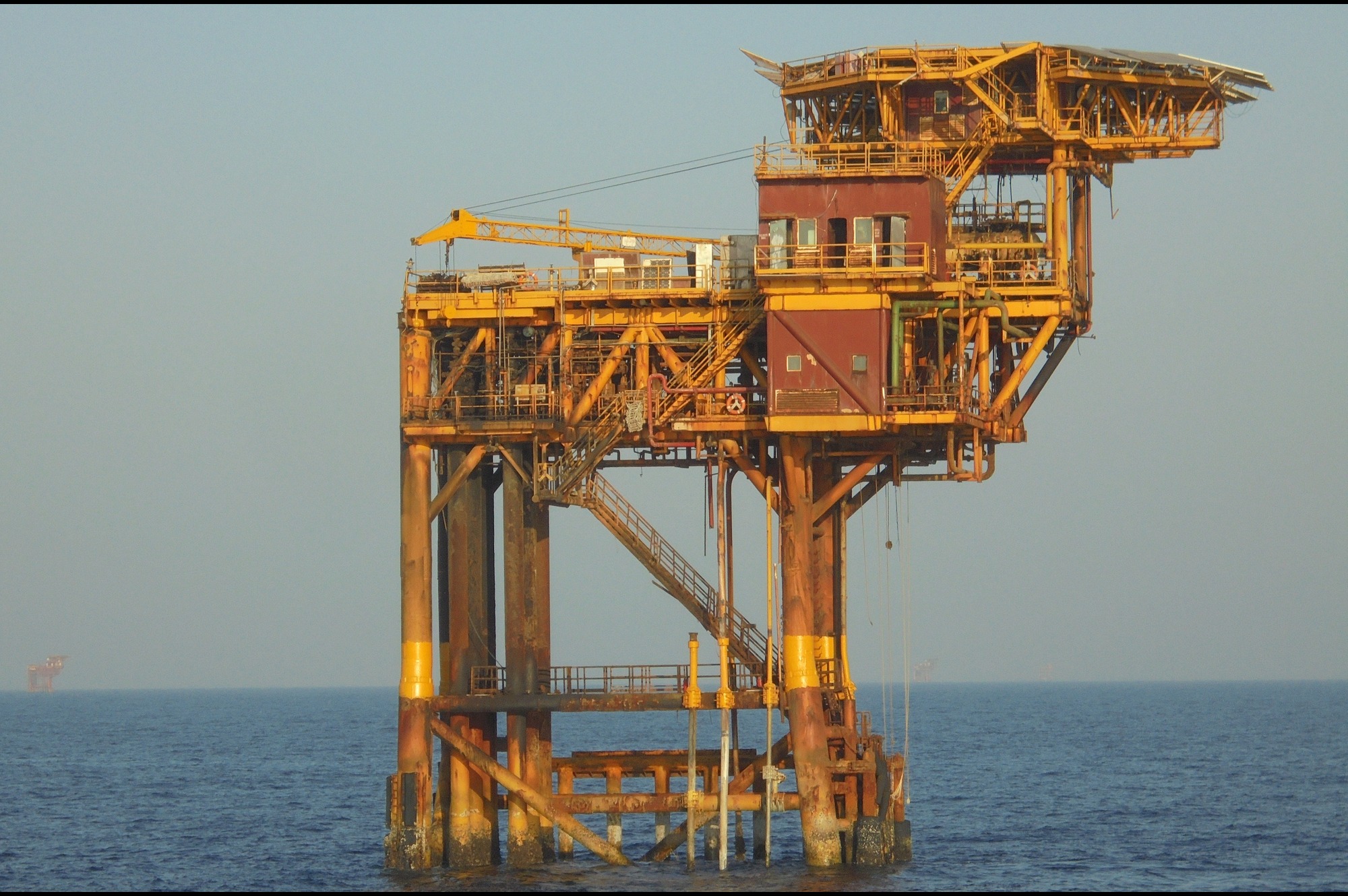
The company selected 18 unmanned wellhead jacket steel platforms in a field off the western coast of India to assess for structural integrity to support the proposed clamp-on wells. The analysis project aims not only to ascertain the structural adequacy of the platforms for these add-on components, but also to ensure the safety of personnel, minimize impact to the marine environment, and enhance production. “The expected outcome of this project would determine the use of the existing platforms for proposed modifications,” said Jain. Its execution would maintain platform fitness for purpose and avert the time and cost for the installation of new platforms.
Meeting New Design and Loading Criteria
“In order to ensure structural and operational integrity of these platforms for additional facilities, fitness for purpose of these structures is to be maintained, prompting structural assessment to be carried out with respect to [the] prevailing design code,” stated Jain. Significant changes have been incorporated into the code, such as the increased value of the velocity-dependent drag and inertia coefficient. These changes to the design code provisions, along with the 20% to 30% increase of hydrodynamic loads on the structure due to increased marine growth, presented challenges for ONGC.
“Due to changes in design criteria and additional loadings, there is a great challenge in documenting the structural integrity of these structures,” emphasized Jain. Several main structural members would be overstressed due to the upward revision of the drag and inertia coefficient, and the marine growth parameters. ONGC also realized that, in many cases, the ultimate capacity of the piles may be insufficient for safe transfer of the additional loads. Faced with the new design standards and additional loadings, ONGC needed comprehensive offshore structural analysis technology to ascertain structural adequacy to support the clamp-on wells and ensure personnel, marine, and environmental safety.
Using Structural Analysis for Improved Workflows
Leveraging SACS, ONGC modeled the structures and performed multiple analyses considering the additional structural loads and changes in design code. “[SACS] was utilized for carrying out structural integrity assessment as it offers to carry out design level linear and non-linear ultimate strength analysis of the platform structures in view of proposed installation of clamp-on wells,” explained Jain. ONGC performed a global static-in-place analysis of the platforms for a 100-year return period under extreme storm conditions for eight directions of wave, current, and wind, along with other design loads and varying marine growth thicknesses.
If the jacket’s structural integrity could not be confirmed in a linear analysis, ONGC was able to use SACS to carry out non-linear strength analysis to understand the global collapse mechanism of the structure. The whole sequence of analysis tasks was performed using SACS software. For a majority of the platforms, ONGC’s analysis revealed that many of the structures could not safely accommodate the additional components and/or did not meet the marine growth thickness parameters within the new design requirements. Many of the platforms also had damages in the form of dents, which were adequately incorporated into the structural analysis model. Based on the model using Bentley’s offshore structural analysis software, ONGC was able to digitally test various mitigation and strengthening measures. “[SACS] software was very efficient in ascertaining the failure modes of jacket structures and finalizing the strengthening/mitigation measures,” said Jain.
Digitalization Drives Savings and Sustainability
Using SACS, ONGC developed a structural analysis model that enabled them to perform various analyses to understand the structural behavior of the platforms and suggest mitigation measures, where necessary. The software’s customized and efficient multi-run option enabled them to run multiple structural strength analyses and iterations simultaneously, saving a significant amount of resource hours. “Different options for strengthening/mitigation could be explored in a short span of time for suggesting an effective and optimized solution,” clarified Jain. The team used Bentley’s offshore structural modeling and analysis application to quickly and accurately perform the detailed assessments, as well as explore design modifications that complied with the new design code provisions. These workflows saved them 30% to 40% in analysis time.
Establishing a digital modeling and analysis approach optimized the existing platforms’ structural integrity, reducing risks to the environment and avoiding disaster occurrences. “By ensuring that the structure is analyzed to meet acceptable target probabilities of failure using SACS software, the risk exposed to the marine environment would be reduced significantly, thus avoiding the occurrence of disasters like oil spillages and structural collapse,” said Jain. Modifying the existing platforms to meet the new design standards saved an estimated USD 30 million to USD 40 million in costs per new platform installation. The reassessment of the existing platforms maintains their fitness for purpose, avoiding the need for additional platforms, while ensuring sustained production. “This will also benefit in early supply of domestic oil against the expected domestic energy need,” concluded Jain.
Tags