
Interview: Lovish Ahuja, Chief Sustainability Officer, Dalmia Cement (Bharat)

As sustainability becomes central to competitiveness, how is the role of the Chief Sustainability Officer evolving in the Indian cement industry, and how is Dalmia Cement (Bharat) responding to this changing mandate?
Over the past decade, the role of the Chief Sustainability Officer (CSO) has undergone a decisive transformation – across industries, and the cement sector is no exception. Once focused on routine risk mitigation, compliance, and producing glossy sustainability reports, today’s CSO is a strategic leader who embeds sustainability into core business decisions and directly contributes in financial outcomes. CSOs have emerged as catalysts for sector wide transformation, championing the integration of sustainability into long term growth strategies. Governance reforms – such as dedicated Board level sustainability/ESG committees – have further elevated the role, ensuring it carries real strategic influence rather than operating as a mere ‘cost center’. Forward looking organizations increasingly recognize the business value of an empowered CSO, and this shift has been both profound and overdue. At Dalmia Cement (Bharat), sustainability is deeply institutionalized, and the CSO’s role is not just acknowledged but genuinely respected. Dalmia Cement (Bharat)’s leadership in decarbonization and progressive industry thinking is well established, and both are anchored firmly in the CSO’s mandate, backed fully by management. The CSO works seamlessly with operations, finance, procurement, and strategy teams to translate ambitious decarbonization and sustainability goals into executable projects, measurable outcomes, and credible commitments that resonate with investors, regulators, and other key stakeholders.
Dalmia Cement (Bharat) has often highlighted its low carbon footprint compared to global peers. What operational levers – such as clinker substitution, fuel mix, or process optimisation – have delivered the biggest impact so far?
In the cement industry – classified globally as a “hard to abate” sector – energy efficiency and decarbonisation are non-negotiable priorities. They sit at the heart of material sustainability performance, both for individual companies and the sector at large. Given this reality, maintaining strong, top level strategic focus on decarbonisation is indisputable. Clinker production remains the most carbon intensive stage of cement manufacturing, driven by the calcination of limestone and the high temperature fuel combustion it requires. Therefore, any reduction in clinker content delivers outsized CO₂ mitigation benefits. Substituting clinker with supplementary cementitious materials – such as fly ash, slag, and other emerging alternatives – significantly reduces the carbon footprint. This is a scalable, immediately deployable lever because it does not rely on unproven technologies. The challenge lies in executing it without compromising strength, durability, or customer performance standards – demands that require rigorous quality control and disciplined product engineering. Dalmia Bharart has long championed this approach through one of the highest shares of blended cements in the industry and continual optimisation of product formulations. This disciplined focus is a major reason why Dalmia’s carbon intensity remains among the lowest in the sector. It is a practical, proven decarbonisation lever delivering year on year impact – even as more advanced technologies progress toward commercial readiness.
How realistic do you believe CCUS adoption is over the next decade, and how is Dalmia Cement (Bharat) positioning itself to lead in this space?
Carbon capture is indispensable for the cement sector because nearly 60% of emissions come from the chemical process of clinkerisation – emissions that cannot be eliminated through renewable energy adoption or efficiency gains alone. If the industry is serious about achieving near zero emissions, capturing CO₂ from kiln operations is not optional – it is mission critical. For India, the coming decade must focus on making CCU a reality at scale if the nation is to stay on track for its Net Zero 2070 commitment. This requires a staged approach: starting with small pilots, moving to large demonstration projects, and ultimately implementing CCU across operating cement plants. Success will depend on driving down the total cost of CCU installation and operation, while solving practical engineering challenges such as reliable power, water availability, chemical supply, and integration with existing plant systems. Equally important is strong policy clarity on the utilisation and commercialisation of captured CO₂, including the removal of market barriers. Without pragmatic, risk sharing government support, CCU cannot achieve mainstream adoption. Dalmia Cement (Bharat) fully recognises CCU as a strategic pillar in achieving its ambition of becoming carbon negative. The company has already announced plans to collaborate with Carbon Clean on a large-scale capture facility and is an active participant in the Government of India’s CCU testbed programme, alongside IIT Bombay, to test capture technologies on real kiln gas streams. This approach builds domestic technical capability, keeps multiple CO₂ utilisation pathways open, and reduces the risk of late or overly import dependent adoption – positioning Dalmia at the forefront of India’s low carbon transition.
What role do circular economy partnerships – with municipalities, industries, and waste aggregators – play in your sustainability strategy?
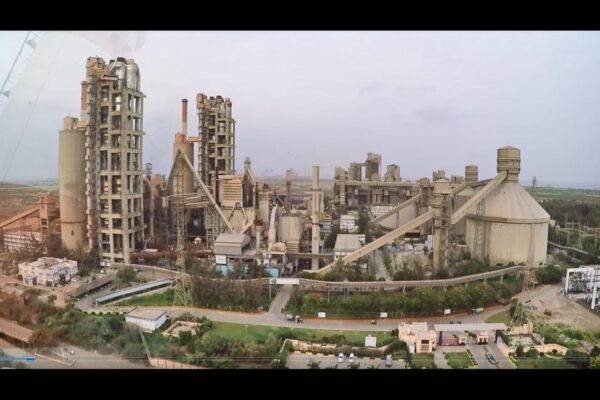
Scaling industrial by products works only when quality is uncompromised and product design is disciplined. Cement performance demands rigorous raw material characterisation, tight chemistry control, dedicated storage and handling where required, and a robust QC/QA system across plants and markets. The goal is unwavering: consistent strength, durability, and customer trust—because a single batch failure can erase months of goodwill. On the alternative fuels side, partnerships are the engine. Kilns need a steady, specification compliant feed, and that is possible only when municipalities and aggregators create a reliable supply chain—from collection and segregation to shredding, drying, and logistics. A practical example is the Bengaluru Solid Waste Management–RDF arrangement with Dalmia Bharat’s Kadapa plant, enabled by EPR economics. This is circularity in action, not just in a strategy deck – real waste diverted, real emissions avoided, real value created.
How close is Dalmia Cement (Bharat) to its renewable targets, and what role could green hydrogen play in cement manufacturing?
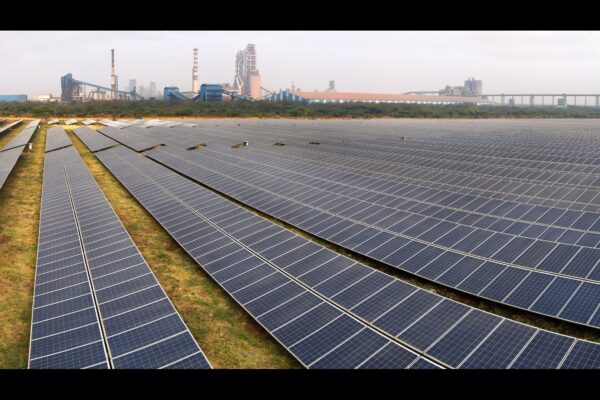
Dalmia Cement (Bharat) is a proud signatory to the RE100 campaign and has committed to sharply increasing its share of renewable electricity by 2030 through a diversified mix of solar, WHRS expansion, green power market purchases, and emerging sourcing models. Despite the realities of grid constraints, wheeling and banking rules, and the need for firming and storage solutions, we have charted a clear pathway to cross 60% RE by 2030. And given the current momentum, it is entirely possible that Dalmia Cement (Bharat) surpasses this target ahead of schedule – provided the broader ecosystem, especially state level RE policies, continues to mature at the required pace. On green hydrogen, we see a promising mid to long term role for cement applications. In the near term, hydrogen is best deployed in targeted pilot settings to understand flame behaviour, NOₓ implications, safety requirements, and control dynamics within cement kilns. At scale, hydrogen will become transformative when it is affordable, reliable, and supported by operational systems capable of handling intermittent production. Until then, focused experimentation and capability building remain essential steps toward future adoption.
Is sustainability influencing capex decisions and plant design differently than a decade ago?
Yes — ten years ago, many sustainability projects were justified as compliance led or CSR adjacent. Today, the capex dialogue has shifted dramatically. There is lesser debate about the ROI of sustainability linked investments, particularly when the decarbonisation gains, efficiency improvements, and long-term cost advantages have been cherished. Rather conversations have now moved to reduction of the long-term cost of carbon mitigation, internalising carbon pricing and transition risk in ROI evaluations, and protecting product competitiveness from future carbon related penalties. Plant design thinking has progressed in the same direction. New investments focus on building future ready infrastructure: advanced alternative fuel handling and co processing systems, grinding circuits designed for a broader blended cement portfolio, digital controls that enhance heat recovery and operational efficiency, and plant layouts that can later integrate carbon capture equipment, additional utilities, and CO₂ handling systems. For Dalmia Bharat, the aspiration of becoming carbon negative has turned sustainability into an investment thesis, not an obligation. When that becomes the organisational direction, project selection changes fundamentally: the priority shifts to initiatives that materially reduce emissions intensity, lock in long term energy security, and preserve optionality for technologies like CCUS as they progress toward commercial reality.
What policy interventions would accelerate low-carbon cement in India?
The fastest accelerator is a policy mix that rewards real emission reductions and de-risks first movers. India needs credible carbon markets or performance-linked incentives that actively promote the mainstream adoption of blended cement as a consumer and industry norm. A critical missing step is the 100% adoption of blended cement specifications in public procurement, which would instantly shift market behaviour and set a strong national precedent. Alongside this, we need clear, performance-based standards that push clinker substitution while maintaining durability and structural reliability. For future technologies like CCUS, policy must confront systemic challenges head-on: the high cost of infrastructure, operational expenses, and the need for reliable offtake pathways for captured CO₂. India is moving in the right direction with a national level CCUS mission under preparation, testbed initiatives through the Department of Science and Technology, and an increasing emphasis on coordinated R&D and deployment strategies for hard to abate sectors. What industry needs now is a predictable, long-term policy signal paired with practical enabling rules -because sustained clarity and stability will drive far more transformation than short-lived schemes. Encouragingly, India appears to be aligning itself toward long-term, technology-forward solutions rather than temporary fixes.
By 2030, how do you see sustainability redefining competitiveness in the Indian cement industry, and how is Dalmia Cement (Bharat) preparing for this future?
In India, price and availability drive most purchasing decisions today, and even by 2030, efficiency will remain the defining factor for competitiveness. Cement is a bulk commodity with strong regional dynamics, making cost sensitivity even more acute. Decarbonisation will influence competitiveness – not entirely, but materially – because cost, carbon, and efficiency are increasingly interlinked. If implemented well, India’s carbon markets, especially the compliance market (CCTS), could become a genuine game-changer for large and organised cement players by rewarding efficiency and disciplined emissions management. Market dynamics could shift even further if blended and low carbon cement receive clear preference in government procurement and large private-sector tenders. This is the critical unlock India has yet to fully deploy. When public procurement in infrastructure – metros, highways, airports, water systems, and institutional real estate – starts demanding low carbon cement and basic carbon disclosures as standard, the entire sector will move. The same applies as more private buyers, influenced by banks, global lenders, ESG-linked bond markets, and international contractors, begin asking for transparent carbon footprints. Over time, capital will follow carbon efficiency as domino effect. Companies that are not prepared may face higher financing costs or reduced access to growth capital. Energy security will be equally decisive. Volatility in coal and petcoke prices, import exposure, and grid instability directly hit operating margins. Plants that rely more on renewable power, waste-heat recovery, and alternative fuels will enjoy greater cost stability and insulation from global commodity spikes. This is a real competitive advantage in India.
How is Dalmia Cement (Bharat) preparing itself to remain competitive in this evolving sustainability-driven landscape?
Dalmia Cement (Bharat) is preparing for this future in a systematic and balanced manner. The company is not relying solely on future technologies. It is doubling down on proven levers that cut both emissions and cost: lower clinker content, a higher share of blended cement, renewable electricity, continuous efficiency improvements, and circular use of fuels and raw materials. At the same time, it is building early capability in carbon capture through partnerships and on-plant pilot systems, ensuring it is not starting from zero when policy or economics accelerate CCUS adoption. The company’s carbon negative aspiration for 2040 and its renewable electricity targets for 2030 send a clear, credible signal to investors, lenders, and long-term customers. This is about preparing for the regulatory, financial, and energy landscape India is steadily moving toward.
Tags